Most players who say they watch film do not watch film. They rewatch the goal, they rewatch the mistake that still bothers them, and they close the laptop after eleven minutes feeling roughly the same as before. Nothing has been isolated, nothing has been written down, and the following week looks identical.
Ninety minutes a week, split into three blocks and pointed at one habit at a time, produces a different result. It is not a large commitment: it is one session shorter than a training night, and it can be done on a phone, a free editor and a notebook.
What follows is the routine, the equipment, the three questions that do most of the work, and the specific mistakes that turn a review session into an hour of watching yourself.
What the ninety minutes buy
- Thirty minutes of capture. One camera, one fixed position, one full match or one full session.
- Thirty minutes of cutting. The match reduced to ten or twelve clips, nothing longer than fifteen seconds.
- Thirty minutes of questions. Three questions asked of every clip, answers written down.
- One habit. Chosen at the end of the session, worked on all week, checked in the next one.
- Cost. Nothing beyond a phone, a tripod and free software already available on any laptop.
- The failure to avoid. Watching the whole match again and calling it study.
Why ninety minutes and not three hours
Attention is the limiting resource, not footage. After about half an hour of concentrated clip work, the quality of the observation drops sharply, and what follows is watching rather than analysing. A longer session mostly adds tiredness and the illusion of thoroughness.
There is also a practical argument. A routine that costs three hours gets abandoned in week four, and a routine abandoned in week four is worth less than a modest one repeated for a season. The value of film study is almost entirely in the repetition, because a habit is only visible across several weeks.
Ninety minutes also matches the amount of usable material a single fixed camera produces. One match yields perhaps a dozen moments in which the player is genuinely involved and the picture is clear enough to judge. Trying to extract more than that from one angle produces speculation, and speculation is what makes review sessions feel useless.
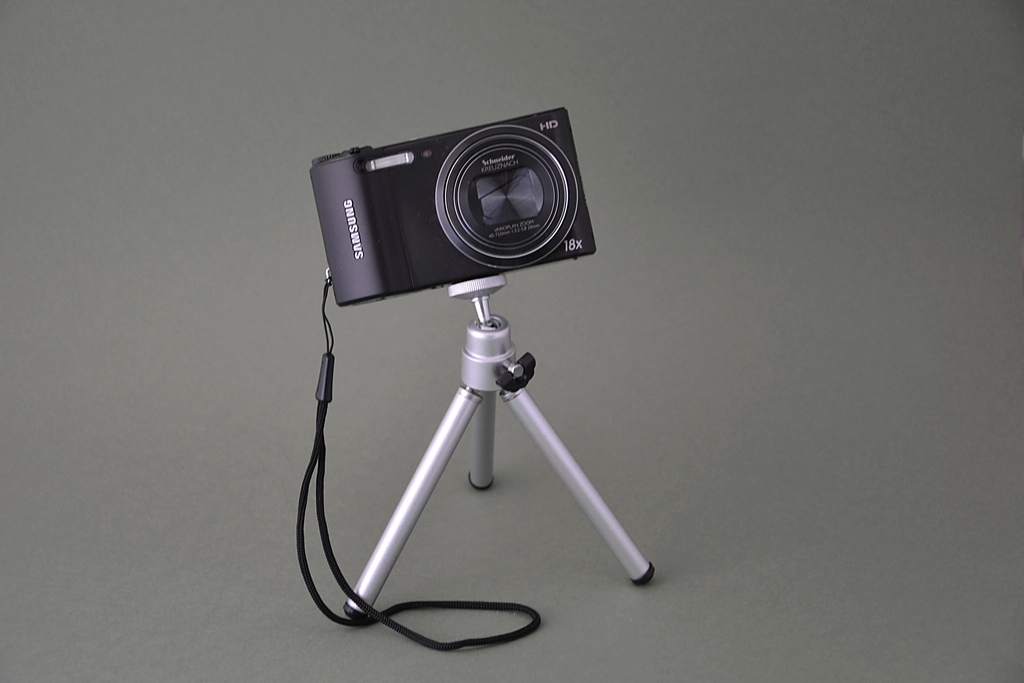
The kit: a phone, a tripod and free software
A phone from the last several years shoots at a resolution well beyond what this needs. The camera is not the constraint. Height and stability are, and both are solved cheaply.
Get the phone as high as the venue allows and as close to the halfway line as possible. A tripod on a stand rail, a clamp on a fence, or a bag on a wall all work. The single biggest improvement available to an amateur setup is elevation, because a camera at head height flattens the pitch and makes distances between players impossible to judge.
Software is free in every category this requires. VLC plays almost any file and steps frame by frame with the arrow keys. Shotcut and the free edition of DaVinci Resolve both cut and export clips. OBS Studio records a screen if the footage lives inside a streaming platform you already have access to. None of this needs a subscription, and none of it needs a machine bought for the purpose. Clubs that have invested in more expensive analysis tools are buying convenience and speed rather than a different kind of insight.
The ninety-minute film study routine, block by block
Run the blocks in order, in one sitting if possible, and stop when the ninety minutes are gone rather than when the material runs out.
- Record the full match or session from one fixed, elevated position. Do not pan, do not zoom, do not follow the ball.
- Transfer the file to a laptop the same evening and rename it with the date and the opponent.
- Watch at double speed with a notebook, writing timecodes for every moment you are meaningfully involved. Aim for fifteen to twenty timecodes.
- Cut the ten or twelve strongest into separate clips, each starting five seconds before the moment and ending three seconds after.
- Watch each clip twice: once at full speed, once frame by frame through the decision itself.
- Answer the three questions in writing for each clip. One line each, no more.
- Choose one habit for the coming week and write it as a physical instruction rather than an outcome.
- Keep the clips. In six weeks they are the only evidence you have that anything changed.
The five seconds before the moment is the part beginners always cut off, and it is the part that contains the reason. A clip that begins at the touch shows what happened. A clip that begins five seconds earlier shows why it was the only thing available.
Block one: capture, and where the camera goes
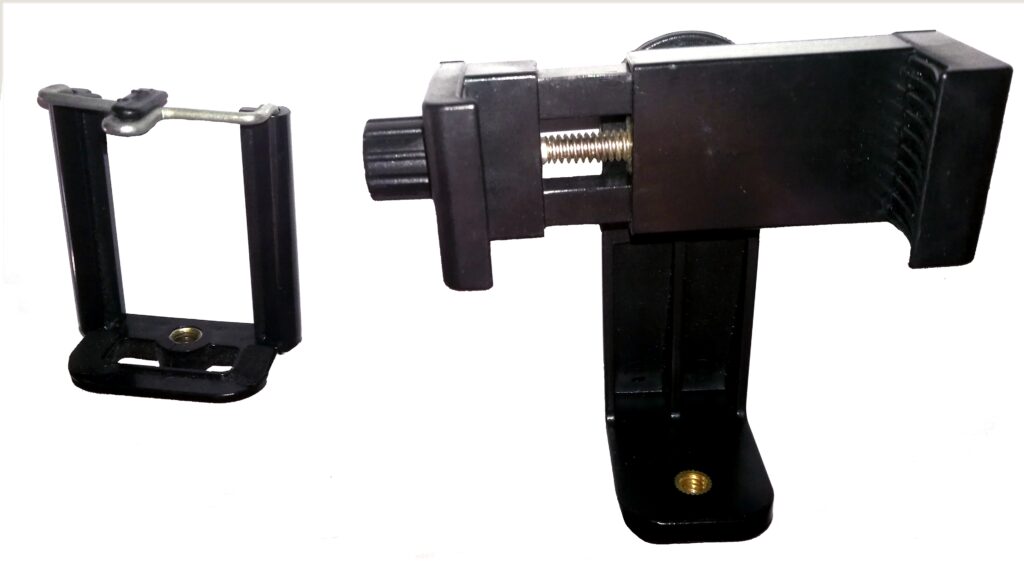
A fixed wide shot from height beats a beautifully operated follow shot for this purpose, and it is worth being stubborn about. Following the ball removes exactly the information you need, which is where everybody else was standing.
Frame so that the widest players on both sides remain in shot when play is at its most spread. In practice this means accepting that individual faces are unrecognisable, and that is fine, because the questions being asked are about position and orientation rather than expression.
If the venue has no elevation at all, the second-best option is a corner of the pitch rather than the halfway line at ground level. From a corner you at least keep depth, and you can tell whether a player is between two opponents or behind them. From ground level at the halfway line, everybody is on the same line and nothing is legible.
Block two: getting the file down to twelve clips
The reduction is where most of the discipline lives. Ninety minutes of footage contains perhaps four minutes of anything worth examining, and finding them at double speed with a notebook is faster than any clever tool.
Take timecodes for four categories: moments on the ball, moments immediately before receiving, defensive actions, and moments where you were an option and were not used. That last category is the most valuable and the one almost nobody logs, because it never feels like an event.
Cutting itself takes minutes once the timecodes exist. Export each clip as its own file, named with the date and a two-word description. A folder of individually named clips from four matches becomes a genuinely useful record; a folder of full match files becomes something nobody opens again. The same logic applies to any long-term development record, which is only useful if it can be searched.
Block three: the three questions asked of every clip

Three questions, in this order, one written line each. The order matters because each one narrows the next.
What did I see before the ball arrived? Frame back to the two seconds before the touch and look at head position. If the head has not turned, the decision that follows was made blind, and no amount of technical work will fix it. This is the question that changes the most players.
What was available? Pause at the moment of the touch and identify every option on the screen. Not the best one, all of them. Most bad decisions are not wrong choices between options, they are choices made from a list of two when the screen contained five.
What did the next three seconds cost? Play forward and watch the consequence. A pass that looks safe and gives the ball to a team-mate who is immediately pressed has cost something. A heavy touch that ends with possession retained has cost less than it felt like at the time.
One habit at a time, and how to track it
The output of every session is a single instruction, and it has to be physical. “Be more aware” is not an instruction. “Turn my head twice before the ball reaches me” is, because it can be counted on video the following week.
Write it down, work on it in training, and then count it in the next session’s clips. Twelve clips give twelve opportunities, and a habit that appears in three of twelve one week and eight of twelve a month later has genuinely moved. That number is the entire point of keeping the clips.
Change one thing at a time. Players who leave a review session with five points to work on retain none of them, and the temptation to fix everything visible in one sitting is the reason most self-directed film study stops after a month. It is the same constraint that governs any technical change under fatigue, which is why coaches introduce them one element at a time rather than in a list.
Free tools that do the job
| Task | Free option | What it is genuinely good at | Where it struggles |
|---|---|---|---|
| Playback and frame stepping | VLC | Opening any file format and moving one frame at a time | No clip management or annotation |
| Cutting and exporting clips | Shotcut | Fast trimming and exporting many short files | Interface takes an evening to learn |
| Editing with more control | DaVinci Resolve, free edition | Precise trimming, speed ramps, clean exports | Heavy on an older laptop |
| Screen recording | OBS Studio | Capturing footage that only exists inside a player | Quality depends entirely on the source |
| Notes and timecodes | A paper notebook | Faster than any application while watching | Not searchable across a season |
Nothing in that table needs replacing before a player reaches a level where somebody else does the analysis for them.
What to record when nobody can film for you
The common obstacle is not equipment, it is that there is no one to hold the phone. Three workarounds cover most situations.
The first is a fixed position with no operator at all: a clamp on a fence and a wide frame that never moves. It loses close detail and keeps everything that matters for this routine. The second is asking a parent or a substitute to start and stop the recording without operating it, which is a much easier request than asking someone to film properly for ninety minutes.
The third is training rather than matches. A single fixed camera on a small-sided game produces denser material than a full match: more touches, more decisions, more repetitions of the same situation. For a player working on one habit, twenty minutes of small-sided footage is often more useful than a full fixture, and it is far easier to arrange.
The mistakes that waste the whole session
Watching the full match again is the first and largest. It feels productive and it produces nothing, because attention without a question attaches itself to goals and errors.
Watching only successes is the second, and it is more common than the reverse. A folder of good moments is a recruiting reel, not a study tool, and the two have opposite purposes. Study needs the clips where nothing happened and something should have.
The third is judging outcomes rather than decisions. A pass that was correct and was misplaced by the receiver is a good decision and a bad outcome, and treating those as the same thing teaches a player to avoid the right pass. Separating the two in writing, clip by clip, is the habit that makes the rest of the routine work. Coaches at every level make the same distinction when they review a session, which is why their notes rarely match a match report from the same afternoon.
Frequently Asked Questions
How much footage does a season of this produce?
Roughly a dozen short clips a week, which is a manageable archive on any laptop. Keeping full match files is the thing that fills a drive; keeping ten fifteen-second clips per week does not, and the clips are the part you will actually revisit.
Is a phone camera good enough?
Yes, for everything this routine asks. The limiting factors are height and stability, not sensor quality, and a mid-range phone on a stable mount from an elevated position produces footage that answers all three questions comfortably.
Should a young player do this alone?
Better with a coach or a parent for the first few sessions, because the tendency to focus on results rather than decisions is strong and difficult to notice in yourself. After a month of the three questions, the habit is usually established well enough to continue alone.
What if my coach already provides analysis?
Then this becomes narrower and shorter. Use the team footage, take your own twelve clips from it, and spend the time on the three questions instead of on capture. Team analysis answers a team question; a personal habit needs a personal record.
How long before anything changes?
Habits of orientation and scanning tend to move within a few weeks because they are cheap to perform and easy to count. Technical changes take considerably longer and are harder to see on wide footage. A film study routine measures the first kind well and the second kind badly, which is worth knowing before choosing what to work on.
Set the camera high, cut twelve clips, ask three questions and change one thing. The players who improve fastest from film are rarely the ones who watch the most of it.