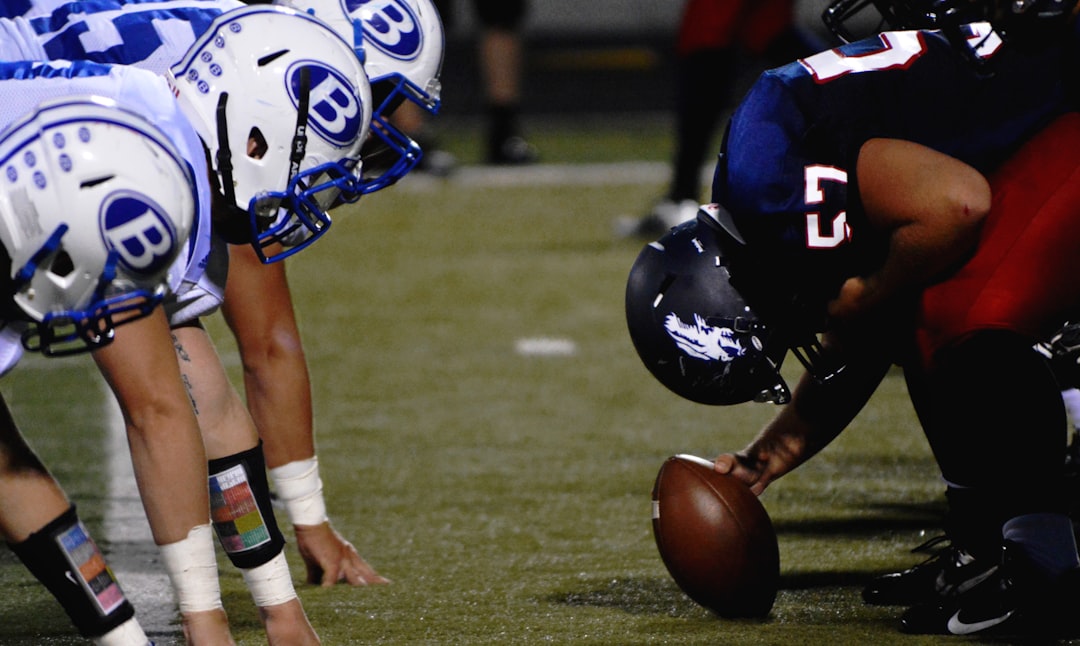
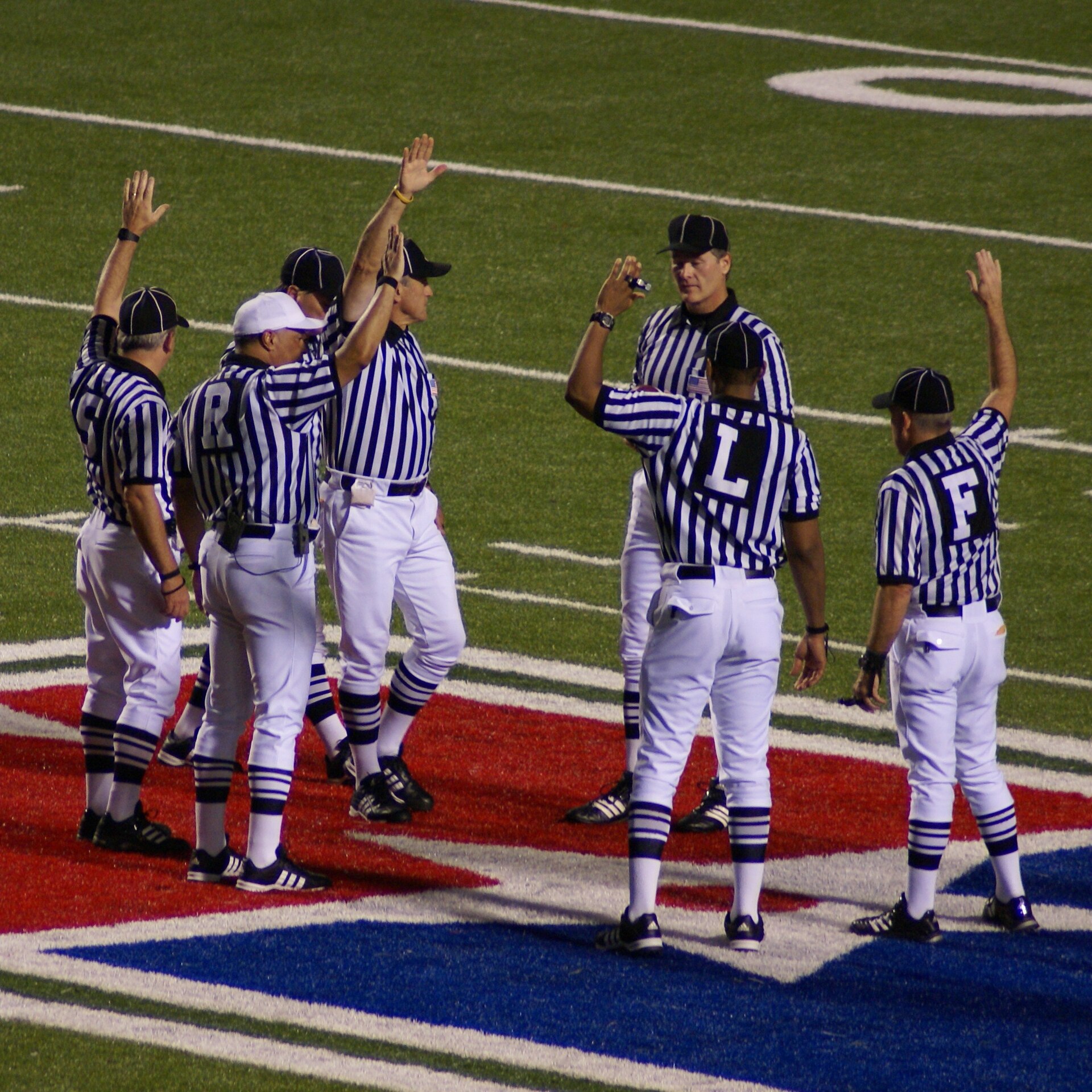
An offense takes the ball with the game clock inside two minutes, one score behind, and a broadcast graphic tells you it needs sixty yards. The graphic is only reporting half the problem. The other half is that every yard has to be bought with time, and the offense arrives with a fixed budget of seconds and three timeouts that it may already have spent.
Post-match arguments about these drives almost always run backwards from the result. The drive scored, so the management was clever. The drive stalled, so somebody panicked. That is a bad way to evaluate anything, because the same sequence of decisions produces both endings depending on a catch nobody controls.
There is a better way, and it is not complicated. Every clock decision has a price expressible in two currencies: seconds and expected points. Once each option carries a price, a drive can be graded on the choices it made rather than on how it ended. What follows is the price list, and how to apply it while watching.
What the offense is actually buying
- Seconds are the scarce currency. Yards are usually available; the time to gain them is not.
- The play clock is the biggest single expense. Any play that leaves the clock running costs the entire reset before the next snap.
- Downs and timeouts are the two ways to buy seconds back. Both are finite, and one of them also buys a coaching conversation.
- Expected points come from position, down and distance. A decision that saves time but loses a down is not automatically good.
- The last snap has a minimum price. A play that cannot be snapped does not exist, however good the call was.
- The codes differ. Professional and college rules diverge on stoppages and warnings, which changes the arithmetic more than most viewers realise.
The two minute drill is arithmetic before it is nerve
The two minute drill has a reputation as a test of composure. Composure matters at the moment of execution and almost not at all in the design, because the design is a budgeting exercise that can be worked out on paper on a Tuesday.
The budget has three inputs: seconds remaining, timeouts remaining, and the distance to a position from which a score is realistic. Everything a coordinator does inside the final two minutes is an attempt to make those three quantities balance, and the plays are selected for their effect on the clock at least as much as for their effect on the field.
That reframing is what lets you judge a drive fairly. The question is never whether the receiver caught it. It is whether the offense reached the last snap with enough seconds and enough downs to have a genuine chance, and whether every earlier decision protected that arrival.
Where the seconds actually go
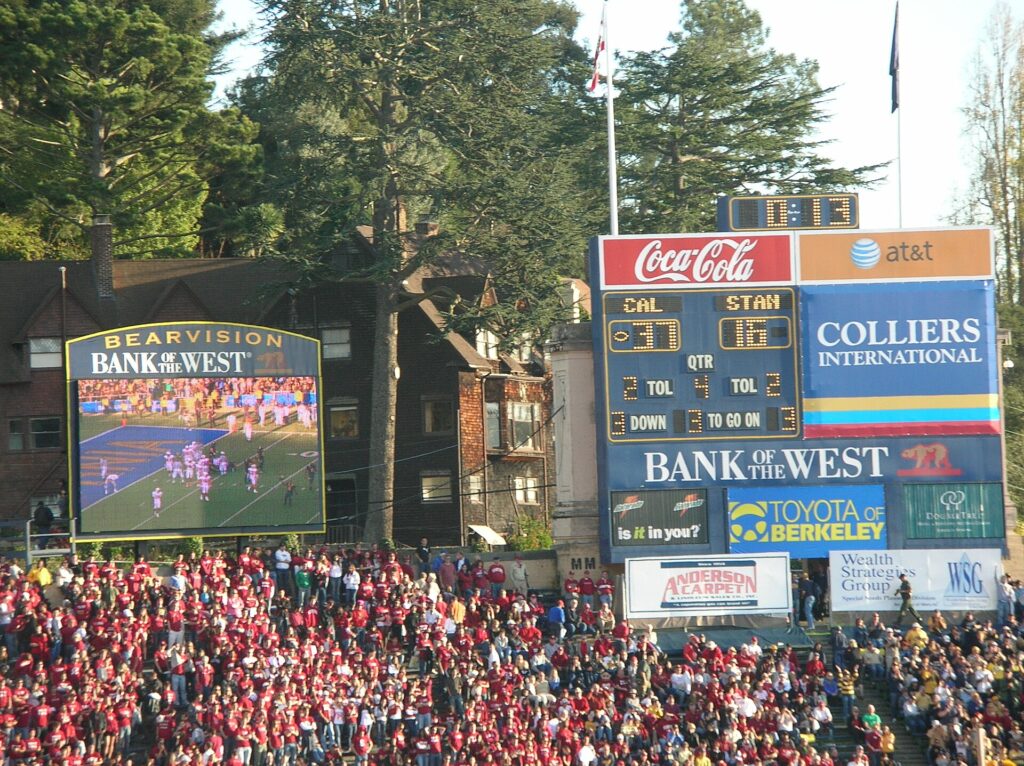
Most of the clock in a late drive is not consumed by plays. It is consumed between them. The play clock in both the professional and the college game runs to forty seconds from the end of the previous play, reduced to a shorter count after certain administrative stoppages, and a huddle-and-snap cycle can eat almost all of it.
So the fundamental split is between plays that leave the game clock running and plays that stop it. A completion inbounds that ends with the runner tackled costs the play itself plus the entire reset. An incompletion costs the play and nothing else, because the game clock stops and restarts on the next snap.
The runner going out of bounds sits in between, and this is where the codes separate. Both stop the clock when a ball carrier leaves the field, but when it restarts, on the snap or on the referee’s ready signal, depends on the code and on how much time is left in the half. The professional game also has a two-minute warning that functions as a free stoppage; the college game does not, and its first-down clock rules have moved in recent seasons. Anybody arguing about a specific sequence should check the current rulebook of the specific code, because these are among the most frequently amended rules in either sport.
Price list for every stoppage
| Action | Effect on the game clock | What it costs | When it is the right call |
|---|---|---|---|
| Incomplete pass | Stops, restarts on the snap | One down | Whenever the alternative is a short gain inbounds |
| Runner out of bounds | Stops; restart depends on code and time left | Nothing | Always, when the yardage is comparable |
| Spike | Stops, restarts on the snap | One down, gains no yards | Only to prevent losing the whole reset with no timeouts left |
| Timeout | Stops, restarts on the snap | One of three in the half | When it saves more seconds than a down would |
| Completion inbounds, tackled | Keeps running | The play plus the full reset | Only when the yardage genuinely justifies it |
| Offensive penalty late in a half | Stops, and in the professional game may carry a ten-second runoff | Yards plus time | Never chosen; worth knowing as a risk |
Read down the third column and the hierarchy is obvious. Out of bounds is free. An incompletion costs a down. A timeout costs a scarcer resource but buys a coaching conversation as well as time. The spike is the only entry on the list that costs a down and delivers no yards at all, which is why it belongs near the bottom.
The spike, priced honestly
Spiking the ball is an intentional incompletion thrown immediately after the snap. It stops the clock at the cost of one down, and it gains nothing. Traded against a play that would have gained four yards and kept the clock running, it is often correct. Traded against a first-down play with the clock already stopped, it is a giveaway.
The common error is spiking on first down after a completion, out of habit, when the offense has timeouts in hand. That converts a scarce down into a stopped clock the team could have bought with a timeout it was never going to spend usefully later. The reverse error is refusing to spike with no timeouts left and the offense unset, which risks the drive ending with players still walking to the line.
The honest way to price it: a spike is worth roughly the reset it prevents, minus the value of the down it burns. Early in a drive, with downs still cheap and timeouts unspent, that is a poor trade. On the last snap before a field goal attempt, with no timeouts, it can be the difference between an attempt and nothing.
The timeout you should have spent three plays ago
Timeouts are the most commonly mismanaged resource in late-game football, and the mistake is almost always hoarding rather than spending. A timeout carried into the final ten seconds and never used was worth nothing. The same timeout spent two minutes earlier, when it would have saved a full reset, was worth a whole play.
The defensive side of this is the mirror image. A defense holding timeouts while an offense kneels the ball is a defense that has already lost the arithmetic, because those timeouts are the only tool it had for getting the ball back. The decision to burn them has to come before the situation is hopeless, which is exactly when it feels premature.
There is a second value in a timeout that pure clock arithmetic misses: it buys a designed call and a chance to fix an alignment. That is a real advantage and it is why coaching staffs treat the last timeout differently from the first two. It is also a good example of the sort of judgement that separates coaches who manage situations well from those who react to them.
Sideline route, middle route, and the reset nobody counts
The route concept a coordinator chooses inside two minutes is a clock decision disguised as a play call. A route breaking toward the sideline lets the receiver take the ball out of bounds and stop the clock for free. A route working the middle of the field usually leaves the runner inbounds, which costs the whole reset.
That does not make middle routes wrong. The middle is where the coverage is thinnest against certain structures, and a twenty-yard gain inbounds can be worth more than an eight-yard gain out of bounds even after the clock cost. The point is that the comparison has to be made in both currencies, and viewers almost never make it in more than one.
The version of this that decides drives is the receiver’s own decision after the catch. Turning upfield for two extra yards instead of stepping out of bounds is, in clock terms, an expensive choice, and it is one of the few late-game errors that is entirely invisible in a box score.
How much time a play needs to exist
Every option has a minimum time cost, and below that threshold it is not an option at all. A snap has to happen: the ball has to be spotted, the referee has to signal ready, the offense has to be set. Coaching staffs carry a number in their heads for how many seconds a sequence needs, and they treat anything under it as no play.
The same applies to the field goal unit. Getting the kicking team on and set, taking the snap, holding and kicking is a rehearsed operation drilled to about a second from snap to contact, but the whole sequence from the previous play ending to the ball being struck is far longer than that. A team with a few seconds and no timeouts has to know whether it can get the unit on at all.
This is where the outcome-blind evaluation gets sharpest. If a drive reaches the last snap with two seconds and a play that needs four, the mistake happened earlier, and it happened while the drive still looked healthy. That is usually the moment worth rewinding to.
Kneeling it out, from the other side of the ball
The offense with the lead is running the same arithmetic in reverse, and it is unusually clean. With the play clock running to forty seconds and the defense out of timeouts, a kneel-down consumes the play plus the entire reset, and three of them in sequence consume roughly two minutes of game clock without the ball ever being in danger.
Which explains why defensive timeouts have to be spent early. Each one forces a snap sooner, and a trailing defense only gets the ball back by making those stoppages before the arithmetic closes.
The subtler defensive question is whether to allow a score. A defense that lets an opponent walk into the end zone concedes points and buys back a possession with time attached. It looks absurd on a highlight reel and it is sometimes the highest-value decision available, which is a useful reminder that the scoreboard is not the only thing being managed.
The same arithmetic in basketball and in added time
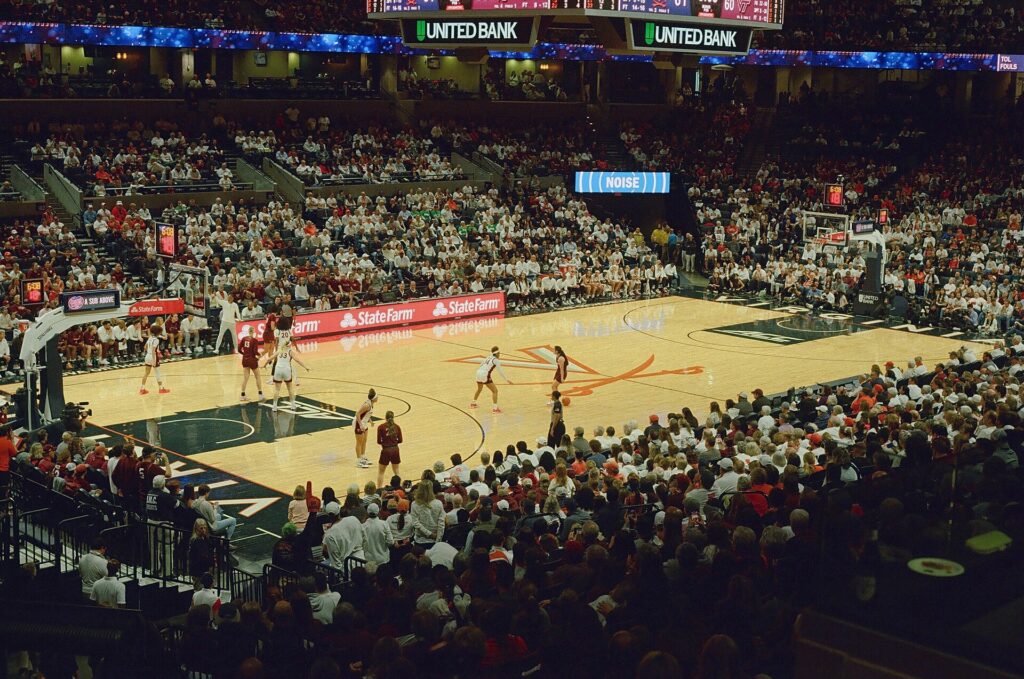
Basketball runs the identical logic with different constants. A shot clock of twenty-four seconds against a game clock of a little over thirty creates the two-for-one: shoot early, concede a possession, and still have the last one. Fouling while leading by three trades two free throws for the removal of a tying shot, a trade that analysts still argue about and that coaches apply inconsistently.
Association football removes the stopping clock entirely and replaces it with the referee’s discretion. Added time is announced as a minimum, and the referee decides when the period actually ends, which means the currency there is not seconds saved but seconds granted. A substitution taken slowly, a goalkeeper holding the ball, a delayed restart: all of them are clock decisions made without a clock that stops.
Across all three, the common structure holds. There is a resource that cannot be replaced, a set of legal ways to spend it, and a decision quality that exists independently of whether the shot went in. Arguments about contested late-game calls would be shorter if more of them started from that structure.
Judging a drive without looking at the result
Grade a late drive on five questions and the result stops mattering. Did the offense take every free stoppage available to it? Did it spend timeouts while they still bought a full reset? Did it accept the clock cost of a middle route only when the yardage justified it? Did it reach the last snap with enough time for the play it wanted? And did it get the field goal unit on if that was the fallback?
A drive that answers yes five times and fails on a dropped pass was well managed. A drive that answers no twice and scores anyway was rescued, which is a different thing and worth saying out loud. Separating the quality of a decision from the quality of its outcome is the whole skill, and it applies well beyond the final two minutes.
It is also why late-game management is such a reliable source of unfair criticism. The decisions are visible, the alternatives are not, and the result arrives about four seconds later. Most of the coaching that decides these drives happened while nobody was watching the clock at all, which is roughly what research into decision-making under competitive pressure keeps finding.
Frequently Asked Questions
Is spiking the ball ever simply wrong?
Yes, whenever the clock is already stopped or a timeout would achieve the same thing at lower cost. A spike converts a down into nothing but a stopped clock, and downs are the resource an offense runs out of last but least recoverably. Its narrow use is preventing a full reset when no timeouts remain.
Why do coaches keep timeouts they never use?
Because a timeout in hand feels like an option and a timeout spent feels like a commitment. The arithmetic disagrees: an unused timeout at the final whistle had a value of zero, while the same timeout spent earlier would have bought a whole reset. Hoarding is the more common error by a wide margin.
What is the ten-second runoff?
A rule in the professional game attaching a loss of time to certain offensive fouls late in a half, so a penalty costs yards and clock together. It exists to stop an offense from using a foul to gain a stoppage, and it is one of the clearest examples of a rule written specifically to price a loophole.
Do college and professional rules really differ that much?
On the clock, yes, and enough to change the plan. The two-minute warning, the treatment of a runner going out of bounds and the handling of first downs have all differed between the codes, and the college rules in particular have been revised repeatedly. Both governing bodies publish their current rulebooks, and the NCAA is the reference for the college game.
Can a drive be well managed and still be hopeless?
Frequently. A team taking the ball with a handful of seconds and no timeouts has very few branches available, and none of them are good. Recognising a situation as arithmetically closed is itself a decision, and it is usually the one that gets described afterwards as giving up.
Try it once with a stopwatch rather than a scoreboard. Time the gaps between plays on the next late drive and the sequence stops looking like drama. It starts looking like a budget being spent, well or badly.