A four-minute match package appears online a few minutes after the final whistle, and the assumption is that somebody worked very fast. Almost none of it was made after the whistle. By the seventy-fifth minute the package usually exists as an ordered playlist of clips that have already been marked, trimmed and stacked, waiting for three or four slots at the end to be filled.
That is the whole trick, and it is not really a trick. It is a production method built around one constraint: the ending cannot be known in advance, so everything except the ending gets finished in advance. The editor is not racing the clock at the end. He is racing it from the first minute and arriving at the whistle with almost nothing left to do.
Knowing how the sequence works changes what you see in a highlight reel. The order of the clips, the moment the crowd audio comes up, the shot that opens the package: none of those are neutral. Each one is a decision taken under time pressure by somebody with a specific list of shots available and a specific deadline.
The shape of the job, in six lines
- The spine is timecode. Every camera and every recorder shares one running clock, so any moment can be recalled by a number rather than by scrubbing.
- The bottleneck is logging. Whatever is not written down as it happens is effectively invisible later.
- The clips exist before the edit. Replay operators mark in and out points continuously during play.
- The order is editorial. Chronology is one option among several and rarely the chosen one.
- Audio is built, not captured. Crowd, effects and commentary arrive as separate layers with separate decisions.
- The last ninety seconds are pre-planned. The reaction shots have their slots reserved before anybody knows what the reaction will be.
How sports highlights are edited while the match is still running
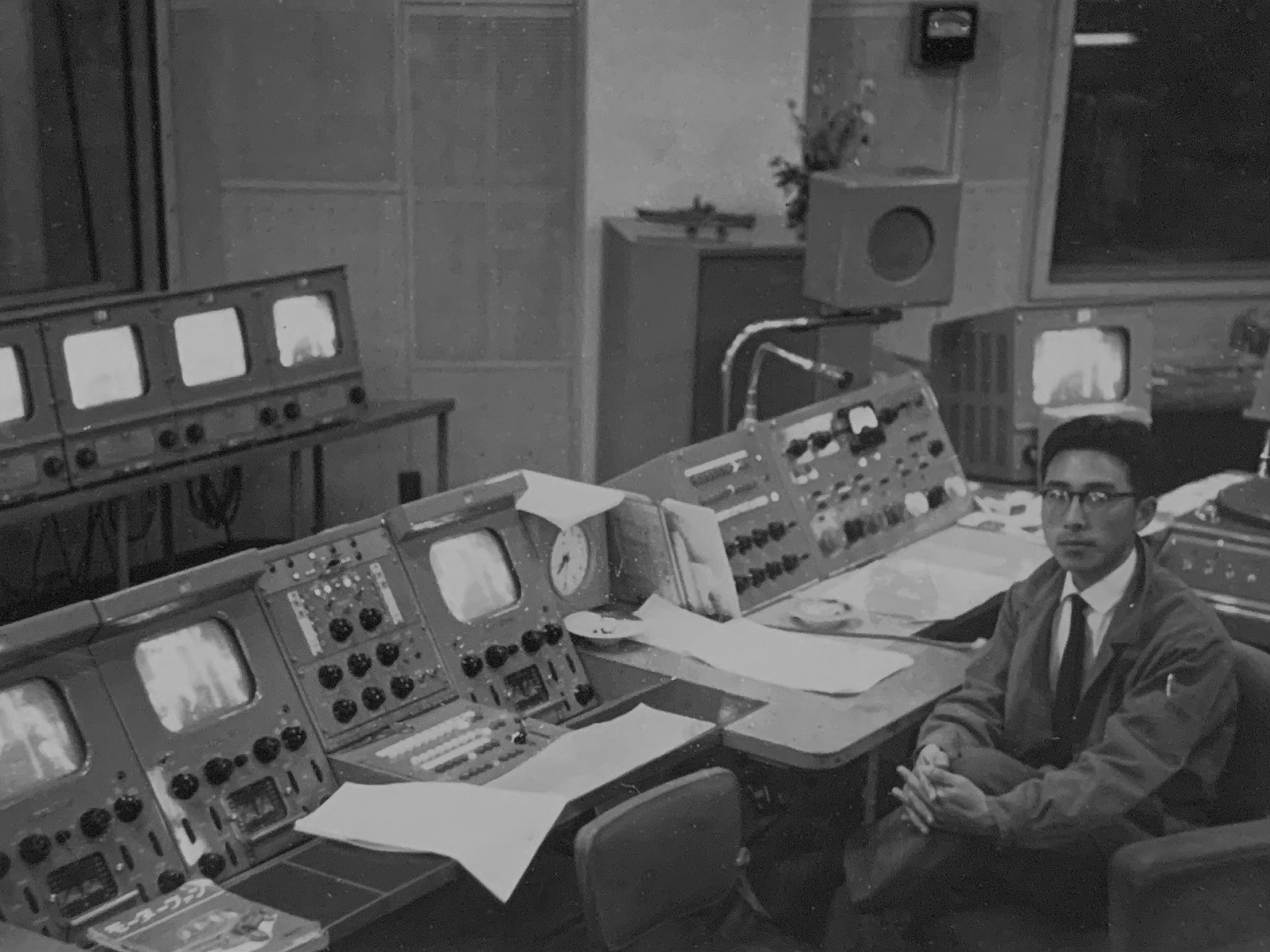
Two groups of people are working in parallel from the first whistle. One group is producing the live broadcast: director, vision mixer, camera operators, replay operators. The other is producing everything that outlives the broadcast: loggers, highlight editors, and whoever is cutting the short vertical clips for social distribution.
The second group depends entirely on the first, because it does not have its own cameras. It has the same feeds, recorded in parallel, plus a log describing what happened and when. That dependency is why the standard camera plan and the logging vocabulary are agreed before the match rather than improvised during it.
The practical result is that a highlight package is assembled subtractively. The material is already there and already marked. The editor’s work is choosing which of it survives, in what order, and how long each piece runs. That is a very different job from building something from raw footage afterwards, and it is far faster.
The live edit, step by step
- Before the match, lock the clock. Cameras and recorders are synchronised so a single timecode reference runs across every source. This is the standard that makes everything downstream possible, and it is the reason the industry has spent decades formalising it through bodies such as the Society of Motion Picture and Television Engineers.
- Agree the shot list and the logging vocabulary. Which keywords get typed for a goal, a save, a booking, a substitution, an injury, a crowd reaction. Consistency here is worth more than speed.
- Record everything from kickoff. The program feed plus isolated recordings of the cameras that matter, so a camera the director never cut to is still recoverable.
- Log continuously during play. Keyword plus timecode, typed as it happens, including things that will probably not be used.
- Mark clips on the replay servers. Operators riding specific cameras set in and out points as incidents occur, building a bin of trimmed material during the match itself.
- Start the assembly around the half hour. The first version of the playlist exists long before the second half, and it gets rebuilt every time something significant happens.
- Re-order after every goal. A late goal changes not only what is included but which moment opens the package, so the running order is provisional until the whistle.
- Lay the audio. Choose between commentary and a music bed, set the crowd level, and decide where the natural sound of an incident is allowed to carry the moment on its own.
- Fill the reserved end slots. Final whistle, player reaction, bench or dugout, and a wide of the crowd. These are the shots that only exist after the match ends.
- Check levels and deliver. Loudness is normalised to the delivery specification, the package is rendered, and the shorter cuts for other platforms follow immediately from the same playlist.
Logging is the step that decides everything downstream
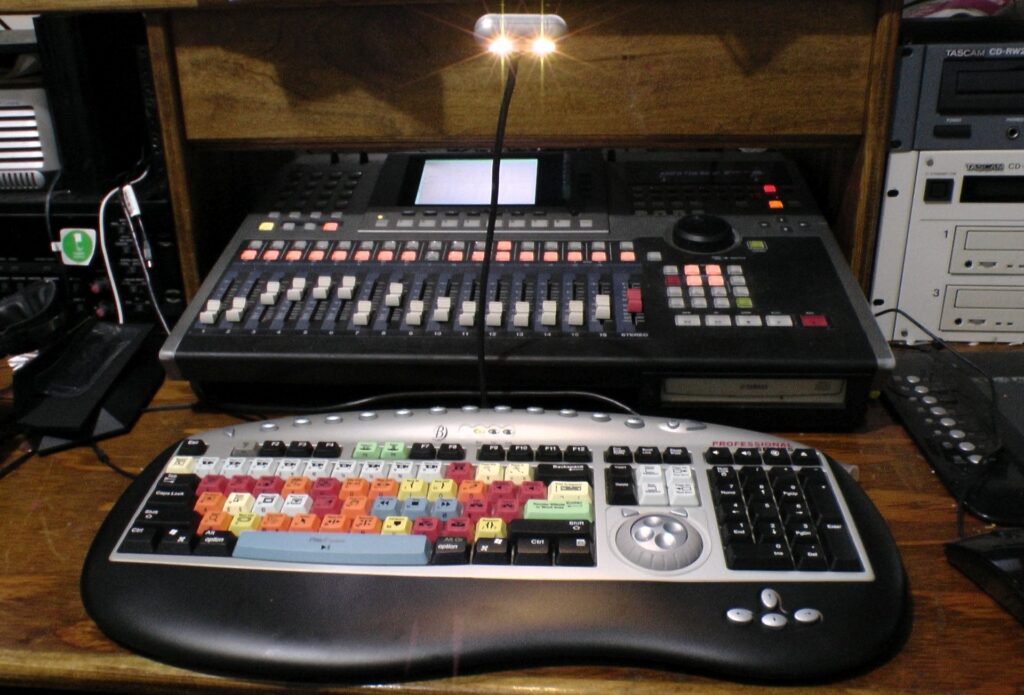
A logger types a short description and a timecode while play continues. It looks like the least glamorous job in the truck and it is the one that determines whether the edit takes eight minutes or forty.
The reason is that video is not searchable. A server holding several hours of match footage has no idea what is in it. The searchable object is the log, so an incident that was never logged is functionally lost even though the pictures are sitting on a drive a metre away.
Good logging is also specific in a particular way. Goal is nearly useless as a keyword by itself. Goal, header, near post, assist from the left, keeper beaten low is a line somebody can act on hours later without watching anything. The discipline is to write for the person who was not there.
The angles are chosen before the goal happens
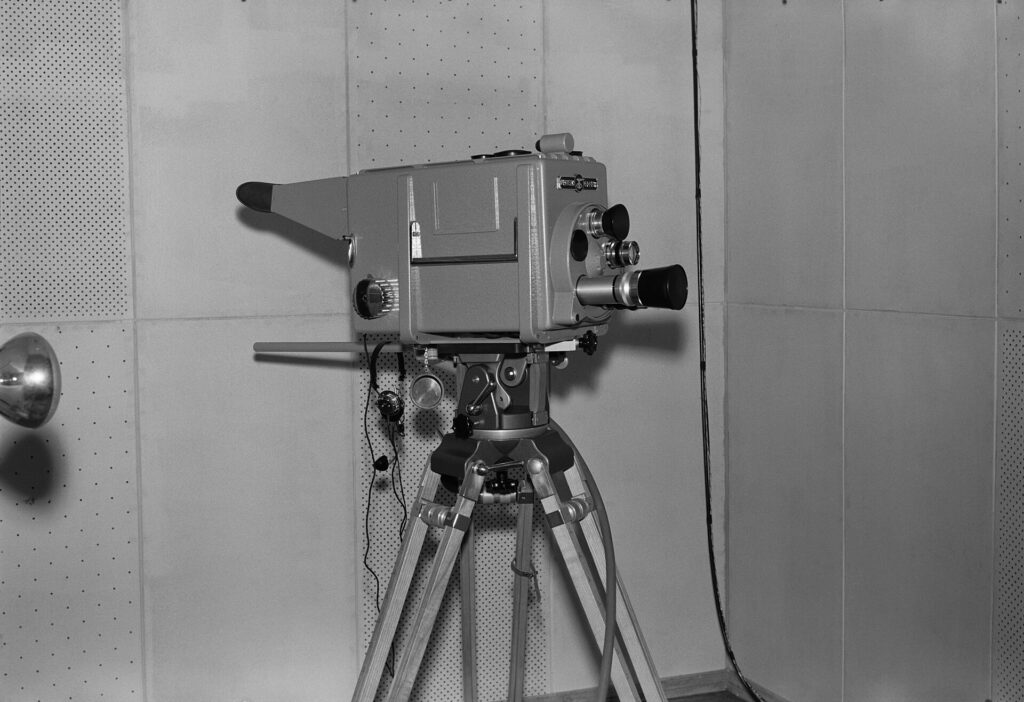
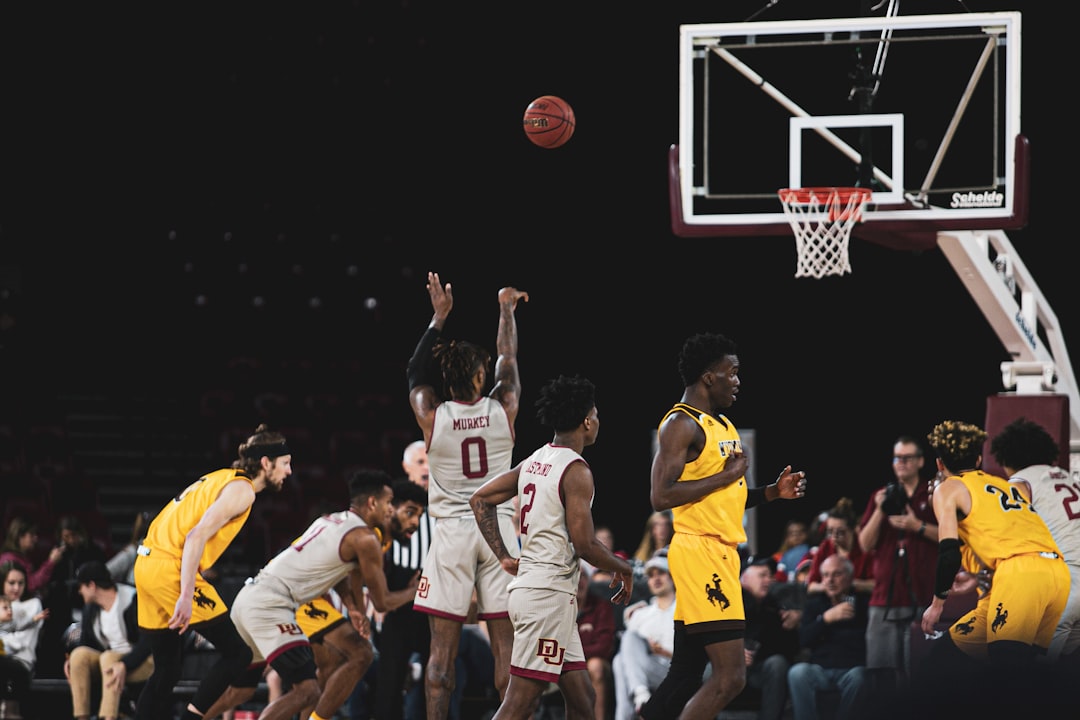
A football broadcast has a main high wide camera on the halfway line, a tighter follow camera beside it, cameras level with each penalty area, a reverse angle from the opposite side, low positions behind each goal and handhelds working the touchlines. A basketball plan is built on the same principle with different geometry: a high wide, low corners, baseline handhelds and specialist rim positions.
Each of those positions answers a different question. The high wide shows shape, spacing and off-ball movement. The tight follow shows technique and face. The goal-line position settles whether the ball crossed. The reverse angle exists because the main side cannot see what a body is hiding.
Replay operators are assigned to those cameras individually, which is why a replay can be cut within seconds. It also explains a familiar viewing experience: the same incident looking like two different events from two positions. Neither angle is lying. Each one is answering the question its position can answer, and a package that shows only one of them has quietly made an argument.
The audio bed is a decision, not a default
Match audio arrives in layers. Effects microphones at pitch level pick up contact, boots and the ball. Crowd microphones in the stands carry the room. Commentary sits on its own track, and in many workflows so does the referee communication, which is treated separately for obvious reasons.
The editor chooses how those layers combine. A commentary-led package inherits the commentator’s emphasis, which is efficient and also means somebody else has already decided what mattered. A package on crowd and effects alone lets the images argue for themselves and needs stronger cutting to work. A music bed is the third option and the one most likely to age badly.
Levels are not left to taste either. Broadcast delivery works to loudness specifications rather than peak levels, which is why a package handed to a European broadcaster and the same package handed to a North American one are measured against different reference targets. The measurement exists so that a highlight reel does not arrive noticeably louder than the programme around it.
Ninety seconds after the whistle
The end of the package is written before the end of the match, as a set of empty slots. Final whistle from a wide position. Players reacting on the pitch. The bench or the dugout. A crowd shot that matches the result. Occasionally a handshake or a substituted player watching from the touchline.
Those slots get filled in the minute or so after the whistle, and the reason they can be filled that fast is that the cameras covering them were told in advance which reaction to hold on. The director is calling reaction shots while the editor is dropping them into positions that already exist in the timeline.
Then the file renders, and the derivative cuts follow. Rights agreements normally govern how long a near-live clip may run and how soon it may appear, so the short versions are cut to a length somebody has already agreed rather than to whatever felt right. Those constraints shape how quickly fans see anything at all far more than the speed of the edit does.
Why the order is never chronological
The single most common misreading of a highlight package is that it is a compressed match. It is not. It is a sequence built to hold attention, and holding attention has a shape that chronology does not provide.
Most packages open on their strongest available beat rather than the first goal, because the opening seconds decide whether anything after them is watched. From there the material is grouped by kind rather than by minute: the goals together, the saves together, the incidents together, with wider context shots used to change the rhythm between groups.
The closing beat is chosen for finality, which usually means the whistle, the reaction or the trophy shot rather than the last thing that happened. Once you know the running order is an argument, a highlight reel becomes considerably more interesting to watch, because you can see which story the edit decided to tell.
One match, four deliverables
| Deliverable | Typical length | Frame shape | Audio | Built from |
|---|---|---|---|---|
| Broadcast package | Several minutes | Widescreen | Commentary plus crowd | The full playlist |
| Near-live clip | Seconds | Widescreen or square | Effects and crowd | A single marked incident |
| Vertical social cut | Under a minute | Tall | Effects, often with captions | Recropped from the same clips |
| Archive master | Full match | Widescreen | Clean feed plus separate tracks | Continuous recording and the log |
The vertical cut is the one that changes the craft, because a tall frame cannot contain a wide tactical shot. Editors either recrop and follow the ball inside the frame, losing the spacing that made the move readable, or they select only incidents that survive the crop. Both choices bias highlight reels toward close action and away from structure, which is a quiet loss for anyone watching to understand the game rather than the moment.
Where it goes wrong
Three failures account for most bad packages. The first is thin logging, usually caused by a logger who fell behind during a busy spell and never caught up. The gap always shows in the same place: an incident everybody remembers that somehow is not in the reel.
The second is late re-ordering. A goal in the closing minutes forces a rebuild, and rebuilds under deadline produce packages where the opening beat no longer matches the story the ending tells. The symptom is a reel that peaks in its first twenty seconds and then descends.
The third is audio drift. Crowd level set during a quiet first half becomes wrong for a loud finish, and nobody has time to rebalance. It is the least discussed of the three and the one viewers feel most, because a mismatched crowd bed makes a real moment feel staged.
What the archive keeps and what it loses
The archive copy is not the broadcast. It is normally the clean feed without graphics, plus the isolated camera recordings that were kept, plus the separate audio tracks and the log. That combination is what allows a match to be recut years later for a documentary or a retrospective.
What disappears is everything that was never isolated. Cameras recorded only through the program feed survive as whatever the director happened to cut to, which means the reverse angle nobody used is gone. So is the talkback, so is the multiview, and so, often, is the original log if it lived in a system nobody migrated.
That is why preservation work in sport is mostly cataloguing rather than restoration. Tapes and files survive far more reliably than the descriptions of what is on them, and the same trend toward richer capture that drives new production technology also produces vastly more unlabelled material than any archive can index by hand.
Frequently Asked Questions
How long does a match package actually take to finish?
The assembly runs across the whole match, so the work after the whistle is usually a few minutes: fill the reserved reaction slots, check the audio, render and deliver. What varies is the rebuild time when a late incident changes the running order, and that is where deadlines get missed.
Why do the same replays get shown from a different angle each time?
Because each camera answers a different question and no single position answers all of them. The first replay usually comes from whichever operator marked it fastest, and later ones add the angle that settles the argument. When one angle is shown repeatedly and another is not, that is a choice worth noticing.
Is the crowd noise in a highlight reel real?
In a properly made package it comes from microphones in that stadium during that match, usually a blend of stand and pitch-level sources. What is constructed is the balance, not the sound itself, and moving crowd audio from one moment to another is treated as a serious breach rather than a stylistic choice.
Why are some incidents missing from the official reel?
Usually logging or rights, rarely conspiracy. An incident that was not marked during play is expensive to find afterwards, and clip length and timing are often set by agreement rather than by the editor. Injuries and crowd disturbances are also commonly excluded by policy.
Does anybody still cut highlights the old way, after the match?
Yes, for longer-form work: season reviews, documentaries and features drawn from material gathered around the event rather than during play. That work depends completely on the log, which is the quiet argument for treating logging as a craft rather than as data entry.
Watch the next package you see with the running order in mind. Note which moment opens it, which one closes it, and where the crowd comes up under the pictures. Those three choices tell you what the edit thought the match was about.