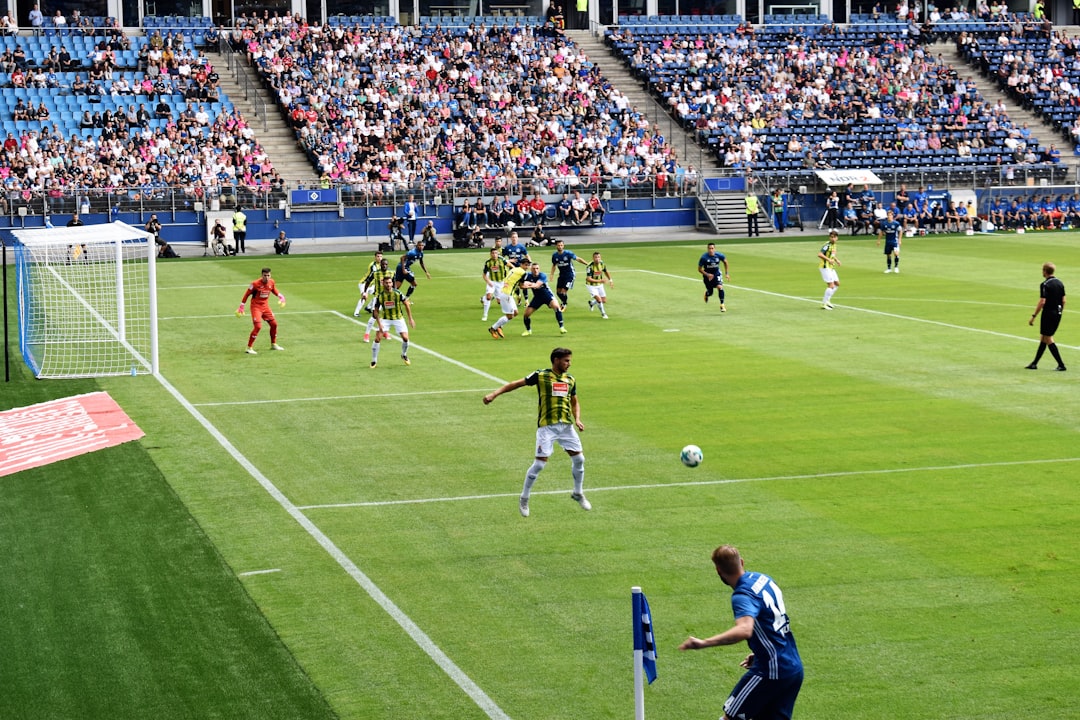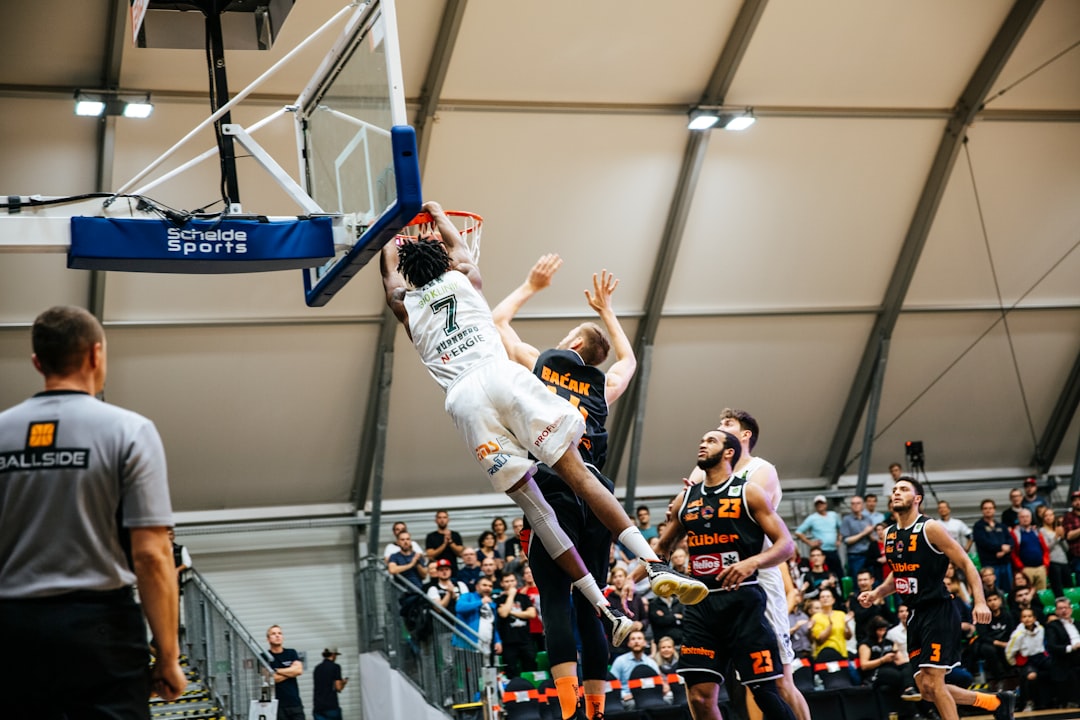
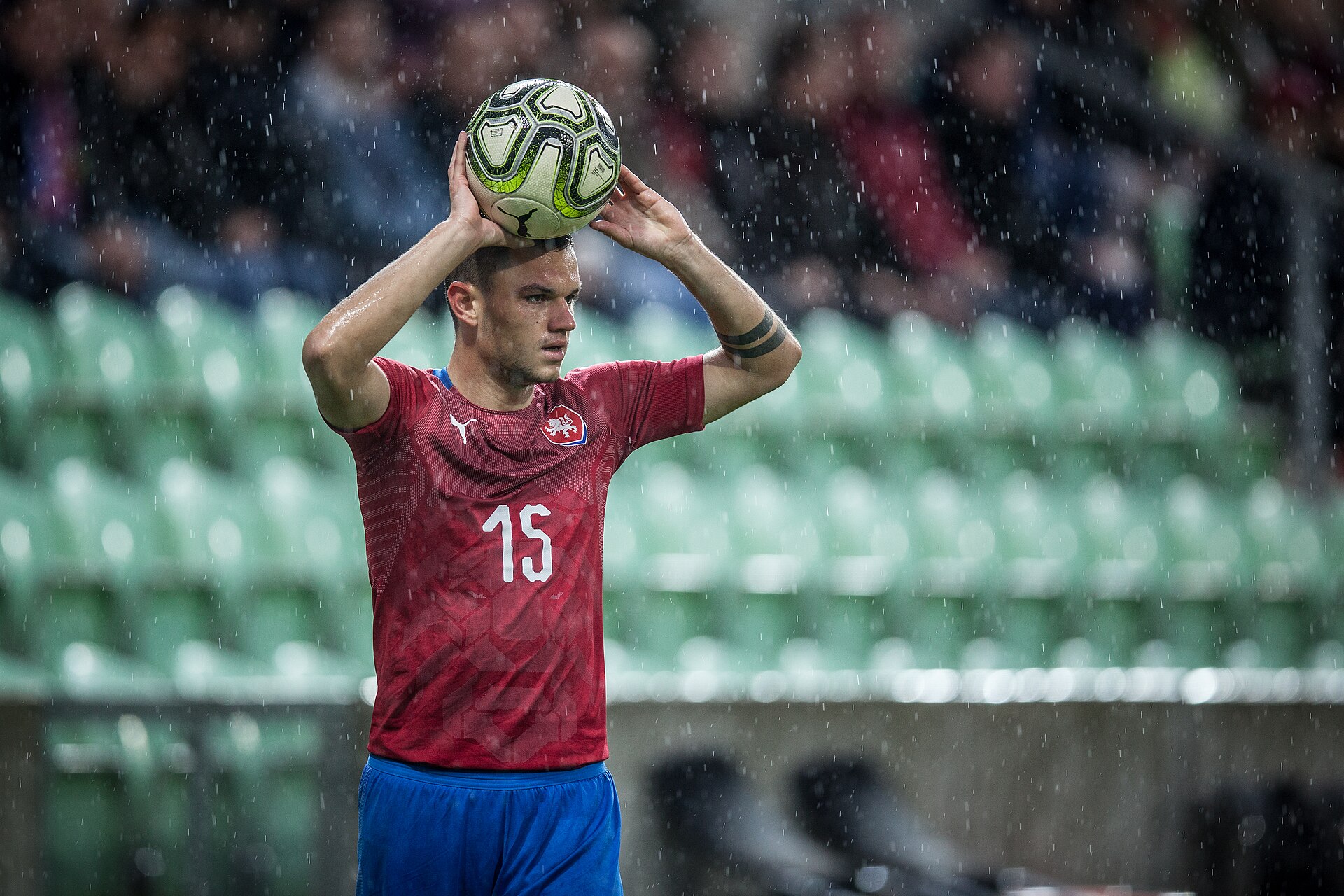
A scout asked for footage will almost always ask for the full match rather than the reel, and the request confuses the families who send it. The reel is the good bit. It has been cut carefully, it shows every successful moment from a season, and it took a fortnight to assemble.
That is exactly the problem. A highlight reel is a record of what happened when the player had the ball and it worked, which is between one and three minutes of a career. The other eighty-nine minutes of a match contain the information a recruiter is being paid to find, and none of it survives the edit.
What follows is what an experienced viewer is actually looking at during those eighty-nine minutes, what each of those behaviours looks like inside a short clip, and how to build a reel that does not get discarded in the first twenty seconds.
Four things a scout is looking for
- Scanning. How often the head turns before the ball arrives, and whether it turns at the right moments.
- Body orientation. Whether the player receives open to the pitch or closed towards the passer.
- Recovery. The first three steps after losing the ball, and the line taken back.
- Reaction to a turnover. Behaviour in the four seconds after possession changes, in both directions.
- The common feature. None of them involve the ball, and none of them appear in a highlight package.
- The consequence. A full-match file is worth more than any edit, which is why it is always requested.
Why a highlight reel is the least useful scouting document
Three structural problems make a reel weak evidence, and they are properties of the format rather than faults of the editor.
The first is selection. Every clip in a reel was chosen because it ended well, which removes any information about frequency. A player who produced eight excellent passes in a season and a player who produced eight a match generate identical reels, and the difference between them is the entire question.
The second is framing. Clips are cut tight around the action, so the viewer cannot see what else was available, where the opposition were, or whether the pass that looks visionary was the only option. The third is duration: a clip that starts at the touch removes the two seconds before it, which is where the decision was actually made. That is why the request is always for the full file, and why the tools that make full matches easy to share changed recruitment more than any analytics product did.
How scouts watch film, minute by minute
The first pass is not about the player at all. It is about the team, the level and the conditions: what system is being played, how good the opposition looks, whether the pitch and the standard make anything transferable.
The second pass follows the player continuously for two or three ten-minute blocks, ignoring the ball entirely. This is the pass that produces the judgement, and it is the one nobody outside the profession expects. The viewer is watching a player who is, for most of that time, doing nothing that would appear in a report.
The third pass is targeted. Having formed a question in the second pass, the viewer goes looking for repetitions of one specific situation: every time the player received under pressure, every defensive transition, every ball played into the channel behind him. Consistency across ten repetitions is worth more than brilliance in one, and the third pass exists to count.
Scanning: what the head does before the ball arrives
Scanning is the first thing looked for and the easiest to see once you know to look. In the two or three seconds before receiving a pass, a good player’s head turns repeatedly, gathering the picture behind and beside him so that the decision is made before the ball arrives rather than after.
What the viewer is judging is not the count but the timing. Head turns while the ball is travelling towards a team-mate are useful. Head turns after the pass has been played to him are too late to change anything. A player who scans four times in an approach and then still takes a touch to look around has gathered information and not used it.
This behaviour is heavily coachable and it is also one of the strongest available indicators of how a player will cope at a higher level, where the time between receiving and being pressed shrinks. It is invisible in a highlight clip, because a highlight clip starts at the moment of the touch.
Body orientation, and the half-turn
The second habit is where the body faces at the moment of receiving. A player square to the passer can only play backwards or sideways. A player half-turned, with the back foot open and the hips angled towards the opposition goal, can do everything the square player can do and also everything in front of him.
Scouts watch which foot receives the ball and where the far shoulder is pointing. Receiving on the back foot, with the body already opened, is the single most repeated coaching point at development level, and the reason is that it converts a two-touch situation into a one-touch one under pressure.
It also has a defensive equivalent that is watched just as closely. A defender who arrives to press with his hips square is beatable on either side; one who arrives angled has removed half the pitch before the contest starts. Both of these are visible in five seconds of footage and neither is visible in a highlight of the same five seconds.
The recovery run, and the first three steps
Losing the ball is a routine event and the interesting part is what happens immediately afterwards. The viewer is timing the reaction: how long between the loss and the first movement back, and what line that movement takes.
Two seconds of hesitation is visible from any angle and it is a habit rather than a fitness issue. Players who react instantly after a loss tend to do it every time; players who watch the ball for a beat tend to do that every time as well. Consistency is what makes it a scouting observation rather than an anecdote.
The line taken matters as much as the speed. A recovering player who runs directly at the ball is easy to play around. One who runs to a covering position between the ball and his own goal, arriving in a place that helps a team-mate, has been taught something and has absorbed it. The distinction is one of the clearest separators between levels, and it is the kind of thing development programmes spend years installing.
Reaction to a turnover, in both directions
The four seconds after any change of possession are the densest scouting information available, and they are watched in both directions.
When his team wins the ball, does the player move immediately, and does he move to receive or to create space for someone else? Both are valuable and they look completely different: one is a sprint towards the ball, the other is a sprint away from it. Players who only ever do the first are easy to defend at higher levels.
When his team loses it, does he press the carrier, cover the pass, or stop? The choice is less important than whether the choice is being made. A player who does the same thing every time regardless of the situation is following an instruction; a player whose response varies with the position of the ball is reading. Reading is what is being bought.
What each of these looks like in fifteen seconds
| Behaviour | Where in the clip it appears | Positive sign | Warning sign |
|---|---|---|---|
| Scanning | Seconds 1 to 3, before the ball arrives | Two or more head turns while the ball travels | First look after the first touch |
| Body orientation | The half-second of the touch | Back foot receiving, hips open to the field | Square to the passer, forced backwards |
| Recovery | Seconds 8 to 12, after a loss | Movement within a step, on a covering line | A beat of hesitation, then a run at the ball |
| Reaction to a turnover | The four seconds after possession changes | Immediate movement, varying with the situation | Identical response every time, or none |
| Off-ball positioning | All of it, including the parts with no action | Distances adjusted as the ball moves | Standing still while the picture changes |
Every row in that table can be checked on a wide, unedited fifteen-second clip. None of them survives a cut that begins at the moment of the touch.
The full-match file, and why they ask for it
The full match answers the question a reel cannot: how often. Frequency is the whole of the judgement in most positions, and frequency is a property of ninety minutes rather than of three.
It also supplies the negative evidence. A recruiter wants to see the passes that were not attempted, the runs that were not made, and the moments where a player was available and was not used. All of that is information about the player, and all of it is edited out by definition.
Finally, a full file establishes context: the standard of opposition, the state of the match, the quality of the surface, and whether a good passage happened against a side that had already conceded four. A clip strips all of it away, and a clip without context is an assertion rather than evidence. The economics of who watches what, and how much travel a recruitment department can afford, sit alongside the broader business of recruitment.
What the camera makes impossible to see
Honest viewers are explicit about the limits, and there are three that no amount of footage removes.
The first is communication. A player organising a line, calling a press or talking a team-mate into position is doing something valuable and inaudible, and it is one of the reasons live viewing has never been fully replaced by video. The second is the tightly framed shot: on a follow-cam feed, everything off the ball is off the screen, which makes most of the behaviours above unverifiable.
The third is physical detail that a wide shot flattens. Real speed over five metres, the strength of a first contact in a duel, the quality of a landing: these are judged badly from a distant fixed camera and are among the main reasons somebody eventually travels to watch in person.
Building a reel that survives a scout’s viewing
None of this makes reels useless. It makes them an introduction rather than a document, and building one accordingly changes what goes in it.
Use wide framing and start every clip five seconds early, so the viewer can see the picture the decision was made in. Include the moments that are not conclusive: a run that was not found, a recovery that saved a situation, a receiving position that made a simple pass possible. These are the clips that convince, because they show behaviours rather than outcomes.
Then attach the full match. A short reel that ends with a link to an unedited fixture, clearly labelled with date, opponent and the player’s shirt number, does exactly what a reel should: it earns fifteen more minutes of somebody’s time. Where a governing body such as the NCAA sets rules on contact and timing, check them before sending anything at all. Building that habit early also gives a player a record that follows them through their development rather than a folder of disconnected clips.
Frequently Asked Questions
Do scouts really ignore highlight reels?
They use them as a filter rather than as evidence. A reel decides whether a full match gets watched, which makes it worth building well, but no serious recruitment decision is made from one. Treating it as an introduction rather than a case is the correct framing.
How long does a full match take to assess?
Less than the running time, because the first pass can be run at speed and the third is targeted at specific situations. An experienced viewer generally forms a working judgement in twenty to thirty minutes of concentrated watching and spends the rest of the time testing it.
Can any of this be measured automatically?
Some of it. Positional data captures distances, speeds and space occupied well. Scanning frequency has been studied using head-mounted and camera-based methods, but it is not a routine output of a standard tracking feed, and orientation at the moment of receiving remains largely a judgement made by eye.
What should a player film if they cannot get a full match?
A full half from a fixed wide position is far more useful than a full match from a follow-cam, and much more useful than a reel. If nothing else is available, twenty minutes of continuous wide footage answers most of the questions a recruiter has.
Does this apply outside team sports?
The principle does. In individual sports the equivalent behaviours are preparation, recovery between efforts and response to an error, all of which are edited out of a highlight in exactly the same way and for the same reason.
Send the reel to get the meeting and the full match to survive it. Everything a recruiter is trained to notice happens while the player is doing something the edit was designed to remove.