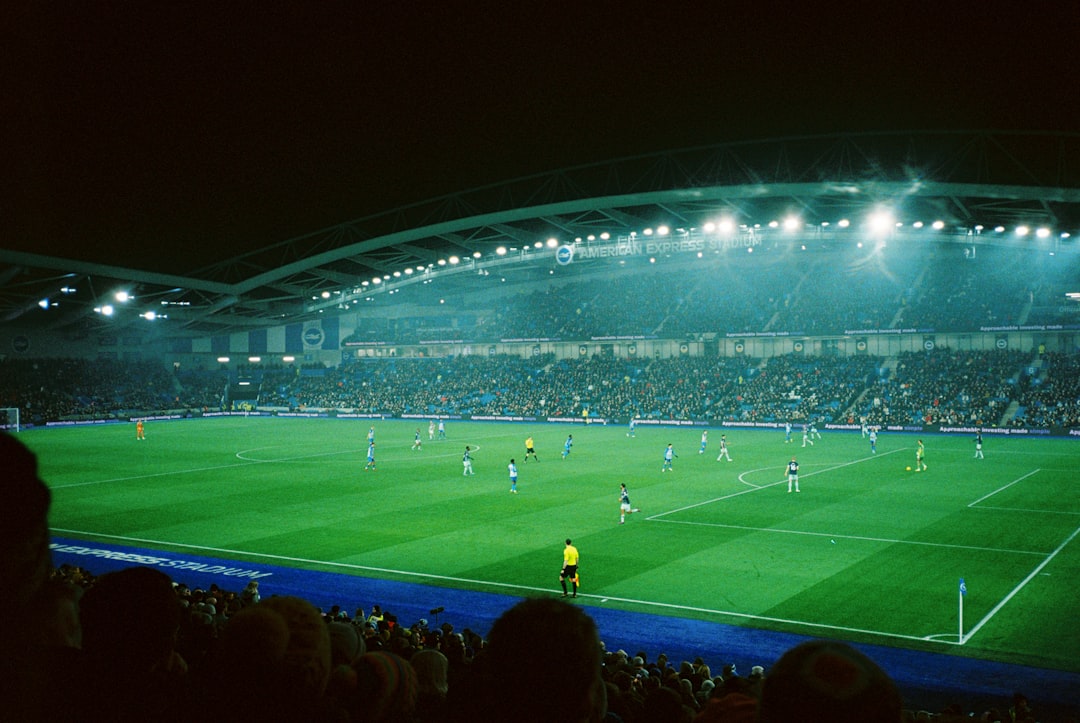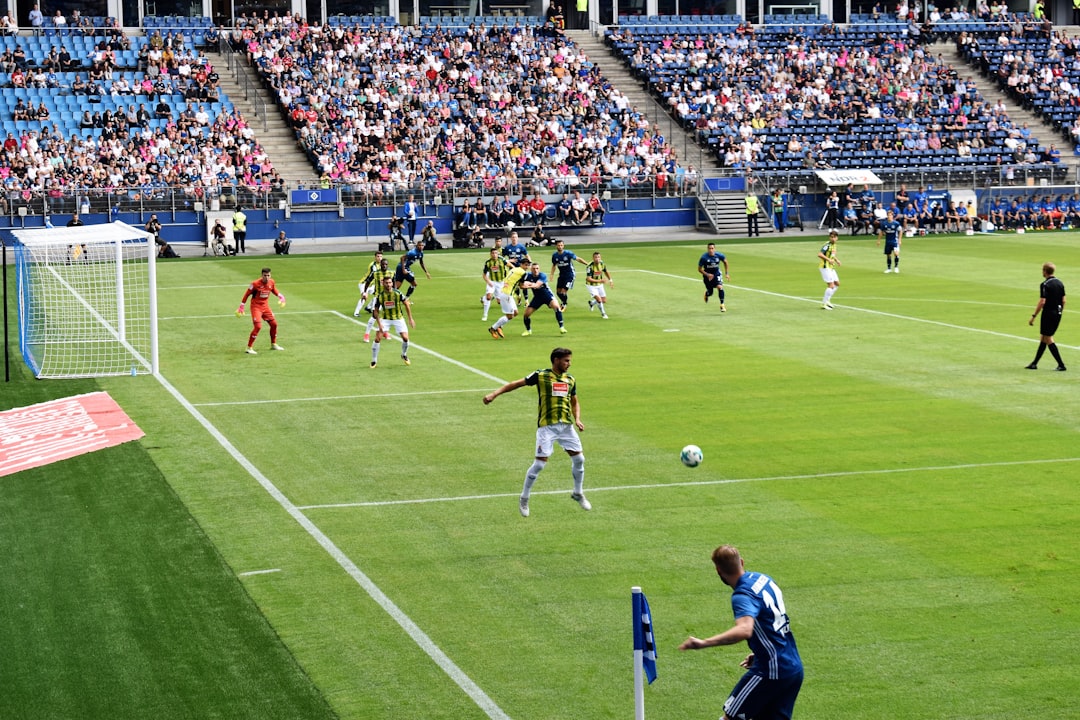

The same footage, reviewed under four different rulebooks, produces four different outcomes. A marginal contact in the penalty area stands in one sport and is overturned in another, not because the cameras differ but because the sentence describing when an official may intervene differs.
That sentence is the threshold, and it is the least discussed part of any review system. Arguments about technology almost always turn out, on inspection, to be arguments about a threshold: how wrong the original decision has to be before somebody is allowed to change it, and who gets to decide that it was.
Four systems are compared below on the same three questions. What triggers a review, how wrong the call must be to be reversed, and who holds final authority. The answers explain most of the controversy that gets blamed on the equipment.
Four systems, four thresholds
- Football. Clear and obvious error, four categories only, on-field referee decides.
- American football. Clear and obvious visual evidence to overturn, coach or booth initiated, replay official involved.
- Ice hockey. Narrow list of reviewable situations, coach’s challenge, a central review office involved in goal decisions.
- Cricket. Player-initiated reviews, a third umpire, and a published margin where the original decision stands.
- The common feature. All four presume the original call is correct and require evidence to move it.
- The disagreement. How much evidence, and how much of the judgement can be re-made.
What a threshold is, and why it is not a camera setting
Every review system rests on a presumption in favour of the original decision. The official on the field made a call in real time, and the review exists to correct serious mistakes rather than to make the decision again from scratch.
The threshold is the amount of evidence required to displace that presumption. Set it low and every close call gets remade in a booth, which is slow and moves authority away from the field. Set it high and obvious errors survive, which is what review systems were introduced to prevent. Every sport has chosen a point on that line, and every sport is criticised for having chosen wrongly.
Crucially, the threshold interacts with the kind of decision being reviewed. A factual question has a right answer: the ball crossed the line or it did not. A judgement question does not: whether a challenge was reckless is an opinion formed by a trained official. Applying a high threshold to a factual question is incoherent, and applying a low one to a judgement question effectively replaces the referee. Most systems try to do both and the seams show.
Four video review thresholds side by side
| Sport | What can be reviewed | Threshold to overturn | Final authority |
|---|---|---|---|
| Football | Goals, penalty decisions, direct red cards, mistaken identity | Clear and obvious error, except on factual matters | The on-field referee |
| American football | A defined list, by challenge or automatic booth review | Clear and obvious visual evidence | The replay official and the league’s replay operation |
| Ice hockey | Goal legitimacy, offside, goaltender interference, by challenge | Conclusive evidence, with the call standing if inconclusive | Officials in consultation with a central review office |
| Cricket | Dismissals, by player review, plus umpire referrals | Conclusive evidence, with a published margin for marginal cases | The third umpire, with the on-field decision retained if marginal |
The second column is why the systems feel so different to watch. A sport that reviews four categories interrupts itself rarely and leaves many errors uncorrected. A sport that reviews a long list corrects more and stops more often.
Football: clear and obvious, and four categories only

Football’s system is deliberately narrow. Only four match-changing situations may be checked, and within them the video official is instructed to recommend a review only for a clear and obvious error or a serious missed incident.
The split between factual and judgement matters is where most misunderstanding lives. Offside and whether the ball left the field are factual: there is a correct answer and the threshold does not apply in the same way, which is why a striker can be given offside by a margin invisible to the naked eye. Whether a challenge was a foul is a judgement, and there the original decision is supposed to stand unless it was plainly wrong.
Final authority remains with the referee on the pitch, who may view the footage at the side of the field before deciding. That design choice is deliberate and it is also the source of the most common complaint: two referees can look at the same images and reach different conclusions without either of them having broken any rule. The wording that governs all of it is published by the board that maintains the laws and is shorter than most people expect.
American football: indisputable evidence, and who challenges
The American system is older and its threshold is stricter in wording. A call is only reversed when the video provides clear and obvious visual evidence that it was wrong; anything ambiguous leaves the ruling on the field intact.
Initiation is the structural difference. For much of a game, review is a resource held by coaches: a challenge is thrown, and a coach who is wrong loses a timeout. That converts officiating into a strategic decision, since a coach must judge not only whether the call was wrong but whether the video is likely to be conclusive enough to reverse it, and whether the timeout is worth more later.
Late in a game and on certain categories of play, the challenge system is replaced by automatic review initiated from the booth, which removes the strategic element exactly when it would matter most. The result is a system that is stricter than football’s on paper and interrupts far more often in practice, because the list of reviewable plays is much longer.
Ice hockey: a short list and a central office
Hockey narrows the question in a different way. Rather than a broad standard applied to many situations, it defines a small number of reviewable situations very precisely, most of them concerning whether a goal should count.
Two features shape how it feels. Coaches may challenge a limited set of situations, notably offside in the build-up and interference with the goaltender, and an unsuccessful challenge carries a penalty rather than merely the loss of a timeout. That price is deliberate: it discourages speculative challenges in a sport where stoppages are already frequent.
The second is centralisation. Goal decisions are reviewed with the involvement of a central office watching every game, which produces more consistency across a league than a purely local review can. It also relocates the decision away from the arena, and the trade between consistency and local authority is the same one every centralised system makes. International competition operates its own variants of the same idea, with a different list of reviewable situations again.
Cricket: umpire’s call, and a threshold made visible
Cricket has done something no other major sport has: it publishes the margin. In reviews of leg-before decisions, ball-tracking output is assessed against a defined tolerance, and if the projected contact with the stumps falls within that margin, the on-field umpire’s original decision stands whichever way it went.
This is the threshold made explicit and visible on screen, and it produces the strange and instructive situation in which two identical images yield opposite outcomes depending on what the umpire originally said. Supporters find that infuriating, and it is the most honest representation of how every review system actually works.
The other distinctive feature is that reviews belong to the players. Each side has a limited number, unsuccessful reviews are lost, and a review that ends in the marginal band is generally retained. That converts the decision to review into a tactical resource, much as a challenge does in the American game, with the added subtlety that a captain must judge the confidence of a bowler who has just appealed. The mechanics are documented in detail under the review system’s own name.
Who holds final authority, and why it matters
The four systems place the final decision in four different places, and this is the structural choice with the largest consequences.
Football keeps it with the on-field referee, preserving his authority at the cost of consistency between officials. The American game gives it to a replay official operating within a league-wide operation, which is more consistent and makes the man in the middle less central. Hockey blends the two. Cricket hands factual dismissals to a third umpire while protecting the original decision in the marginal band.
Each choice produces its characteristic complaint. Where authority stays on the field, people complain about inconsistency between officials. Where it moves to a booth, people complain that the referee has been reduced to a functionary. There is no arrangement that avoids both, and a fair criticism of any system has to say which trade it prefers rather than pretending one exists without cost.
Why the threshold, not the technology, drives the argument
Camera and tracking technology has improved to the point where the underlying facts are rarely in dispute. What remains disputed is what to do about a fact once you have it, and that is entirely a matter of the standard being applied.
This explains why introducing better equipment reliably fails to reduce controversy. A more accurate offside line makes the measurement better and does nothing about the question of whether a two-centimetre advantage should disallow a goal. Improved camera coverage of a penalty area produces clearer images of a contact and does not settle whether that contact was a foul.
It also explains why the same league can change nothing technical and produce a completely different season of complaints simply by instructing officials to intervene more or less often. The threshold is a policy setting, it is adjusted between seasons, and it is almost never reported as the change it is. That gap between what changed and what gets discussed is a familiar feature of the arguments that dominate a season.
What a fair complaint about a review looks like
Most complaints after a disputed review are aimed at whoever is nearest: the official on the field, the person in the booth, or the technology on the screen. Very few of them identify the part of the system that produced the result, which is why the same argument recurs unchanged every season.
A useful objection identifies which part of the system produced the outcome. There are only a few possibilities and separating them raises the quality of the argument considerably.
The decision may have fallen outside the reviewable categories, in which case the complaint is about scope rather than about the officials. The evidence may have been inconclusive under a standard that requires conclusiveness, in which case the complaint is about the threshold. The images may have been conclusive and ignored, which is the only version that is a failure of the people involved. Or the decision may have been a judgement call within the range where the original stands, which is not an error at all.
Sorting a disputed call into one of those four before complaining changes what you are asking for. Three of them are requests to rewrite a rule, and only one is a criticism of an official. Most matchday anger is aimed at the fourth when it belongs to one of the first three, and the resulting clips do the rounds regardless of what the rulebook actually said.
Frequently Asked Questions
Why is offside decided to the centimetre when fouls are not?
Because offside is a factual question with a correct answer, while a foul is a judgement. Review systems apply a high threshold to judgement calls precisely to avoid remaking them, and apply no such threshold to facts, which is why the two feel inconsistent while following the same logic.
Does a stricter threshold mean fewer reversals?
Generally yes, and that is the intended effect. A high threshold protects the original decision and accepts that some errors survive; a low one corrects more errors and moves authority away from the field. Neither is free, and the choice is a policy preference rather than a technical one.
Why does the same incident get different outcomes in different competitions?
Because the reviewable categories, the threshold and the final authority all vary between competitions, sometimes within the same sport. A decision protocol adopted in one league may not be in use in another, and the images being identical does not make the rules identical.
Is a challenge system fairer than an automatic one?
It is different rather than fairer. Challenge systems ration reviews and add a strategic layer, which means some correct challenges are never made because a coach has run out. Automatic systems review more consistently and interrupt play more often. Several sports use both, at different points of a game.
Could a sport publish its margin the way cricket does?
Technically yes, and it would make the threshold visible in the same instructive way. The resistance is that a published margin invites arguments about the margin itself, whereas an unpublished standard absorbs the same disagreement into a vaguer phrase that is harder to attack.
Before arguing about a review, find the sentence that says when an official may intervene. Almost every dispute that looks like a failure of technology is a disagreement about that one line.