
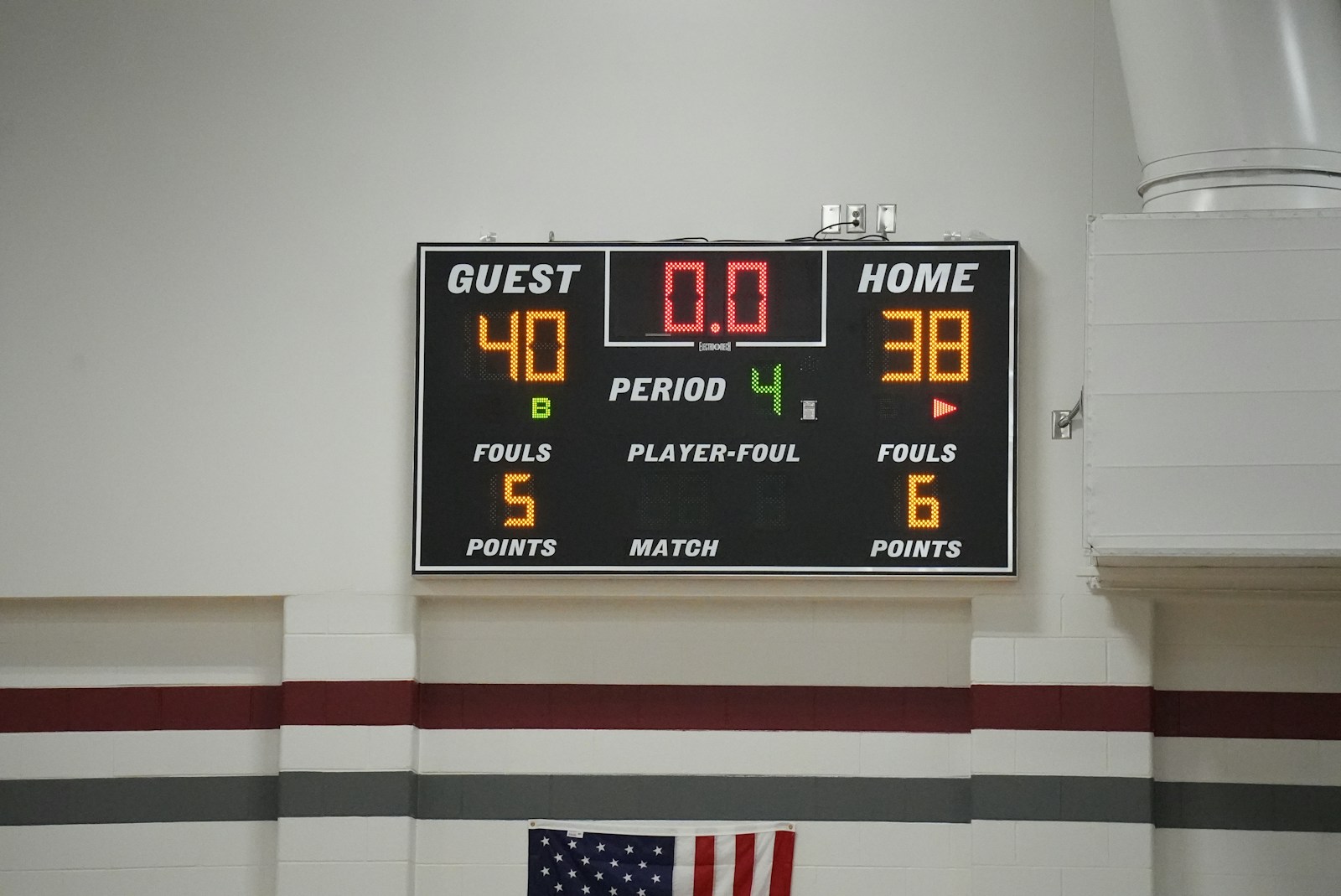
The Miami Heat closed out the Atlanta Hawks in overtime on a Friday night in April to become the first 10-seed in NBA history to advance from the Play-In Tournament to the playoffs proper. The final was 123-114. The Heat had been outscored, outrebounded, and outshot by Atlanta across the regular season meeting between the two teams. They had finished 37-45 against a Hawks team that finished 40-42. By every season-long indicator the Play-In format was designed to reward, the wrong team had advanced. By every aspect of how Play-In games actually unfold, Miami had been the favorite from the moment they survived their first elimination game two nights earlier.
That contradiction is the format. The NBA’s Play-In Tournament was sold to the public as a way to extend competitive basketball into the second half of April for teams that had narrowly missed the playoffs. What it has actually become — across five iterations now — is a selection mechanism that systematically rewards a set of skills the regular season does not measure cleanly. Bench depth. Three-point variance. Closing-lineup chemistry. Hot streaks of three or four games. The team that wins the Play-In is rarely the team the season-long advanced metrics would have picked.
What follows is what the format actually selects for, why the Heat being the first 10-seed to make it through was less surprising than the headlines suggested, and what this tells us about extending the same logic to other parts of the postseason.
What the Play-In is actually testing
The format is structurally short. The 7-vs-8 game is a single elimination game with the winner getting the 7-seed and the loser getting one more chance. The 9-vs-10 game is a single elimination. The winner of the 9-vs-10 game plays the loser of the 7-vs-8 game for the 8-seed. The total number of basketball games separating the worst Play-In team from the playoffs is two. The total number of basketball games separating the best Play-In team from the playoffs is one.
That sample is too short to reward season-long quality. It is plenty long enough to reward streakiness, depth at the back end of the rotation, and the ability to win a high-leverage game on the road. A team with the eighth-best record in a conference and the fifteenth-best season-long impact data can advance from the 10-seed if their last fifteen games trended hot. A team with the seventh-best record and the eighth-best impact data can lose at home in their double-chance game and still get bounced from their second chance because they happened to draw the streakiest underdog.
Miami in 2025 fit the profile exactly. They had been bad through January, mid-pack through February, and very good through March and April. The Hawks had been mid-pack the entire season — more talented across the roster, less streaky, less peaking. The Play-In format weighted the four-week sample over the four-month sample, and the four-week sample favored the Heat.
The 2025 results, with the selection-bias lens
| Conference | Advancing team | Seed | Regular-season record | Last 15 record |
|---|---|---|---|---|
| East | Magic | 7 | 40-42 | 10-5 |
| East | Heat | 10 | 37-45 | 11-4 |
| West | Warriors | 7 | 48-34 | 9-6 |
| West | Grizzlies | 8 | 48-34 | 8-7 |
Three of the four advancing teams had a better record across their last 15 games than across the season. The Heat’s 11-4 close was the most extreme. The two teams the Play-In sent home — Chicago and Sacramento — had been at or below their season average over the same window. The selection bias is not subtle. The format compresses the relevant sample window, and the teams trending up get rewarded for the trend rather than for the underlying season.
This is not necessarily a flaw in the format. The NBA wants the Play-In to feel like late-season basketball matters. It does, structurally — the late-season basketball matters more than the early-season basketball, because of how the format compresses the sample. Whether that is the right way to seed the playoffs is a separate question, and one the players’ association and the league office both have very different answers to.
What the format selects against
The mirror argument matters as much as the selection one. The teams that consistently get bounced from the Play-In share a profile that is almost the inverse of what wins: starter-heavy rotations, low three-point variance, season-long consistency without a closing kick. Across five years, eleven teams have entered the Play-In with regular-season impact metrics in the top half of the league and gone home anyway. The Hawks in 2025 are the textbook case — talented across the starting five, thin off the bench, and unable to manufacture the kind of late-game three-point variance that wins single-elimination games against streakier opponents.
This is not a small subset. Across the five Play-In iterations, the average team eliminated in the 7-8 or 8-10 path has finished with a season-long net rating two full points higher than the team that knocked them out. That is the variance gap the short sample creates. A team with a +1.5 net rating that closes 11-4 over fifteen games beats a team with a +3.5 net rating that closes 8-7. The longer view says the second team is better. The format does not care about the longer view.
There is also a roster-cost dimension that I have not seen written about much. Teams projected to enter the Play-In range have started prioritizing trade-deadline acquisitions of streaky scorers and bench shot-creators over reliable starters. The Mavericks-Pacers trade for Caruso in 2024 was an early version of this. The Bulls swapping out a starter for a high-variance bench guard last summer was another. The market for “Play-In specialist” role player is now a recognized front-office category. It exists because the format selects for it.
Where this gets weird
The clean “Play-In selects for streakiness” framing misses three things that complicate the math.
The first is that Play-In winners have historically lost their first-round playoff matchup at a rate that suggests the format-selection benefit does not travel. Across the five years of Play-In existence, teams that advanced from the 9 or 10 seed have a combined first-round record of 0-13. Streakiness wins in single elimination. It does not win in a seven-game series against the conference’s top seed. The Heat will face Cleveland next, and the model-implied series probability sits south of 8%.
The second is that the 7-vs-8 game produces a different kind of mismatch. The team that wins the 7-vs-8 game is, on average, the team with the better closing lineup, not the team with the better season. The Warriors-Grizzlies game in 2025 was decided by Memphis’s bench struggling and Golden State’s three closers — Curry, Butler, Draymond — producing the kind of late-game lineup data that the regular season had not surfaced cleanly because Curry-Butler-Draymond closing minutes were a March addition, not a season-long staple.
The third complication is that the Play-In has changed mid-season roster construction. Front offices for teams projected to land in the 7-to-10 range have started weighting their trade-deadline acquisitions toward role players who help in single elimination games. That is a real, measurable shift in how mid-tier teams build, and it is downstream of the format. The NBA introduced the Play-In to extend competitive basketball into late April. They also, accidentally, started reshaping how teams between the 12th and 25th win-total bands construct rosters.
What the next two months will test
The Heat advancing as a 10-seed is the cleanest test case the format has produced. They will face Cleveland in the first round. The series itself will likely end in five games, with Cleveland winning. What I am watching, instead of the result, is the underlying lineup data.
- Heat closing-lineup net rating across a four-game sample. If it stays positive against Cleveland’s best closing lineup, the Play-In selection mechanism captured something real about Miami this year. If it collapses, the streakiness was a Play-In artifact and the underlying team is what the season-long record said it was.
- The Magic vs Boston matchup. Orlando’s 7-seed against the top-seeded Celtics is the truest test of whether Play-In winners can punch above their seed line against actual elite competition. Magic-Celtics will tell us more about format-selection translation than Heat-Cavs will.
- Memphis vs OKC. The Grizzlies advancing from the 8-seed gets them OKC, the league’s best team. If Memphis competes to four close games, the closing-lineup theory is the format’s hidden output.
The callback
The Miami Heat as the first 10-seed in NBA history is going to make the back end of the highlight package on every NBA Awards show for the rest of the decade. The team that closed out the Hawks in overtime in mid-April was not, by season-long metrics, the better team. They were, by the metrics the Play-In format actually measures, exactly the team the system was designed to reward. The question the next month will answer is whether the system rewards anything that travels. Five years of evidence says the answer is mostly no, with footnotes. The playoff scaling piece walks the broader version of which regular-season metrics survive the postseason. Streakiness is not on the list. Miami’s run as a 10-seed will end on the same list. That does not make the run less worth watching. It does mean the watching is for something other than what the seed line implies.
Play-In results via NBA.com; closing-lineup data via Basketball Reference and Cleaning the Glass.