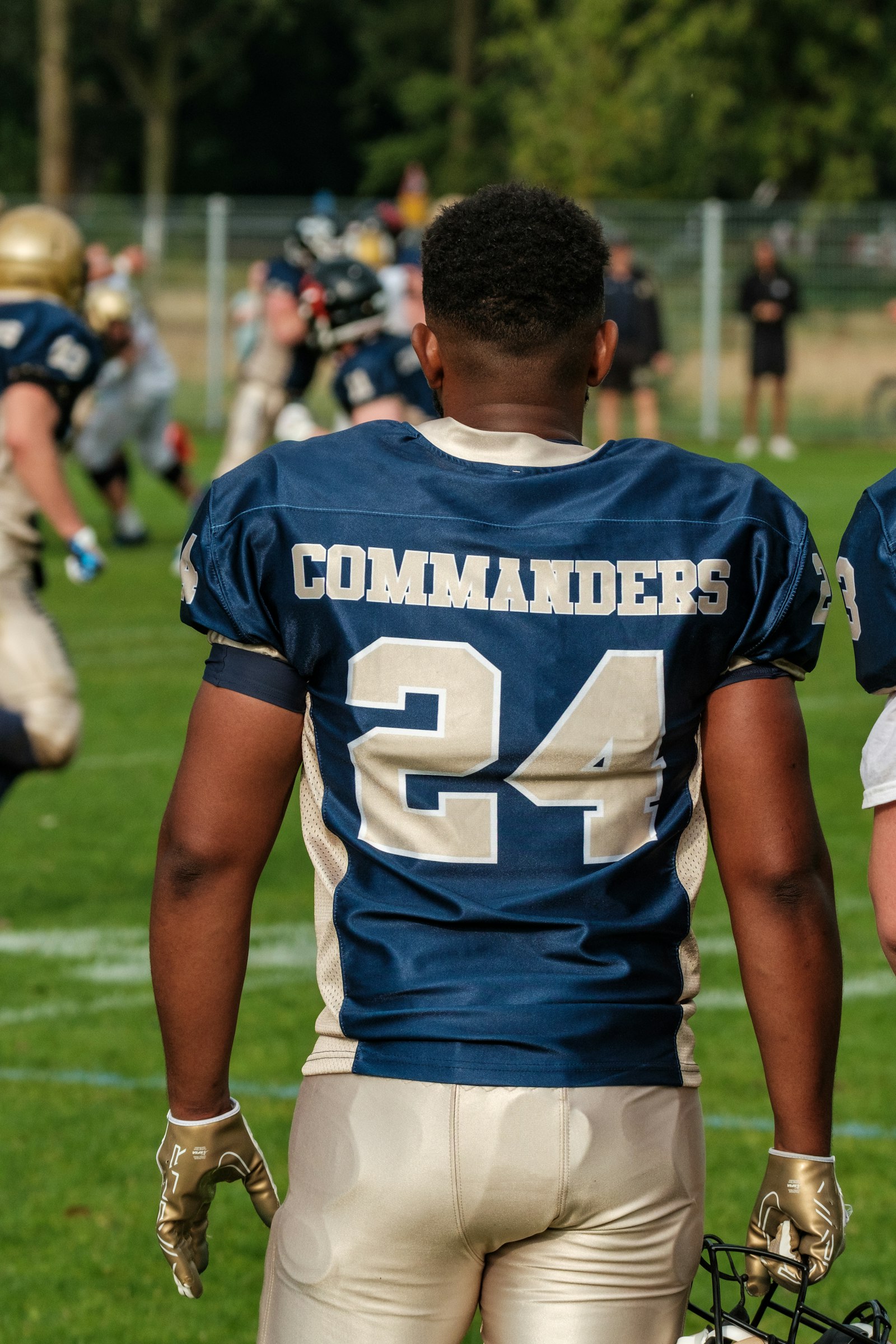

NFL Preseason Week 1 arrives with a specific coverage problem: 16 games, most starters playing between five and fifteen snaps, and enough garbage-time volume to produce dozens of misleading box-score stories by Sunday night. The trick with Week 1 isn’t to ignore the games; it’s to read them at the right layer. Starter reps and installation packages are real signal. Bench-vs-bench drives are not. The framework below separates the two.
Quick read: Preseason Week 1 in 60 seconds
- Starter snap counts: The most valuable Week 1 signal. Who plays, for how long, in which packages — that’s the coaching staff’s clearest public statement of their depth chart.
- Rookie exposure: First real look at rookies against non-teammates. Watch usage in specific personnel groupings, not raw yardage totals.
- Garbage time: Ignore. Late-game production against practice-squad defenders inflates every player’s line without informing anything.
- Injury news: The single biggest story of most Preseason Week 1 slates — and the one that reshapes preseason projections more than any highlight.
- What to write about: Depth-chart signals, scheme installation choices, specific matchup performances against starters — not the box scores.
How to read starter snap counts
Preseason Week 1 starter snap counts are the most-mistranslated data in NFL coverage. A quarterback playing 12 snaps isn’t a story; a quarterback playing three isn’t a story either. The story is the combination: which packages he ran, which receivers rotated with him, and how the play-caller structured the sample. A starter who runs three series in base offense reveals almost nothing beyond conditioning. A starter who runs 12 plays across three personnel packages, red-zone and third-down reps included, has produced a legible install sample — and that install sample is the signal.
The corollary: coaches who play starters longer in Week 1 usually signal roster uncertainty behind them. When a veteran starting corner logs 25 snaps in a Preseason Week 1 game, the coaching staff is telling you they don’t yet trust the backup. Read it that way rather than as an evaluation of the starter himself.
Garbage-time drives, decoded
The final quarter of most preseason games is a case study in signal-to-noise ratio failure. Rosters are 90 players deep in early August, and the fourth quarter of Preseason Week 1 features roughly the 70th through 90th player on each roster. Their performances against each other tell you almost nothing about regular-season outcomes, because these are the players competing for practice-squad spots, not for roles. Box scores from these stretches routinely produce “breakout” fantasy takes that are, without exception, meaningless.
The exception: joint-practice reps during the week before Week 1. Those are the reverse of garbage time — starters vs starters in controlled 11-on-11, and the observations from those practices are the most valuable preseason data available. Local beat writers who cover joint practices carefully produce far better preseason analysis than national panels who cover only the games. Our minicamps piece covers the same instinct applied to earlier in the offseason.
The Preseason Week 1 signal framework
| Signal | Weight | What to look for |
|---|---|---|
| Starter snap count | High | Distribution across personnel packages, not total volume |
| Rookie usage against starters | High | Specific matchup context; who they played, not just what they did |
| Joint practice observations | Very High | Real-game speed vs opposing starters — the best data of the week |
| Injuries emerging | Critical | The story that reshapes every other projection |
| Play-calling variety | Moderate | Installation signal; how much of the offense is on the field |
| Backup QB box score | Low | Context dilutes any inference — against whom, in which situation |
| Garbage-time production | None | Bench-vs-bench data does not translate to September |
A reading framework for Week 1 coverage
| Question | What it reveals |
|---|---|
| How many snaps did the starter play? | Coaching intent — and confidence in the backup |
| Which personnel packages were used? | Installation completeness |
| Which rookies got starter matchups? | Genuine evaluation opportunity |
| What did the joint practice show? | Real-game speed signals from earlier in the week |
| What injuries emerged? | The most important story on most Sunday nights |
| How does the depth chart look now? | Post-Week-1 clarity on backup roles |
| What is the beat writer saying about the trajectory? | Local context worth trusting over national panels |
The vocabulary underlying the framework lives in our sports analytics field guide. Public data from Pro Football Reference and grade-level context from PFF provide most of the underlying support for serious Week 1 analysis.
Frequently asked questions
Should I watch Preseason Week 1 games?
Yes for scheme installation observation, no for regular-season projection. The games are useful as visual data on how the offense and defense are being built, not as predictive data on who wins in September.
What’s the single most useful Week 1 signal?
Starter snap count distribution across personnel packages. That combination tells you the coaching staff’s install priority and their confidence in specific depth-chart positions — both more valuable than any box-score line from the game itself.
How do injuries in Preseason Week 1 typically resolve?
Most heal in time for Week 1 of the regular season. The exceptions — soft-tissue injuries with long recovery windows, or contact injuries requiring surgery — are the ones that reshape season projections. Trust the team-issued timeline over the initial speculation.
Where can I read serious Preseason Week 1 coverage?
The Athletic’s team-specific beat writers, PFF for grade and pressure-rate context, and Pro Football Reference for historical baselines.
The takeaway, in one paragraph
NFL Preseason Week 1 produces narrow but real signals about scheme installation and depth-chart intent, buried under a lot of noise from garbage-time drives and inflated backup production. The framework above is the version we apply to any Week 1 coverage — and the discipline is naming which layer of the data you’re reading before you draw conclusions from it. For the broader vocabulary, our sports analytics field guide is the natural companion read.