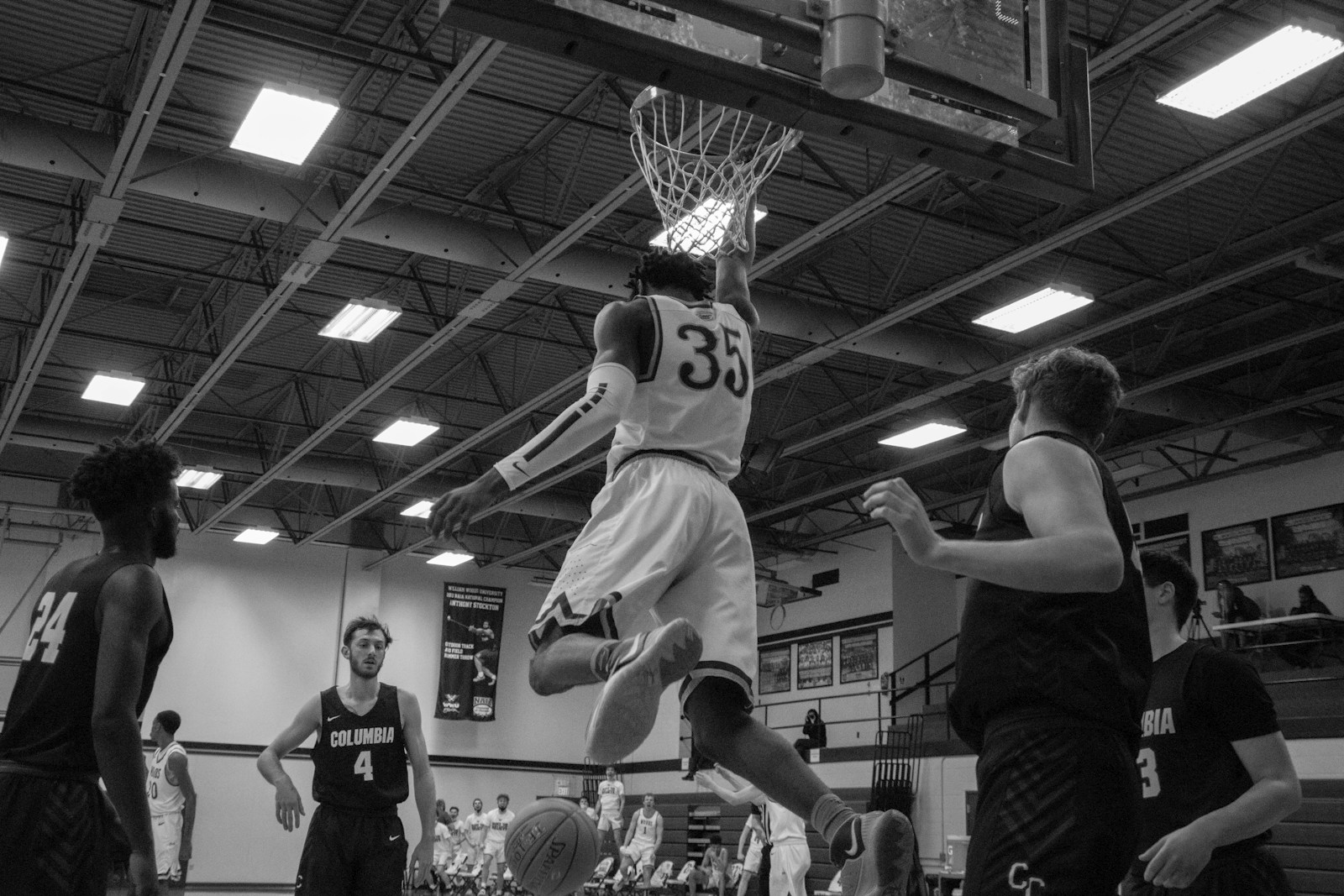

NBA Summer League concludes this week, and the analytical community sorts the rookies whose performances signal genuine NBA contribution from those whose stats are inflated by the format. Summer League is a specific data-generating environment: lighter defense, aggressive scoring by lottery picks, spotty rotations, small samples. Reading it well means knowing which signals translate and which don’t. The tracking data does most of that work.
Quick read: Summer League analytics in 60 seconds
- What matters: Per-possession efficiency, defensive activity in tracking data, physical baselines (speed, jump, wingspan against opponents).
- What does not: Per-game scoring totals, single-game highlights, box-score volume against weak defenders.
- The format trap: Summer League features lighter defense; volume scorers look substantially better than they’ll be in October.
- What translates: Defensive playmaking (steals, deflections, contests), court vision (assist rate), physical athleticism baselines.
- What does not translate: Scoring volume against weak defenders, isolation offense, single-game breakouts.
Why Summer League data is genuinely different
Summer League games happen in an environment that does not match the NBA regular season on any dimension that matters. Defensive intensity is meaningfully lower; rotations are shorter and less predictable; officiating tolerances are different; opponent quality varies wildly game to game. All of this means that box-score statistics from Summer League consistently overstate rookie scoring potential and understate defensive impact. The tracking data corrects for most of these distortions because it measures activity per possession and per opportunity rather than per game.
The practical implication: any Summer League evaluation that leads with points-per-game is reading the wrong layer. Per-possession efficiency, defensive activity metrics, and specific matchup performance (rookie vs starter-quality opponent) do more work than scoring volume. The NBA advanced stats field guide covers the vocabulary; Summer League is the environment where the vocabulary earns its keep.
The rookie signal framework
| Rookie archetype | Tracking signal that matters | What to discount |
|---|---|---|
| Lottery pick wing | Defensive on/off, court vision, decision speed | Scoring volume against Summer League defenders |
| Second-round guard | Per-possession assist rate, ball-handling efficiency | Per-game points, single-game highlights |
| Center prospect | Rim protection activity, screen-and-roll footwork | Rebounding volume (context-dependent) |
| Two-way athlete | Physical baseline vs starter-quality opponent | Box-score line in isolation |
| Late-round project | Specific role-skill exposure | Overall efficiency (small sample) |
| Foreign import | Adjustment speed to NBA pace and physicality | Familiar-comfort possessions vs unfamiliar |
| Returning Summer League player | Year-over-year improvement in specific skills | Comparison to first-year rookies |
A reading framework for Summer League coverage
| Question | What it reveals |
|---|---|
| What is the per-possession efficiency? | Real scoring signal, format-adjusted |
| What does the defensive tracking data show? | Impact that box scores miss |
| How did the rookie perform against starter-quality opponents? | Specific matchup context matters |
| What are the physical baselines? | Speed, jump, wingspan — the fundamentals |
| What are the coaches saying about NBA fit? | Real evaluation vs summer highlight |
| How does the rookie handle NBA-speed defense? | The translation question |
| What does the coaching staff project for the regular season role? | The actual answer |
Public data at Basketball Reference and the NBA’s own tracking data (available with lag) support most of the analysis above.
Frequently asked questions
How predictive is Summer League for rookie NBA performance?
Modest. Per-possession efficiency and defensive activity translate better than box-score volume. The best predictor from Summer League is specific matchup performance against starter-quality opponents; the worst predictor is total scoring against weaker defenders.
Which rookies typically look better than they are?
Volume scorers on isolation-heavy possessions against Summer League defense. That skill translates poorly to regular-season NBA play.
Which rookies typically look worse than they are?
Defensive specialists, court-vision passers, and role players whose value doesn’t show up in scoring lines. Their tracking data reveals what the box score hides.
Where can I read serious Summer League coverage?
The Athletic’s NBA rookie coverage, Basketball Reference for underlying data, and NBA-specific analytics newsletters that focus on tracking data over box scores.
The takeaway, in one paragraph
NBA Summer League produces useful rookie signals in the tracking data and misleading signals in the box scores; the analytical discipline is knowing which layer to read. The framework above is the version we apply to any rookie evaluation. For the broader vocabulary, our sports analytics field guide is the natural companion read.