The board goes up on the touchline showing a number, and forty thousand people immediately form an opinion about it. Too many. Not enough. Made up. The fourth official holding it above his head had no part in choosing it, and the number is not the amount of time that will be played.
Both of those facts are written into the Laws of the Game and neither is widely known. The board displays a minimum, decided by somebody else, and it is the one piece of information in a stadium that is routinely read as the opposite of what it says.
The process behind it is duller and more systematic than the arguments suggest. Some of it is timed precisely, some is estimated against a rough standard, and one part of it is a judgement the Laws deliberately leave to the referee.
What the board is, and what it is not
- It is a minimum. The referee may add to it during the added period and may not reduce it.
- It is not the fourth official’s decision. He displays a number he has been given.
- The clock never stops. Football runs a continuous clock and compensates afterwards, unlike most codes that stop and restart.
- It is rounded. The board shows whole minutes; the referee’s timing is not in whole minutes.
- It does not reset the half. A period does not have to end the moment the displayed time expires, and it can be extended for one specific reason in the Laws.
- It is per half. First-half additions cannot be corrected by shortening the second.
Who actually decides the number
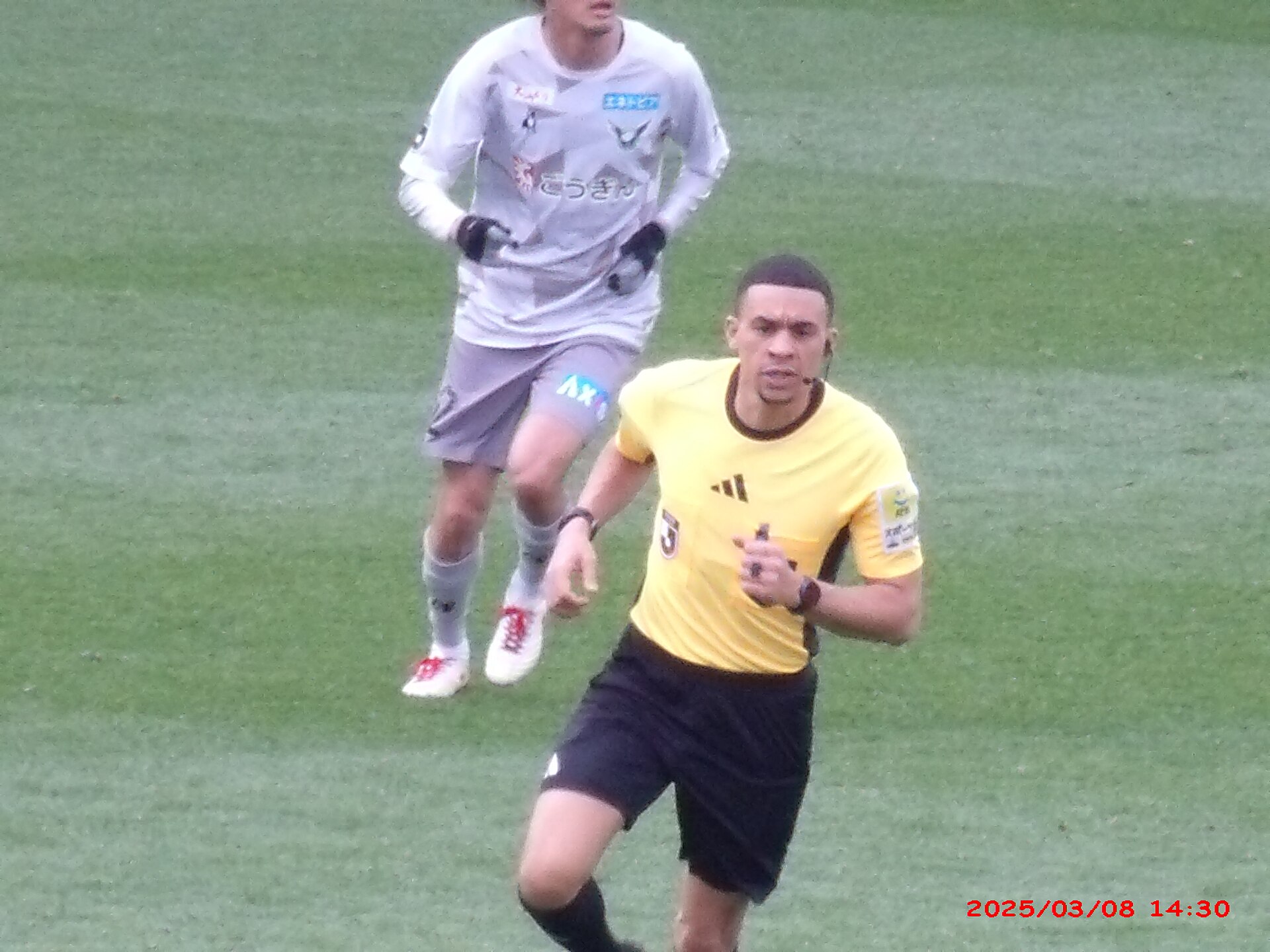
The referee is the sole timekeeper. He runs the clock, he judges what time was lost, and he decides how much is added. The fourth official’s role at the end of a half is to display the figure he is given, which is why arguing with the man holding the board is one of the least productive activities available in a stadium.
In practice the two work together throughout the half. The fourth official tracks substitutions and other clear stoppages from the touchline, notes what he sees, and passes it on. Communication systems have made that exchange continuous rather than a single conversation before the board goes up.
What the referee cannot do is delegate the judgement. The Laws place the decision on him, and the reason is that several of the categories require an assessment of whether time was genuinely lost, which is not something a stopwatch can settle on its own.
How stoppage time is calculated, stoppage by stoppage
The method is additive. The referee starts each half at zero and accumulates the time lost to the categories the Laws specify. There is no baseline allowance, no standard four minutes, and no adjustment for the state of the match.
Most referees run a watch continuously and either stop a second watch during major interruptions or keep a running mental total. A substitution is noted, a lengthy injury assessment is noted, a review is noted. At the end of the half the total is rounded and passed to the fourth official.
The important structural point is that the count is of time lost, not of interruptions. A stoppage that lasts eight seconds and a stoppage that lasts two minutes are both stoppages, and only one of them meaningfully changes the total. This is why matches with many small breaks can produce less added time than matches with two long ones.
A second structural point follows from it. Ordinary dead-ball time is not counted at all. A throw-in taken promptly, a goal kick, a free kick awarded and restarted without fuss: none of that enters the total, even though the ball is out of play for a good portion of any half. The Law is concerned with time lost beyond the normal rhythm of the game, not with the difference between ball-in-play and ball-out-of-play.
That distinction is worth holding onto, because the figures published for effective playing time in a match are measuring something else entirely. A half with under thirty minutes of ball in play can still generate a perfectly ordinary two minutes of added time, and the two numbers are not in conflict.
What Law 7 tells the referee to count
The list in the Laws is specific rather than open-ended, which is not how most viewers assume it works.
- Substitutions. Every one, from the whistle to the restart.
- Assessment and removal of injured players. Including the time taken to get medical staff on and off.
- Time wasting. Deliberate delay, whether or not it also produces a caution.
- Disciplinary sanctions. The time consumed by administering a caution or a dismissal.
- Medical stoppages permitted by competition rules. Drinks breaks and cooling breaks, which have defined maximum lengths.
- Delays relating to video checks and reviews. Both the check and, where it happens, the review at the pitchside monitor.
- Any other cause, including significant delay to a restart. This is the category that covers goal celebrations, and it is the one that changed the totals most.
The full text sits in Law 7 as published by the body responsible for the Laws of the Game, and it is short enough to read in a couple of minutes. Most of the arguments about added time are settled by that page.
Measured, estimated, and the difference
| Cause | How it is accounted | Why |
|---|---|---|
| Video check or review | Measured closely | Clear start and end, and it is logged |
| Injury with medical staff on the pitch | Measured | Obvious boundaries, often lengthy |
| Substitution | Usually a standard estimate | Frequent, similar in length, tracked by the fourth official |
| Goal celebration | Estimated from the whistle to the restart | Variable, and difficult to time while managing players |
| Caution or dismissal | Estimated | The referee is occupied administering it |
| Routine time wasting | Judged | Requires deciding whether the delay was deliberate |
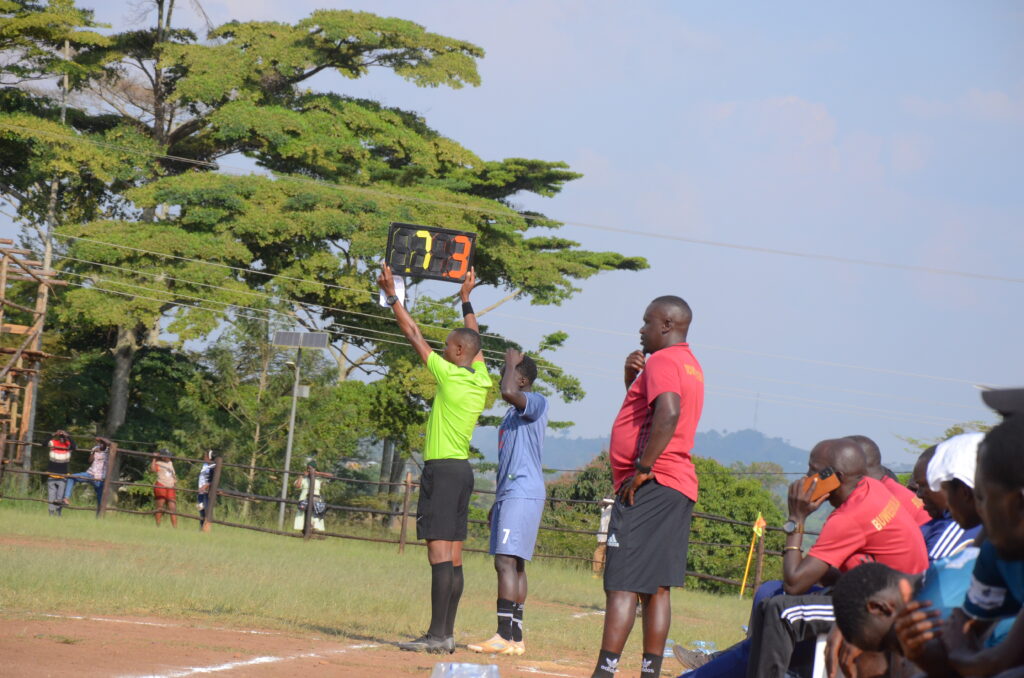
The split matters because it explains the imprecision people object to. Two of the six categories have hard boundaries and the rest are judged in real time by a person who is simultaneously refereeing a football match. That is not sloppiness, it is the design of a system that keeps a running clock.
Why the number is a minimum
The Laws describe the displayed figure as the minimum additional time. The referee may increase it and may not reduce it, and both halves of that sentence get ignored in the stands.
The increase is not discretionary punishment. It happens because the categories keep applying during added time itself. A goal scored in the ninety-third minute produces a celebration and a restart delay, and that delay is time lost in the same way any other is. A substitution made in the ninety-fourth minute has the same effect. Three minutes on the board can legitimately become five without the referee having changed his mind about anything.
The prohibition on reducing it exists for the obvious reason. A figure that could be revised downward would be an invitation to argue that the match should end early when a particular side is ahead, and the Laws remove that discussion by making the number one-directional.
Whole minutes on the board, continuous time on the watch
The board carries whole numbers because it has to be read from a distance in a second. The underlying total is not in whole numbers, and the rounding is where a portion of the argument comes from.
A referee who has accumulated three minutes and forty seconds will display four. One who has accumulated three minutes and ten seconds will usually also display four, because the convention is to round up rather than to shorten a half. The board is therefore an approximation in one direction, on top of a total that already contained estimates.
None of this affects when the half actually ends, because the referee is timing against his watch rather than against the board. That is the source of the most common complaint in the ground, where a crowd counts from the moment the board appears and the referee is counting from a different point entirely.
Goal celebrations, substitutions and the restart

The two categories that generate the most added time in an ordinary match are the two that look least like stoppages: celebrations and substitutions.
A goal takes the ball out of play from the moment it crosses the line until the kick-off is taken, and that interval is regularly well over a minute once players have run to a corner, returned, and reorganised. Multiply by four or five goals and a match has lost several minutes to an event nobody thinks of as a delay.
Substitutions changed shape when the permitted number rose in most competitions. Each one costs the time from the whistle to the restart, including a departing player’s walk, and a match using every available change in both directions accumulates a substantial total. The requirement in many competitions that a substituted player leaves at the nearest point on the touchline exists precisely to reduce that number, and the caution available for delaying the restart of play is the referee’s answer when it does not work. Whether that is applied consistently is one of the recurring questions in the wider argument about fair play and its enforcement.
What changed, and why the totals went up
For a long time added time was, in practice, a conservative estimate. Two minutes was close to a default at the end of an ordinary half, and the categories in Law 7 were applied loosely.
That changed when referees were instructed to account for lost time more accurately, particularly the time consumed by celebrations, substitutions, disciplinary sanctions and video reviews. The instruction did not change the Law. It changed how completely the existing Law was being applied, which is a distinction worth keeping, because nothing about what counts was rewritten.
The effect on the board was immediate and large. Figures of eight, ten and occasionally more stopped being remarkable, and matches began routinely exceeding a hundred minutes of elapsed time. The reaction split predictably between people who saw a rule finally being enforced and people who saw a match that had become too long, and subsequent guidance has looked for a balance between accuracy and playing an extra quarter of an hour. That argument continues, and it produces the kind of dispute that dominates a week of coverage in the same way any decisive refereeing decision does.
The end of a half, and the kick that outlives the whistle
Once the minimum has elapsed, the referee decides when to stop, and the Laws give him one explicit obligation and one widely observed convention.
The obligation concerns penalty kicks. If a penalty has to be taken or retaken, the half is extended until that kick is completed, however long that takes and regardless of the time on any clock. The half is over when the kick has finished, and the outcome of the kick is the last event of the period.
The convention is that a referee does not usually end a half while a promising attack is in progress. This is practice rather than Law, and it is where a genuine element of judgement sits. A referee who blows while a cross is in the air has not broken a rule, and a referee who allows a further thirty seconds because a counter-attack is under way has not either.
The arguments the board does not settle
Three complaints come up every weekend, and all three rest on a misunderstanding of what the number is.
The first is that the referee played more than the board showed, which is what the word minimum means and is not an irregularity. The second is that the amount favoured one side, which confuses the cause with the effect: time lost is time lost regardless of who is winning, and a side that scores late and celebrates is generating additional time for its opponent to equalise. The third is that the referee should have added time for a specific incident that did not appear to register, which is frequently correct and rarely provable, since the total is not itemised.
What would settle all three is publication of the breakdown, and some competitions have moved toward showing more of it. Until that is standard, the board remains a single rounded figure summarising a set of judgements made under pressure, which is why it generates the volume of argument it does. The gap between what a number is and what a crowd believes it to be is a familiar problem in the way disputed moments travel afterwards.
Frequently Asked Questions
Why does the referee sometimes play less than the board shows?
He should not, and if the half ends early it is an error rather than a discretion. The Laws allow the referee to increase the minimum but not to reduce it, so a half that finishes short of the displayed figure is a mistake in timing rather than a decision.
Is there added time at the end of the first half?
Yes, calculated exactly the same way. It attracts less attention because the consequences are smaller, but the accounting is identical and the board goes up in the same manner at the end of the forty-fifth minute.
Can a referee correct a first-half timing mistake later?
No. The Laws state directly that a timekeeping error in the first half must not be compensated for by changing the length of the second. A half that was accidentally short stays short.
Does the half end if the ball is in the net at the whistle?
The half ends when the referee blows, and a goal only counts if the ball has fully crossed the line before that whistle. In practice a referee will not blow while the ball is travelling toward goal, which is convention rather than a requirement of the Laws.
Why does football not just stop the clock?
Because the running clock is the sport’s design rather than an oversight, and changing it would alter the rhythm of the game substantially. The idea is raised regularly and has been examined in limited settings, but the compensating allowance remains the way the Laws handle lost time.
Next time the board goes up, start your own count from the whistle rather than from the board, and add the substitutions and celebrations you watched. The number will make far more sense than it did before.