Take a standard widescreen broadcast frame and crop it to the shape of a phone held upright, keeping the full height. What remains is a shade under a third of the original width. Not a trim. Roughly two-thirds of the picture is gone, and it is gone from the sides, which is where most sports keep their meaning.
That single piece of arithmetic explains almost everything about which clips work in portrait and which do not. It is not a question of taste or of platform, and it is not solved by better editing software. A frame that has thrown away two-thirds of its width either still contains the thing that mattered or it does not.
Some sports survive this almost untouched. Others become unwatchable in a way that is difficult to articulate until you see the same moment side by side in both shapes, at which point the loss is obvious and permanent.
The crop, in numbers
| Target shape | Share of original width kept | Picture discarded | Typical use |
|---|---|---|---|
| 9:16, full-height crop | About 32 per cent | Roughly two-thirds | Full-screen portrait video |
| 4:5, full-height crop | About 45 per cent | Just over half | Feed posts on several platforms |
| 1:1, full-height crop | About 56 per cent | Just under half | Square feed video |
| 9:16, whole frame fitted in | All of it | None of the picture | Picture occupies about a third of the screen height |
The last row is the trade at the centre of the whole subject. Keep everything and the image becomes a small band across the middle of a tall screen. Fill the screen and two-thirds of the frame goes. There is no third option, and every technique described below is an attempt to choose the least damaging version of one of those two.
What a 9:16 frame keeps from a 16:9 master
Geometrically, a portrait crop keeps a narrow vertical column through the middle of the original picture, running the full height. In a wide shot of a pitch that column is about twenty metres across. In a tight shot of two players it might contain both of them comfortably.
The height is where the gain sits, and it is real. Anything that happens along the vertical axis, a jump, a dive, a lift, a fall, is not merely preserved but presented better, because a tall frame gives that motion room that a widescreen frame crops at the top.
The cost is context. Everything a viewer uses to understand a moment without thinking about it lives at the edges: the defender arriving, the line the player is running toward, the space that was empty, the second competitor. Removing the sides does not blur that information, it deletes it, and no amount of resolution or reframing brings it back.
The three axes that decide it
Whether a clip survives can be predicted before anyone opens an editing timeline, using three properties of the sport itself.
Where the meaning sits relative to the ball. In some sports the significant action is co-located with the object: a lift, a dive, a serve, a punch. In others the meaning is the relationship between the ball and something twenty metres away, and that relationship is exactly what the crop removes.
Whether the significant motion is vertical or horizontal. A pole vault is a vertical event and gains from the shape. A sprint finish is a horizontal event between two lanes and cannot be shown at all.
Whether context is part of the moment. A dunk is a dunk regardless of what the rest of the court is doing. An offside decision is nothing but the relationship between distant bodies, and a clip that cannot show two of them at once has not shown the incident.
What vertical video sports highlights lose, sport by sport
Applying those three tests produces a fairly clean split, and the split does not track the popularity of the sport or how much of it gets posted in portrait.
| Sport | Survives a portrait crop | What is lost |
|---|---|---|
| Diving, gymnastics, pole vault | Very well | Almost nothing that mattered |
| Weightlifting, climbing | Very well | Some of the surrounding apparatus |
| Basketball at the rim | Well | The pass and the help defender |
| Boxing and mixed martial arts | Well | Movement around the ring or cage |
| Tennis serve, golf swing | Well in isolation | The ball’s flight and the opponent |
| Association football | Poorly | The run, the defensive line, the shape |
| American football | Very poorly | The entire play except one body |
| Cricket and baseball | Poorly | Field placement and the ball’s travel |
| Motorsport and cycling | Very poorly | The second competitor, which is the event |
The sports that survive it
The winners share a shape. The competitor is alone or nearly alone, the apparatus is fixed, and the significant motion runs up and down rather than across.
Diving is the clearest case, and it is arguably better in portrait than in widescreen, because a tall frame follows a body from the board to the water without a pan and without wasted picture on either side. High jump, pole vault and gymnastics on a single apparatus behave the same way.
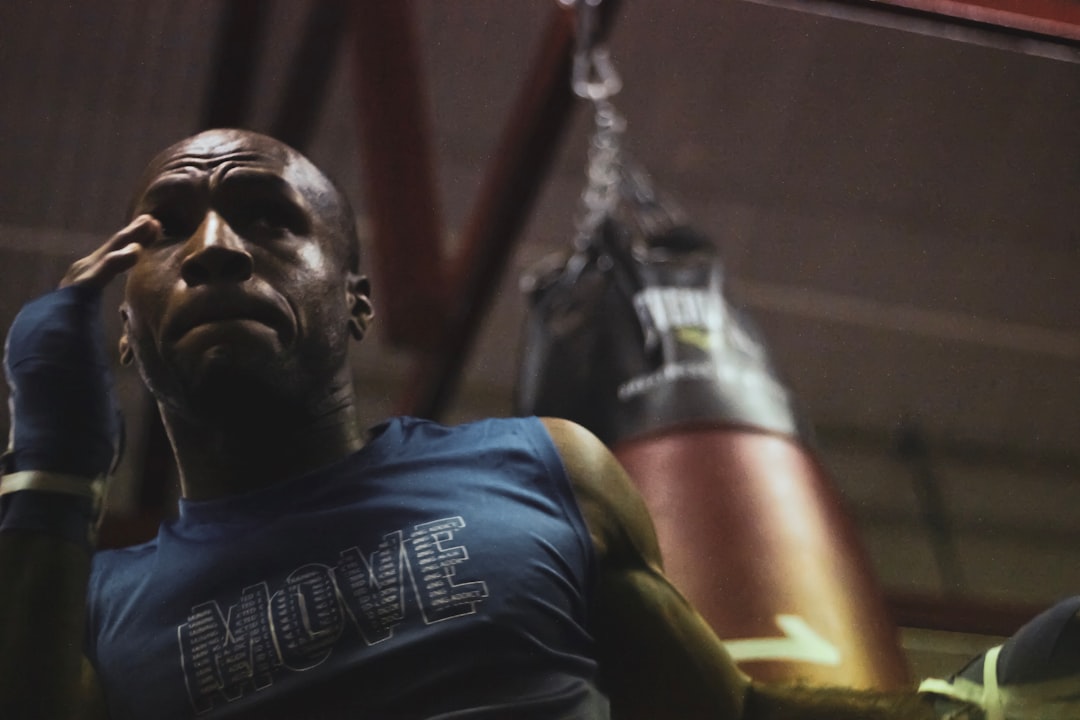
Combat sports work for a different reason. Two competitors are close enough together to fit in a narrow column most of the time, and the moments a highlight is built around involve almost no lateral travel. Weightlifting, climbing and skateboarding on a vert ramp all pass for the same combination of reasons: one subject, vertical axis, fixed apparatus.
The sports that do not
The failures are the sports where a moment is a relationship rather than an action, and football is the sharpest example.
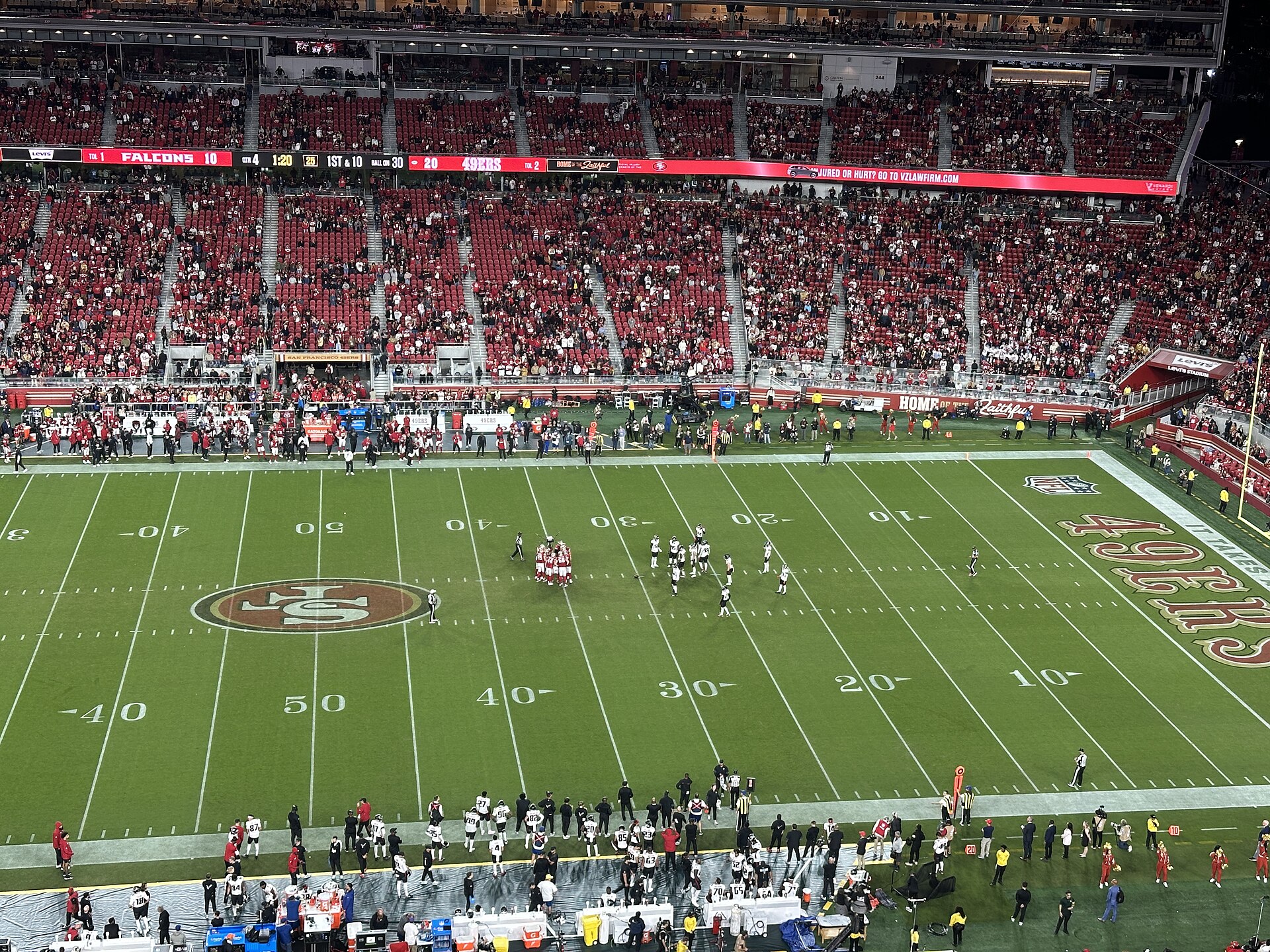
A through ball is meaningless without the run it found, and the run is frequently thirty metres from the ball. A tight crop on the passer shows a man kicking; a tight crop on the runner shows a man running. Neither is the play. The same problem destroys most of American football, where a play is eleven bodies executing separate assignments and any single-column crop reduces it to one of them.
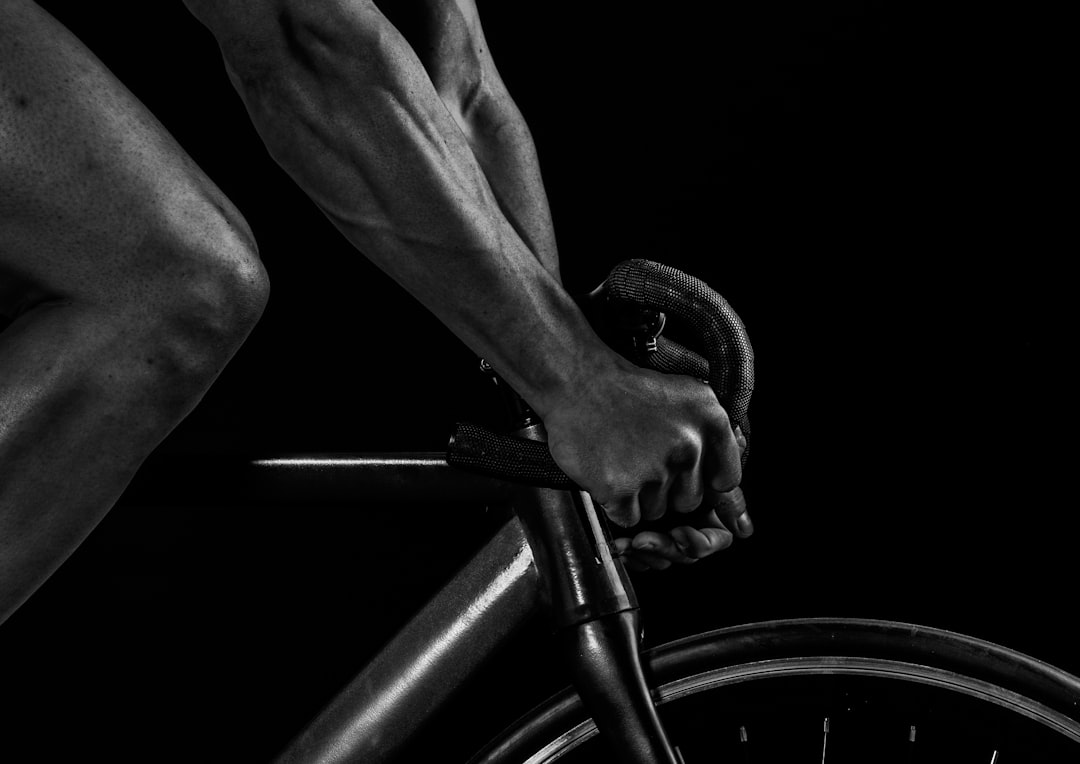
Motorsport and cycling fail hardest of all, because the entire content of an overtake is two objects in the same frame moving relative to each other. A portrait crop can contain one car. A clip containing one car is a clip of a car driving. And racing over distance, from a sprint finish to a bunch arriving at a line, has the same defect: the axis of the sport is the axis the crop removes.
Where automated tracking crops fail
Every major editing suite now offers some form of subject tracking that generates the crop automatically. It works, in the sense that it produces an output, and it fails in a small number of recognisable ways.
- Hunting between subjects. Several candidate bodies of similar size make the crop oscillate, and the result is a frame that drifts side to side for no reason a viewer can perceive.
- Tracking the wrong body. When the ball is too small or briefly hidden, the tracker locks onto the largest or most central figure, which is regularly a defender or an official.
- Lag on fast pans. A whip-pan outruns the tracker, the subject leaves the crop, and the frame catches up half a second later with a visible lurch.
- Cuts. Trackers restart at a shot change, and the first few frames after a cut often show the crop settling, which reads as a mistake.
- Faces in the crowd. Anything using face detection will be pulled toward a coach, a substitute or a spectator at the edge of the action.
- Wide and aerial shots. No subject is large enough to lock onto, and the crop defaults to the centre of a frame whose centre is empty.
The practical rule that comes out of this is unglamorous: automated reframing is reliable on tight shots with one subject and unreliable on everything else, which is roughly the same boundary as the sport-by-sport split above.
The scorebug problem, and the safe area below it
Broadcast masters usually arrive with graphics burned into the picture. The clock, the score and the lower thirds sit in the corners, and the corners are the first thing a centre crop removes. What survives is often half a graphic, cut down the middle, which looks worse than none at all.
Three answers are in common use. Work from a clean feed without burned-in graphics and add a purpose-built vertical version. Place the cropped picture in the upper part of the frame and fill the space beneath it with a graphics panel, which also handles captions. Or accept the loss and rebuild the score information as text, which is what most social editing teams do because it is fastest.
Platform interface is the second half of the same problem. Captions, account names and buttons occupy the lower portion of a portrait screen and part of one edge, so a subject placed dead centre gets partly covered by the interface rather than by the crop. Framing slightly high has become the working convention, and it is the kind of production detail that only becomes visible once the way audiences reach a sport has already changed.
Reframing by hand: keyframes, holds and the rule about panning
A hand-built crop beats an automatic one on anything that is not a simple tight shot, and it takes less time than people expect once the approach is fixed.
The first principle is that a static crop is better than a moving one. A locked-off portrait frame that lets a subject move within it looks deliberate. A frame that follows every movement looks like a mistake, because viewers read the reframe as camera movement and there is no reason for the camera to be doing that.
The second is that when a pan is necessary, it should start after the motion begins and end before the motion stops, so that the frame is following rather than anticipating. Two keyframes are usually enough. Adding more produces a crop that appears to be reacting to things the viewer cannot see. And a pan should never coincide with a cut, because the two movements together read as a technical fault rather than as an edit.
Resolution is what makes any of this possible. Working from a master with more pixels than the delivery format leaves room to reposition without scaling up, which is why the arrival of higher-resolution acquisition mattered more for portrait output than for anything viewers were watching on a television. Standards work of the kind published by the Society of Motion Picture and Television Engineers governs the formats underneath all of it.
Shooting for both frames from the start
The most effective answer to the crop is not to crop. Productions that care about portrait output now handle it at acquisition rather than in the edit.
The cheapest version is a dedicated vertical camera covering the same action, usually close to the primary position and framed for a single subject. It produces material that needs no reframing at all, and the difference in quality against a cropped broadcast frame is large enough to be obvious.
The version that costs nothing is a directing convention: protect the centre column. Framing the primary camera so that the essential action stays inside the middle third means every shot can be cropped without losing the subject, in the same way that widescreen productions once protected a safe area for older television sets. It constrains the wide framing slightly and it solves the problem for everything downstream, which is the sort of trade that appears repeatedly in the technical changes moving through sports coverage.
What the change has done to how a highlight is cut
The shape has pulled the whole grammar of the highlight package with it, and the effects are visible even in material never intended for a phone.
Clips are shorter and the peak arrives earlier, because a portrait viewer scrolls rather than waits. Tight angles are chosen over wide ones at the point of selection rather than at the point of cropping, which changes which replay a director calls. Captions have largely replaced commentary, since sound is frequently off. And the first frame now does the work a thumbnail used to do, so editors choose an opening frame for what it looks like frozen.
The awkward consequence is archival. Material shot before high-definition acquisition has no spare resolution to crop into, so a great deal of older footage is effectively unavailable in portrait without severe quality loss. A sport’s visual history and the format its audience currently watches have come apart, and there is no technical fix for the gap. Anyone interested in the underlying geometry will find the standard framing ratios and their history catalogued in any reference on image aspect ratios, and anyone interested in the audience side will recognise it in how allegiance and attention have shifted.
Frequently Asked Questions
Why not just letterbox everything?
Because the picture then occupies about a third of the screen height and reads as small and unconsidered next to material shot for the shape. It is the honest option and it performs badly, which is an uncomfortable combination for anyone deciding what to publish.
Is automatic reframing good enough for match highlights?
For tight single-subject shots, usually. For anything wide, involving several players or a fast pan, it needs checking and frequently needs replacing. The efficient workflow is to let the tool make a first pass and then reframe the clips it got wrong, which is normally a minority of them.
Does portrait video change which replays get chosen?
Yes, and this is the least discussed effect. A director who knows a clip will end up in portrait favours tight angles and close follows, which means the wide shot that best explains the play is less likely to be recorded as the primary replay in the first place.
What about older archive footage?
It crops badly and there is no way around it. Standard-definition material has no resolution to spare, so a portrait crop is a heavy upscale of a third of an already soft picture. Presenting archive in its original shape, with the frame acknowledged rather than hidden, is usually the better choice.
Which sports should not be posted in portrait at all?
Anything where the moment is a relationship between distant objects: overtakes, offside decisions, defensive shape, field placement, sprint finishes. A clip that cannot show both halves of the relationship is not a shorter version of the moment, it is a different and less informative one.
Before cropping anything, freeze the frame and cover the outer thirds with your hands. If the moment still explains itself, the clip will survive. If it does not, no reframing tool is going to save it.