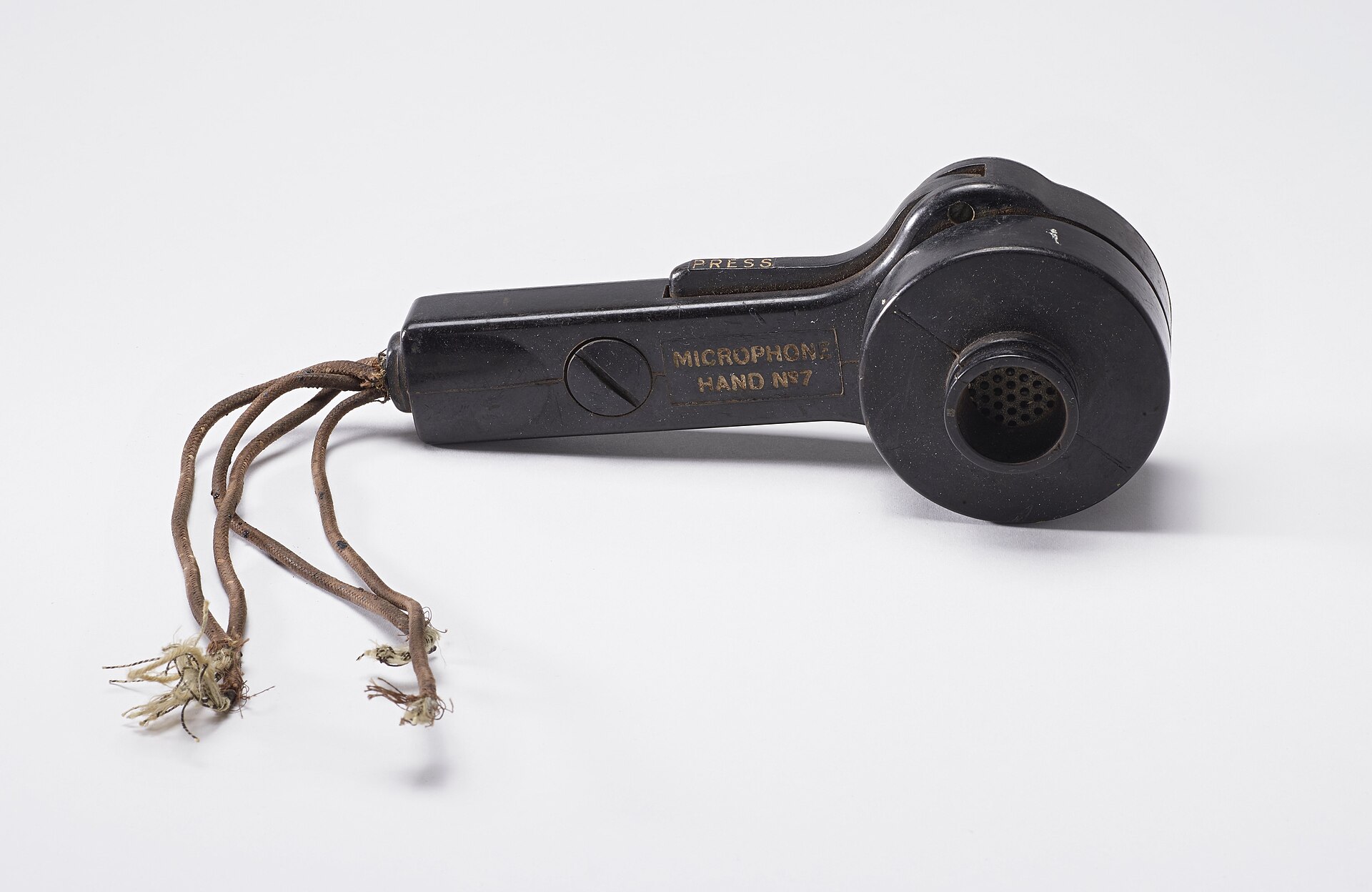

Stand in a mixed zone for twenty minutes and you will hear the same opening four or five times. How do you feel. It gets asked because it is safe, because it fills the first second while the recorder is being raised, and because nobody has ever been criticised for asking it.
The answer it produces is always the same shape. Delighted, obviously. Disappointed, obviously. The player supplies an adjective, the reporter supplies a follow-up built on the adjective, and ninety seconds later everyone leaves with a quote that could have been written before the match.
The problem is not the question’s politeness. It is that the question asks for a verdict on a state the player has not finished having, in a corridor, thirty seconds after a whistle. Almost anything else would produce more, and the twenty below are the ones that reliably do.
How to use the list
- Pick two, not twenty. A mixed zone gives you ninety seconds and a press conference gives you one turn. The list is a bank, not a script.
- Match the situation. A question that works after a win is often actively unkind after a defeat.
- Say it as written, or close to it. Most of these fail when padded with a preamble, because the preamble hands the player somewhere to go.
- Expect the first answer to be short. That is normal. The second one on the same subject is where the material is.
- Three of them never belong in the first minute after a whistle. They are listed, with the reason, near the end.
Why the default question closes what it opens
How do you feel asks for a summary. Summaries are exactly what media training prepares people to deliver, and the stock answers are short, safe and complete. Once a player has given a complete answer, the natural conversational move is to stop, which is why the follow-up so often lands nowhere.
The questions that work do the opposite. They ask for a component rather than a total: a moment, a decision, an instruction, a thing that was visible from the pitch and not from the stand. Components are harder to prepare for and much more interesting to answer, and athletes generally prefer them because they are questions about the job rather than about the emotion.
There is a second reason worth naming. A player who has just finished ninety minutes of physical effort is often genuinely unable to characterise how they feel, and asking them to do it puts them in the position of guessing at their own state in front of a recorder. A specific question is easier for them and better for you.
The same defect shows up in the other stock openers. Talk us through the goal invites a narration the player has already heard on the broadcast. What does this mean for the season asks for a forecast nobody in the building can make. Both are complete-answer questions dressed as open ones, and both are answered in under fifteen seconds by anyone with experience.
Twenty sports interview questions, and what each one opens
The five groups below cover most of what a working reporter faces in a week. Each question is followed by what it is doing, because the reason matters more than the wording and a question adapted for a different sport should keep the reason intact.
Four of the five groups are tied to a moment: a result, a change, an absence, a milestone. That is deliberate. Questions detached from a moment invite general answers, and a general answer about a career or a season is the one thing every player has already given to somebody else this month.
The wording is deliberately flat. None of these is clever, none contains a hook, and none is designed to look good in a transcript before the answer arrives. A question that draws attention to itself gets answered as a challenge, and a question that sounds like an ordinary request for information gets answered as one.
After a win: five that are not congratulations
- What did you change at the point it started going your way? Asks for a decision with a timestamp. The player has to locate a moment, and locating a moment produces detail that a summary never will.
- Which part of that was planned during the week and which part was improvised? Separates preparation from adaptation. It also gives the player permission to credit the staff without sounding rehearsed.
- Who made that easier for you, and how? Routes credit into a mechanism. The answer usually names a teammate and then explains what that teammate did, which is far more useful than a name on its own.
- What were you seeing out there that we could not? The perception question. It asks for the one thing the player has that nobody in the room has, and it is the question most likely to produce something genuinely new.
- If the same situation came up again in ten minutes, what would you do differently? Keeps the answer forward-facing and skips the victory lap. Players who have just won are unusually willing to be critical, and this is the window.
After a defeat: four that do not ask for a confession

- At what point did the plan stop working? A time question rather than a blame question. It is answerable, it is not an accusation, and it produces a structure the reader can follow.
- What was the instruction at that stage? Asks for information rather than an admission. A player can describe what they were told to do without conceding that anyone failed.
- Which of those problems is fixable this week and which is not? Separates execution from structure. The answer tends to be more honest than anything a direct question about quality would get, because it is framed as a schedule.
- What will you be looking for when you watch it back? Moves the player out of the emotional present and into the professional frame they will be in tomorrow, which is the frame in which they are worth quoting.
On a tactical change: four a player can actually answer
- When did you notice the shape had changed, and what told you? Asks for the cue rather than the diagram. Players read tactical changes off specific triggers, and those triggers are concrete and interesting.
- What did that ask you to do differently in the ten minutes after it? Personal, bounded and specific. It avoids asking a player to explain the coach’s thinking, which is a question they are rarely willing or able to answer.
- Where were you supposed to be when they had the ball, and where did you end up? Invites a description of drift without any accusation attached. The gap between the two positions is usually the whole story.
- Who did you have to talk to on the pitch for that to work? Surfaces communication, which is invisible on television and central to how any change is actually implemented.
On an injury or a fitness question: three that stay inside what is known
These need care. A player may not have been assessed, may not be permitted to discuss a diagnosis, and may be under no obligation to disclose anything medical. All three questions below stay on capability and process rather than prognosis, which keeps the exchange within what the player can legitimately answer.
- What can you do this week that you could not do last week? Progress framed as capability. It produces a concrete answer without requiring a medical claim from someone who is not a clinician.
- Who decides when you are available, and how is that conversation going? A process question. It maps the decision-making without asking anyone to speculate on a return date.
- What does an ordinary day look like at the moment? Descriptive, low-risk and consistently productive. The detail in the answer is usually the story, and none of it requires a diagnosis.
None of these should be asked in the minutes after an incident, and none of them replaces a medical statement. Coverage of long-term absence is one of the areas where the support structures around professional players matter more than the reporting usually reflects.
On a career moment: four that are not the anniversary
- What was the version of this you pictured at eighteen, and how far off was it? Sets an internal benchmark and asks the player to measure against it. It produces reflection without requiring nostalgia.
- What part of this job would you not have believed at the start? A surprise question. Surprises are stories, and this one almost always produces a specific, unrehearsed answer.
- Who taught you the particular thing you did in the second half? A lineage question. It gives credit, produces a name the reader will not have expected, and gets a technical explanation attached to it.
- What are you better at now than two years ago in a way nobody watching would notice? The most productive question on this list. It asks for expertise that is invisible from the stand, and athletes are usually pleased to be asked.
Three questions to keep out of the first minute
Timing changes what a question is. Each of the three below is legitimate at a press conference the following day and close to indefensible ninety seconds after a final whistle.
Anything about a contract or a transfer. It asks for a strategic statement from someone in their least strategic state. The realistic outcomes are a non-answer or a headline the player did not intend to create, and the second one causes damage that is entirely the interviewer’s doing.
Anything requiring a verdict on an official. In most competitions a player who criticises a match official can be sanctioned for it. Asking the question in the corridor puts them between a bland answer and a fine, and neither serves the reader. It is a subject better handled through the rules themselves than through a quote extracted under duress.
Anything asking them to assess a teammate’s mistake. The available answers are a public criticism or an obvious untruth. Neither is worth having, and asking guarantees one of them. The equivalent question about the collective, phrased around what the group has to fix, gets the same information without the cost.
What makes a question answerable
| Property | The test | What happens when it is missing |
|---|---|---|
| A subject the player controls | Could they have decided this? | Speculation about someone else |
| A time anchor | Does it point at a moment? | A summary, delivered in adjectives |
| Information, not a verdict | Is it asking what, or asking whether it was bad? | A defensive answer or a refusal |
| Room for a specific | Could the answer contain a number or a name? | A cliche, correctly deployed |
| No smuggled premise | Does it contain a claim they must accept to answer? | A rejection of the premise, and no content |
| One question | Is there exactly one verb they must respond to? | They answer the easiest of the three |
The last row is the one that catches experienced interviewers. A three-part question is an invitation to answer the harmless part, and players who have been through enough of these sessions will take that invitation every time without appearing to dodge anything.
Sequencing, and the three seconds after the answer
Order matters as much as wording. Open with something answerable and low-stakes, not because it is polite but because it establishes that you are going to listen to the answer. The difficult question belongs third or fourth, once the exchange has a rhythm.
Then leave the silence alone. Three seconds after an answer ends feels much longer than it is, and it is the interval in which people add the sentence they had not planned to say. Filling it with the next question is the most common way a good answer gets cut off at the point it was becoming useful.
Two constraints are worth knowing before you go in. A press conference is run by a moderator who decides the order and the ending, so the plan has to survive being given one turn. And a mixed zone has no moderator at all, which means the constraint is the player’s willingness rather than the clock, and that willingness is built in the first fifteen seconds. Whatever the reader sees of the exchange afterwards is a clip rather than a conversation, which is worth remembering given how quickly a single answer now travels. The professional standards published by the Society of Professional Journalists are a reasonable reference point for where the limits sit.
Frequently Asked Questions
Is how do you feel ever the right question?
After a genuine personal event, yes, and it is sometimes the only decent thing to ask. A first appearance after a long absence, a retirement, a bereavement. What makes it lazy is using it as a default opener when a specific question was available and would have worked better.
What if the player gives a one-word answer?
Wait, then ask the same question about a narrower thing. A short answer is usually a sign the question was too broad rather than that the player is unwilling, and reducing the scope of the second attempt tends to fix it.
How do these translate to a press conference?
Badly, if you use more than one. A conference gives most reporters a single question, so the choice matters more than the technique, and the perception questions and the time-anchored ones survive that format better than anything requiring a follow-up.
Should you tell a player what the piece is about?
Yes, briefly, and it usually improves the answers. Someone who understands the frame can supply what the piece needs rather than guessing at it, and the alternative, where the player finds out from the published version, damages access you will want again.
Do interpreted interviews change the approach?
They shorten it. Every question costs twice the time and nuance gets lost in both directions, so simple constructions and single-clause questions work far better. Save the questions that depend on precise wording for a conversation without an interpreter in it.
Take two questions from this list into the next thing you cover, and drop the default opener entirely for one week. The change in what comes back is larger than the effort involved.