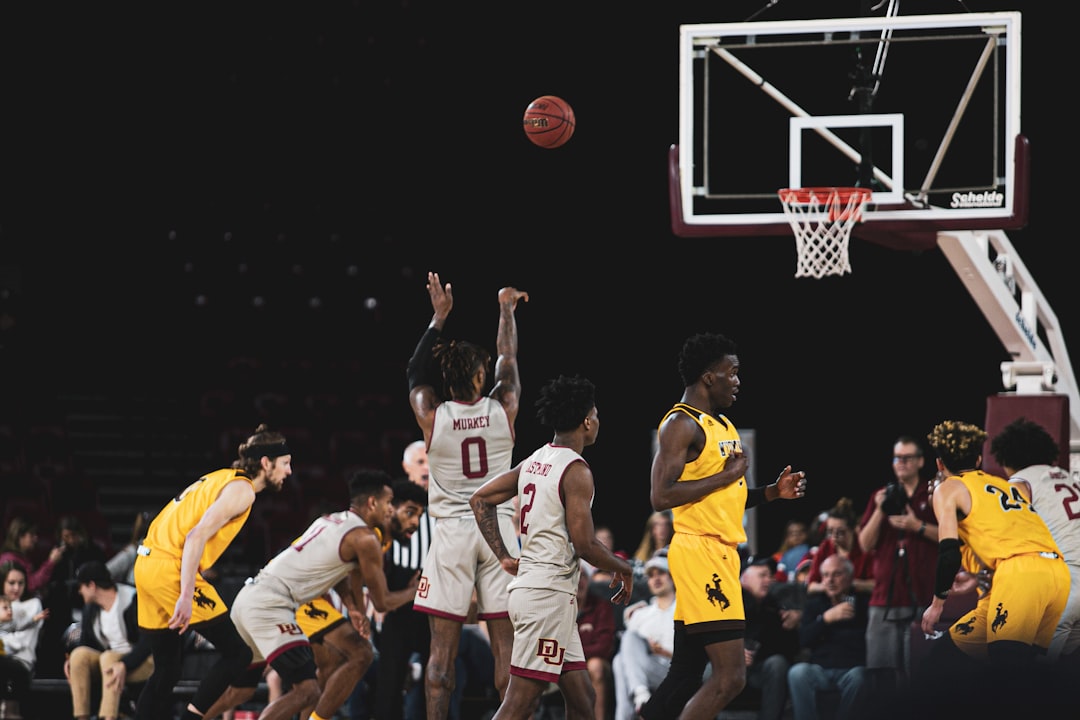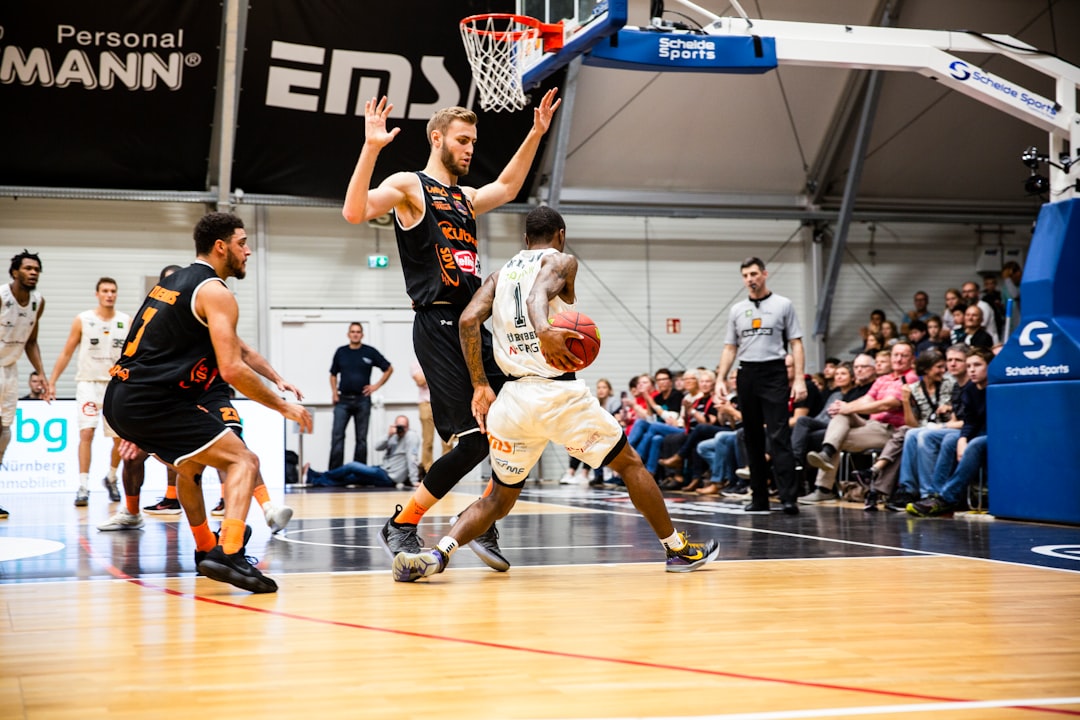
Somebody is asked how a difficult night went and says the game slowed down for him in the second half. The clip gets shared with a caption about empty talk, and a phrase that describes one of the better-documented findings in sports science gets filed as a cliche.
That happens constantly, and it happens because of the format rather than the speaker. An athlete has forty seconds, a microphone, a contractual obligation to be there, and no way of knowing which fragment will be used. Under those conditions people reach for compressed language, and compressed language sounds hollow to anyone who does not know what is being compressed.
Most of the stock phrases are reports. They describe something specific: a perceptual change, a training decision, a tactical failure, a medical uncertainty. Knowing what sits behind each one does not make interviews more interesting to watch, but it does change what can be extracted from them, which for anybody writing about sport is the more useful outcome.
Twelve phrases, in short
- The perceptual group. The game slowed down, I saw it early, I was a step ahead. All describe anticipation, not calmness.
- The tactical group. We didn’t execute, we lost our shape, we were second to everything. All are checkable against footage.
- The medical group. I felt something, managing my load, feeling fresh. All are constrained by what an athlete is permitted to say.
- The social group. Credit to them, one game at a time, just helping the team. All are conversation management.
- The variance claim. The ball didn’t bounce for us. Sometimes true, and testable against chances created.
- The limit. None of these tells you what somebody thinks. They tell you what somebody chose to report.
Athlete interview cliches are compressed reports
A specialist talking to another specialist uses shorthand, and nobody objects. A surgeon describing a procedure to a colleague does not define terms. The difference in sport is that the shorthand is spoken directly to a general audience with no translation layer, so the compression that makes it efficient inside the sport makes it sound empty outside it.
There is a second pressure specific to athletes. Almost every phrase available to them carries risk: naming a teammate’s error, describing an injury before it has been examined, or predicting anything at all. The phrases that survive in circulation are the ones that convey something without creating a problem, which is a fairly demanding filter.
The result is a vocabulary that is genuinely informative and reliably misread. The useful skill is not detecting insincerity, which is mostly guesswork, but recognising which category a phrase belongs to and therefore how much weight it can carry.
The game slowed down: anticipation, not calm

This is the phrase most often mocked and it describes the most-studied thing on the list. Experienced performers extract information from an opponent’s movement before the outcome of that movement exists: the angle of a shoulder, the position of a plant foot, the shape of a hand on release. The decision is therefore made earlier in objectively identical time.
The standard way of testing this is occlusion. Show a performer video of an action and cut it off at various points before completion, then ask them to predict what happens. More experienced participants make better predictions from earlier cut-off points, which isolates anticipation from reaction speed. The method is decades old and the general finding has held across a wide range of sports.
A second mechanism runs alongside it. Experts recognise configurations rather than individual positions, so a familiar defensive arrangement is processed as one object instead of eleven. That frees attention, and freed attention is subjectively experienced as extra time. Neither mechanism is about staying calm, which is why the phrase is a poor description of composure and a good description of perception.
I saw it early, and what scanning actually measures
Closely related, and more concrete. Before receiving a ball, players turn their heads to sample the space around them, and the frequency and timing of those checks can be counted from footage. It is one of the few things here a viewer can measure with a wide camera angle and some patience.
The research generally finds a relationship between how often a player samples the surroundings in the seconds before receiving and the quality of the decision that follows. The size of that relationship varies by position and by study, so the responsible way to talk about it is to describe the metric rather than quote a value. Seeing it early is not a claim about eyesight or reaction time; it is a claim about having gathered information before the moment it was needed, which is a habit rather than an attribute.
We didn’t execute: which layer failed
This one gets treated as an evasion and it is actually a fairly precise technical statement. It separates two possible failures: the plan was wrong, or the plan was right and the actions did not happen as rehearsed. Saying we didn’t execute is a claim that the second thing happened.
It is also a way of not naming anybody. Execution failures usually belong to identifiable people, and identifying them publicly is one of the fastest ways to break a dressing room. The phrase distributes responsibility across the group deliberately, which reads as vague and is in fact a choice with a purpose.
There is a physiological layer underneath it too. Under fatigue and pressure, skills tend to revert toward older and less-practised patterns, so a movement rehearsed reliably in training can fail in the last twenty minutes of a match. That is a well-understood phenomenon, and it means the phrase is often literally correct rather than diplomatic.
One game at a time is the only safe forecast
Boring, and unavoidable. Any statement about future results is a prediction, and a prediction from a participant becomes a headline, a piece of opposition motivation, and a clip to replay if it turns out wrong. The expected cost of saying something specific is high and the expected benefit is close to zero.
It also happens to describe how preparation is organised. Training weeks are built around the next fixture, with load, recovery and tactical work all planned in a cycle that ends at the next match. An athlete saying they are focused on the next game is describing a schedule, not performing modesty.
The interviewing implication is straightforward. A question that invites a forecast will produce this phrase every time, so the question is wasted. Asking about something already completed produces an answer the athlete is free to give.
I felt something, and why vagueness is accurate
An athlete leaves the field holding the back of a leg and is asked, within minutes, what the injury is. Nobody in the stadium knows yet. There has been no examination and no imaging, and naming a structure at that point would be a guess presented as information.
So the honest answer is the vague one. I felt something is a description of a sensation rather than a diagnosis, and it is the most an athlete can say without inventing detail. What follows in the days afterwards is usually more specific because more is actually known, not because anyone has become more forthcoming.
Layered on top is a disclosure question that varies enormously between competitions. Some leagues require regular public availability reports; others treat medical information as private and leave clubs free to say very little. An athlete in the second kind of competition who describes an injury in detail may be volunteering information their employer has decided not to release, which is a genuine constraint rather than an excuse. Support structures around professional athletes generally treat this boundary as important, and reporters who ignore it tend to get less rather than more.
Managing my load is a scheduling term
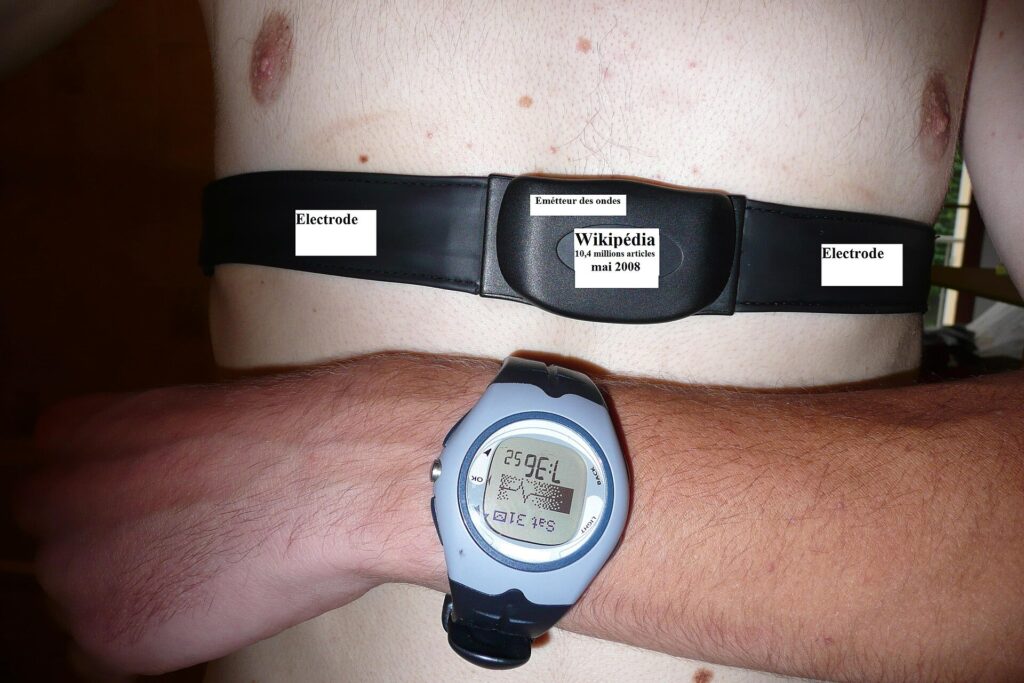
Load has a technical meaning. External load is what the body did, measured as distance, accelerations, jumps, throws or repetitions. Internal load is what that cost, tracked through heart rate, perceived exertion and recovery markers. Both are monitored routinely in professional environments, and the numbers belong to the staff, not to the athlete.
Approaches that compare recent workload against a longer baseline have been widely used as a monitoring tool and have also been criticised in the literature, so the fair description is that this is an active area of debate rather than a settled method. What is not in dispute is that sudden increases in workload and inadequate recovery are associated with elevated injury risk, which is why the monitoring exists at all. Anyone reading around it will find the American College of Sports Medicine a reasonable starting point for the underlying physiology.
The important part for a listener is authorship. Load management is a decision made by medical and performance staff about a schedule, and the athlete describing it is reporting a decision rather than requesting a rest. Treating the phrase as a personal preference misattributes it, and it is one of the more common misreadings in coverage. The same applies to sleep and recovery planning, which is scheduled with the same seriousness.
We lost our shape is a checkable claim
Of all the phrases here this is the most useful, because it points at something visible. Shape means the distances between units: between the defensive line and midfield, between the widest players, between the ball and the nearest support. Losing it means those distances grew beyond what the system tolerates.
It is checkable from a high wide camera angle without any data at all. Watch the gap between the lines when the ball is turned over and compare it with the same moment earlier in the match. A team that has lost its shape usually shows it in one specific place rather than everywhere, and finding that place is the whole content of the claim.
Its neighbour, we were second to everything, makes a narrower claim about loose balls and the first step after a contest. That is also observable, and it is one of the few claims of this type that a viewer can reasonably confirm or reject. Both phrases are far more informative than the adjectives that usually replace them in match coverage.
Credit to them, and the phrases that close a conversation
Some phrases exist to end a line of questioning politely, and recognising them saves everybody time. Credit to them, they were better on the day is one. Just trying to help the team is another, and it appears almost exclusively in response to questions about individual awards or personal statistics, where every available answer is either boastful or false modesty.
The ball didn’t bounce for us belongs to a different family. It is a claim about variance, and unlike the others it can be tested: compare chances created with chances converted, and either the claim holds or it does not. Used honestly it is one of the more sophisticated things an athlete can say, and used as cover it is one of the emptiest.
Feeling fresh and feeling good round out the group. They are usually the only statements about physical condition an athlete is cleared to make, so their information content is close to zero and their absence is occasionally interesting. A player who declines the standard reassurance has said something, though not enough to build a story on.
Twelve phrases and what each one reports
| Phrase | What it reports | How much weight it carries |
|---|---|---|
| The game slowed down | Earlier anticipation from advance cues | High; describes a documented effect |
| I saw it early | Information gathered before receiving | High; partly measurable from footage |
| I was a step ahead | Pattern recognition rather than speed | Moderate; overlaps with the two above |
| We didn’t execute | Failure at the action layer, not the plan | Moderate; deliberately unattributed |
| We lost our shape | Distances between units grew | High; checkable on a wide angle |
| We were second to everything | Loose balls and first-step timing | High; countable from footage |
| I felt something | A sensation, before any examination | Low by necessity; more is not known yet |
| Managing my load | A staff scheduling decision | Moderate; authorship is elsewhere |
| Feeling fresh | Cleared physical status | Low; the absence is more telling |
| One game at a time | The preparation cycle | Low as content, high as a signal to stop asking |
| Credit to them | Conversation management | Low; a closing move |
| The ball didn’t bounce for us | A variance claim | Testable against chances created |
The right-hand column is the one that matters for anybody quoting these. Six of the twelve support a paragraph of analysis. Four support a sentence. Two support nothing at all and should be treated as the punctuation they are.
What this method cannot do
None of this reveals what anybody is thinking. A phrase tells you what somebody chose to say under a specific set of pressures, which is a different object entirely, and the gap between the two is where most bad sports writing lives. An athlete using a stock phrase might be reporting precisely, deflecting, or repeating something absorbed from a hundred previous interviews without meaning much by it.
The limits are worth stating plainly. Tone is a poor guide, because adrenaline, exhaustion and noise all distort it. Frequency is a poor guide, because some people simply talk this way. An interpretation that requires the athlete to be concealing something is almost always weaker than one that does not.
What the method does support is better questions. If a phrase is a compressed report, the follow-up is a request to decompress it, and that request works far more often than a challenge does. Ask where the shape went rather than whether it went, and the answer stops being a phrase. Interviewers who prepare this way, along the lines of the preparation athletes themselves do, get considerably more out of the same forty seconds.
Frequently Asked Questions
Are these phrases taught in media training?
Some are and some are simply learned by exposure. Media training does teach structure, safe framing and how to return to a prepared point, but most of the vocabulary here spreads through imitation inside a sport rather than through formal instruction.
Which of the twelve is most worth following up?
We lost our shape, by a distance. It points at a specific, visible failure and the follow-up question almost writes itself: which unit, from which minute, and what changed. It is one of the few phrases where a second question reliably produces new information.
Does the game slowing down happen to amateur players?
The underlying mechanisms are not restricted to elite performers. They scale with experience in a particular activity, so a club player who has played the same position for years will read familiar situations faster than a newcomer. The effect is domain-specific and does not transfer between sports.
Is it fair to quote a stock phrase in a match report?
It is fair, and usually not worth the space. A quote earns its place when it says something the reporting cannot, and most of these say something the reporting can say more precisely. The exception is when the phrase itself is the story, such as an unexpected refusal to use the routine reassurance.
Why do so many athletes sound identical in interviews?
Because the constraints are identical: same time limit, same risks, same audience, same small set of safe answers. Convergence under shared constraints is what you would expect, and it says very little about the individuals.
Pick one phrase from the next post-match interview you watch and decide which of the four groups it belongs to. That single classification does more work than any amount of reading tone, and it takes about a second.