A college assistant working through recruiting mail in October is not watching your video the way you edited it. The window is open on half a screen, the sound is off, and the scrub bar is being dragged. If nothing has happened by the twenty-second mark, the tab closes and the next link opens.
That behaviour is not rudeness and it is not a shortage of interest. It is arithmetic. A staff receiving hundreds of unsolicited links in a season has to triage them, and the only way to triage video quickly is to look for a reason to stop watching. Most reels supply one immediately, usually a title card with a drum loop under it.
None of this is about production value. The reels that survive triage are frequently the plainest ones on the list. What they have in common is that they were cut in the order a coach needs the information, which is almost never the order the athlete wants to tell the story.
The build order, in one pass
- Collect the raw games first. Full, unedited, in the highest resolution available. Everything downstream is limited by what you started with.
- Log every candidate clip by timecode. Game, quarter, clock, one line on what happens. This is the step people skip and the step that decides how long the edit takes.
- Cut the clips before you order them. Three to six seconds each, starting before the play begins.
- Rank them ruthlessly. Your best three go first. Not your earliest, not your favourite.
- Add identification, once per clip. A single marker on the opening frame that fades.
- Export the unedited companion clips separately. Two or three full possessions or series, untouched.
- Name the files properly, then write the description. The last step, and the one that decides whether any of the previous six are ever seen.
How a sports recruiting highlight reel is actually watched
The viewing pattern is consistent enough to design around. A coach opens the link, watches the first two or three clips at normal speed, then either keeps watching or drags the playhead to sample the middle and the end. That sample decides whether the file gets forwarded to a position coach.
Two consequences follow. The first is that the opening is doing almost all of the work, so it cannot be spent on establishing shots, a name graphic or a slow build. The second is that the middle cannot be filler, because the scrub bar will land there and whatever is on screen at that moment gets treated as representative.
Sound is a third consequence and it is the one most edits get wrong. Assume the audio is muted, because it usually is in a shared office. Anything the music was carrying, including the sense of rhythm between clips, has to survive in the cuts alone.
The opening twenty seconds
Twenty seconds is three or four clips. They should be the three or four best plays on the tape, in descending order, with nothing in front of them.
An identification card is still useful, but it belongs on the first frame as a static frame lasting a second or two, not as an animated sequence. Name, graduation year, position, height, jersey number and jersey colour is enough. Anything else lives in the description, where it can be read at a glance and copied.
What does not belong in the opening: a montage of workouts, a quote, a shot of the stadium, a countdown, an animated logo, or a lifting clip. A coach evaluating a player has no use for any of it at this stage, and every second it occupies is a second removed from the only part of the video that is being watched attentively.
Clip length, and where a clip starts
Three to six seconds is the working range, and the difference between three and six is decided by the sport rather than the play.
| Sport | Clip starts | Clip ends | Usual length |
|---|---|---|---|
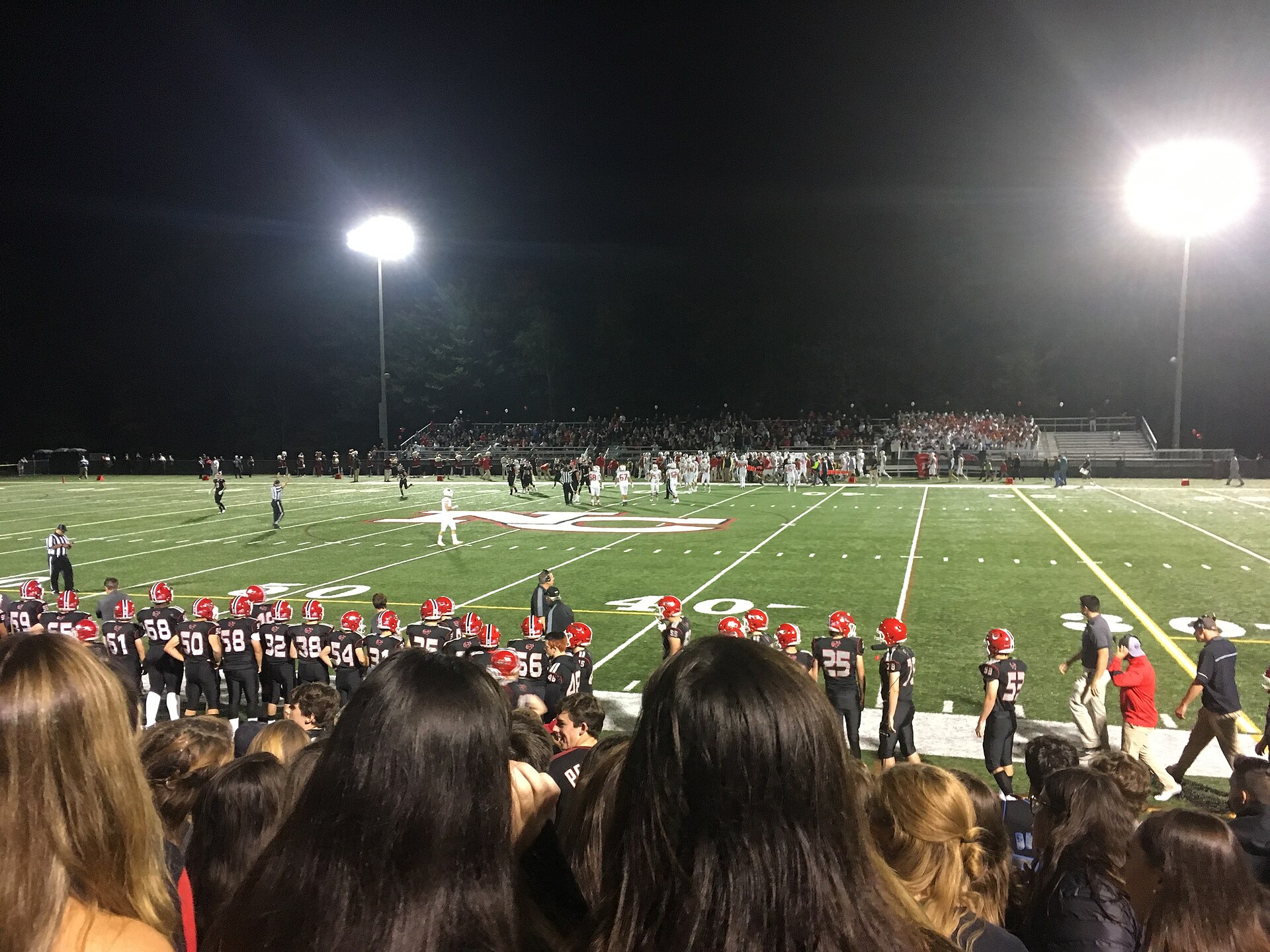
| American football | Two seconds before the snap | When the whistle is obvious | Five to eight seconds |
| Basketball | As the possession begins to develop | One second after the outcome | Four to six seconds |
| Association football | When the ball starts moving toward you | After the finish or the pass lands | Four to seven seconds |
| Volleyball | At the serve or the set | On the contact and the landing | Three to five seconds |
| Lacrosse and hockey | At the entry into the offensive zone | On the shot or the turnover | Four to six seconds |
The starting point matters more than the ending. In American football, cutting in at the snap removes the alignment, the split and the pre-snap movement, which is most of what a position coach is evaluating. In basketball and football, cutting in as the ball arrives removes the off-ball work that made the moment possible and turns a good read into a lucky arrival.
The ending is easier. Stop once the result is unambiguous. Leaving three extra seconds of celebration on every clip adds a minute of nothing across a reel and it is the single most common padding in amateur edits.
Spotlighting without hiding the play
Identification has one job: let a coach find you on the first frame so he can watch the rest of the clip without searching. Anything beyond that starts working against you.
The version that works is a thin circle or a small arrow, placed on the first frame, held for about a second and then removed. It marks a starting position and then gets out of the way. If the jersey number is legible in the frame, mentioning it once in the description can replace the marker entirely.
The versions that fail are familiar. A filled shape that covers the player’s feet, so the coach cannot see footwork. A spotlight effect that darkens everything else, so the coach cannot see the defensive alignment he is trying to judge you against. And a marker that tracks the player for the full clip, which is the worst of the three, because it obscures exactly the body it is supposed to identify.
The unedited clips that answer the second question
A highlight reel answers one question: can this player make plays. The next question a staff asks is what the player does when nothing is happening, and a reel is structurally incapable of answering it.
Two or three full possessions, series or shifts, exported untouched, answer it in about four minutes. No cuts, no markers, no music. A coach watching an unedited sequence sees the recovery run after a turnover, the defensive assignment carried out correctly, the reaction to a bad call, and the body language on the walk back. None of that survives a cut.
Attach them as separate files or separate links, clearly labelled, and never mix them into the reel. The reel is for triage and the raw clips are for evaluation, and a video that tries to do both loses the first job without gaining the second. Programmes that invest heavily in the development side of a young athlete’s progress tend to ask for the raw footage first and the reel second.
Order: best, then representative
The ranking rule is simple and uncomfortable. The best clip goes first, the second best goes second, and the third best goes third. After that the order shifts from best to representative, because the middle of the reel is being sampled rather than watched, and what a coach lands on should look like a normal play executed correctly.
Chronological order is the default in most amateur edits and it is close to the worst possible arrangement. It buries the best material at whatever point in the season it happened to occur and it forces a coach to sit through improvement he did not ask to see.
Grouping by game is the second most common mistake. A coach is not building a narrative about your season. He is looking for repeated evidence of a specific skill, so grouping by skill, when the sport allows it, is far more useful than grouping by opponent.
Ranking your own clips is genuinely hard, and most athletes rank sentimentally rather than technically. Ask a coach to pick the top five from a longer list before you order anything, because the plays that impressed you and the plays that demonstrate a transferable skill are frequently different, and that gap is one of the more useful things a structured development programme tends to correct early.
File names, links and the things that break in an inbox
A file arriving in a recruiting inbox needs to be identifiable after it has been downloaded, renamed by a browser, and dropped into a folder with two hundred others.
The convention that survives all of that is plain: surname, first name, graduation year, position, then the school or club, separated by underscores, with no spaces and no accents. The same string goes in the subject line of the email. It looks bureaucratic and it is exactly what an assistant sorting a folder needs.
The link itself is where most reels die. A file that requires a login, a request for access, an application download or a page that expires will not be opened twice. Host it somewhere that plays in a browser without an account, check the link from a device that is not signed into your own account, and do not change or re-upload it after you have sent it out.
What the description has to carry

The text next to the video is read more often than people expect, because it is where a coach confirms what he has just seen. It should be short and it should be scannable.
The essentials are graduation year, position, height and weight, jersey number and jersey colour, current school or club, and a contact for the coach who can speak about you. A second jersey colour, if the tape covers both home and away kits, saves a coach twenty seconds of confusion in the middle of the reel.
Keep the claims verifiable. Anything a staff can check will be checked, and the fastest way to lose a file is to have one number in the description contradicted by the tape. Academic and eligibility information belongs in the email body rather than in the video description, and the rules governing what a programme may do with any of it come from the governing body for that level of competition rather than from the school.
Music, transitions and the five things to cut
Music is optional, usually muted, and occasionally a liability if the track has lyrics that a staff would rather not have playing in a shared office. If you use it, use it instrumental and quiet, and never cut the clips to the beat, because a rhythmic edit forces clip lengths that do not match the plays.
Transitions should be cuts. Nothing else. A dissolve between two clips of a sport adds a third of a second of confusion and communicates nothing.
- Slow motion on every clip. Use it once, on one play, if the moment genuinely needs it. Otherwise it doubles the runtime and hides speed.
- Clips where you cannot be identified. If a coach has to look twice, the clip is not working, however good the play was.
- Plays that are good because of somebody else. A staff can tell, and including them reads as padding.
- Anything from more than two seasons ago. It invites a comparison you did not intend.
- The reel over five minutes. Three to four minutes is the working length; nothing after that is watched.
A last pass before you send it
Watch the file once with the sound off, at full screen, on a device you did not edit it on. Most of what is wrong with a reel becomes obvious in that single viewing, and almost none of it is obvious in the editing timeline.
Then check four things in order. Can a stranger find you within one second of each clip starting. Does the middle of the reel look like a normal, competent play. Does the file name still identify you after download. Does the link open in a private browser window with no account signed in.
If all four hold, the video is doing its job, and everything else is a question about the player rather than the edit. The autumn stretch is when these inboxes fill fastest, and a file that survives triage in October is worth more than a better-produced one sent in February. Families working through this for the first time usually underestimate how much of the process is administrative rather than athletic, which is a theme that runs through the wider business of college sport.
Frequently Asked Questions
How long should the reel be?
Three to four minutes for the highlight file, with a hard ceiling around five. The unedited companion clips can be much longer, because they are watched by a different person for a different reason and only after the reel has already done its job.
Does the video need professional editing?
No, and expensive edits frequently perform worse because they add the graphics and effects a coach has to look past. What matters is clip selection, clip start points, clear identification and a link that opens. All four are free.
Should the same reel go to every programme?
The reel can be the same. The email should not be. A staff can tell within a line whether a message was written for them, and a note that names the position they are recruiting for and the reason you are writing is what moves a file from the pile to a position coach.
What about vertical video for social platforms?
Keep them separate. A recruiting file stays horizontal and full resolution, because it is watched on a monitor and judged on detail. A vertical cut is a different product for a different audience, and sending it as the primary link makes evaluation harder rather than easier.
Is it worth updating the reel during a season?
Yes, but replace rather than accumulate. One current file at a stable link is easier to handle than four versions with dates in the file name, and a staff that has already opened your link once will open the same one again if the description says what changed.
Cut the first twenty seconds again tomorrow, before anything else. If those four clips are right, the rest of the edit matters far less than it feels like it should.