Two teams finish level and something has to separate them. What happens next is not a detail of the rulebook; it is a choice between three things a competition cannot have at once. It can be short, it can be fair to the play that just happened, or it can be safe for the bodies that produced it.
Every tiebreak in world sport is a position on that triangle. Thirty minutes of extra football is the most faithful to the preceding ninety and by some distance the most expensive physically. A shootout costs almost nothing and resembles the match least. Nothing sits in all three corners.
What follows sets six formats against each other on the same three criteria, and then says which sport each one suits and why. The physical column deserves more weight than it usually gets, because it is the one that carries into the following week.
How the six formats rank
- Longest and heaviest. Two halves of extra time in football: thirty added minutes on legs that have already done ninety.
- Longest tail. Continuous sudden-death periods in play-off ice hockey, where a tie can run most of another match.
- Most predictable. Fixed extra periods repeated until somebody leads at the buzzer, as in basketball.
- Most artificial, least costly. A shootout, a super over, a tiebreak. Minutes of exposure, and a contest that is only loosely the sport that preceded it.
- Highest intensity per minute. Reduced-numbers overtime, where fewer players cover the same surface.
- Cleanest symmetry. Alternating possessions from a fixed starting point, which guarantees both sides the ball and removes the coin toss argument.
The three criteria, defined before use
Length is the simplest of the three, and it should be read as expected length plus the size of the tail. A format with a short average and an occasional enormous outlier creates scheduling problems that an average conceals.
Injury load is not the same as injury count, and no honest comparison can put a figure on it. What the sports medicine literature supports is narrower and still useful: accumulated match minutes raise risk, muscle injuries cluster in the later stages of matches as fatigue builds, and short recovery windows between fixtures are associated with elevated injury rates. A tiebreak that adds a third of a match, in a schedule that will not move, is a real cost even though nobody can put a number on it in advance.
Fidelity is the third: how much the tiebreak resembles the contest it is resolving, and how much it rewards the side that was better over regulation. A format with high fidelity gives the stronger team roughly the advantage it earned. A low-fidelity format resets the match to something close to a coin flip, which is not a criticism in itself, only a description.
Six overtime formats on the same three criteria
The table compares them directly. Reading across a row is more informative than reading down a column, because the trade-offs are what distinguish them.
| Format | How it ends | Added playing time | Physical cost | Fidelity to regulation |
|---|---|---|---|---|
| Two halves of extra time | Whoever leads after the second period | Thirty minutes, always | Highest | Highest |
| Continuous sudden death | First score, however long it takes | Unbounded | High, with a long tail | High |
| Repeated fixed periods | A lead at the end of a period | Five minutes at a time | Moderate | High |
| Reduced numbers | First score, or a shootout after | Five to ten minutes | Moderate but intense | Moderate |
| Alternating possessions | One side outscores the other in a round | Short and bounded | Low to moderate | Moderate |
| Skills tiebreak | Best of a fixed set, then sudden death | Minutes | Lowest | Lowest |
The pattern in the table is not subtle. Physical cost and fidelity move together almost perfectly, and the only genuine escape from that relationship is the alternating-possession design, which buys symmetry rather than resemblance.
Extra time: the honest and expensive answer
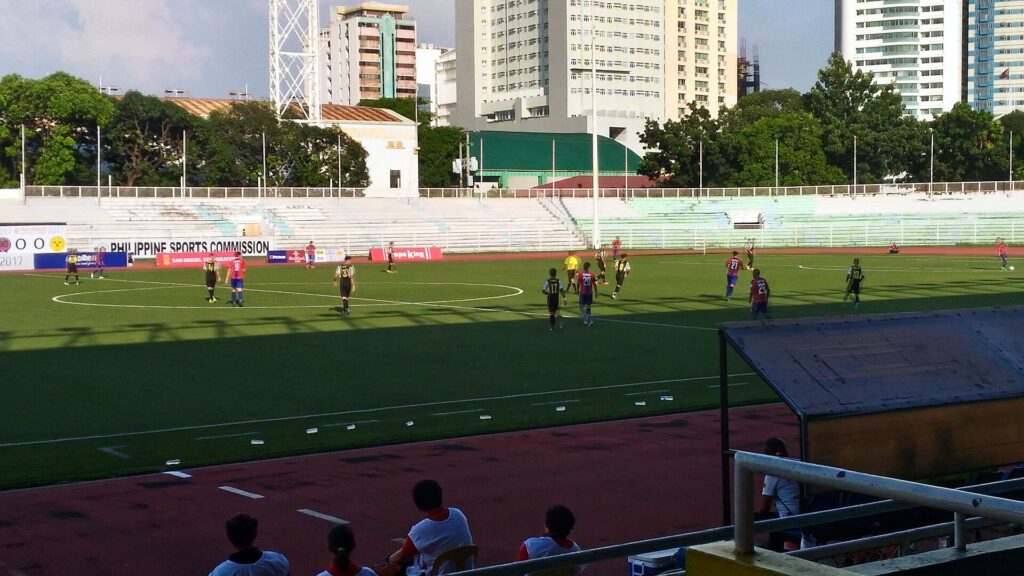
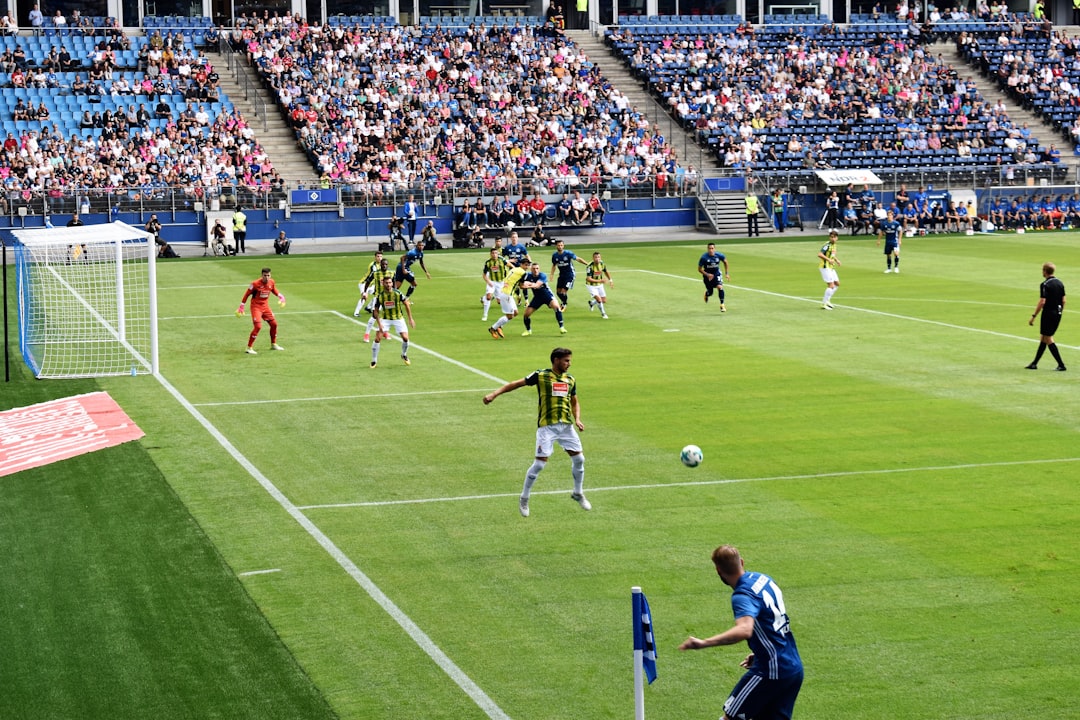
Thirty minutes in two halves is the most faithful tiebreak in team sport. The same eleven against eleven, the same pitch, the same rules, with substitutions available and the tactical problem essentially unchanged. If the question is which side is better at football, this format answers it with the fewest distortions.
It is also the one that arrives on a squad already at the end of a ninety-minute effort, frequently in a knockout competition where the next fixture is days away. Extra time adds a third of a match to every player who stays on, in the period where fatigue is highest and technique is most degraded.
The mitigations tend to be procedural rather than structural: an additional substitution during the extra period, a longer break before it starts, and drinks breaks in hot conditions. They soften the load without changing the design, which is why the debate about scrapping extra time in favour of going straight to kicks resurfaces in every congested season. The recovery cost of a single overloaded fixture is measured days later rather than on the night.
Continuous sudden death and the problem of the tail
Play-off ice hockey runs full-length overtime periods at even strength until somebody scores, which is the purest version of sudden death in a major team sport. The fidelity is very high: nothing about the game changes except that it does not stop.
The distribution of outcomes is what makes it difficult. Most of these end quickly, which is why the format survives, but the tail is genuinely open-ended and a match can run to a second or third additional period. That is an enormous physical demand in a sport played in shifts of under a minute, and it lands on a small group of players who take the most ice time.
The secondary effect is on everything downstream. A tie that runs long compresses recovery before the next fixture, forces line-up changes, and in a series played every other day the consequences show up two matches later. Sudden death is cheap in expectation and occasionally ruinous, which is a hard property for a schedule to absorb.
Repeated fixed periods: predictable by design
Basketball resolves a tie with a five-minute period played to completion, repeated as often as necessary. No sudden death, no reset of the score, no change to the rules beyond the reduced length.
The advantage is that it is bounded in practice. Multiple overtimes happen and are memorable precisely because they are rare, and the modal case is one period. Because the period is played out, a team cannot lose to a single lucky sequence in the opening seconds, which raises fidelity relative to sudden death.
The cost is concentrated rather than broad. Rotations shorten in overtime and the best players stay on the floor, so five extra minutes for a team is often five extra minutes for the same five bodies, at the end of a match in a schedule that rarely allows more than a day or two before the next one. Foul trouble compounds it, since a side that has lost players to fouls has fewer to share the load. Managing that across a season is the same problem as any other workload question in a compressed calendar.
Reduced numbers: short minutes, high intensity
Regular-season ice hockey resolves ties with a short period at reduced strength, and the design is clever. Fewer skaters on the same surface means more open ice, more scoring chances, and a much higher probability that the period ends before the buzzer, which keeps the format short.
The physical accounting is less flattering than the clock suggests. Each player covers substantially more ground per minute than at full strength, and the shifts are all-out. Five minutes of that is not five minutes of ordinary play, and it falls on the most-used skaters because coaches send their best.
Fidelity drops as well. A period played at reduced numbers is a genuinely different game from the one that produced the tie, with different tactical demands and different players advantaged. It is short, entertaining and only loosely connected to the preceding sixty minutes, which is a reasonable trade for a regular season and a poor one for a knockout.
Alternating possessions: symmetry instead of resemblance
American college football gives each side the ball at a fixed point close to the opponent’s end zone, alternating until one team outscores the other in a round. In its current form, the sides switch to alternating two-point attempts once the tie has persisted past the early rounds, specifically to keep the total length under control.
What this design buys is symmetry. Both teams get the ball, so the argument about the coin toss largely disappears, and the outcome depends on execution in a situation both sides face identically. It also bounds the length, which the professional game’s version has struggled with.
What it gives up is resemblance. Starting every possession in field-goal range removes field position, punting and the entire drive-building part of the sport, and rewards a narrow set of skills. It resolves the tie efficiently and it is not really the game that was played for sixty minutes, which is the honest summary of the format. Similar compromises show up wherever a sport has redesigned an ending rather than simply extending it, a habit worth reading against how these competitions were originally structured.
Skills tiebreaks: cheap, decisive, unlike the sport
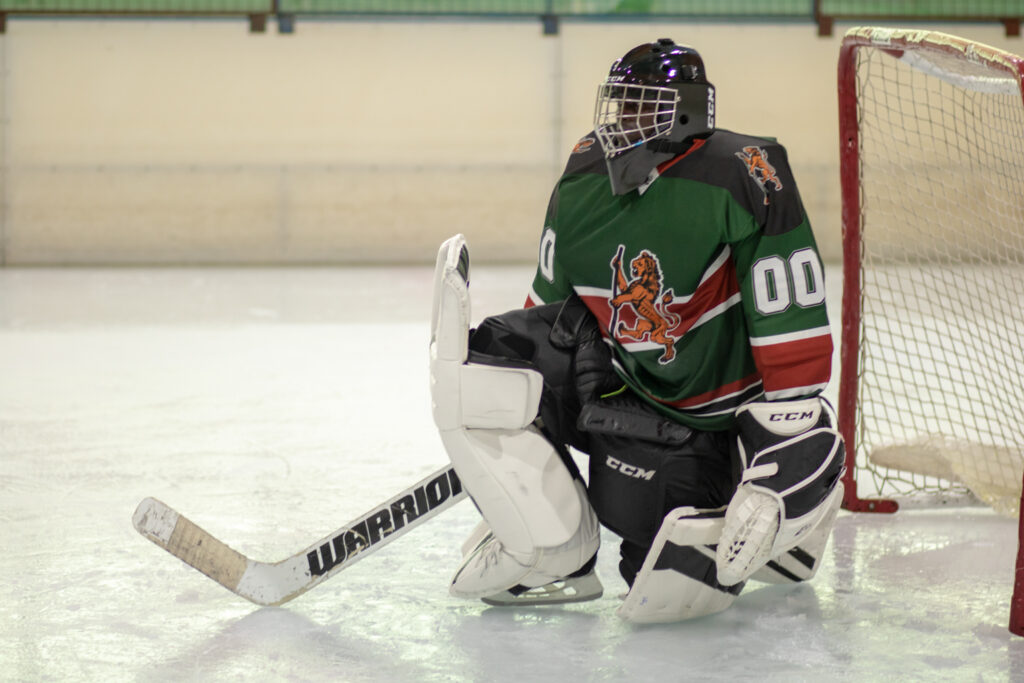
The shootout in football, the super over in cricket, the tiebreak in tennis and the shootout in hockey all belong to one family. A fixed number of standardised attempts, then sudden death, with almost no physical cost and an outcome delivered quickly.
Their virtue is real. They protect players, they protect schedules, and they produce a definite result at a time certain, which matters to everything from broadcast slots to travel. In a tournament where a replay is impossible, they are frequently the only workable answer.
Five kicks, one over, ten points
The internal designs differ more than the family resemblance suggests. Football gives each side five kicks and then proceeds one pair at a time, so the early rounds carry a scoreboard and the later ones carry sudden death. Cricket’s super over gives each team a single over with a small allowance of wickets, and if that finishes level another over is played, which keeps the format bounded round by round rather than open-ended.
Tennis sits slightly apart, because its tiebreak is played with rackets and a ball in the ordinary way and is closer to the sport than a shootout is to football. Even so the principle is the same: a compressed, standardised sequence substituted for an open-ended continuation, chosen because the open-ended version had become unmanageable for players and schedules alike.
Their weakness is fidelity, and it is severe. A penalty shootout tests a skill that occupies a tiny fraction of a football match, involves eleven players rather than a team, and correlates weakly with anything that happened in the preceding two hours. It is a fair procedure in the narrow sense that both sides face the same test. It is not a continuation of the contest, and the distinction is worth keeping clear when a competition is being judged on its endings.
Which format suits which sport
The right answer depends on three properties of the sport itself: how much physical cost a minute of play carries, how frequently scoring happens, and how much recovery the calendar allows.
Where scoring is frequent, a short fixed period works, because five minutes reliably produces a separation. Where scoring is rare, a fixed period usually ends level and the format has to choose between running long and switching to a skills test. Where the physical cost per minute is very high or the next fixture is close, the calendar effectively makes the decision, and the tiebreak that survives is the short one.
Football sits in the awkward middle, which is why its endings are argued about more than anyone else’s. Goals are rare enough that a short period settles little, the physical cost of thirty minutes is high, and the calendar is unforgiving. The compromise it reached, extra time followed by kicks, is not elegant, and it is difficult to name a better one that keeps both the fidelity and the schedule intact.
Frequently Asked Questions
Why was the golden goal abandoned in football?
Sudden death was tried in major competitions and dropped after the game it produced turned out to be worse rather than better. Teams that could not afford to concede stopped attacking, so a format designed to force a quick resolution encouraged the opposite. The silver goal, which ended the tie at the next interval instead, was also discarded.
Does the team that wins the coin toss have a real advantage?
It depends entirely on the format. Where the toss decides who receives first in an alternating-possession system, the effect is smaller than it looks because both sides get the ball. Where it decides possession in a sudden-death format, the advantage is meaningful, which is exactly why several competitions have redesigned their overtime rules.
Are there sports that simply accept a tie?
Many, and it is a legitimate answer rather than an evasion. League football, regular-season American football and several other competitions allow a drawn result and distribute points accordingly. A tiebreak is only mandatory when the competition structure requires one side to advance.
Is a longer tiebreak always fairer?
More playing time gives the better side more opportunity to demonstrate it, so in that narrow sense yes. But length is bought with fatigue, and a very tired contest starts measuring something other than quality. Beyond a point, additional minutes stop improving the answer and start degrading it.
Why do some competitions replay a tied match instead?
A replay is the highest-fidelity option available, since it is the whole sport played again with fresh legs. It has become rare because it demands a free date in the calendar and a second full travelling operation, and modern schedules almost never have room for either.
Next time a tie goes to a tiebreak, ask which of the three things the format gave up. There is always one, and knowing which it is explains most of the complaints that follow.