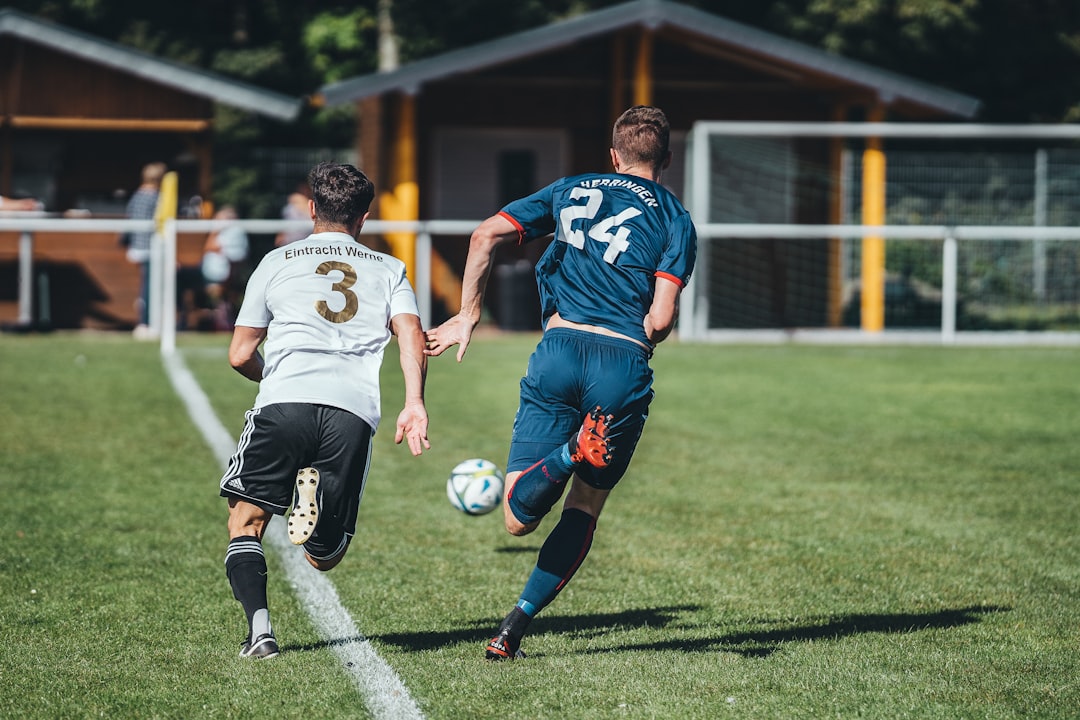
A challenge happens at full speed and looks like two players arriving at a ball. The replay comes back at a fifth of the speed and looks like an assault. Nothing in the footage has changed. The elbow was always there, travelling at the speed it travelled at, and the second version is the same event stretched across five times as many seconds.
Broadcasters know this, which is why the slow version is the one that airs. It holds attention, it resolves detail that full speed cannot, and it makes an incident feel decided. Officiating bodies also know it, and their instructions to review officials treat high-speed footage as useful for some questions and actively misleading for others.
That split is the useful thing to carry into a Sunday argument. There is a category of question the slow replay answers better than any human eye, and a category it answers worse, and the two get mixed together constantly.
Six things a slow replay changes
- It removes speed. The one variable that separates a mistimed challenge from a reckless one is the variable slow motion deletes.
- It adds apparent deliberation. More viewing time reads as more decision time, and more decision time reads as intent.
- It sharpens contact. A high frame rate resolves the exact frame of impact, which full speed blurs into a single event.
- It fixes positions. For factual questions such as whether a foot was on a line, that precision is the whole point.
- It exaggerates severity. Studies of officials have found harsher sanctions from identical incidents shown slowly.
- The rule of thumb. Slow for where and whether. Full speed for how hard and whether it was meant.
Why slow motion replay changes what a viewer concludes
The mechanism is not really about vision, it is about inference. When an action unfolds over five seconds instead of one, the brain estimates the time the actor had available from the time the observer just spent watching. Somebody who appears to have had a long moment to choose is judged as having chosen.
This has been examined directly. Experimental work on video speed and judgments of intent has found that identical footage played slowly produces higher ratings of premeditation than the same footage at normal speed, and the effect persists even when viewers are told the clip has been slowed. Related work with match officials found that slow motion did not make them better or worse at deciding whether a foul occurred, but did shift the severity of the sanction upward.
Both findings point the same way. The slow version does not add information about the actor’s state of mind, because that information was never in the footage. It adds a feeling of deliberateness, and viewers, including trained ones, convert that feeling into a judgment.
What the frame rate is actually doing
A standard broadcast camera records at the frame rate of the transmission, typically twenty-five or fifty frames a second in one half of the world and thirty or sixty in the other. Slowing that footage means holding frames on screen for longer, which is why an ordinary replay looks soft and slightly stuttered.
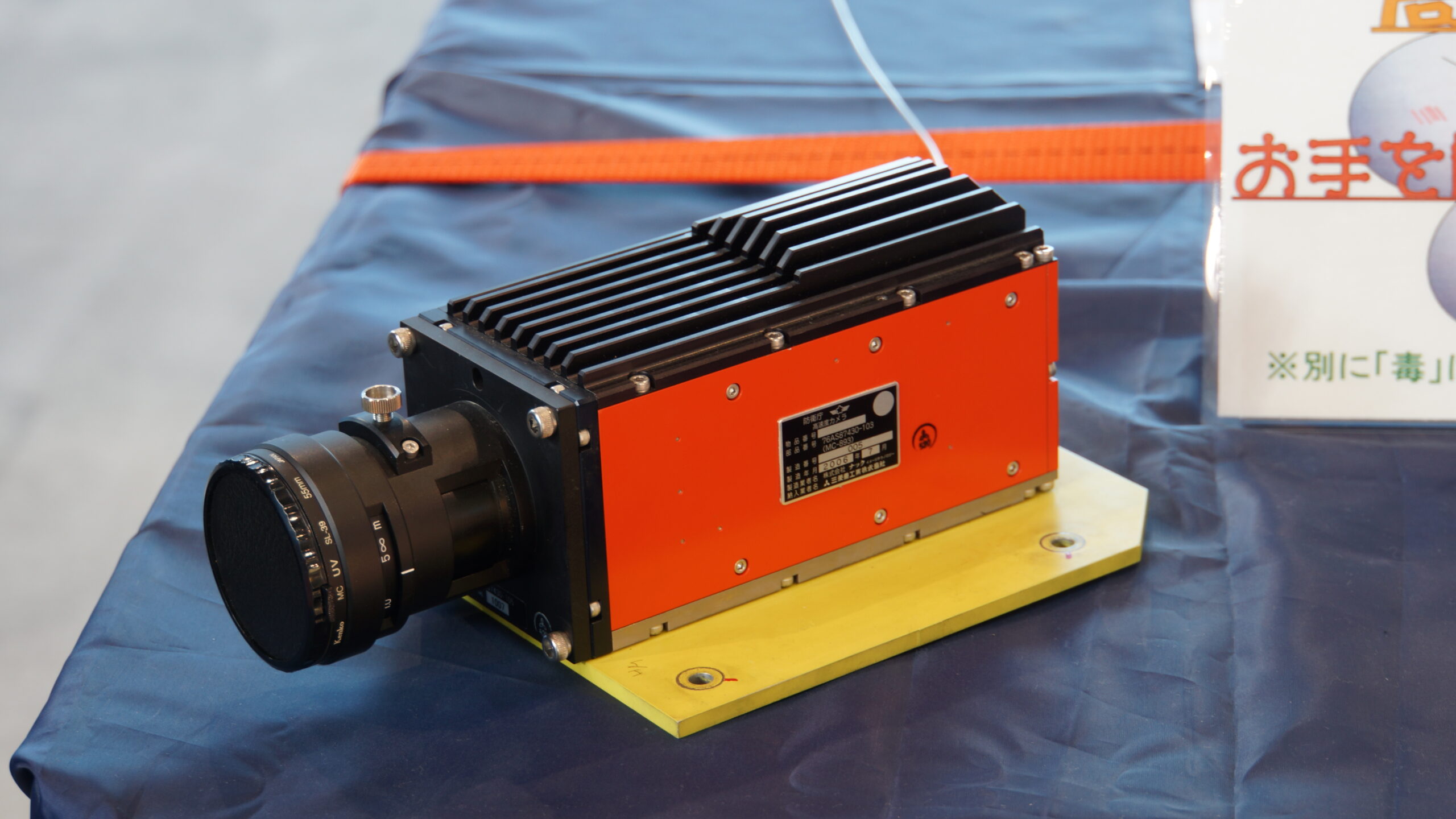
A super-slow-motion camera solves that by recording several times as many frames and playing them at normal rate, giving smooth motion at a fraction of real speed. The ultra-motion systems used for key incidents record faster still, into the hundreds and sometimes above a thousand frames a second, and their output can be stretched dramatically without breaking up.
There is a cost attached. More frames per second means less light per frame, so these cameras need either bright conditions or wide apertures, and wide apertures give a shallow depth of field. That is why an ultra-motion replay often has a beautifully sharp foot and a soft, unreadable background: the picture that best shows the contact is frequently the worst one for showing context.
Shutter speed, motion blur and the missing evidence
Frame rate is only half of it. Shutter speed controls how long each frame is exposed, and high-speed capture forces a short exposure, which freezes limbs that would otherwise smear. That crisp still of a boot on an ankle is a real record of one instant, and it is also a picture no eye has ever seen.
Motion blur is information. At full speed, the blur across a swinging arm is roughly how fast that arm was moving, and observers read it without thinking about it. Freeze the frame and the blur disappears, taking the velocity cue with it. What remains is a still photograph of contact, which looks the same whether the arm was travelling quickly or drifting.
The questions slow motion answers well
None of this argues against the technology, which is indispensable for a specific class of question. Where the answer is a fact about position or sequence, more frames is straightforwardly better, and the review protocols reflect that.
Whether the ball crossed a line. Whether a foot was ahead of the last defender at the moment of a pass. Whether a hand touched the ball before a knee. Whether contact happened inside or outside the area. Which of two events came first. Every one of those is a geometric or chronological question with a correct answer that exists in the footage, and a frame-accurate replay is the right instrument for it.
The football video review protocol makes the distinction explicit in its guidance to officials: slow motion for factual matters such as point of contact and position, normal speed for judging the intensity of a challenge or whether an offence was careless, reckless or excessive. That is not a stylistic preference. It is a direct response to the perceptual problem.
The questions it answers badly
Intent is the obvious one, and it is worth saying clearly that no camera has ever recorded intent. What footage records is movement, from which intent is inferred, and slowing the movement changes the inference without changing the evidence.
Severity is the second, and it is more surprising. How dangerous a challenge was depends on the energy in it, which is a function of speed, and speed is exactly what the replay has removed. A viewer watching a slowed collision has no reliable way to distinguish a heavy impact from a light one; both look like bodies meeting, slowly.
Avoidability is the third and least discussed. At quarter speed there is visibly enough time for a defender to withdraw a leg, because at quarter speed there is enough time for anything. At full speed the window between committing to a challenge and contact is frequently shorter than a human reaction, which is a fact about physiology, not effort.
The scale of that constraint is worth holding on to. A simple visual reaction takes something in the region of a fifth of a second, and changing a movement already under way takes longer than starting one, because the limb has momentum and the correction has to be planned. A defender who has committed his weight has passed the point where withdrawal is available, and no amount of replay will show the moment he could have stopped, because that moment came and went before the clip begins. This is the same failure of intuition that appears when people judge injury mechanisms from footage without knowing what the body was doing beforehand.
Camera position compounds the problem
Speed is not the only distortion in the frame. A long lens from the halfway line compresses depth, so two players separated by a metre can appear to occupy the same space, and a foot that missed can look like a foot that landed. The reverse angle from the far side can show the same incident with an obvious gap.
Height matters as much. A low camera behind the play flattens the vertical dimension and makes a boot look higher than it was; an elevated angle restores it. Neither camera is lying, and a replay operator selecting between them under time pressure is choosing which distortion the audience receives.
The combination is what produces the familiar experience of two supporters watching two replays and reaching incompatible conclusions in good faith. Both saw a truthful record of the same collision from a position that emphasised different things. Argument about the incident is really argument about the angle, which is a pattern that repeats every time a disputed clip travels widely.
Editing choices that add to the effect
By the time a clip reaches a feed it has usually been shaped, and each of the standard choices pushes in the same direction.
The freeze on the frame of contact turns a moving sequence into a photograph, and photographs carry an authority that footage does not. The zoom crops away the run-up, removing the information a viewer would need to judge whether the challenge was reachable. The repeat, three or four times in succession, increases familiarity, and familiarity is experienced as certainty.
The audio decision matters as much as any of them. An isolated effects microphone near the touchline can make ordinary contact sound severe, because a boot on a shin at close range is a loud noise regardless of how much force was behind it. The same play mixed under crowd noise reads as unremarkable. Where the clip begins is a decision too: starting it half a second later removes the approach, and starting it half a second earlier can turn a lunge into a reaction to something the opponent did first.
None of these are deceptions. They are the ordinary grammar of highlight editing, applied to a clip that will be used as evidence rather than entertainment, which is a use the grammar was never designed for. An editor cutting a package under deadline is optimising for clarity and pace, not for the evidential standard somebody will later apply to it in an argument.
A checklist for watching a disputed clip
Six questions, in order, before forming a view. They take about a minute and they prevent most of the common mistakes.
- Have I seen it at full speed? If not, no judgment about force or intent should be attempted yet. Full speed first, slow second.
- What is cropped out? Find the two seconds before contact. Most avoidability arguments are decided there.
- Which angle is this? Side-on with a long lens hides depth. Look for a second position before concluding anything about distance.
- Is the question factual or evaluative? Position and sequence are factual, and the slow replay settles them. Severity and intent are not.
- What was the player looking at? Eyes on the ball and eyes on the opponent are different pictures, and the difference survives slowing.
- Would I say the same at full speed? The last check. If the verdict only appears in slow motion, it is a verdict about the replay.
Full speed and slow, side by side
The table sets out which version of a clip supports which kind of statement. It is the same footage in every row.
| Question | Best viewed at | Why |
|---|---|---|
| Did the ball cross the line? | Frame by frame | Geometric fact, needs frame accuracy |
| Was the player level at the moment of the pass? | Frame by frame | Depends on identifying one exact frame |
| Was there contact, and where? | Slow motion | Full speed cannot resolve the point of impact |
| How much force was in the challenge? | Full speed | Force depends on velocity, which slowing removes |
| Could the player have avoided it? | Full speed | Slow motion invents reaction time that did not exist |
| Was it deliberate? | Neither, with care | Intent is inferred, not recorded, and slowing inflates the inference |
What this asks of anyone publishing clips
If a clip is being posted as an argument rather than as entertainment, the honest version includes the full-speed pass at least once. That single habit removes most of the distortion, and it costs three seconds of running time.
Labelling helps as well. A caption that says the sequence is at a quarter speed gives a viewer the information they need to discount their own reaction, and while the research suggests the effect does not vanish when people are warned, it does soften. Broadcasters generally identify super-slow-motion replays for exactly this reason.
The wider point is that replay technology has advanced faster than the conventions for reading it. The picture keeps getting sharper while the questions people ask of it stay the same, and closing that gap is a matter of habit rather than equipment, in much the same way that new tools in training outrun the practices built around them.
Frequently Asked Questions
Does knowing about the effect protect me from it?
Partly. Experimental work suggests that warning viewers reduces the bias without eliminating it, which is why the practical advice is procedural rather than mental: watch the full-speed version, do not simply remind yourself that the clip is slow.
Why do officials use slow motion at all if it distorts judgment?
Because most reviewable decisions are factual. Offside position, ball out of play, point of contact and identity of the offender are all questions with correct answers in the footage, and frame-accurate playback answers them. The protocols restrict slow motion for the judgment calls where it misleads.
Is a freeze frame ever fair evidence?
For position, yes, if the frame is correctly chosen. For anything involving force or momentum, no. A still image contains no velocity information at all, which is precisely why it can make a glancing contact look like a stamp.
How fast do the fastest broadcast cameras record?
The ultra-motion systems used for marquee incidents record in the hundreds of frames per second, and specialist units go above a thousand. They are expensive, need a great deal of light and are usually assigned to one or two positions rather than the whole camera plan.
Does the same problem exist in other sports?
Yes, wherever contact is judged. The vocabulary differs, but a review official deciding whether a hit was targeted, or whether a batsman offered a shot, is working with the same tension between frame accuracy and the perceptual cost of removing speed.
Watch the disputed clip once at full speed before you watch it slowly, and notice how often the second viewing tells you something the first one did not support.