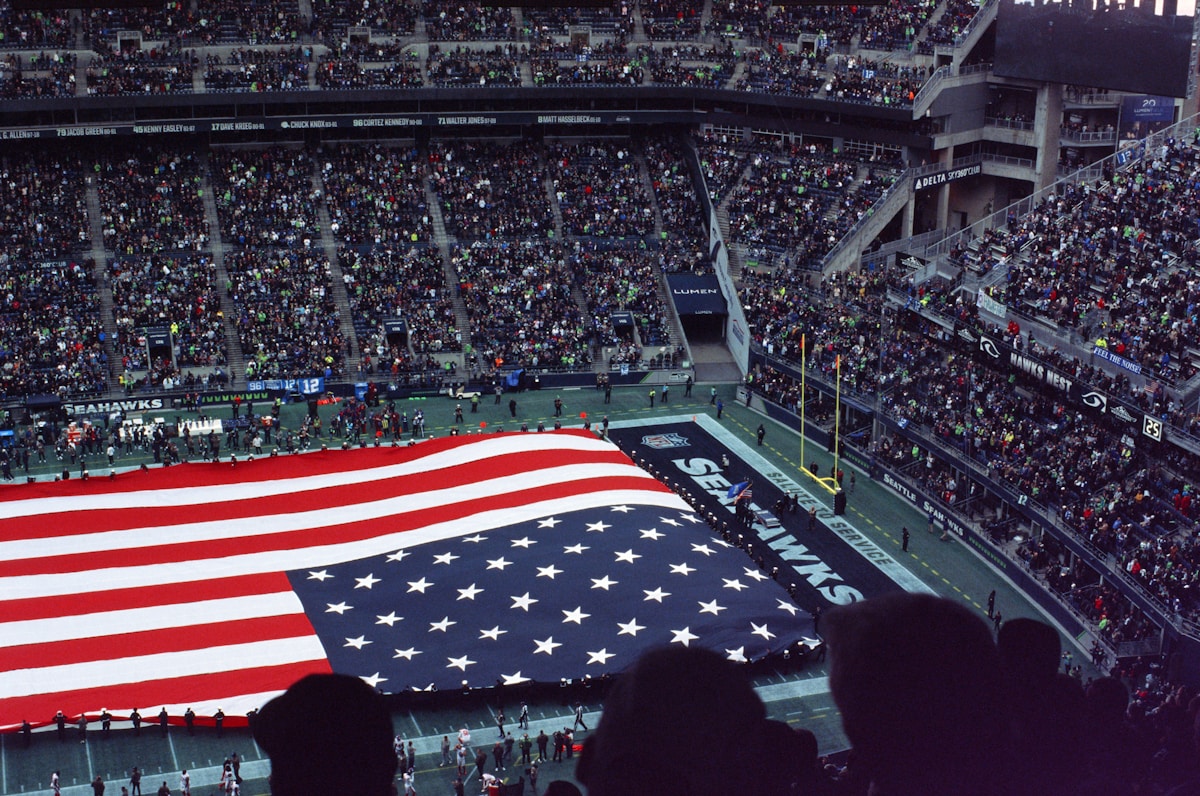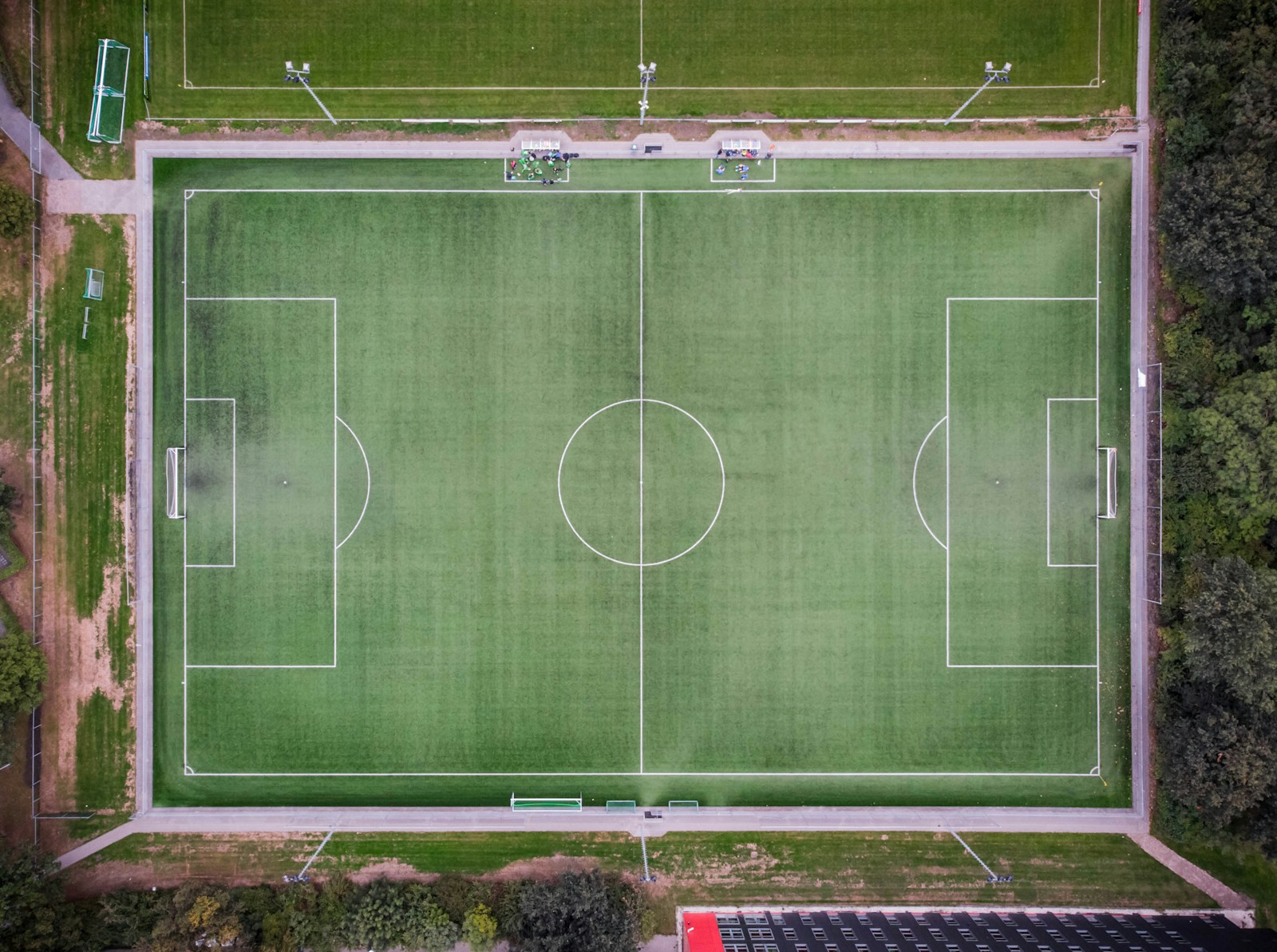

Anfield, October 2024. Liverpool against Chelsea, eighteenth minute. Chelsea’s center back receives a back-pass and looks up. Within two seconds, three Liverpool attackers — Mohamed Salah, Luis Díaz, and Cody Gakpo — have triggered a coordinated press, closing passing lanes to the wide center back, the holding midfielder, and the outlet fullback in nearly identical timing. The Chelsea center back panics, plays a hopeful long ball, and Liverpool’s holding midfielder collects it 35 yards from goal. Within six seconds, the ball is in the back of the Chelsea net. The Anfield crowd recognizes what happened. The Chelsea coaching staff recognizes what happened. Most of the watching audience recognizes what happened. What none of them, including most of the analytical writers covering the match, can articulate with much precision is the spatial choreography that produced it — the press map. The defensive shape Liverpool is running, the pressing triggers, the cover behind the front three, the timing of the trap. The play was not luck. It was a designed routine, executed against a specific opposing structure that the analytics team had identified as exploitable.
Press maps — the spatial representation of where on the pitch a team applies defensive pressure, with what intensity, and through what coordinated structure — are, in 2026, the cutting edge of public-facing football tactical analysis. The framework has existed inside clubs for at least a decade. The data and visualization tools to render press maps in a public-facing way have caught up only recently, primarily through the work of StatsBomb, Sky Sports’ analyst team, and a growing community of independent tactical writers. The maps reveal something that match-summary stats, xG totals, and possession percentages cannot: the geometric structure of how a team defends, where its weak points are, and how an opposing coach is likely to exploit those weak points if they have the right analytical staff.
I have been writing about football tactics and analytics from London since 2014, and the visualization framework that has changed my own analytical reading of matches most in the last five years is the one this article is going to unpack. Press maps and defensive shapes — what they show, how they’re built, where they break, and how to read them in a match preview or post-match analysis without overstating their predictive power, is the subject of this article.
The origin: where press maps came from
The conceptual roots of defensive-shape analysis in football go back decades — from the Hungarian “Magical Magyars” of the 1950s through Rinus Michels’s Total Football, Arrigo Sacchi’s Milan, and the Pep Guardiola Barcelona era. Coaches have always thought about defensive shape geometrically. What changed in the last decade is the availability of tracking data that lets the geometric thinking be measured and visualized at scale.
The first publicly-circulated press maps emerged from Ted Knutson’s StatsBomb in the late 2010s. Knutson’s team published heat maps showing where opposing teams completed defensive actions — tackles, interceptions, recoveries — and these heat maps, while not full press maps in the modern sense, were the public’s introduction to spatial defensive analysis. The maps revealed something interesting: most Premier League teams had a “press zone” of high-intensity defensive activity that occupied a particular region of the pitch, and the zone’s location varied dramatically by manager and tactical philosophy.
The next step came from tracking-data-derived press maps, which use the optical-tracking and GPS data captured during matches to reconstruct each team’s defensive shape moment by moment. The maps can show, for any given moment in the match, where each defender is positioned, what triggers caused the press, and how the geometric structure evolved during the press. The technical work behind these visualizations is significant; the public-facing versions have emerged primarily through partnerships between data providers (StatsBomb, Skillcorner, second spectrum) and analytical writers.
By 2023, the public version of press-map analysis was robust enough to support serious tactical writing. The Athletic, Tifo Football, and a network of independent tactical analysts (Joey Pierno, Mark Carey, Liam Tharme) all published press-map breakdowns in their match coverage. The Bayer Leverkusen 2023-24 unbeaten season, the Brighton-De Zerbi era, and the Manchester City-Guardiola defensive transitions were all extensively analyzed through the press-map framework. The conversation has matured.
How press maps work: in plain language
A press map, in its simplest form, is a spatial visualization of where on the pitch a team applies defensive pressure. The pitch is divided into zones (typically a 6×6 or 12×8 grid). For each zone, the map shows the intensity of opposing-team pressing — measured by frequency of defensive actions (tackles, pressures, interceptions) and by recovery time (how quickly the team retrieves possession after losing it in that zone).
The visualization typically uses a heat-map color scheme: red for high-intensity zones, yellow for medium-intensity, blue for low-intensity. A team with red zones high up the pitch — in the opposing team’s defensive third — is a high-pressing team that initiates pressure near the opposing goal. A team with red zones in its own defensive third is a deep-block team that absorbs pressure and counter-attacks.
The deeper press maps add triggering information — what specific opposing-team actions cause the press to engage. The most common pressing triggers in the modern game are: a back-pass to the goalkeeper or center back, a sideways pass between center backs, a touch that the receiver takes facing his own goal, and a delayed touch (the so-called “second touch” trigger). Different teams have different trigger preferences, and the differences are tactically meaningful.
The fullest press maps add structural information — how the pressing team’s shape coordinates. Liverpool under Klopp ran a 4-3-3 high press with the front three setting the press and the midfielders backing up the cover. Manchester City under Guardiola ran a higher-line, more positional press that relied on individual marking with structural cover. Bayern Munich under Tuchel ran a more aggressive coordinated press with multiple trigger points. The structural differences produce different press-map signatures and require different responses from opposing coaches.
The critical component: pressing intensity vs success rate
The single most important distinction in press-map analysis is between pressing intensity (how much pressure a team applies) and pressing success rate (how often that pressure produces a turnover or limits the opposing team’s progression). A team can apply intense pressure that yields nothing because the opposing team’s ball-circulation skill or the goalkeeper’s quality breaks the press. A team can apply moderate pressure that succeeds frequently because the timing, coordination, and triggers are well-tuned to the opposing team’s specific weaknesses.
The mainstream coverage of pressing — particularly in the Klopp Liverpool era — often conflated the two, treating “pressing more” as automatically equivalent to “defending better.” The data does not support this. The teams that have, in recent seasons, produced the cleanest pressing analytics have been the ones with above-average intensity AND above-average success rate. Liverpool 2018-2022, Brighton 2022-24, Bayer Leverkusen 2023-24, Manchester City across the Guardiola era — these were teams whose pressing was not just hard but specifically effective against the opposing structures they faced.

Press maps vs the alternatives: a comparison
The major frameworks for analyzing defensive shape, side by side:
| Framework | What it measures | Where it shines | Where it breaks |
|---|---|---|---|
| Press maps | Spatial pressing intensity and triggers | Tactical structure, opposing-team analysis | Requires tracking data; visualization can mislead without context |
| PPDA (passes per defensive action) | Average passes opposing team makes before being pressed | League-wide single-number pressing intensity | Doesn’t capture spatial or structural detail |
| High turnovers | Count of possessions won in the final third | Direct pressing success metric | Volume-dependent; doesn’t capture failed presses |
| Pressing success rate | %% of presses that produce turnover or progression denial | Quality measurement of pressing | Hard to measure consistently across providers |
| Defensive line height | Avg position of the defensive line during match | Strategic intent indicator | Single-number summary; loses spatial nuance |
The honest reading uses two or three of these in concert. PPDA gives a league-wide single-number comparison. Press maps add the spatial detail. Pressing success rate filters for quality. The combination produces tactical analysis that survives a single match’s variance.
What the data needs: inputs
Press-map analytics is data-hungry in a way most public football analysis is not. The minimum input is tracking data — the position of every player on the pitch, sampled at 25 hz or higher — for every match in the dataset. The data is currently provided by a small number of commercial vendors (StatsBomb, Skillcorner, Second Spectrum, Stats Perform) and is, in 2026, largely behind paywalls.
The pressing-related event data (when a defensive action occurred, what triggered it, what the outcome was) requires frame-by-frame video charting in addition to the tracking data. The chartists watch the play and tag the press trigger and outcome at the moment of action. StatsBomb’s commercial product includes this layer; the public versions usually don’t.
For writers without commercial data access, the workable substitutes are FBref’s defensive action heat maps (volume of defensive actions by zone, not full press maps but useful for spatial intuition), StatsBomb Open Data (limited matches with full detail, freely available for research use), and the match-summary visualizations at The Athletic and Tifo Football, which use the commercial data in writing for general audiences.
Building the analysis: a working framework
The practical workflow for using press-map thinking in tactical writing:
- Start with the team’s overall PPDA. Low PPDA = high-pressing team. Mid PPDA = mid-block. High PPDA = deep-block team. The number is rough but orienting.
- Look at high turnover rate (possessions won in the final third). A high-pressing team should have above-average high turnovers; a deep-block team should have low high turnovers but better deep-block-derived chances.
- If press-map visualization is available, identify the team’s press zones. Are the red zones high up the pitch (against center backs and goalkeeper)? Around midfield (against the holding midfielders)? Lower (against the build-up after they cross midfield)?
- Cross-reference with conceded chance quality. A high-pressing team that concedes few but high-quality chances may be vulnerable to long-ball bypass; a deep-block team that concedes many low-quality chances may be doing exactly what their tactical plan intends.
- Watch the matches with the data in hand. The press-map analysis works best as a guide to what you’re watching for in real time, not as a replacement for the watching itself.
Where this gets weird: common mistakes
The pitfalls of press-map writing.
Volume vs quality conflation. A team with many defensive actions in a particular zone is doing a lot of work there; whether that work is producing good outcomes is a separate question. Press maps that show only volume can suggest a team is “pressing well” when they are, in fact, pressing a lot without success.
Single-match samples. A single match’s press map is a snapshot of one game’s dynamics. Two matches against very different opposing structures will produce very different press maps for the same defending team. The structural press identity of a team only emerges over 8-12 matches of data.
Defender-by-defender attribution. Press maps show aggregated team behavior. They do not credit individual pressers. A team’s pressing system may depend heavily on one or two key players (a hard-running striker who triggers the press, a midfielder who reads situations well) without the press map showing this. Combining press maps with individual defensive action data fills part of this gap.
The “the press is the strategy” overstatement. Most modern teams have multiple defensive postures they shift between depending on opponent and game state. The press map shows the team’s average behavior, which can blur the underlying tactical flexibility. A team that presses high in some matches and sits deep in others looks like an average mid-block team on the season-aggregated press map.
The “we just need to press more” coaching trap. Smaller clubs occasionally hire press-philosophy coaches without the personnel to execute the press well. A high-press requires fit, athletic, coordinated players. Imposing it on a roster without those traits produces poor results. The press-map evidence has helped clarify which teams the press philosophy actually works for and which teams it doesn’t.
When press maps shine: use cases
The applications:
Opposition analysis before a match. A scout preparing a match preview can use the opposing team’s press map to identify exploitable zones. A high-pressing team that concentrates its press on the center back exchange but leaves the wide channels relatively open is vulnerable to a fullback bypass; a coach preparing for them can train specific exit routes. This kind of analytical preparation is now standard inside professional clubs.
Manager evaluation across multiple teams. Managers who have produced consistent press-map signatures across multiple clubs — Jürgen Klopp, Pep Guardiola, Marcelo Bielsa, Roberto De Zerbi — are doing something replicable. The maps show that. Managers whose press structures vary wildly across teams may be more reactive than the prevailing narrative suggests.
Player-level role identification. A wide forward who is asked to trigger the press is in a different role than one who is not. Press maps, combined with individual defensive action data, can identify the “pressing engines” within a team and the players whose roles depend more on structural cover than active pressing.
League-wide tactical trends. Aggregated press maps across an entire league can reveal where the tactical zeitgeist is heading. The Premier League’s increasing reliance on high pressing, the Bundesliga’s tradition of structured pressing, La Liga’s broader range of approaches — these league-level patterns are visible in the data and inform how analysts read the broader football culture.
A working example: Bayer Leverkusen 2023-24
Bayer Leverkusen’s 2023-24 Bundesliga unbeaten season produced one of the cleaner press-map case studies of the modern era. Xabi Alonso’s team ran an aggressive but spatially-disciplined press, with the front three coordinating triggers in nearly identical timing across matches. The press map showed dense red zones in the opposing team’s defensive third and clean structural cover behind, with very few “broken press” sequences (where one defender presses without the others backing them up).
The success rate of Leverkusen’s pressing was elite. Across the season, opposing teams converted only 38% of their build-up sequences from their own defensive third into the attacking half — well below the Bundesliga average of 53%. The chance quality conceded was correspondingly low. The team’s defensive identity, captured cleanly in the press maps, was a major factor in the unbeaten run.
What made Leverkusen’s pressing particularly instructive analytically was the opposing-team adaptation pattern. By the middle of the season, several Bundesliga managers had built tactical responses specifically aimed at the Leverkusen press — longer goal-kicks to bypass the front three, faster ball circulation through the midfield, more direct attacking patterns. The press map response, in Leverkusen’s matches against these adapted opponents, shifted: more dense red zones around the midfield trigger point, less concentration on the back-line build-up. The team adapted in response to the adaptations. The press map captured both halves of the tactical conversation.
The limits: what press maps cannot tell you
The clean version names the limits.
Press maps cannot capture individual quality. A team’s collective press depends on each player’s pressing technique, decision-making, and physical condition. The aggregated map doesn’t show whether a striker is pressing well or pressing badly within his role; it only shows the spatial pattern. Combining with individual defensive action data fills part of this gap.
Press maps cannot model goalkeeping. The modern game has elevated goalkeeper distribution to a tactical weapon — a goalkeeper who can play out from the back under pressure changes the entire pressing dynamic. Press maps don’t capture the goalkeeper’s contribution to break the press or to invite it; that requires separate analysis.
Press maps cannot predict match outcomes. A team with a structurally elite press will lose to a team that, on the day, executes a clean tactical response. The map captures the average tendency. The single-match outcome depends on execution, motivation, weather, and the dozens of micro-decisions that any model cannot fully predict.
Press maps cannot fully resolve the system-vs-personnel question. A team’s pressing identity is partly the coach’s design and partly the players’ ability to execute. Identical schemes implemented by different players produce different press-map signatures. The framework can identify which teams are doing what; it has more difficulty saying who is responsible for the doing.
One additional limit: the public-facing infrastructure for press-map analysis is still uneven. Major leagues (Premier League, Bundesliga, Serie A, La Liga) have reasonable public coverage, mostly through commercial data partnerships. Lower-tier leagues and women’s football have less. The analytical writing in 2026 is meaningfully better-resourced for some competitions than others, and the gap should be named when relevant.
Frequently asked questions
What is a “good” PPDA for a high-pressing team?
Below 10 PPDA indicates a high-pressing team; 6-8 PPDA is elite-level pressing intensity. Manchester City under Guardiola has typically run around 7-9 PPDA in recent seasons; Liverpool under Klopp ran around 8-10. Below 6 is unusual and typically not sustainable across a full season.
Do all high-pressing teams play the same way?
No. The structural details vary substantially. Liverpool’s 4-3-3 press relied on the front three coordinating triggers with midfield cover. Manchester City’s press is more positional, with wide players engaging in specific zones. Bayer Leverkusen’s press was aggressive but spatially disciplined. Each system has different vulnerabilities and different ideal personnel.
Can I see press maps without a commercial subscription?
Limited public versions exist. StatsBomb Open Data provides full press-map detail for a small set of matches. Tifo Football’s video analyses occasionally show press-map visualizations for high-profile fixtures. The Athletic’s tactical pieces by writers like Liam Tharme and Mark Carey use commercial data to publish accessible writing. The fullest commercial versions remain behind StatsBomb, Skillcorner, and Stats Perform paywalls.
Are press maps changing how managers prepare?
Yes, substantively. Top-flight clubs in Europe have been using press-map analysis in opposition preparation for at least five years. The trend is now reaching the Championship and second-tier leagues across Europe. The analytical edge that the framework once provided is partially eroded as it becomes standard. The next frontier is likely in real-time press-map updates during the match itself, which a few clubs are already piloting with in-game analytics dashboards.
Sources and further reading
- StatsBomb — the leading commercial provider for press-map data and the source of the most-cited public-facing press-map visualizations.
- Tifo Football — analytical writing and video that consistently surfaces press-map context in their tactical coverage.
- The Athletic football coverage — Liam Tharme, Mark Carey, and others writing tactical pieces grounded in press-map analysis.
- FBref — public-facing defensive action heat maps as an accessible substitute for full press-map detail.
- Skillcorner — tracking-data provider that powers some of the public-facing press-map work in mainstream coverage.
The Liverpool press that opened this article — the eighteen-minute coordinated trap that ended in a goal — was a designed routine, not luck. The press map for that match, reconstructed after the fact, showed exactly the pattern the analytical staff had identified before kickoff: Chelsea’s center back exchange was vulnerable to a coordinated three-front-press, the timing window for the trigger was 1.8-2.2 seconds, the cover behind would isolate the long-ball outlet. The execution was the players’ work. The structure was the analysts’ work. For the broader frame on how to read modern football’s analytical landscape, our guide to possession value is the natural companion piece.