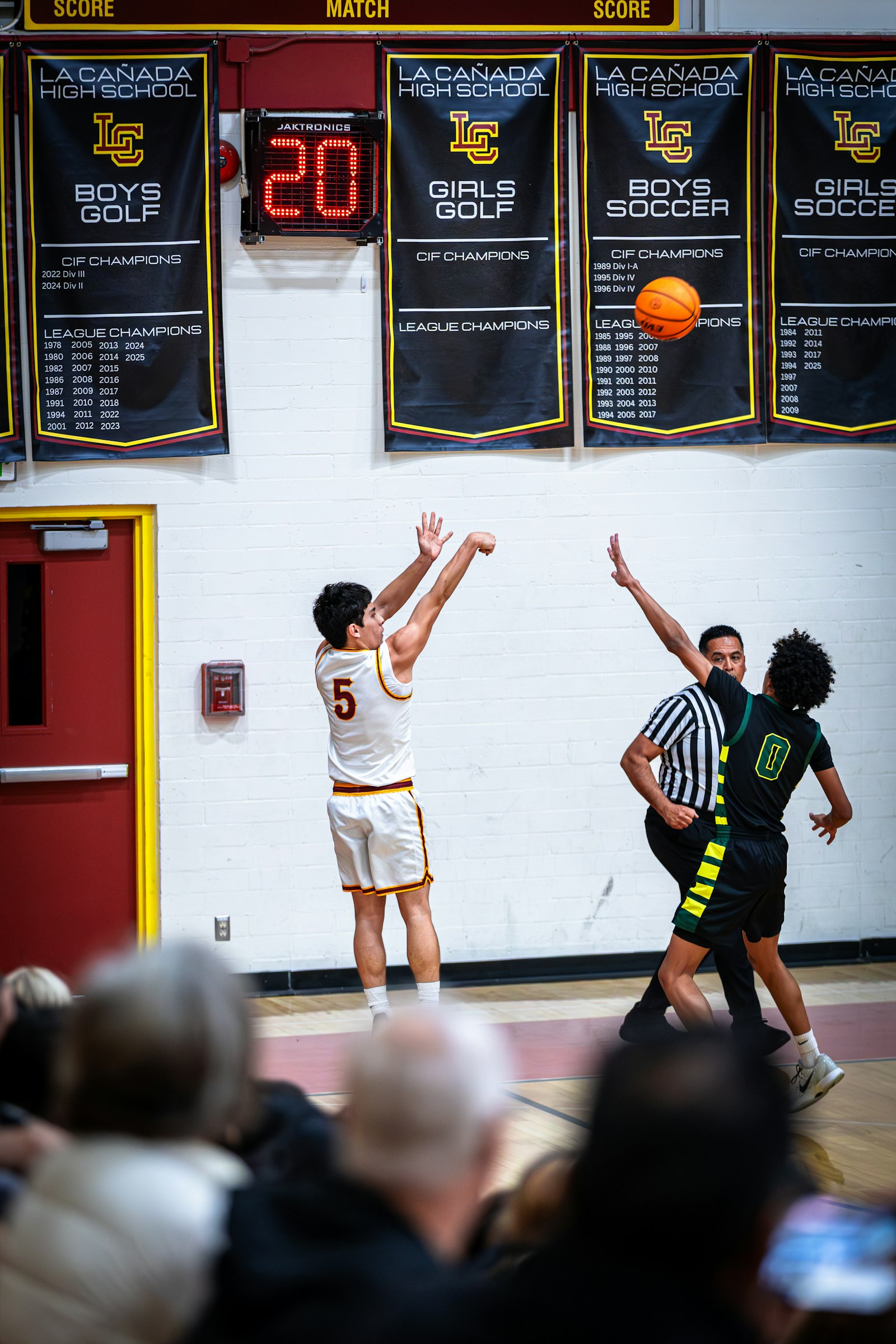

There is a certain NBA box score that arrives every winter wearing a trench coat. The star scored 34. He took 27 shots. He had seven assists, five turnovers, and a plus-minus that looks like a typo from a hostile intern. The postgame argument splits immediately into two camps. One says he carried them. The other says he hijacked them. Both sides point at usage like it is a confession.
This is where usage rate becomes a mirage. It shows how much of the offense ran through a player while he was on the floor. It does not automatically tell you whether that burden was heroic, destructive, necessary, or the least bad option in a lineup with three non-shooters and a power forward auditioning as a table.
Usage is not a halo. It is not an indictment. It is a load-bearing stat. You still have to inspect the building.
What usage rate actually tells you
The basic idea is straightforward: usage rate estimates the share of team possessions a player finishes through a shot attempt, free throws, or turnover while on the court. It is a role stat before it is a value stat. High usage means the player is ending a lot of possessions. It does not mean he is ending them well.
The NBA Stats glossary gives the official terms. Basketball Reference gives historical context. The interpretation problem starts when we treat usage like a moral category. High usage can mean trust. It can mean necessity. It can mean the offense has no second option. It can mean the player does not believe in passing to the corner because the corner has betrayed him before.
Burden versus control
The best way to read usage is to separate burden from control. Burden is how much responsibility the player carries. Control is how much agency he has over the quality of the possessions he finishes.
A primary creator facing two defenders above the break carries a heavy burden. A rim-running big finishing spoon-fed dunks may have lower usage but cleaner control. A bench gunner with a green light may have high usage and almost no responsibility to create for others. The number alone cannot tell those stories apart.
This is why our Iverson Line piece matters. Raw production can outlive the box score only when you understand the burden behind it. Allen Iverson was not an efficiency spreadsheet’s dream, but any fair reading of his prime has to account for role, spacing, era, and offensive architecture. Usage is where that argument starts. It is not where it ends.
Where this gets weird
The weird part is that a high-usage player can be both overtaxed and inefficient at the same time. Fans hate this because they want a clean verdict. Either the star is dragging a bad roster uphill or he is the reason the hill exists. In reality, the league is full of players doing necessary work badly because the alternative is worse.
A guard can take too many pull-up twos and still be the only player on the roster capable of bending the defense. A wing can turn the ball over too often and still be the only one making second-side reads. A center can look limited as a passer because the spacing around him is a haunted house. Usage will show you the responsibility. It will not grade the available choices.
This is the part of player analysis that separates serious writing from scoreboard court. The question is not “did he shoot too much?” The question is “what happened to the offense when he did not?”
The efficiency trap
Efficiency is essential. It is also lazy when used without role context. A 62 percent true shooting finisher and a 57 percent true shooting creator are not automatically in the order the spreadsheet suggests. Shot difficulty matters. Self-creation matters. Late-clock possessions matter. Defensive attention matters.
That does not excuse bad shot selection. It explains why bad shot selection sometimes appears inside a functional offense. The star who takes the ugly late-clock jumper may be bailing out a possession that died eight seconds earlier. The box score charges him. The film indicts the entire room.
A better usage checklist
- What percentage of the player’s shots are self-created?
- How often is he creating for teammates, not just finishing possessions?
- What happens to team efficiency when he sits?
- How much spacing does he have?
- Are the turnovers aggressive creation turnovers or loose-handle disasters?
- Does his usage rise because of design, injury, or panic?
Those questions make the stat slower. Good. The fast version is how we end up yelling about a player from a screenshot.
What the great sites get right
Good NBA analysis tends to start with the human pressure point, then brings in the stat. The Ringer does this when it lets personality and tactical detail share the same paragraph. FiveThirtyEight did it by refusing to let a model answer a question without showing its assumptions. Cleaning the Glass does it by filtering the environment before turning a number into a sentence.
That is the structure worth copying: scene, metric, caveat, weirdness, testable takeaway. Not because it is cute. Because it keeps the writer from pretending one number can do five jobs.
The teammate tax
Usage rate becomes much more honest once you price in teammates. A creator playing with two credible shooters is doing a different job from a creator playing with one shooter, one non-shooter, one cutter, and a center whose defender has moved into the paint permanently. The box score sees the same missed pull-up. The possession sees a dead end.
This is why lineup data matters for player evaluation. A high-usage player can be inefficient because he is making poor choices. He can also be inefficient because the defense has no reason to respect anyone else. Those are different articles. If the writer does not separate them, the reader gets a courtroom sketch instead of a case.
The late-clock bucket
Late-clock possessions are where efficiency goes to get mugged. Someone has to take the shot when the first action dies, the second action never arrives, and the possession has six seconds left. That someone is usually the high-usage player. The miss counts the same. The context does not.
This does not absolve stars from bad habits. It just keeps the analysis from treating every attempt as equally voluntary. A pull-up with 18 seconds left and a pull-up with three seconds left are not siblings. They are distant cousins who met once at a wedding.
The creation ladder
The cleaner question is where a player sits on the creation ladder. Can he score only after someone else bends the defense? Can he punish a rotation? Can he create a good shot against a set defense? Can he create a good shot for someone else after the defense sends help? The higher the rung, the harder the job, and the more carefully usage has to be read.
That ladder is why two players with similar efficiency can have different value. One is finishing the advantage. The other is manufacturing it. Usage rate points toward the burden. The ladder tells you whether the burden is rare.
The callback
So when the 34-point box score shows up in its trench coat, do not ask usage rate to solve the case. Ask it to identify the suspect. Then check the lineup, the spacing, the shot clock, the second unit, the turnover tape, and the poor soul in the corner who has not hit a three since Tuesday.
Sometimes the star carried them. Sometimes he hijacked them. Most nights, inconveniently, he did both.
Four box scores, one usage number, four different jobs
Usage rate is the cleanest stat to misread because the number is identical for players doing wildly different work. Here is what a 30% usage night looks like across four real archetypes from recent NBA seasons.
| Archetype | Recent example | What 30% usage means here | Why the efficiency reads differently |
|---|---|---|---|
| Primary creator, no spacing | 2024 Westbrook with the Clippers’ second unit | Carrying the offense because no teammate can | Bad efficiency, but the alternative is worse possessions |
| High-end scorer with spacing | Devin Booker in a healthy Suns lineup | Earning shots inside a functional offense | Strong efficiency at high usage = elite signal |
| Empty-calorie volume scorer | Late-career Carmelo Anthony stretches in Portland | Burning possessions teammates could finish better | Decent point totals, weak team net |
| Bench gunner with a green light | Jordan Poole 2022 sixth-man minutes | Pure scoring license inside controlled spacing | Efficient bursts, but no playmaking burden |
The usage column is identical. The role inside that usage is not. This is why the same stat line — 28 points, 22 shots, 4 assists, 3 turnovers — can describe a top-15 player or a player his coach is quietly trying to phase out.
Frequently asked questions
What counts as “high” usage in 2025?
League average is 20% by definition. Anything north of 28% qualifies as primary-creator territory. Above 32% is in the historical range of Westbrook, Harden, Doncic, and Embiid in their peak years. Usage above 35% across a full season has been done by fewer than a dozen players in NBA history, and almost all of them played on teams that lost in the playoffs to a more balanced roster.
Is high usage always bad for efficiency?
On average, yes. Marginal shots are harder than average shots, and defenses tilt toward primary creators. But the exceptions are the most valuable players in the league. Jokic, Curry, and Doncic have all sustained elite true shooting at top-quintile usage. That combination, “efficiency at usage,” is the single hardest skill to maintain across a career.
How does usage interact with team net rating?
A high-usage player on a great offense is usually carrying real value. A high-usage player on a bottom-ten offense may be exposing the roster more than supporting it. The on/off split tells you which. If team offense gets worse when the star sits, the usage is doing work. If it stays the same, the usage was costuming the same outcomes with the star’s name on them. Our net rating piece covers the discipline for reading those splits without embarrassing yourself.
Does usage rate mean anything in soccer?
Not directly. The football equivalents are touches in the attacking third, progressive carries, shot creation, and final-third entries. Each of those is closer to a usage analog than total touches. The principle travels even if the metric does not: how much responsibility a player carries should be read alongside what the rest of the system makes possible.
The takeaway, in one paragraph
Usage rate is a load measurement, not a judgment. The trench-coat box score wants you to confuse the two. The honest read separates burden from control, then checks whether the offense suffers when the star sits. For the next layer of the conversation — how five-man combinations turn that usage into actual margin — our lineup synergy piece picks up exactly where this one ends.