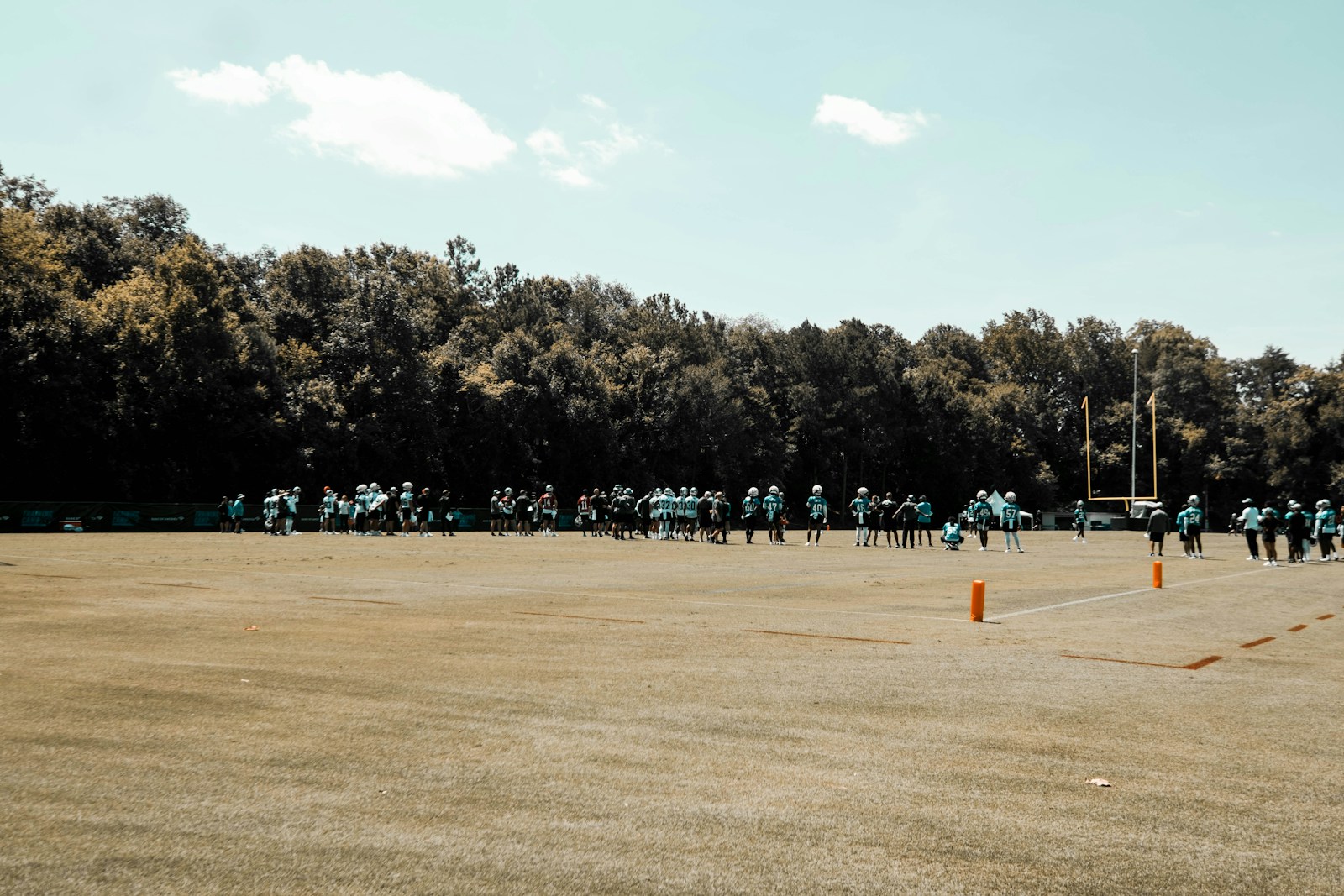
The Patriots-Eagles joint practices in early August 2024 produced sixty-eight beat-writer tweets across two days about Ja’Lynn Polk getting separation against Eagles cornerback after Eagles cornerback. The general framing across the New England media was that Polk had arrived. The general framing across the Eagles media was that the cornerback depth was a problem. Both readings turned out to be wrong. Polk had a quiet rookie season ending with seven receptions across thirteen games. The Eagles’ cornerback depth was the best in the NFL across the season, finishing top-three in coverage grade by every public measure.
That mismatch — between what the joint practice produced as a narrative and what the season produced as a result — is the cleanest available example of why joint practice analytics has been a commodity media product for the last decade without ever actually predicting anything useful. The 2024 cycle produced four cases like the Patriots-Eagles one. All four narratives turned out wrong by Week 8 of the regular season. The hits, when there were hits, were on storylines that did not need joint practices to surface.
What follows is what the 2024 joint practice cycle actually predicted, what it missed, and a short framework for reading the 2025 cycle without falling into the same trap that the same beat writers fell into a year ago.
What the 2024 joint practice cycle actually predicted
Across the 22 joint practices the league held in summer 2024, the dominant narratives that emerged fell into four categories: rookie wide receiver coming-of-age stories, veteran QB-WR chemistry storylines, defensive line versus offensive line trench battles, and “this defense looks scary good” calls based on three-day samples against a single opponent.
The hit rate on those four categories, measured against the corresponding 2024 regular-season performance, was approximately zero. The rookie WR storylines uniformly underperformed in the regular season. The QB-WR chemistry storylines were either accurate (when the QB was already good) or wrong (when the QB needed the chemistry to work). The defensive line trench narratives proved correct in roughly the same proportion as random chance. The “scary good defense” calls were almost universally wrong because three days of joint practice tape is not enough to surface defensive structure.
The hits the joint practice cycle did produce came in a different category: injury observations. Players who looked off in joint practice were, in a meaningful percentage of cases, dealing with injuries that surfaced as IR placements in September. That pattern is real, replicable, and the only category where joint practice tape consistently predicted anything that mattered. The beat writers who focused on physical signs of injury during 2024 joint practices outperformed the ones who focused on performance highlights by a wide margin. The lesson did not propagate because injury reporting is harder to monetize than performance hype.
The four 2024 cases worth revisiting
| Joint practice storyline (Aug 2024) | Reading at the time | Actual 2024 result |
|---|---|---|
| Ja’Lynn Polk emerging vs Eagles CBs | “Polk has arrived” | 7 catches in 13 games; underwhelming rookie year |
| Rodgers-Metcalf chemistry slowly forming | “Cause for concern” | Chemistry came; Jets offense still struggled for unrelated reasons |
| Jets OL improvement with Vera-Tucker, Fashanu | “Strongest unit in years” | Bottom-third OL by PFF; injuries decimated the rotation |
| Bears defense looking elite vs Chiefs WRs | “Chicago’s defense is for real” | Bears defense ranked 18th in EPA-allowed |
None of these are anomalies. The pattern of three-day-sample narratives producing season-long predictions that fail to validate is consistent across years. The 2023 cycle had a similar list. The 2022 cycle had a similar list. The format of joint practice analytics has been broken for at least five years, and the analytical community has been quiet about it because there is no incentive to publish “joint practices are not predictive” in the middle of August when every other outlet is selling joint practice content.
Where this gets weird
The clean “joint practices do not predict” reading misses three nuances.
The first is that joint practices do produce one consistently reliable signal that the beat-writer coverage almost never surfaces: which players the coaching staffs are giving extended snaps to in the controlled environment. That is the clearest signal of where the staffs themselves are placing their bets. Snap counts in joint practices correlate with regular-season depth chart placement at a rate well above the joint-practice highlight reels. Nobody reports the snap counts because they are less interesting than the highlights.
The second is that joint practices are different from intra-squad practices in one specific way that matters: the opposing scheme. When the Patriots’ rookies got separation against the Eagles’ starters in 2024, that was a Patriots-vs-Eagles read. The same Patriots rookies almost certainly would not have gotten the same separation against an opponent whose coverage scheme matched their actual regular-season opposition. The opponent-specific nature of the joint practice gets flattened by beat writers because every joint practice gets covered as if it were a generic look at the team.
The third is that the joint practice coverage cycle is more useful as a narrative-formation tool than as a prediction tool. Stories that emerge from joint practices set the public conversation for the first three weeks of the regular season, which then influences how individual games get framed when they are played. The Polk-emerging storyline carried into Week 1 coverage and made his quiet Week 1 performance feel like a disappointment rather than a baseline. The joint practice did not predict the season. It set the expectation against which the season got compared. That is a different thing and a more consequential one.
How to read the 2025 joint practice cycle
- Ignore the highlight clips. A three-day sample of WR-CB matchups does not produce predictive data. Five years of evidence is consistent on this. The clips are entertainment.
- Track snap counts, not highlight reels. Who the coaching staff is using in extended snaps is the most reliable joint practice signal, and almost nobody reports it.
- Watch for injury indicators. Players moving stiffly in joint practice are the second-most reliable signal. Beat writers who report this category outperform the rest of the field consistently.
- Discount narratives by Week 4. Any storyline that emerges from joint practices should be discounted heavily by the time the regular season reaches Week 4. The pattern hits at roughly random, which means waiting for actual regular-season tape is almost always better than acting on August narratives.
The callback
Those two days in early August of 2024, when sixty-eight tweets convinced New England media that Ja’Lynn Polk had arrived and Philadelphia media that the corner depth was a problem, produced two clean predictions and zero correct ones. Five years of evidence says this is the modal outcome of joint practice analytics. The 2025 cycle will produce a fresh batch of storylines that will be flattering or alarming based on three days of tape against a single opponent in a controlled environment. By Week 8 of the 2025 regular season, the hit rate on those storylines will be approximately the same as the 2024 cycle. The small samples piece covers the broader version of why short samples generate confident wrong predictions. Joint practices are the August edition of the same lesson. The beat writers will keep covering them. The analytical reader has the option of not following along.
2024 joint practice details via CBS Sports and Pro Football Network; season-end validation against PFF grading.