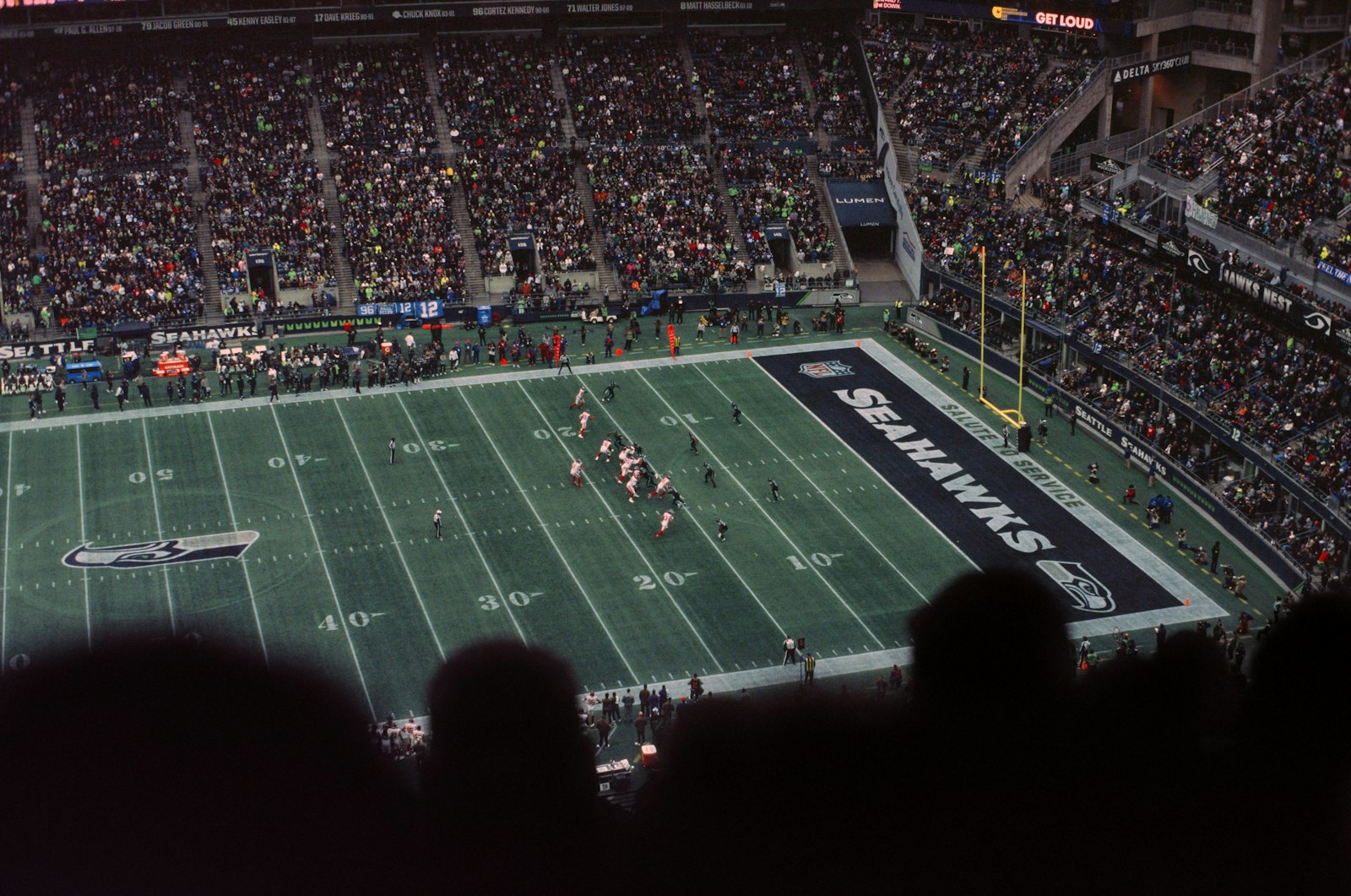

The Buccaneers and Steelers played a preseason game in Pittsburgh on a Saturday afternoon in early August. Aaron Rodgers played one drive — three completions, a 12-yard scramble, a punt. He came off the field at the seven-minute mark of the first quarter and put on a baseball cap. The Steelers crowd cheered politely. Across the league that same weekend, twelve other starting quarterbacks took exactly the same number of snaps as Rodgers (between three and eleven), and the postgame coverage spent its primary attention on the backup quarterback competitions and the rookie wide receiver highlights that the actual season would not validate. This is the structural design of NFL preseason football in 2025. The starters do not play. The story the coverage tells is about the players who do.
The actual analytical signal that the preseason produces sits in the snap counts, not the highlights. Who plays third-team versus second-team. Which positions get the most extended snaps. How the rotation patterns hint at the regular-season depth chart. Whether a coach uses joint practices or preseason games to test specific situational packages. None of this content travels well on highlight reels. All of it predicts the regular season better than the box-score numbers the preseason produces.
What follows is what to actually track in the 2025 NFL preseason, why snap counts beat box scores as predictive data, and three specific patterns from preseason coverage that are reliably misleading every August.
Why snap counts beat box scores
The preseason produces three categories of player performance data: starter snaps (limited, against opponent backups), backup snaps (variable usage, mixed competition level), and depth-chart snaps (extensive usage, lowest-tier competition). Each category has a different signal value. The mistake the public coverage makes is treating all three the same — a rookie wide receiver dominating in the fourth quarter against third-stringers gets framed the same way as a starter going 5-for-7 against second-team defense. They are different things.
Snap counts tell you which players the coaching staff actually trusts. A backup quarterback who plays the third quarter against the opposing starters is the team’s projected QB2 and probably the projected QB3 promotion target. A rookie running back who plays 12 of the team’s 25 second-team snaps is being prepared for an early-season role. A defensive back who rotates across multiple coverage looks in extended preseason action is being evaluated for situational packages, not for the base defense. The snap distribution reveals the coaching staff’s depth chart with more clarity than any other publicly available signal.
The structural reason snap counts predict better than box scores is that the box scores reflect performance against mixed competition with extreme variance. A rookie WR catching seven balls against third-string corners in a Friday-night exhibition is not the same as a rookie WR catching three balls against starters. The headline coverage flattens that distinction. The snap-count tracking does not. Our joint practices piece covers a related version of the signal-vs-noise problem in preseason coverage.
Three preseason patterns that are reliably misleading
| The pattern | What the coverage says | What it actually means |
|---|---|---|
| Rookie WR dominant in 4th quarter | “He’s arrived” | Playing against 3rd-string defense |
| Backup QB outplays starter in completions | “QB controversy” | Backup playing against backup defense |
| Defensive line generating pressure | “Pass rush will be elite” | OL is playing 3rd-stringers, not starters |
| Starter looks rusty in limited reps | “Concerning” | Starter is at 60% effort by design |
| Special teams unit dominant | “Coverage units are ready” | Opponents using backup gunners |
Each of these patterns produces a confident take in the days after a preseason game and a quiet retraction by Week 4 of the regular season. The Ja’Lynn Polk-emerged storyline from 2024 was the cleanest example — Polk’s preseason production was real but the projection failure that followed was structural. The pattern is not unique to him. Roughly one in every three preseason coverage narratives meets the same fate by midseason.
Where this gets weird
The clean “ignore preseason highlights, track snap counts” framing misses three nuances.
The first is that some preseason games do produce real signal at the team-construction level. The first joint practice between two teams typically generates more usable analytical data than the actual preseason game does, because the practice format allows coaches to test specific personnel packages without the structural noise of game flow. Beat writers who report on joint practices in detail — snap-by-snap personnel notes, specific scheme matchups — produce predictive content that the standard game coverage misses. The Athletic does some of this. ESPN does some. Most outlets do not.
The second is that injuries during the preseason carry real signal. A player who plays a single snap and exits is a different injury profile than a player who plays four series with no incident. The injury-management decisions made in preseason games tend to predict regular-season availability, especially for players coming off offseason surgery. This category of preseason data has been undervalued by the public conversation because it is harder to summarize in a tweet.
The third is that the preseason itself is shorter than it used to be. The NFL moved from four preseason games to three in 2021 and has been debating whether to compress further. The shorter window has compressed the amount of evaluation that can happen. The trade-off is that the coaching staffs have less time to evaluate marginal roster decisions, which has produced earlier-season depth-chart adjustments than the league saw in the four-game era. The first three weeks of the regular season have, structurally, become an extension of preseason evaluation.
What to actually track in the 2025 preseason
- Backup quarterback snap distribution by quarter. Which backup plays in which quarter against which opponent’s defensive unit. This is the clearest signal about who is QB2 and QB3 by the time the season starts.
- Rookie pass-rusher snap counts in extended action. Pass rushers who play 30+ snaps in preseason games are being prepared for rotational roles. Pass rushers who play under 15 are projected developmental.
- Tight end usage in red-zone situational packages. Teams test red-zone packages in preseason because the regular-season cost is too high. The TE used most in red-zone reps in August is likely the TE used most in red-zone snaps in October.
- Joint practice press coverage. The single most-useful preseason content is the practice notes from joint practices. If a beat writer specializes in this, follow them. If not, the standard game coverage is mostly noise.
The callback
Those three completions and one scramble Aaron Rodgers produced on that Saturday afternoon in Pittsburgh, before he put on a baseball cap and watched the rest of the game from the sideline, told us roughly nothing about how Rodgers will play in October. The fact that the coaching staff played him for exactly one drive — not two, not three — told us slightly more. The Steelers are protecting his health for the regular season. The decision is itself a signal about how the team is structuring its 2025 ceiling. That kind of analytical content is available in every preseason game if you know what to look for. The highlights are not where it lives. The snap counts and the rotation patterns and the injury-management decisions are. The joint practices piece covers the broader version of why preseason content is mostly noise unless filtered carefully. The 2025 preseason will produce three weeks of confident takes about who has arrived and who is struggling. By Week 4 of the regular season, roughly two-thirds of those takes will look wrong. The snap-count discipline is the cheapest way to be in the other one-third.
Snap-count data via Pro Football Reference; preseason game data via NFL.com; analytical context via PFF.