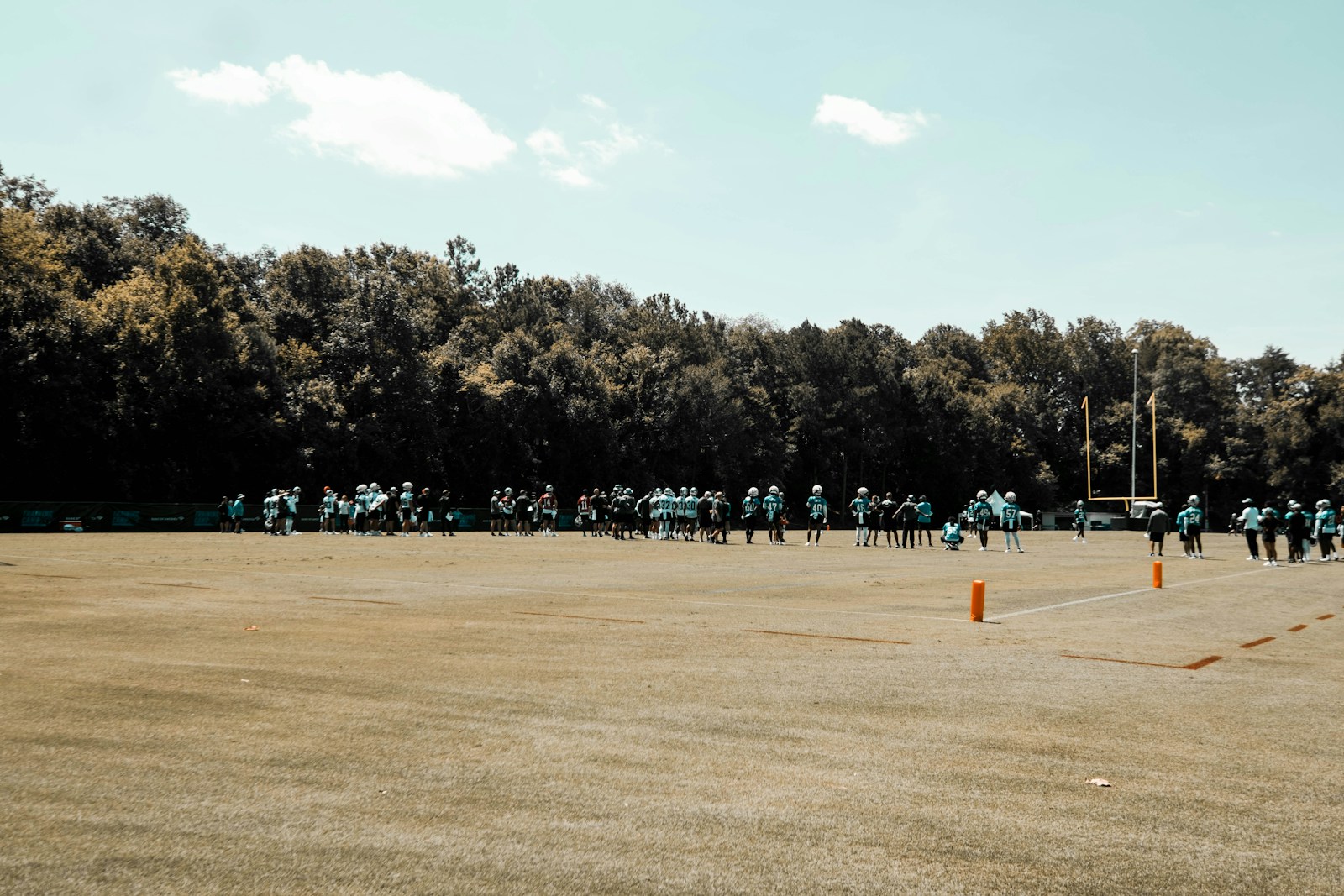
NFL 53-man roster cutdowns produce more content than the decisions themselves warrant, but the underlying math is straightforward once you strip away the drama. Every team has to trim roughly 37 players from 90 to 53 by the deadline in the days after Preseason Week 3. Most of those cuts are obvious — camp bodies, undrafted longshots, backups at deep positions. The interesting ones (the veteran cuts that produce fantasy waivers, the surprise-keep rookies, the trade-fodder decisions dressed as cuts) follow patterns that repeat every year. This piece is the framework for identifying those patterns.
Quick read: NFL 53-man cuts in 60 seconds
- The math: Teams cut 37 players from 90 to 53; the vast majority of those cuts are obvious training-camp bodies whose fate was resolved before Preseason Week 1.
- The consequential cuts: Maybe five per team — the veterans who don’t make it, the surprise-keep rookies, the trade candidates dressed as cuts.
- Contract structure signals: Guaranteed money almost always survives cutdown; non-guaranteed veterans with cheaper replacements often don’t.
- Practice-squad economy: The real depth-chart resolution happens on the 17-player practice squad in the 24-72 hours after cuts.
- What to write about: Waiver-claim implications, practice-squad strategy, and specific veteran surprises — not the total cut list.
What the cap sheet already told you
Most of the interesting 53-man decisions were already telegraphed in the offseason cap sheet, months before camp opened. Veterans with guaranteed money past the cutdown almost always survive because cutting them means eating the cap hit; teams that would have to absorb $3-5M of dead money to bench a specific player almost never do. Veterans without guarantees who compete against cheaper alternatives at the same position are the ones who most often lose their jobs — the cap savings of moving on to a rookie or a UDFA on a minimum contract is meaningful, and teams over the cap systematically make these decisions in ways that shape the eventual 53.
Rookies drafted in rounds 4-7 almost always make the roster in Year 1 (draft-capital signaling; teams that invested a pick almost always want to see the player through his rookie contract). Undrafted free agents who make it are the interesting story every year — the ones kept are usually kept for specific special-teams value or for depth at a shallow position group, not for generalist talent. The corollary is that cutdown coverage that treats every decision as unexpected is reading the wrong layer. The unexpected cuts are the ones that diverge from what the cap sheet and draft capital would predict, and those are the ones worth writing about. Our minicamps piece covers the earlier version of the same instinct: trust the contract structure over the press-conference language.
The cutdown archetypes
| Archetype | Analytical case | Likely outcome |
|---|---|---|
| Guaranteed veteran | Money committed; cutting means eating cap | Survives almost always |
| Non-guaranteed veteran with cheaper alternative | Position group has depth; contract savings available | Frequently cut — base rate around 40% |
| Draft-capital rookie (rounds 1-3) | Team invested significantly; not cutting Year 1 barring injury | Survives almost always |
| Late-round rookie (4-7) | Team invested modestly; usually survives on special-teams value or position-group depth | Survives most of the time |
| Undrafted rookie | Standout preseason and specific ST value required | Usually cut; the ones kept are the interesting story |
| Trade candidate | Cap-conscious teams shop before cutting | Trade preferred if possible; cut only if no market |
| Position battle loser | Depth-chart resolution; cut or practice squad | Depends on age, cap, and practice-squad eligibility |
A reading framework for cutdown decisions
| Question | What it reveals |
|---|---|
| What does the contract structure say? | Guaranteed money almost always survives cutdown |
| What is the draft capital? | Recent early picks stay; late picks and UDFAs are the marginal decisions |
| What is the position-group depth? | Deep groups produce more surprise cuts as the team optimizes across positions |
| What did preseason reveal? | Confirmation of pre-camp evaluations, not the primary signal |
| Which players have practice-squad eligibility? | The real depth-chart resolution often happens here |
| Who are potential trade candidates? | Cap-conscious teams shop before cutting |
| Which waiver claims will the team make? | The other half of cutdown — adds shape the final 53 as much as cuts do |
The vocabulary lives in our field guide. Public cap data at OverTheCap and draft-capital baseline at Pro Football Reference support most of the analysis above.
The practice-squad economy
The 53-man roster gets the coverage, but the real depth-chart resolution often happens on the 17-player practice squad in the 24-72 hours after cuts. Every team can protect a limited number of practice-squad players from waiver claims each week; the specific players teams protect signal which developmental prospects the coaching staff actually values. A player who was cut Tuesday and protected on the practice squad Wednesday is essentially a 54th-man — a player the team wanted to keep but couldn’t fit on the active roster, and one who will get elevated to the active roster during the season more often than not.
Waiver-claim activity in the 24-72 hours after cuts also reveals which teams have the most-active developmental pipelines and which are stuck with what they drafted. Teams that consistently claim mid-round talent released by other teams are running proactive rosters; teams that make no waiver claims are usually stuck with cap and depth-chart problems that limit their flexibility. The practical implication is that 53-man coverage that ignores the practice-squad math and the waiver-claim activity is missing roughly a third of the story. Fantasy waivers get the mainstream attention; the practice-squad protections and waiver-claim patterns are usually the more informative signals for the following season’s roster construction.
Frequently asked questions
How predictable are 53-man cuts?
Most cuts are highly predictable from cap structure and draft capital — roughly 30 of the 37 per team are essentially foregone conclusions by the end of preseason. The interesting minority (5-10 per team) are the ones where the cap sheet or draft signal predicted differently from what happened. Those are the coverage-worthy decisions, and they’re often driven by position-group specific circumstances: a rookie beating out a veteran at a position where the team drafted heavily; a UDFA winning a special-teams spot over a higher-drafted player; a scheme change producing an unexpected roster resolution.
What is the strongest single cutdown signal?
Contract guarantees. A player with guaranteed money past the cutdown almost always survives, because cutting him means eating the cap hit and taking on dead money that limits mid-season flexibility. This one signal resolves most veteran-vs-veteran decisions before preseason even begins, which is why cap-sheet analysis in July and August is more predictive of the final 53 than preseason box scores in August.
How does practice-squad protection work?
Teams can protect a limited number of practice-squad players each week from being claimed by other teams via waivers. The protections signal which developmental prospects the coaching staff values most, and the pattern across the first few weeks of the regular season reveals how the team thinks about depth-chart development. A player consistently protected week after week is essentially the 54th man on the roster; a player never protected is being kept for temporary depth or specific practice value.
Where can I read serious cutdown coverage?
The Athletic’s team-specific beat writers for the local context, OverTheCap for cap-sheet analysis, and Pro Football Reference for draft-capital and historical roster data. Beat writers who publish detailed cap analysis in August produce systematically better cutdown predictions than national panels that lean on preseason box scores.
The takeaway, in one paragraph
NFL 53-man cutdown decisions are mostly predictable from contract structure and draft capital, with a small minority of coverage-worthy surprises each year. The framework above is the version we apply to any cutdown analysis, and the discipline is filtering the noise (garbage-time preseason box scores, hot-take fantasy waivers) from the actual signal (cap sheets, draft capital, position-group depth, practice-squad protections). For the broader vocabulary, our sports analytics field guide is the natural companion read.