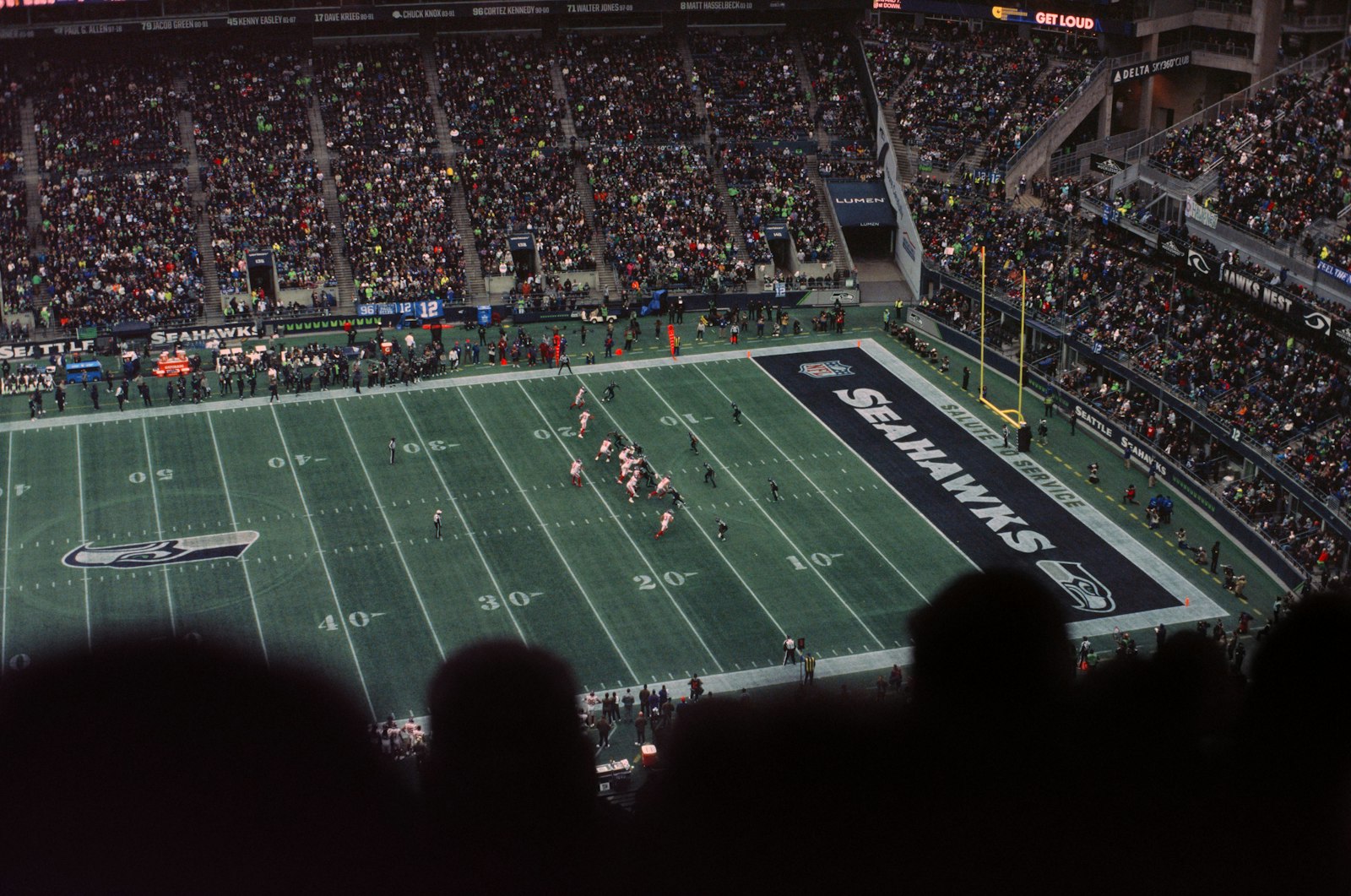

A team makes the playoffs with the league’s best red-zone touchdown rate. The Monday-morning coverage credits the play calling, the offensive line, the goal-line packages. Three weeks later, the same team loses a wild-card game scoring 17 points despite reaching the red zone four times.
The pattern is so familiar in NFL coverage that it has its own genre. Red-zone efficiency gets cited as a sign of identity when it is up, and as evidence of dysfunction when it is down. The actual stat is one of the noisier NFL team-level metrics, and reading it cleanly requires more context than the broadcast graphics tend to provide.
The piece below is the working version of how red-zone efficiency actually behaves, where it gets misread, and the short framework we apply before quoting any red-zone split in a piece.
Quick read: NFL red-zone efficiency in 60 seconds
- What it measures: Touchdown rate on possessions reaching inside the opponent’s 20-yard line.
- League average: ~57-60% across recent seasons.
- Why it is noisy: Small sample (each team gets roughly 50-60 red-zone trips per season) means season-end numbers carry significant variance.
- Common misread: Treating mid-season red-zone splits as season-defining trends.
- How to use it: Pair with EPA per red-zone play and personnel-specific splits before drawing conclusions.
What red-zone efficiency actually counts
Red-zone touchdown rate measures the percentage of possessions reaching the opponent’s 20-yard line that end in a touchdown. The split is appealingly clean: territory inside the 20, possession ending, touchdown or not.
League average across recent seasons sits between 57% and 60%. Elite red-zone offenses live near 65%; bottom-tier red-zone offenses near 50%. The variance is meaningful at the team-season level because each team only generates roughly 50-60 red-zone possessions per regular season. By statistical standards, that is a small sample for a percentage-based metric. Season-end rankings can shift several positions based on the difference between scoring 4 of 7 versus 5 of 7 in any single late-season game.
The public sources for red-zone efficiency include Pro Football Reference, ESPN, and the league’s own stats pages. The vocabulary that supports red-zone analysis lives in our sports analytics field guide, with the EPA-specific frame in our EPA piece.
Why red-zone splits get misread so often
Several specific patterns produce red-zone analysis that ages poorly. The table below maps the most common.
| Red-zone misread | What it looks like | What the data actually shows |
|---|---|---|
| Mid-season “identity” claim from small sample | Team posts 70% TD rate across 8 trips | Sample of 8 is too small; regression highly likely |
| Coaching critique from single bad game | Team goes 0-for-3 in red zone in a key loss | Variance; multi-game baseline is the honest measure |
| “Run game establishes red-zone offense” framing | Team with strong run game has high RZ TD rate | Correlation often weaker than coverage implies |
| Quarterback praise from red-zone passer rating | QB posts strong red-zone numbers in 20 attempts | 20 attempts is barely a sample; check season EPA |
| “Bend but don’t break” defensive narrative | Defense gives up yards but limits red-zone TDs | Pattern often a small-sample artifact, not strategy |
| Red-zone field goal rate framed as offensive failure | Team settles for kicks frequently | Often reflects opponent quality, not offensive choice |
| Goal-line stand celebrated as defensive identity | Defense stops opponent at the 2-yard line | One play; says little about season-long defensive quality |
The shared pattern is that red-zone efficiency at the small-sample level reflects more variance than narrative-building coverage tends to admit. The careful version of red-zone analysis runs through the sample-size question before assigning credit or blame. The companion read on why small samples mislead lives in our small samples piece.
What red-zone efficiency actually predicts
The metric is not useless. Several specific contexts produce red-zone data that travels reasonably well.
Multi-season red-zone TD rate above league average. A team that has produced top-10 red-zone efficiency across two consecutive seasons has produced a sustainable signal. The two-season baseline filters out the single-season variance and isolates real organizational identity. Coaches who consistently produce above-average red-zone offense — Andy Reid’s various Chiefs teams are the canonical example — earn the credit the data assigns them.
Personnel-specific red-zone splits. Teams with elite red-zone tight end usage (height advantages, mismatch coverage potential) often produce sustainable above-average red-zone efficiency because the personnel mismatch reliably converts. The signal is structural, not variance-driven.
EPA per red-zone play across a season. The EPA-based version of the metric is more stable than the raw touchdown rate because it weights field position, down, and distance properly. A team’s red-zone EPA tells you whether the red-zone trips were productive even when they did not end in touchdowns. The framework on which metrics travel well across seasons lives in our durability piece.
Red-zone defensive performance against quality opponents. A defense that limits top-10 offenses to below-average red-zone efficiency has produced a meaningful signal. The opponent quality controls for some of the variance that distorts the raw splits.
A framework for reading red-zone efficiency honestly
The table below is the workflow we apply before quoting any red-zone split in a piece.
| Question to ask | What it reveals | What to do with the answer |
|---|---|---|
| How many red-zone trips is the percentage based on? | Whether the sample size supports the claim | Under 30 trips = treat as hypothesis, not conclusion |
| How does the rate compare to the team’s previous season? | Whether this is continuation or shift | Stable across seasons = signal; shifting = variance more likely |
| What is the EPA per red-zone play? | The leverage-weighted version of the same question | EPA tells the fuller story than TD rate alone |
| What is the opponent quality in those red-zone trips? | Whether the rate was earned against good defenses | Against bottom-10 defenses = less informative |
| Has the personnel changed? | Whether key red-zone contributors are still on the roster | Personnel shifts = expect different efficiency |
| What is the run-pass split inside the red zone? | Whether the play caller has a discernible identity | Balanced splits = harder to defend; predictable = easier |
| How does the team perform in goal-to-go specifically? | The most leverage-rich red-zone subset | Goal-to-go TD rate is the most predictive single split |
The framework’s job is to spot red-zone claims that are built on too little data or too much variance. The careful version surfaces sample-size context. The lazy version cites the season-to-date rate and treats it as a verdict. The companion read on balancing data with direct observation lives in our match-reading workflow piece.
Where red-zone efficiency tells a real story
Three specific contexts produce red-zone analytics that are genuinely informative rather than narrative-driven.
The “elite mismatch” team. A roster with a true mismatch piece in the red zone — a 6-foot-6 tight end, a power back with elite short-yardage conversion rates, a quarterback with consistent goal-line throw accuracy — produces sustainable red-zone advantages that show up year over year. The signal is structural and durable.
The “scheme-specific” team. A coach whose red-zone concepts consistently produce above-average results across multiple seasons and multiple personnel groups is doing something real. Andy Reid’s Chiefs, Sean McVay’s various Rams teams, and Kyle Shanahan’s 49ers have all shown this pattern.
The “defensive specialist” team. A defense that consistently limits opponent red-zone conversion across multiple seasons — Bill Belichick’s various Patriots teams during the dynasty era are the textbook case — has produced a signal that is structural rather than variance-driven. The pattern is rare but real.
Frequently asked questions
How predictive is mid-season red-zone efficiency for the playoffs?
Moderately. The metric is too volatile to predict single playoff games with confidence, but season-long red-zone EPA correlates more reliably with playoff success than the raw touchdown rate. A team finishing in the top-10 in red-zone EPA across the regular season carries that advantage into playoff scenarios more consistently than its TD-rate ranking would suggest.
Why is the red-zone touchdown rate considered noisy?
Sample size. A team generates roughly 50-60 red-zone trips per regular season. Each trip ends in either a touchdown, a field goal, or no points. Across 50-60 events, percentages can shift several positions based on what amounts to two or three trips going differently. The variance per trip is structural to the metric and cannot be smoothed out without more data than a single season provides.
Does the run-pass split inside the red zone matter as much as coverage suggests?
Less than mainstream framing implies. Balanced red-zone play callers (roughly 55-45 either direction) produce slightly better outcomes than heavily run-skewed or pass-skewed callers, but the effect is modest and easily overwhelmed by personnel and matchup factors. The “you have to run the ball in the red zone” framing is more nostalgic than empirical.
Where can I track NFL red-zone splits during the season?
The league’s official stats pages publish team and player red-zone splits weekly. Pro Football Reference archives season-long data with historical context. PFF publishes situational red-zone breakdowns for subscribers. The Athletic’s analytical NFL writers cite red-zone context routinely in mid-season coverage.
The takeaway, in one paragraph
Red-zone efficiency is one of the most-cited and most-misread NFL team-level metrics. The small sample inherent to the stat means mid-season rates carry significant variance, and treating any single-season figure as a season-defining identity often produces analysis that ages poorly within months. The framework above is the version we apply before quoting any red-zone split. For the broader vocabulary this conversation sits inside, our sports analytics field guide is the natural companion read.