
Somebody wanted a famous match for an anniversary programme. The obvious assumption was that a broadcaster who transmitted it live must still hold it. What came back from the archive was four minutes of silent newsreel, a highlights compilation cut for a magazine show, and a note that the original recording had been wiped in the year after transmission.
That sequence is the standard outcome for major sporting events of the black-and-white era and well into the colour period. The recording of a match was not treated as a document. It was treated as a use of a stock item that cost real money and could be used again.
Three separate forces removed the material, and they operated in order: tape was reused because it was expensive, formats became unplayable because machines were retired, and rights fragmented until nobody had both the tape and the permission to do anything with it. Understanding the order explains why the losses are so uneven, and why a goal often survives while the match around it does not.
What survives, and what does not
- Usually survives. Newsreel, film highlights, short compilations sold or syndicated abroad.
- Rarely survives. The complete live transmission, with its commentary and its build-up.
- First cause. Tape stock was expensive and was routinely wiped and reused.
- Second cause. Format obsolescence, which made surviving tapes unplayable.
- Third cause. Rights fragmentation, which stopped anybody paying to fix the first two.
- Where recoveries come from. Foreign broadcasters, private off-air copies and mislabelled cans.
Why lost sports footage is usually an accounting decision
The instinctive explanation is negligence, and it is almost never right. The people making these decisions were following the economics of their equipment, and nothing in the working culture of a broadcaster of that era suggested that a recording of a match had any value once the match had been shown.
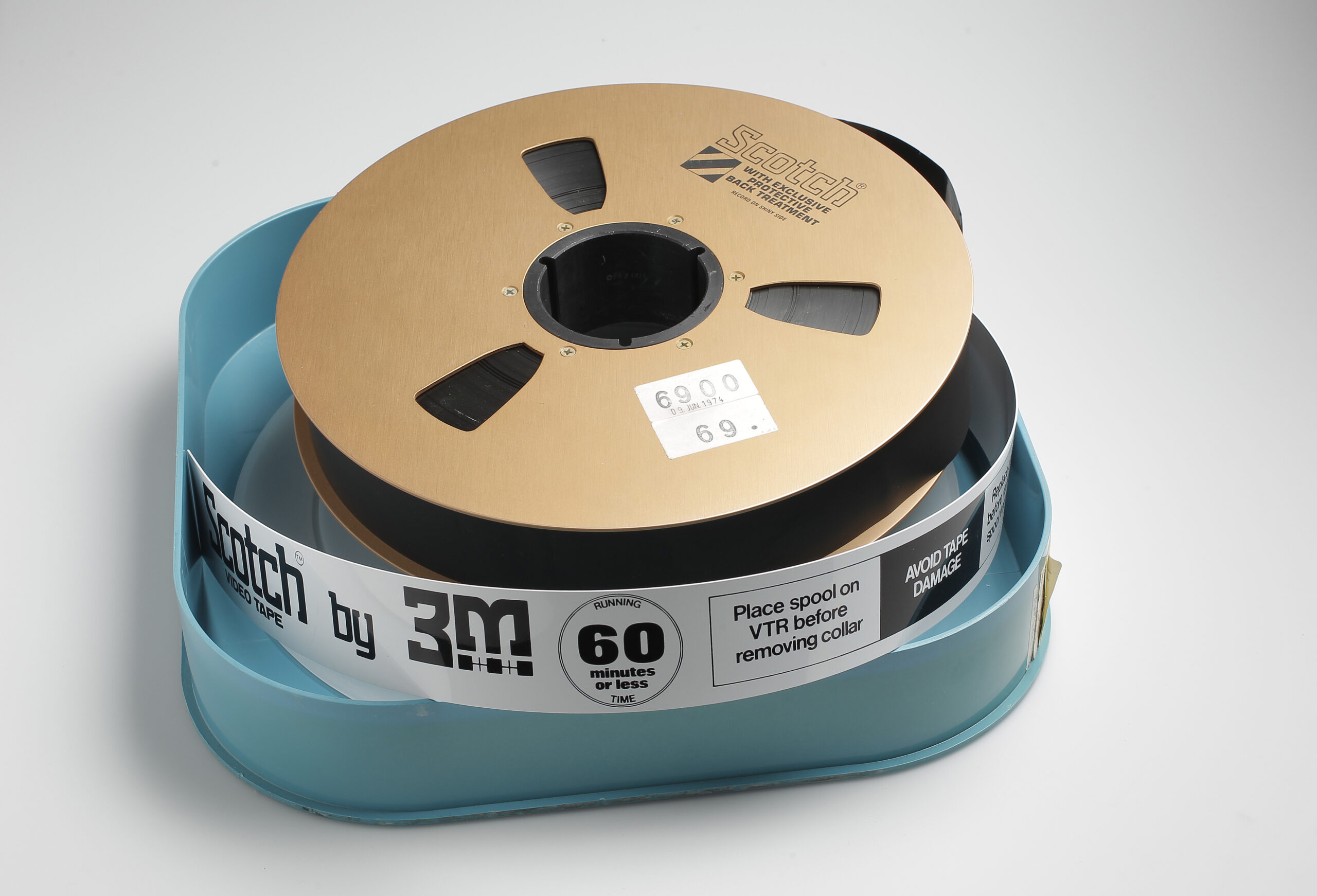
A large reel of professional videotape represented a substantial cost, and a facility might hold a limited number of them in rotation. Every recording therefore occupied a stock item that the department needed the following week. Keeping a tape meant buying another, and the case for buying another had to be made in terms of future transmission value.
For a sporting event the future transmission value looked close to zero. The result was already known, the highlights had been extracted and the audience for a rerun was assumed to be nobody. The decision to wipe was not the loss of a historical record; it was the reuse of a stock item whose content had already been consumed. The historical value arrived decades later, by which time the arithmetic that destroyed the material had long stopped applying.
The case: a match that exists as four minutes of newsreel
Trace a typical example and the same shape appears every time. A match is played, transmitted live and recorded onto tape by the broadcaster carrying it. Within days, a highlights package is cut for a weekly programme and a short film item is prepared for cinema newsreel or for sale to foreign broadcasters.
Those derived items are made on film, and film gets stored because film is a physical object that arrives in a can with a label and goes onto a shelf. The tape stays in the machine room, in rotation, and within a year it carries something else. The derived copies survive; the original does not.
What this produces, decades later, is an archive that is upside down. The compilation cut down to four minutes for a magazine programme is intact, the newsreel item exists in several countries, and the transmission that ran for two hours with commentary and crowd sound is gone. The event survives as its own summary, edited by somebody choosing what mattered on the following Tuesday, which is why so much of what fans regard as the footage of an older era is highlights rather than matches.
Videotape was stock, not a record

The distinction between a medium and a record is the heart of it. Film had been a record for half a century: exposed, developed, stored, catalogued, physically incapable of being reused. Everyone in a broadcasting building understood that a can of film was an object.
Videotape arrived as a working tool. It was erasable by design, which was the feature that made it useful, and it sat in the technical department rather than in the library. The people who decided its fate were engineers managing an inventory, not archivists managing a collection, and no part of the process asked whether anything of long-term value was about to disappear.
Cataloguing followed the same logic. A reel might carry a handwritten label describing what was on it before the last wipe, or nothing at all. Even where sports material survived by accident, it survived unlabelled, which is why archive recoveries so often begin with somebody playing an unmarked tape to find out what is on it. The technical standards that eventually made all of this legible are maintained by bodies such as the engineering societies that define broadcast formats, and they arrived long after the losses.
Format obsolescence: the second loss
A tape that survived the first decade then faced a slower problem. Broadcast formats changed roughly every ten to fifteen years, and each change stranded the material recorded on the previous one.
Machines were retired, spare parts stopped being manufactured, and the number of working transports for an early format fell towards a handful worldwide. A tape in that situation is not lost in the way a wiped tape is lost, because the physical object still exists. It is simply unreadable without a machine that only a few institutions still operate.
The chemistry adds a deadline. Magnetic tape degrades, binder layers absorb moisture and some stocks become unplayable without heat treatment before a single pass. Every year of delay reduces what a transfer can recover, and the machines are getting rarer at the same time the tapes are getting worse.
| Era | Typical medium | Main reason material is missing |
|---|---|---|
| Early television | Film recordings of live output | Only highlights were ever committed to film |
| The tape years | Large-format professional videotape | Reuse of expensive stock after transmission |
| Late analogue | Smaller cassette formats | Obsolete machines and degrading stock |
| Early digital | Digital tape and early file systems | Formats abandoned before migration was funded |
The last row is the uncomfortable one. Material recorded within living memory is at risk for the same reason as material from the tape years, because a proprietary digital format with no migration plan fails exactly as an obsolete tape format does.
Who owned the recording, and who owned the match
Rights are the third force and the one that keeps surviving material out of view. A recording of a sporting event is not a single piece of property with a single owner.
The broadcaster holds the recording it made. The competition organiser holds rights in the event. Commentary, incidental music and third-party inserts have their own arrangements. Historic contracts were often written for a defined transmission window and are silent about anything after it, which means nobody can say with confidence who may authorise a reissue.
The practical consequence is stasis. Restoring an old recording costs money, and the case for spending it depends on being able to use the result. Where the rights position is unresolved, the material stays on the shelf, technically intact and effectively unavailable, which is a different kind of loss from a wiped tape and produces the same experience for anybody looking for it.
Why a famous goal survives and the match does not
This is the pattern that confuses people most, and it follows directly from everything above. A goal was extracted at the time, for highlights, for news bulletins and for sale abroad, and it was extracted onto film.
Each extraction created a new physical object in a new location, and each of those objects had a decent chance of being stored properly. A single moment might therefore exist in a dozen places while the tape holding the surrounding ninety minutes existed in one and was reused.
Redundancy, entirely accidental, is why the memorable fragments of older sport are the ones that survive. It also shapes how those events are remembered, because a competition preserved only as its highlights is remembered as a sequence of decisive moments rather than as matches. That distortion runs through a good deal of writing about the tournaments that defined earlier decades, and it comes from an inventory policy rather than from anything the teams did.
The sound is a separate loss
Picture and audio were not always stored together, and the audio has its own failure modes. Commentary was frequently produced on a separate circuit, mixed at the point of transmission and never held as a discrete recording.
Where a picture survives on film without its original sound, what is usually available is a music track and effects added later, or silence. The commentary that shaped how an event was understood at the time is the part most likely to be missing, and it is the part nobody thought to keep, because it was regarded as a live performance rather than as content.
The consequence is a strange kind of half-survival. A goal exists, the crowd exists as a generic effects bed added by an editor, and the voice that described it as it happened does not. Restorations often reunite a surviving picture with an off-air audio recording made by a viewer at home, and the join is usually audible.
How recordings come back
Recoveries happen more often than most people expect, and they come from a small number of predictable places.
Foreign broadcasters are the richest source. A match sold abroad for delayed transmission produced copies in other countries, on other formats, held by institutions with different retention policies. Material wiped in its country of origin frequently survives somewhere it was exported to.
Private off-air recordings account for a second tranche, mostly from the domestic video era onwards, and they are technically poor and historically valuable. Mislabelled or unlabelled cans in an institution’s own store account for a third: the tape was never wiped, it was simply lost inside its own archive. Amateur film shot from the stands preserves angles no broadcaster recorded, and film society and collector holdings occasionally yield complete items that no broadcaster knew existed.
What a restored transmission actually looks like
The word restoration suggests a clean object emerging from a dirty one. What usually emerges is a composite, assembled from sources of different generations, and the seams are part of the finished item.
A typical reconstruction might run a surviving domestic recording for one passage, cut to an export copy held abroad for a section missing from it, and fill a remaining gap with a newsreel item shot on film at a different frame rate from a different position. The picture quality changes at each join, the sound changes with it, and a caption sometimes explains that a passage exists only as a still photograph.
None of that is a failure of the work. It is an honest representation of what survives, and it is far more useful than a version that quietly cuts the missing minutes and presents the result as complete. The one thing a restoration cannot do is invent a camera angle that was never recorded, which is why so many reconstructed matches are watchable only from the position the single main camera occupied.
What preservation practice looks like now
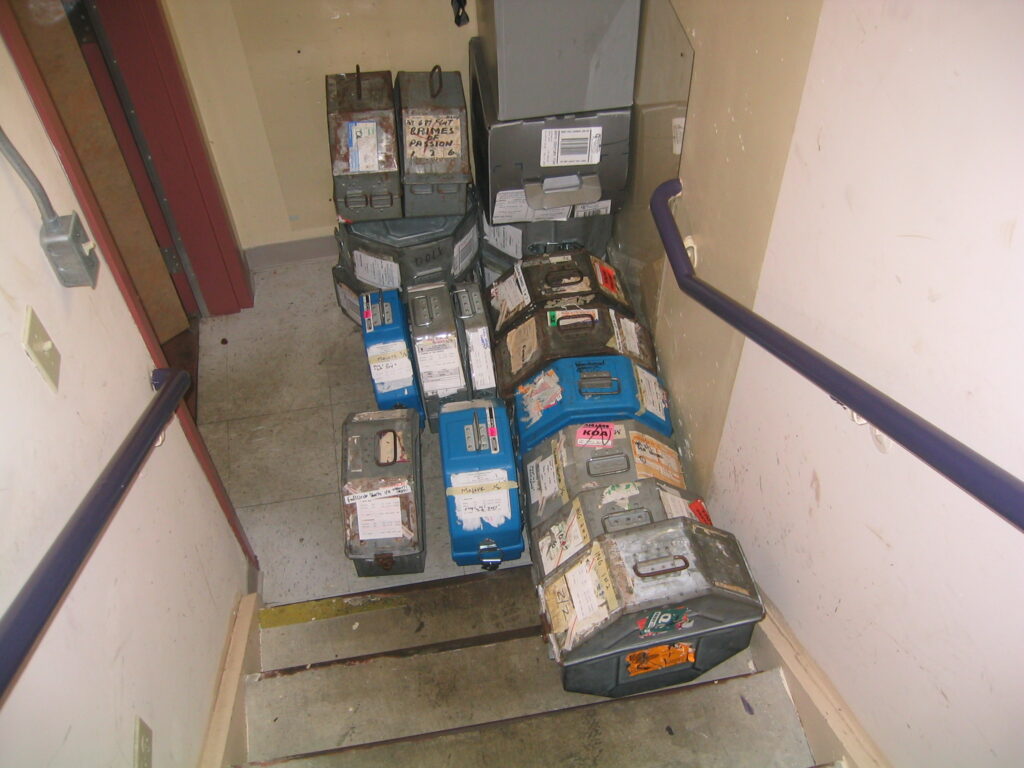
Current practice inverts almost every assumption of the tape era, and the inversion is recent enough that a good deal of material from the 1990s remains at risk.
Recording is now file-based and storage is cheap enough that the default is to keep everything, including feeds that were never transmitted: isolated camera outputs, tactical cameras, unused angles. The volume is enormous and the cost per hour is low, which reverses the calculation that destroyed the earlier material.
Serious preservation adds three things beyond keeping the files. Multiple copies in separate locations, because a single storage system is a single point of failure. Open or widely supported formats, because proprietary formats become the next obsolescence problem. And metadata created at the point of recording, because an unlabelled file is only marginally better than an unlabelled tape.
Migration is the discipline that holds it together: moving material onto current systems on a schedule rather than when something breaks. It is unglamorous, it never finishes, and it is the only part of the process that prevents the tape years from repeating in a new form. The historical stakes are easier to see now than they were then, which is a small part of why the events that shaped the sporting calendar are documented far better today than the ones that shaped it fifty years ago.
Frequently Asked Questions
Were broadcasters careless with these recordings?
Not by the standards they were working to. Tape was an expensive consumable managed by technical departments, and a transmitted match was regarded as having no further transmission value. The decision looks negligent only from a position that values the material historically, which very few people did at the time.
Why does a highlights package survive when the full match does not?
Because highlights were usually cut onto film and distributed, which created several physical copies in several locations. The live recording existed as one reusable tape in one building. Redundancy created by distribution is the main reason anything from that period survives at all.
Can a degraded tape still be transferred?
Often, and it depends on the stock and the storage. Some tapes require treatment before they can be played at all, and specialist facilities recover material that appears unusable. The constraint is the number of working machines for obsolete formats, which is falling, and the cost of the work, which has to be justified against uncertain rights.
Is anything being lost today?
Yes, mostly from the early digital period rather than the tape era. Proprietary formats abandoned by their manufacturers, storage systems retired without a migration plan and files held in one location only are the current equivalents of the wiped reel. Cheap storage removes the original economic pressure, and it does not remove the need for a plan.
Who decides whether an old match can be shown again?
Usually several parties at once, which is the problem. A broadcaster may hold the recording while a competition organiser holds rights in the event, and commentary and music may carry separate arrangements. Contracts written for a single transmission window frequently say nothing about later use, and that silence is enough to keep restored material unseen.
The footage of an event is not the same object as the event, and it was managed for years by people whose job was to control an inventory. What reaches a screen today from that period is largely what somebody once thought worth copying twice.