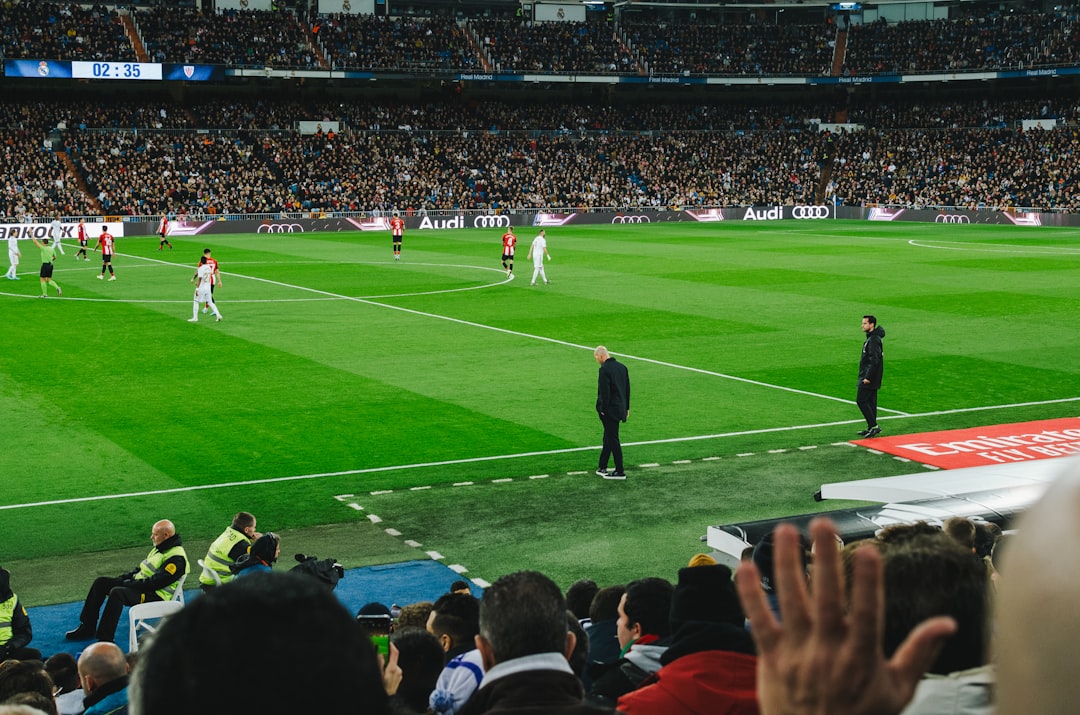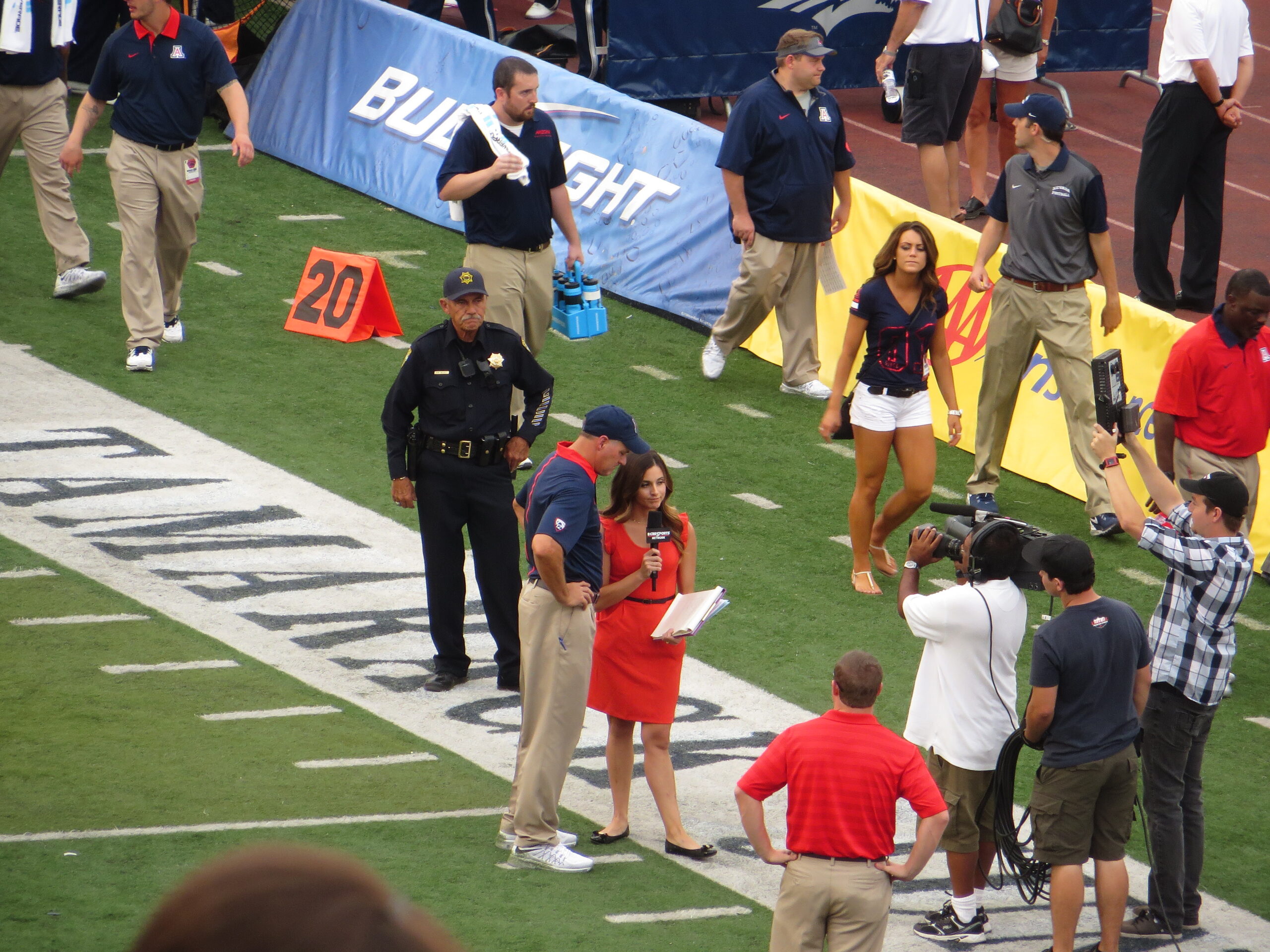

A reporter asks the coach why a specific tactical change was made at halftime, and gets a measured answer about matching the opponent’s shape. The same reporter asks the player who executed that change the identical question, and gets a shorter, more personal answer about simply being told to push higher and trying to follow instructions. Neither athlete is hiding anything. They are answering different questions that happen to sound the same out loud.
Coverage often treats a gap between a coach’s account and a player’s account of the same moment as evidence of tension, miscommunication or even conflict inside a team. Sometimes it is. Far more often the gap is structural, produced by two people facing different obligations, different risks and different audiences while standing at the same podium answering what looks, on the transcript, like an identical prompt.
What follows compares what a coach and a player are actually being asked to do when facing the same question, and works through why the contradiction between their answers is usually explained by that structure rather than by anything happening behind the scenes.
The comparison in six lines
- The coach’s obligation. Explain a decision that reflects the whole team’s strategy and his own judgment.
- The player’s obligation. Describe his own experience of executing a decision he did not make.
- The coach’s risk. Being seen as tactically wrong or inconsistent across matches.
- The player’s risk. Contradicting the coach publicly, or overstating his own tactical understanding.
- The coach’s audience. Analysts, rival coaches, and the club’s ownership evaluating his management.
- The player’s audience. Fans assessing his effort and attitude, and teammates hearing how he described the group.
The same question, asked twice
A question posed identically to both a coach and a player is not, functionally, the same question, because each person answering it is drawing from a different base of information and facing a different set of consequences for how they answer. The coach knows the full tactical reasoning behind a decision because he made it. The player knows what he was told to do and what it felt like to do it, which is genuinely different information rather than an incomplete version of the coach’s answer.
Treating the two answers as competing accounts of the same underlying truth, rather than as two different, equally valid layers of the same event, is where most of the manufactured tension in this kind of comparison actually comes from.
What a coach is obligated to answer that a player is not
A head coach is generally expected to account for the team’s overall strategy, in-game adjustments and selection decisions, since those are choices he made personally and is professionally accountable for regardless of the outcome. Declining to explain a major tactical decision at all is treated, fairly, as evasive in a way it would not be if a player declined the same question.
It is a specific instance of the broader question raised in pieces on what actually makes a great coach, where public accountability is treated as inseparable from the authority the role carries. This obligation exists because authority and accountability are meant to travel together in a functioning sporting organization. The person who made the decision is the person expected to defend it publicly, which is a standard applied far less strictly to a player who was simply following instructions he had no part in devising.
What a player risks that a coach does not
A player answering a tactical question carries a distinct risk a coach does not face in the same way: appearing to contradict or second-guess a coaching decision publicly, which can create real friction inside a locker room regardless of whether the player intended any criticism at all.
The same dynamic surfaces often in coverage of mental health support for professional athletes, where locker room solidarity and public honesty do not always pull in the same direction. This risk pushes player answers toward a specific, recognizable register: deferential to the coaching staff’s reasoning, focused on his own execution rather than the strategic merit of the decision, and generally reluctant to offer independent tactical analysis even when a player clearly possesses the tactical understanding to do so.
Coach vs player interviews, on the same two questions
| Question type | Typical coach answer | Typical player answer |
|---|---|---|
| Why was a tactical change made? | Strategic reasoning tied to the opponent’s setup | What he was instructed to do and how it felt to execute it |
| Why did a specific play break down? | Systemic explanation involving multiple players and roles | His own specific action or decision in that moment |
| How is team morale after a loss? | Broad, forward-looking, focused on the group’s response | Personal and immediate, focused on his own frustration or resolve |
| What needs to change going forward? | Specific adjustments he intends to make as the decision-maker | General commitment to working harder or trusting the process |
Reading down either column shows a consistent pattern: the coach’s answers are structural and forward-looking because his role is structural and forward-looking. The player’s answers are personal and immediate because his role, from an interview’s perspective, is to describe his own direct experience rather than to defend a systemic choice he did not make.
The audience each answer is actually built for
A coach’s press conference answer is heard by rival coaching staffs preparing future scouting reports, by club ownership assessing his management, and by tactically literate analysts parsing his reasoning for consistency across a season, which pushes his answers toward careful, defensible, strategically coherent language even under pressure.
A player’s answer is heard primarily by fans assessing effort and character, and by teammates who will hear, secondhand or directly, how he characterized the group’s mood and performance, which pushes his answers toward solidarity, humility and personal accountability rather than tactical precision, regardless of how much tactical understanding he genuinely has.
Why the contradiction between them is usually structural
Because the two answers are optimized for different audiences and carry different risks, a genuine, meaningful contradiction between them is actually less common than casual comparison suggests, even though a surface-level reading of two transcripts side by side frequently makes it look that way.
Most apparent contradictions dissolve once the different obligations are accounted for: a coach describing a tactical switch as a considered adjustment and a player describing the same switch as just doing what I was told are not disagreeing about what happened. They are each answering from the specific vantage point their role actually occupies.
A worked example: the same tactical question, two answers

Asked why the team shifted to a back three midway through a match, a coach might describe reading the opponent’s wide overloads and needing an extra body to match their shape, a fully strategic answer reflecting the reasoning behind the decision itself.
Asked the identical question, the center-back who dropped into that new shape might simply say the manager told us to switch at halftime and we tried to execute it as quickly as possible, an answer that is not evasive or uninformed, but genuinely reflects what that player experienced and is professionally expected to say, regardless of how much tactical insight he privately holds about why the switch made sense.
When the contradiction really does signal conflict
The structural explanation above does not mean every gap between a coach’s account and a player’s account is harmless. A genuine signal worth taking seriously is a player visibly declining to defend a decision he would normally be expected to support without hesitation, or offering a notably flat, minimal answer where enthusiasm would ordinarily be easy to muster.
The distinction is one of degree and tone rather than content alone: a shorter, more personal answer than a coach’s is entirely normal and expected. A visibly reluctant or pointedly noncommittal answer, especially compared with how the same player has answered similar questions in the past, is a more genuine indicator that something beyond ordinary role differences might be at play.
Reading both answers as a set, not in isolation
The more informative approach for anyone covering or following a team closely is reading a coach’s and a player’s answers to the same event as complementary pieces of one account rather than as competing claims to be adjudicated against each other, since each genuinely holds information the other does not.
A coach’s answer reveals the reasoning behind a decision. A player’s answer reveals what executing it actually felt like and how it is being absorbed inside the group. Combined, the two answers tell a fuller story than either could alone, which is a more useful reading practice than treating any single gap between them as evidence of something being hidden.
How this changes when the team is winning
Much of what separates a coach’s and a player’s answer becomes far less visible during a winning run, since neither party carries much risk in agreeing enthusiastically about what is working, and the structural gap between their obligations only becomes apparent again once results turn and each side’s answer starts protecting something different.
Broader work on the intersection of sport and mental health makes a related point about how visible strain only surfaces once the easier, winning version of a relationship stops holding. This is worth remembering specifically because it means the comparison described throughout this piece is not a constant, visible feature of every press conference. It surfaces most clearly in exactly the moments, after a loss, during a slump, following a controversial tactical call, when the underlying differences in obligation and risk actually start to matter, which is also when casual readers are most likely to misread a normal structural gap as a sign of genuine dysfunction.
What beat reporters learn to listen for over a season
Reporters who cover the same team across a full season develop a baseline sense of how a specific coach and specific players typically answer routine questions, which makes genuine deviations from that baseline far more informative than any single answer read in isolation ever could be.
This is the practical version of the reading practice recommended throughout this piece: comparing an answer not just against what the other party said about the same event, but against how that same person has answered similar questions across the season, which is a more reliable way to detect a genuine signal than looking for contradiction between a coach and a player on any single afternoon.
What this means for how fans should read a locker room story
A story built primarily around a perceived contradiction between a coach’s and a player’s account, without acknowledging the structural explanation described throughout this piece, tends to overstate the likelihood of genuine internal conflict, since most of what such stories present as evidence is fully consistent with two people simply answering from different, entirely legitimate vantage points.
A more careful reader can still take these stories seriously when they are warranted, but the bar for concluding real tension exists should be the specific signals described earlier, a visible reluctance to support a decision, a notable change from a player’s usual tone, rather than the mere existence of a gap between what a coach and a player said about the same event, which is closer to the expected default than to a genuine red flag on its own.
Frequently Asked Questions
Is it fair to expect a player to have the same tactical depth as a coach in interviews?
No. A player’s role in an interview is generally to describe his own experience and execution, not to independently justify a strategic decision he did not make, and holding him to the coach’s standard misreads what his answer is actually for.
Does a mismatch between a coach’s and a player’s account always suggest a problem?
Not usually. Most mismatches reflect the different obligations, risks and audiences each person is answering to, rather than genuine disagreement about what actually happened.
Why are player answers generally shorter and more personal than coach answers?
Because a player’s audience is largely assessing effort and character, and his risk in speaking is largely about team solidarity, both of which favor personal, humble language over structural tactical analysis.
What is the clearest sign a mismatch reflects real tension rather than normal role differences?
A visibly reluctant or unusually flat answer compared with how the same player typically responds, particularly when asked to directly support a decision he would ordinarily be expected to back without hesitation.
Should reporters ask coaches and players the exact same questions?
It can be useful precisely because the differing answers reveal different, genuinely informative layers of the same event, provided the resulting gap is read as structural rather than automatically treated as a contradiction to be resolved.
The next time a coach’s explanation and a player’s account of the same moment do not quite line up, the more useful question is not which one is lying. It is what each of them was actually being asked to protect, and neither answer needs to be wrong for both to be true.