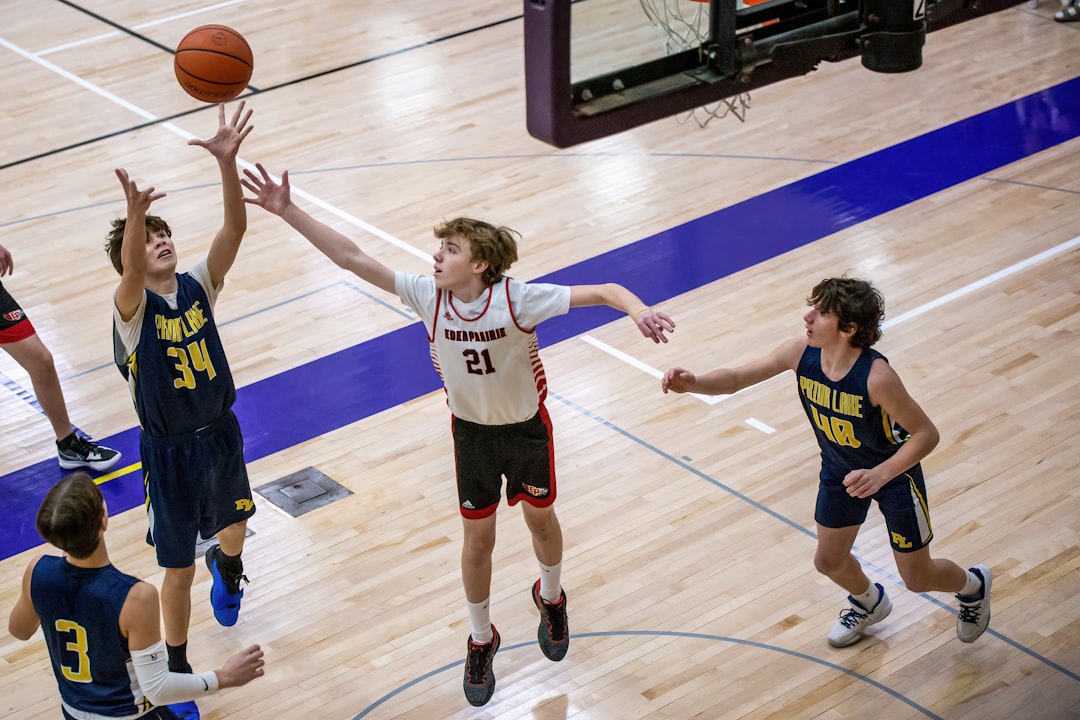
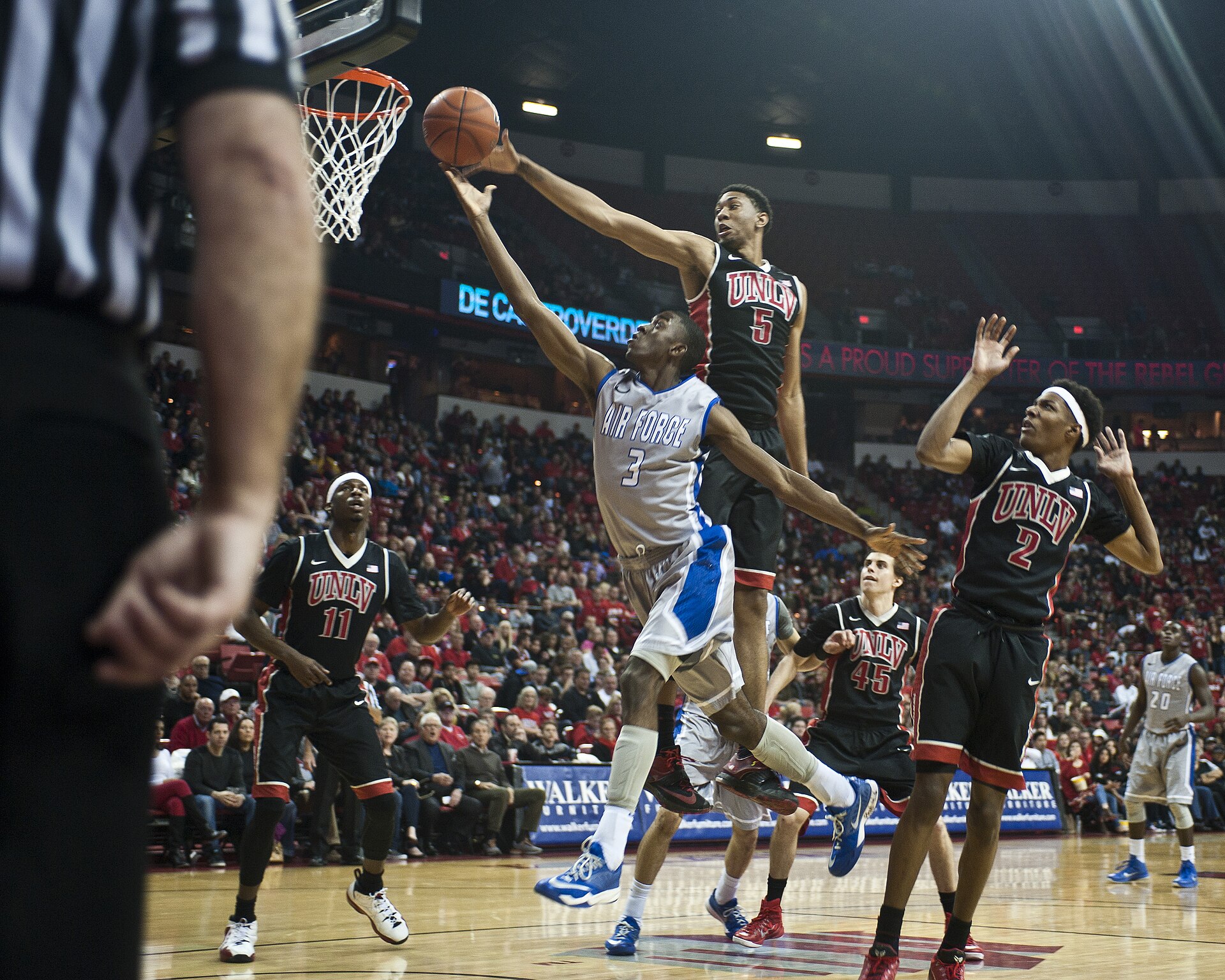
A guard on the wing has caught the ball on the same spot four times in a row. The fifth time, his defender jumps a full step higher into the passing lane, gets a forearm across the receiving shoulder, and the pass never leaves the passer’s hands. Two seconds later the guard is under the rim laying the ball in, and the defender is still standing where the entry pass would have gone.
Nothing in that sequence is improvised. The cut that beat the denial is a four-step pattern with a fixed order, and each of the four steps has a failure mode that ends the play on its own. The most common failure is not a bad pass or a slow cutter. It is a cut that leaves too soon.
Half a second early and the whole thing collapses, because the defender still has the ball and his man inside the same field of view and only has to turn his head. Half a second late and the weak-side help has already rotated to the rim. The usable window is narrow, it is roughly the same width at every level of the sport, and the players who live inside it get described as smart rather than quick.
The sequence in six lines
- The trigger. A defender who has stopped seeing the ball. Nothing else makes the cut available, and no amount of speed substitutes for it.
- The setup. Two or three steps toward the passer, sold at the same tempo as the four catches that came before.
- The plant. Outside foot, one hard push rather than a step, hips turning before the shoulders do.
- The pass. Released before the cutter is visibly open, thrown into space rather than at a body.
- The finish. Two footwork options at the rim, chosen at the plant and not at the catch.
- The window. Somewhere around half a second of genuine advantage. Early and the defender recovers by looking; late and the help is already there.
What the defence has to be doing for this to exist
A defender guarding a player one pass away from the ball has a choice, and it is a real trade rather than a matter of effort. He can stand between his man and the basket, keep both the ball and the man in view, and concede the entry pass. Or he can put a hand and a foot into the passing lane, deny the catch entirely, and accept that for part of every possession he cannot see the ball.
Denial is the second option. It is taught everywhere, it works, and it is the reason this cut exists at all. A defender with an arm extended into the lane has turned his chest toward his man, which means the ball is behind him or at the edge of his vision. He compensates by snapping his head back and forth on a rhythm, and that rhythm is the thing the cutter is actually attacking.
The extreme versions make it easier still. Top-locking, where a defender plays above his man to remove the path to the ball, leaves the back half of the floor open by design. Against an open stance, though, the cut is a turnover waiting to be thrown, and a good cutter does not run it.
The four steps of a backdoor cut in basketball
The pattern is a sequence, not a burst of speed. It runs setup, plant, pass, finish, in that order, and each step exists to make the next one available. Skipping one does not make the play faster; it makes it a different and worse play.
The order also assigns responsibility, which matters when the cut fails and somebody has to be told why. Steps one and two belong to the cutter. Step three belongs entirely to the passer, and it happens before the cutter has done anything a spectator would notice. Step four belongs to the cutter again, but the decision inside it was made two steps earlier.
Step one: the denial hand and the first move away
The cutter reads one thing before he moves: which hand the defender has in the lane, and where his head is pointing. A right hand extended with the head turned toward the wing tells you the defender is committed and blind on one side. A defender with both hands down and his head square is not denying, and the read is over.
The setup is two or three steps toward the passer, and the only requirement is that they are believable. The tempo has to match the tempo of the catches that came before it in the possession. A cutter who suddenly walks into the setup, or who takes it at a jog when every previous catch was made off a hard step, has announced the play to a defender who has been watching him for twenty minutes.
The hands do much of the selling. A target hand shown at the height a real entry pass would arrive produces the committed reach; without it the defender has no reason to overextend. Repeating that setup at full conviction for forty minutes is one of the quieter reasons conditioning shows up in the fourth quarter.
Step two: the plant foot and the change of direction
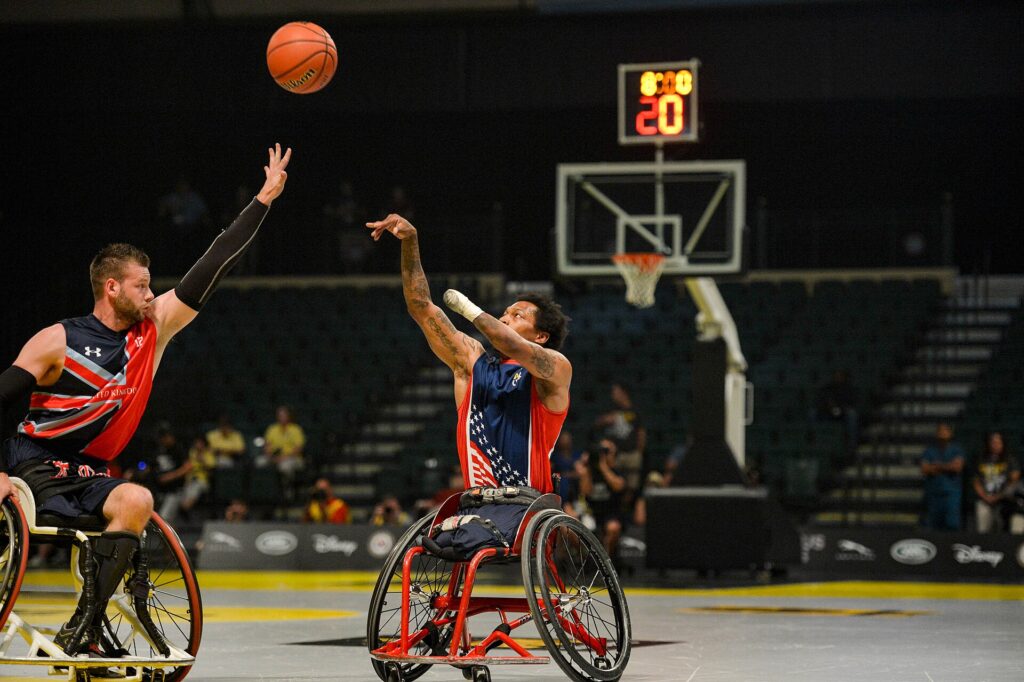
The plant is the moment the play becomes visible. The outside foot goes down hard, the knee bends more than feels natural, and the push comes off that foot rather than from a step with the other one. The difference between a push and a step is about two feet of separation, which is most of the margin the play has.
Hips turn before shoulders. A cutter who rotates his upper body first stands up, loses the angle and drifts wide of the rim. The correct path is not straight at the basket; it is behind the defender’s hip and then to the basket, which is a slight curve rather than a line, and it keeps the defender’s body between him and the ball he is trying to recover.
Two hard steps after the plant buy the separation, three is normal, and beyond that the cutter is racing the help rather than his own defender. Contact during the change of direction is common and mostly legal both ways, though a cutter who uses an arm to hold the recovering defender off has crossed into the illegal use of hands the international rulebook describes.
Step three: the passer’s half of the play
The passer is reading the same defender, at the same moment, for the same tell. He is not waiting to see his teammate open. If he waits for that, the play is already dead, because by the time the separation is visible the recovery has started.
The pass leaves on the plant. That timing feels wrong the first several hundred times, because the ball is being thrown to a spot where nobody is standing. It goes to the outside hip, ahead of the cutter, at a height that lets him catch it without breaking stride. A bounce pass is the default against a defender who has recovered enough to get a hand up, and an overhead pass is the choice when there is a big in the paint whose arms are the problem rather than the recovering guard.
Two passer errors account for most failures: late release, and eyes. A passer who stares at the cutter brings the low help across before the ball moves, and a defender who arrives early turns a layup into a charge. Holding the ball as if the entry pass is still coming is the part that takes longest to build, which is why it is drilled as a repetition problem rather than a tactical one.
Step four: the catch, and the two ways to finish
There are two footwork options at the rim and they solve different problems. The first is the two-step layup: catch on the inside foot, one more step, rise off the foot furthest from the help, and finish on the far side of the rim with the body shielding the ball. It is quicker, it covers more ground, and it is the correct choice when the help defender is late or absent.
The second is the jump stop: catch in the air, land on two feet, rise off both. It is slower and it sacrifices the ground the first option covers, but it survives contact far better, it keeps a pivot available, and crucially it keeps a pass alive to whoever the help defender abandoned. Against a big who has committed early, it is the option that turns a blocked shot into an assist.
The decision is made at the plant, not at the catch. A cutter who arrives still deciding has already slowed down, and that deceleration is what allows the recovery.
Why half a second early kills it
A denying defender’s head moves on a cycle. He checks the ball, checks his man, checks the ball again, and the cycle is roughly as long as it takes to say the word. The cut has to begin at the start of the interval when his head is turned away from the ball, because that is the only time the pass can be released without him seeing it leave.
Begin half a second earlier and the defender is still in the part of the cycle where both the ball and the cutter are inside his field of view. He does not have to move his feet at all. He turns his head, sees a pass being loaded to a cutter he can already see, and either steps into the lane or simply follows. The cutter has given away his position for nothing and now has to re-set with a defender who has been warned.
Begin half a second later and a different thing goes wrong. The defender’s head has come back to the ball, so the initial separation is still available, but the passer’s release is now late by the same amount, and half a second is roughly how long the weak-side help needs to slide from the opposite block to the front of the rim. The cut succeeds and the finish fails. Reading that rhythm ahead of time, rather than reacting to it, is the part of the skill that sits closest to anticipation rather than athleticism.
Where the cut dies, and who is responsible
| Failure | What it looks like | Responsible | The correction |
|---|---|---|---|
| Early departure | The defender turns his head, sees everything, and steps into the lane without moving his feet | Cutter | Hold the setup one beat longer; leave when the head turns, not before |
| Late release | The cutter is open at the rim with nobody throwing him the ball | Passer | Throw on the plant, to the spot, before separation is visible |
| Unsold setup | The defender never extends, so there is nothing to cut behind | Cutter | Target hand up, same tempo as the previous catch |
| Telegraphed eyes | The low defender is at the rim before the pass arrives | Passer | Look at the entry angle, not at the cutter |
| Collapsed spacing | Two defenders in the paint and no room to land | The other three | Corner stays in the corner; the big vacates rather than drifts |
| Wrong finish | A layup taken into a set defender, or a jump stop with nobody near | Cutter | Choose at the plant, based on where the low man is standing |
The last row is the one coaches argue about, because it is the only failure that still sometimes produces two points. A cut that beat the defence and then finished into contact reads as a good play in the box score and as a mistake on film.
What the other three players owe the cut
Spacing decides whether the cut has anywhere to land. The single most valuable contribution comes from the player in the weak-side corner, and it consists of standing still. A corner who drifts toward the baseline or floats up the wing releases his defender to become the help, and the cut arrives at a crowded rim.
The big is the second variable. If he is standing in the paint, he is the reason the cut fails, however well the first three steps were run. Vacating to the opposite block or up to the elbow takes his defender with him and empties the space.
The fifth player’s job is to stand somewhere a defender has to respect. A player positioned where he can neither shoot nor drive is guarded by a defender free to watch the ball, and a free defender in the middle of the floor is the one thing this play cannot survive.
Reading the cut before the pass leaves
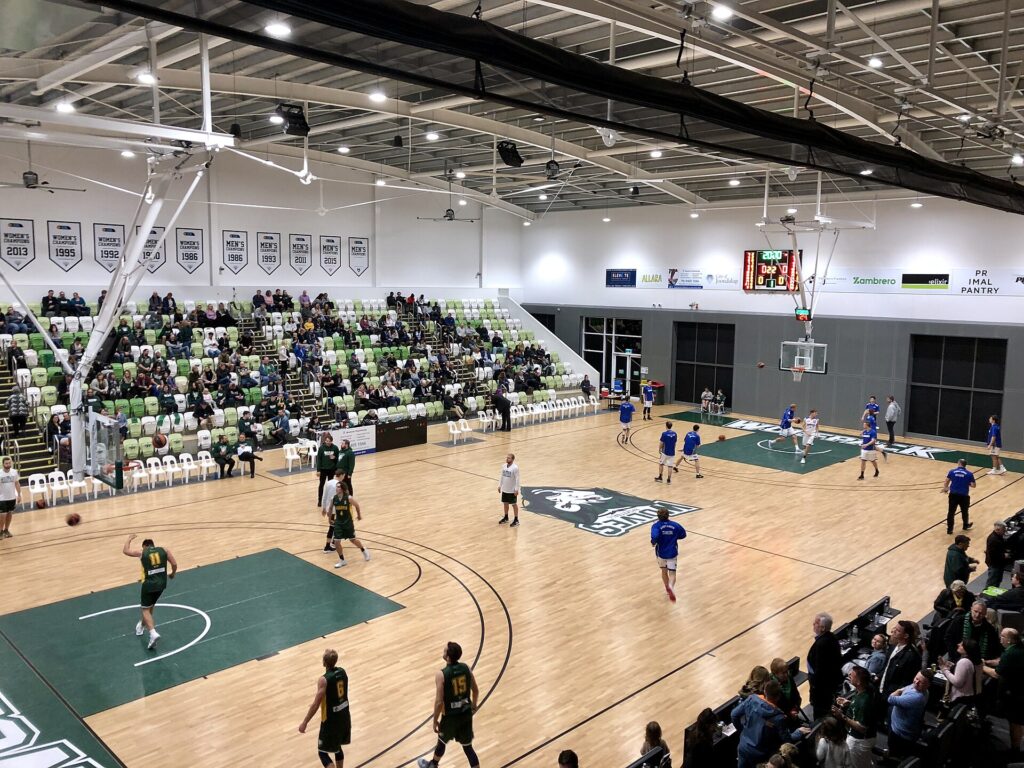
From a seat or a screen, this is one of the easier patterns to call early, because everything you need happens away from the ball. Find the defender who is one pass from the ball with a hand in the lane and his chest turned toward his man. Then stop watching the ball entirely.
Watch his head. When it turns away from the passer, count. If the cutter moves inside that turn, the play is on, and you will know it about a second before the pass is thrown. If the cutter moves while the head is still square, you will see the denial hold and the possession reset, and you will have identified the error before the broadcast does.
One habit sharpens this quickly. After any easy basket at the rim, rewind and look at where the weak-side corner was standing when the cut started. It explains more finishes than the finish does.
Frequently Asked Questions
Does the cut only work against denial defence?
Effectively, yes. The whole play is built on a defender who cannot see the ball and his man at the same time. Against an open stance with the defender’s back to the sideline and both in view, the cut runs into a defender who never lost track of anything, and the pass becomes a live-ball turnover going the other way.
Should the cutter run at full speed?
Not through the setup. The setup has to match the speed of the previous catches or it does not sell. Full speed belongs to the two steps after the plant, and only those. A cutter at top speed the whole way is easier to read, arrives at the rim out of control, and cannot choose between the two finishes.
Why is the pass thrown before the cutter is open?
Because separation appears and disappears inside about half a second. A passer who waits for confirmation is throwing into a closing window instead of an opening one. The pass is thrown to a location the cutter is going to occupy, which is the same principle behind almost every timed pass in the sport.
What is the difference between this and a simple cut to the basket?
A cut to the basket attacks space. This attacks a defensive decision, and it requires that decision to have been made. The setup step toward the ball is not decoration; it forces the defender to commit to the lane, and without it the pattern is a player running toward the rim.
How do teams defend it once they know it is coming?
By changing the stance rather than the effort. Dropping into an open stance concedes the entry pass and removes the cut in one move. The offence’s counter is that the pass it was being denied is now freely available, which is the trade the defence just accepted.
Next time a possession ends with an uncontested layup, ignore the finish and rewind to five seconds earlier. Find the defender with a hand in the lane, watch his head turn, and mark the exact frame the cutter left. That frame is the play.