A ball is hit into the right-field corner with a runner on second, and by the time the outfielder picks it up, the play is already three-quarters decided. Not by his arm. By where four other players stood before the ball left the bat.
Cutoff and relay throws get discussed as a test of arm strength, and arm strength is the smallest variable in whether the throw beats the runner. The alignment, the depth of the cutoff man, and the decision about which base to defend are set in the first two seconds after contact, long before anyone has released anything.
What follows breaks the play into the four roles involved and shows why the throw that ends an inning is usually decided before the outfielder ever touches the ball.
The play in four roles
- The outfielder. Fields cleanly and throws to a target, not to a base.
- The cutoff man. Aligns early, sets a reachable target, and reads the throw’s line.
- The relay or backup. Covers the throw that gets away and holds the second option open.
- The base or plate. Sets up to receive and to apply the tag without blocking the lane illegally.
- The decisive variable. Depth of the cutoff alignment, not the strength of the arm.
- The common failure. A throw released before the target is set, aimed at where the base is rather than at a person.
Why the throw is decided before the ball is fielded
An outfielder’s job on a ball hit to the gap or the corner is not to throw the ball as hard as possible toward home plate. It is to deliver an accurate throw to a target who is already positioned to make the next decision, and that target has to be in place before the throw happens for any of it to work.
The alignment decision, made by the cutoff man and the players behind him, happens the instant the ball is hit, based on the runner’s position, the score, the inning, and the number of outs. By the time the outfielder squares up to throw, the geometry of the play is already fixed. His job has narrowed to one thing: hit the target that has already been set.
This is why teams with modest outfield arms can still execute the play well, and why a strong-armed outfielder without a disciplined cutoff behind him regularly airmails a throw that a mediocre arm would have delivered on target.
The cutoff and relay, step by step
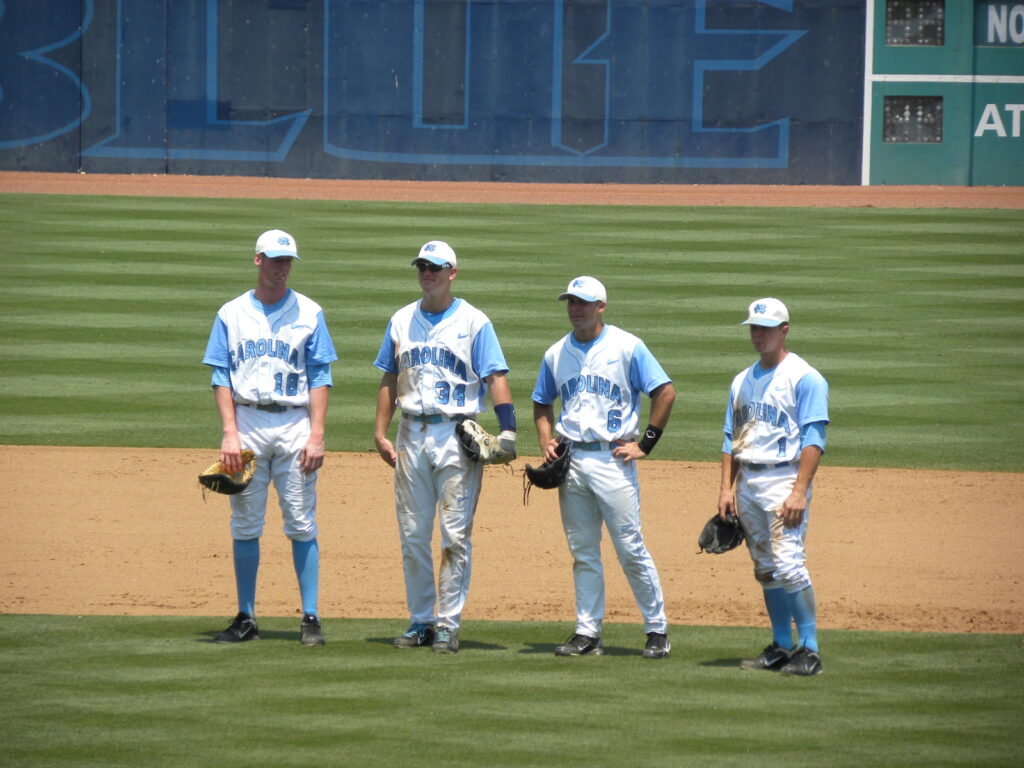
The sequence has a fixed order, and skipping a step is where most breakdowns happen. Every competent defense runs some version of the same four beats.
First, the cutoff man sprints to a point roughly halfway between the ball and the base he is protecting, adjusting his exact depth based on the strength of the outfielder’s arm and the speed of the runner. Second, he turns to face the outfielder and raises his arms to present a clear, chest-high target, calling for the ball if his sightline to the incoming runner is better than the fielder’s. Third, the outfielder throws through the cutoff man rather than over him, on a line flat enough to be catchable but not so low that it one-hops unpredictably. Fourth, the cutoff man reads the play in real time: cut it and redirect to another base, let it go through if the throw is true and the play at the original base is live, or intercept it entirely if the runner has stopped.
Each step depends on the one before it. A cutoff man who sets up too shallow gives the fielder a target but loses the ability to redirect the throw usefully; one who sets up too deep protects his redirect option but forces a longer, less accurate throw from the outfielder in the first place.
The four roles, and what each owes the throw
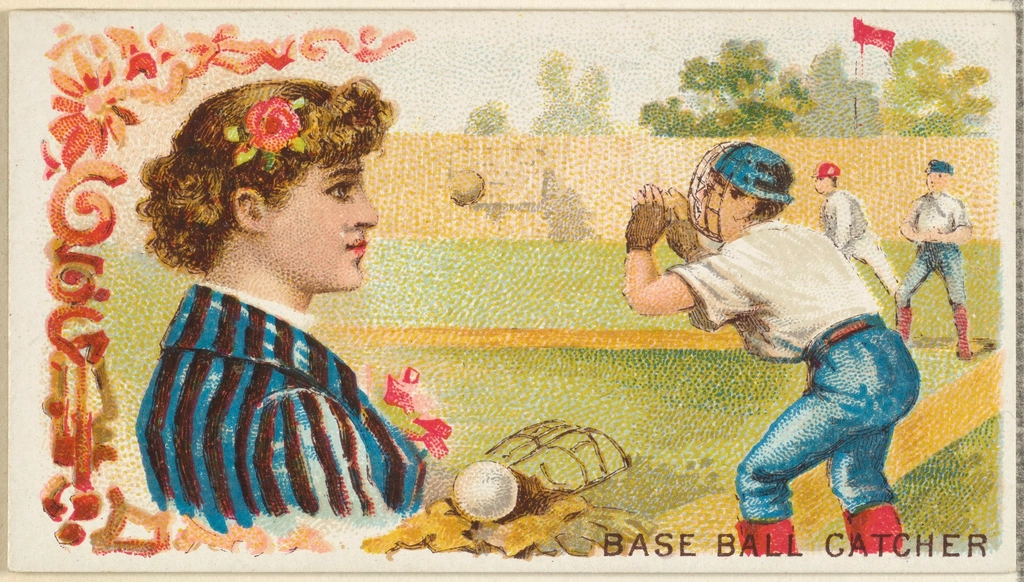
Treating the play as one throw obscures how many separate jobs have to be done correctly for it to work. Four positions carry distinct responsibilities, and a single missed one changes the whole outcome.
| Role | Primary job | Most common failure |
|---|---|---|
| Outfielder | Field cleanly, throw to the target | Rushing the throw before squaring to the target |
| Cutoff man | Set depth, present target, make the redirect call | Standing too far from the throwing lane |
| Backup/relay | Cover the throw that skips past the cutoff | Watching the play instead of moving into position |
| Receiver at the base | Give a low target, secure the catch, apply the tag | Blocking the baseline before possessing the ball |
The backup role draws the least attention and prevents the most damage. A relay throw that sails past the cutoff man with no backup in place turns a close play into an extra base, which is a heavier cost than a single missed cutoff assignment usually deserves.
Depth: the variable that decides the whole play
Cutoff depth is a moving target, not a fixed spot on the grass, and adjusting it correctly is the single highest-leverage decision in the sequence.
Against a strong-armed outfielder, the cutoff man can play deeper, because the fielder can still reach the base on a fly if the cutoff man lets the ball go through. Against a weaker arm, playing shallower shortens the distance the outfielder has to cover, at the cost of the cutoff man’s ability to redirect if the play at the original base is no longer live.
Speed of the runner works the same lever in the opposite direction. A slow runner buys the defense room to play a deeper cutoff and take the extra half-second needed for a clean transfer; a fast runner compresses the entire sequence and rewards a shallower alignment that sacrifices redirect flexibility for a quicker release.
Reading the runner before the ball arrives
The cutoff man’s most important skill is not catching or throwing. It is watching third base, not the incoming ball, for the two or three seconds before the throw arrives.
A runner who is clearly stopping at third has already ended the play at that base, and a cutoff man who is still watching the ball rather than the runner will not see this in time to redirect. A runner who is running through third at full speed tells the cutoff man the play is now at the plate, and the redirect decision has to be made and communicated before the ball is even in his glove.
This is the reason the position is given to an infielder with strong situational awareness rather than simply the player with the strongest arm on the roster. The arm matters for the second half of the play. The eyes matter for the first half, and the first half is where most plays are actually settled.
Where the throw goes wrong
Three failures account for the overwhelming majority of blown relay plays, and none of them is a lack of arm strength.
The first is a throw released before the target is fully set, usually because the outfielder feels rushed by the runner’s speed and throws at the base rather than at a person standing in front of it. The second is a cutoff man positioned on the wrong line, favoring one side of the throwing lane so severely that an accurate throw still misses him. The third is indecision at the moment of the redirect, where a cutoff man freezes rather than committing to cut the ball or let it through, and the hesitation costs more time than either decision would have cost on its own.
All three failures share a root cause: the play was not set up before the ball was hit. Teams that walk through cutoff assignments before the half-inning starts, based on the specific runner on base and the specific score situation, eliminate most of these errors before the ball is even in play.
Why the throw beats the runner more often than the highlight suggests
Broadcasts show the spectacular versions: a strike from the wall to the plate on the fly, a diving tag, a bang-bang call at first that needs a review. Those plays are rare specifically because a well-executed relay rarely produces one.
A properly run cutoff sequence usually results in the runner holding at the previous base rather than testing the arm at all, because the alignment discouraged the attempt before the ball was thrown. The plays that never happen, because a coach or a runner recognized the defense was set correctly, are the actual measure of how well a team executes this fundamental, and they never appear in a highlight package because nothing visibly dramatic occurred.
Watching the sequence from the stands
The play is easy to follow once a viewer knows where to look, and the sequence rewards watching away from the ball for most of it.
Watch the cutoff man’s first three steps rather than the outfielder, since his positioning tells you what the defense believes about the arm and the runner before either has been tested. Watch third base rather than the throw once the ball is in the air, since the runner’s decision there determines what the cutoff man is about to do. Only in the final second should the eye return to the throw itself, at which point the outcome has already been shaped by everything that happened before it arrived.
How the play changes with runners on multiple bases
Everything above describes the simplest version, a single runner forcing a throw to one base. Add a second runner and the calculus changes, because the defense now has to choose which runner the throw is actually meant to stop.
With runners on first and second on a base hit to the outfield, the lead runner usually dictates the throw, since he represents the run that matters most. The defense’s cutoff alignment still favors the same base it would for a single runner, but the trailing runner’s advance becomes a calculated concession rather than an oversight. Coaches accept the extra base in exchange for keeping the more dangerous runner from scoring, and a cutoff man who tries to defend both runners at once typically ends up stopping neither.
This is also where communication matters most. The cutoff man needs a clear, pre-arranged signal for which base he intends to defend, called out loud enough for the outfielder to hear before the throw is released, because a throw aimed at the wrong base after the ball has already left the hand cannot be corrected.
What coaches drill to make this automatic
Because the sequence has to happen faster than conscious thought allows in a real game, teams drill it as a set of fixed responses to specific situations rather than as a set of principles to reason through live.
A typical session walks through every combination of runner and out count with no ball actually hit, just players sprinting to their cutoff positions and calling out which base they are protecting. The repetition builds the same kind of automatic recognition a driver develops for a familiar intersection: by the time the situation happens for real, the positioning decision has already been made a hundred times in practice.
The second half of the drill work focuses specifically on the redirect call, since it is the moment most likely to break down under real pressure. Cutoff men practice reading a live runner’s body language from a teammate jogging through third at varying speeds, building the same recognition skill that later has to work at full game speed with a real throw arriving at the same time.
Frequently Asked Questions
What is the difference between a cutoff man and a relay man?
The terms describe the same role on most plays: a fielder positioned between the ball and the base, able to let a throw go through or redirect it. Some teams use relay specifically for a second, deeper fielder used on the longest throws, where two intermediate stops are needed rather than one.
How far from the base should the cutoff man stand?
It depends on the outfielder’s arm strength and the runner’s speed, and it should shift play to play rather than sit at a fixed spot. A workable starting point is roughly halfway between the ball and the base, adjusted a few steps in either direction based on those two variables.
Why do outfielders sometimes throw over the cutoff man on purpose?
Only when the defense has already decided the play is clearly live at the far base and there is no need to preserve a redirect option. It sacrifices flexibility for a small amount of time, and it is the wrong choice whenever the play could still change at the last base.
What causes most errors on relay throws?
Rushing. An outfielder who throws before the cutoff man has fully set his target, or a cutoff man who releases before securing the transfer, produces most of the errors charged on this play, far more often than a simple physical misplay.
Does this fundamental matter at lower levels of the game?
It matters more, not less, because arm strength is weaker and errors are more frequent at every step. A well-drilled cutoff sequence compensates for exactly the physical limitations that are most common below the professional game.
The throw that beats the runner looks like an arm. It is actually four decisions made correctly in the two seconds after contact, and the arm only has to deliver what those decisions already set up.