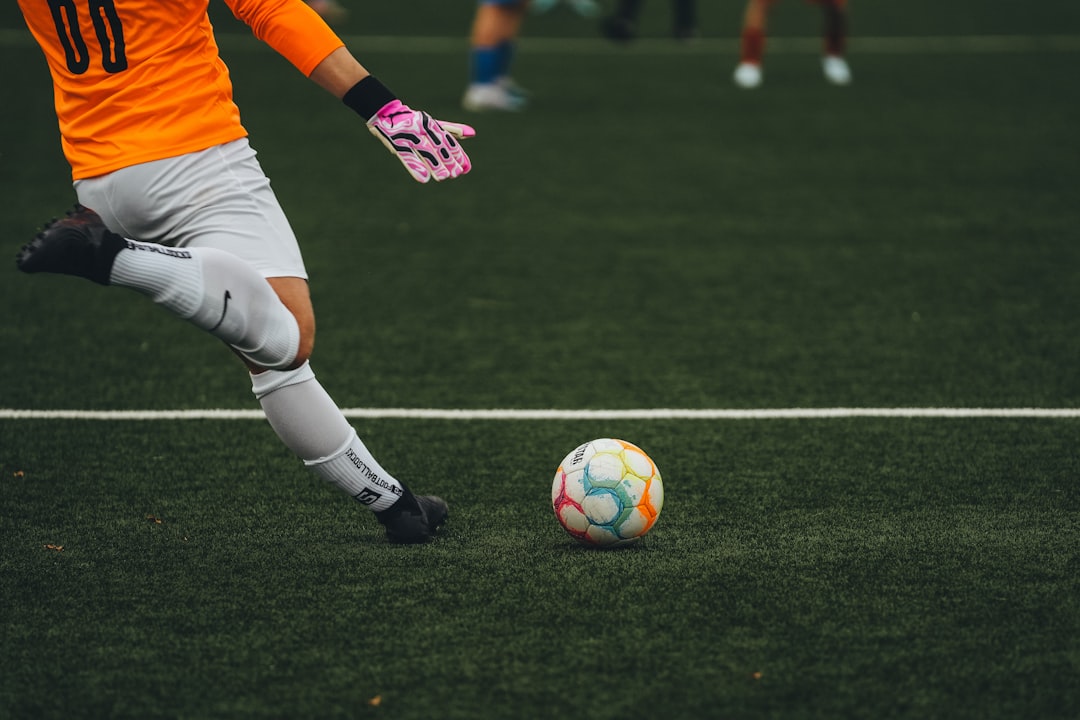
Ask a goalkeeper and a striker the same question after the same match and you get two answers of different quality, and the difference is not personality. It is the job. One of them spent ninety minutes watching the game from behind it, with long stretches of nothing and a handful of isolated events. The other spent ninety minutes inside it, with almost no view of anything beyond the nearest two defenders.
Interviewers who use one question set for a whole squad get thin material from half of it and never work out why. The player who answers in vague generalities is often not being evasive. He is being asked to describe something his position did not let him see.
What follows compares the two roles on what each can honestly report, and then sets out the questions that suit each. The principle extends well beyond those two positions, but they are the clearest illustration in any sport.
Two roles, two kinds of answer
- Field of view. The goalkeeper sees the whole shape. The striker sees the nearest defender and a fraction of a second of space.
- Time. The goalkeeper’s match is long and empty with sudden compressions. The striker’s is a series of half-second decisions.
- Memory. Goalkeepers recall sequences. Strikers recall sensations and specific contacts.
- Self-assessment. One role is judged almost entirely on errors, the other almost entirely on conversions.
- Vocabulary. Positional and spatial on one side, physical and temporal on the other.
- The failing question. “How did that feel?” gets a usable answer from neither.
Why position shapes what a player can describe
An interview is a request for a report, and a report is limited by what the reporter had access to. A goalkeeper spends most of a match facing the entire field with nobody obstructing his view, which makes him the only outfield witness with a continuous picture of shape, spacing and the movement of both teams.
A striker spends most of a match with his back to the play or in a crowd, receiving information in fragments and acting on it faster than it can be consciously processed. Asked afterwards to explain a movement, he is reconstructing rather than recalling, and the reconstruction is honest but thin.
This is not a claim about intelligence or articulacy, and it is worth saying plainly because the assumption sits under a lot of lazy coverage. It is a claim about vantage point. Put the same player in a different position for a season and the character of his answers changes with it.
Interviewing athletes by position: two vocabularies compared
| Dimension | Goalkeeper | Striker |
|---|---|---|
| What they saw | Team shape, spacing, patterns over minutes | The nearest defender, the space behind him, the ball |
| Time perception | Long stretches, then compressed bursts | Repeated half-second windows |
| Natural unit of description | The sequence: what led to what | The contact: body position, touch, timing |
| Judged on | Errors, which are visible and decisive | Conversions, which depend on others |
| Typical distortion | Over-explains structure, under-reports the save | Attributes outcomes to feel rather than decision |
| Best question shape | Sequence and cause: what changed, and when | A specific moment, named precisely |
The last row is the practical takeaway. A wide question opens a goalkeeper and closes a striker; a narrow one does the reverse.
The goalkeeper’s time is longer and emptier
A goalkeeper can go twenty minutes without touching the ball and still describe those twenty minutes in detail, because his job during them is to organise, watch and anticipate. That period is genuinely observed rather than remembered, and it is why goalkeepers are so often the most useful tactical interviews in a squad.
The compression is the other half. When the action arrives it arrives all at once, and the events that decide a match happen in fractions of a second at close range. Goalkeepers describe these in terms of position and preparation rather than reaction, which is accurate: most of what looks like reflex was decided by where they were standing a second earlier.
The interviewing consequence is that a goalkeeper answers a broad question well. “What changed in the ten minutes before the goal?” is a question he can genuinely answer. Asked the same question, a striker will usually offer a general impression, because he was inside those ten minutes rather than watching them.
The striker’s time is compressed into half a second
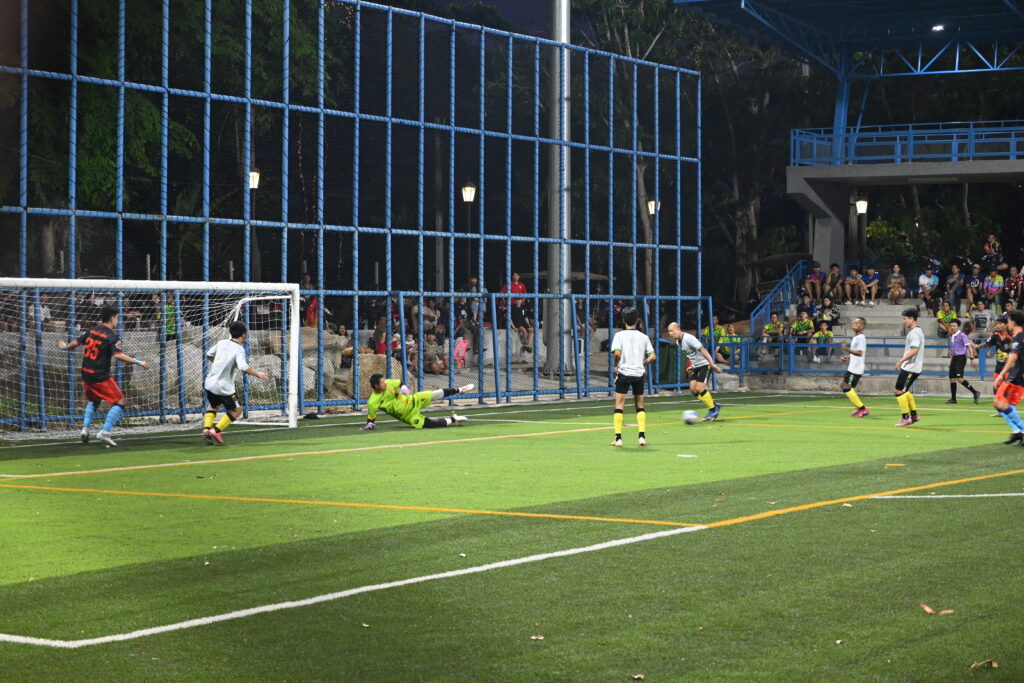
The forward’s working unit is small: the moment before receiving, the touch, the finish. Everything that matters happens inside a window too short for narrative, and the vocabulary reflects that. Strikers talk about contact, weight, the ball sitting up, the defender’s shoulder, the keeper’s first movement.
Asked to explain a run, many will describe a feeling rather than a decision, and this frustrates interviewers who assume the vagueness is deflection. It usually is not. Skilled movement is executed below the level of deliberate thought, and demanding a rational account of it produces invention rather than insight.
What a striker can report with precision is the specific moment. Name it, place it, and the answer arrives with detail. “When you took the shot on the half-turn just before the hour, what did you see of the goalkeeper?” gets a concrete reply. “Talk us through your performance” does not.
Self-assessment: errors against conversions
Before either of them speaks, it is worth remembering that both are describing a job with a public scoreboard attached. A goalkeeper who concedes from a deflection and a striker who misses from six yards are answering questions about the same ninety minutes, and the two conversations have almost nothing in common beyond the venue.
The two roles are judged by asymmetric standards and it shapes how each talks about their own match. A goalkeeper’s errors are visible, isolated and decisive, and there is no ambiguity about responsibility. That produces a professional habit of precise, sometimes brutal self-criticism, because vagueness about an error looks worse than the error.
A striker’s contribution is measured mostly by conversions, which depend on service, on defenders, on a goalkeeper and on chance. That produces a different habit: a tendency to talk about process, chances created and positions taken up, which sounds evasive to an audience and is a reasonable description of a partly external outcome.
Knowing the asymmetry changes what you ask. A goalkeeper can be asked directly about a mistake and will usually answer directly. A striker asked about a miss is being asked about something that has an emotional cost and a limited explanation, and the same information often arrives more usefully through a question about the chance rather than the finish. This is the point where the conversation crosses into territory that deserves care rather than a follow-up.
Questions that work with a goalkeeper
Use the vantage point. The whole value of the interview is that this person watched the match from behind it with a clear view.
Ask about sequence: what changed between the first twenty minutes and the last twenty. Ask about spacing: whether the distance between the lines was different after the interval. Ask what he was shouting about, and at whom, which is a question about organisation that goalkeepers answer readily and specifically.
Ask about preparation rather than reflex: where he was standing before the shot, what he expected the striker to do, what the run-up told him. Avoid asking how a save felt, which invites a sentence about instinct and closes off everything interesting about the positioning that made it possible.
Questions that work with a striker
Be specific and be short. The productive question names a moment, gives a time reference and asks about one thing inside it.
Ask about the defender rather than the goal: what the centre-back was doing, whether he was being followed or passed on, when the space appeared. Ask about the touch before the decisive one. Ask what he had noticed about the goalkeeper’s starting position earlier in the match, which is a question about preparation that forwards think about far more than they are given credit for.
Ask about service in concrete terms: which type of ball he wanted, from where, and how often it arrived. That produces a genuine tactical answer without requiring the player to criticise a team-mate, which is the trap that makes most service questions unusable.
The question that fails with both
“How did that feel?” is the default, and it fails in opposite directions. The goalkeeper answers it too well, offering a considered paragraph that is mostly reflection and contains nothing that could not have been written without him. The striker answers it in four words, because the honest answer to how a finish felt is that it felt like a finish.
The other reliable failure is the compound question, which is worse for a striker than for a goalkeeper. Two questions in one sentence let a tired player answer the easier half, and forwards in a mixed zone will do exactly that. Goalkeepers, with a longer natural answering rhythm, will often answer both and it costs nothing.
The third is the question that requires the player to have seen something he could not see. Asking a striker what the midfield was doing when the second goal went in asks for testimony from a man who was running away from it. He will answer, politely, and the answer will be worthless.
What each can tell you about the other
The most under-used technique is asking each role about the other’s job, because each has information the other lacks.
Goalkeepers can describe what a striker’s runs do to a defensive line, and they do it well, because they spend the match watching that line get pulled around. Ask a goalkeeper about the opposing forward and you get a genuinely expert answer about movement patterns rather than a compliment.
Strikers can describe goalkeepers with unusual precision: starting positions, whether a keeper commits early, which side he tends to show. That information is gathered deliberately during a match and is rarely asked for. Both questions have the additional advantage of being safe to answer, which matters when the alternative sits close to subjects a player would rather not discuss immediately after a result.
Adapting the same idea across sports
The principle transfers cleanly to any sport with fixed positional roles. A libero and an outside hitter have the same relationship as a goalkeeper and a striker: one sees the whole court continuously, the other operates in short compressed windows.
In American football, a quarterback is a sequence witness and an offensive lineman is a contact witness, and asking a lineman about coverage or a quarterback about hand placement produces equally poor material. In basketball, a point guard reports structure and a centre reports collisions.
The practical version of this is a two-column note in a reporter’s book: for each player who might be available, whether they are a sequence witness or a moment witness, and one question of the right shape prepared for each. It takes ten minutes before a fixture and it changes the quality of what comes out of the corridor afterwards, particularly at events where every answer is public within minutes.
Frequently Asked Questions
Is this just a way of saying some players are more articulate?
No, and conflating the two produces reporting that would not survive any serious standard of fairness. Articulacy varies within every position. What varies by position is what the player had access to during the match, and no amount of articulacy allows someone to describe a passage of play they were running away from.
Does the same distinction apply to defenders and midfielders?
Yes, along the same axis. Central defenders are closer to the goalkeeper’s vantage point, with a view of the game in front of them, and deep midfielders are the strongest structural witnesses on the pitch. Wide players and forwards sit at the other end, reporting moments rather than sequences.
How do you prepare position-specific questions before a match?
Write two sets in advance: three sequence questions for the players who watched the match unfold, and three moment questions naming the specific passages you expect to matter. Both lists get rewritten during the game, but having the shapes ready is what makes a two-minute mixed zone productive.
What about a player who has changed position recently?
That player is unusually valuable, because he can compare the two vantage points directly. Asking what he can see now that he could not see before is one of the few questions that reliably produces something genuinely new, and it is rarely asked.
Does this apply to coaches as well?
Coaches are sequence witnesses with an additional problem: they saw everything and have a reason to describe only part of it. The question shapes that work with a goalkeeper generally work with a coach, but the constraint on the answer is institutional rather than perceptual.
Before the next mixed zone, sort the available players into those who watched the match and those who were inside it. The question that opens one of them is the question that closes the other.