A two-pass exchange down the left touchline takes about as long as it takes to read this sentence. The crowd credits the finisher, the replay credits the passer, and the move enters the highlight reel as a single fluid thing. Slow it down and it is not one thing at all. It is four separate decisions stacked inside roughly two seconds, and three of them can be right while the fourth quietly ruins the move.
The pattern is old enough to have collected a name in every sport that uses it. Wall pass. One-two. Up, back and through. Backdoor exchange. What travels between codes is not the shape on the board but the problem the shape solves: how to get an attacker past a defender who is already closer to the goal, without asking that attacker to beat him twice.
Coaches drill it as timing. Commentators describe it as understanding between two players. Both descriptions are true and both hide the mechanism, which is duller and far more useful: a defender’s momentum gets spent in one direction while a runner leaves in another, and the ball travels through the gap that opens for as long as it takes that defender to stop, plant and go again.
The four reads at a glance
- The window. From the first touch to the return, the whole exchange usually lives inside two or three seconds.
- The order. First the pass, then the defender’s weight, then the start of the run, then the angle of the return.
- The read that decides it. The third. The run has to leave while the first pass is still travelling. The other three reads have margin for error; this one does not.
- Two ways it dies. A first pass that is too comfortable, or a run that is too early and too straight.
- Where to look. Not at the ball. At the near defender’s plant foot, and at the ground behind him.
- The rule that bites. In football and in ice hockey the offside check lands on the second pass, not the first.
What the pattern is actually solving
Put one defender between an attacker and the goal and you have created a two-part problem. Beating him on the dribble means beating him twice: once on the touch that takes the ball past him, and again on the recovery stride, because a defender who has been beaten laterally is usually still the faster player over the next five metres.
Passing around him asks for something much cheaper. The attacker needs the defender’s weight to go the wrong way exactly once. That single commitment converts a one-against-one into a two-against-one for the length of one recovery step, and one recovery step is all the space the pattern ever needs.
This is why distance matters more than skill. The defender can guard the man or guard the ground behind himself, and he can only be forced to choose when the passer is close enough to hurt him immediately. Stretch the same exchange over half a pitch and he simply drops off, watches both, and the whole thing becomes a square pass. The exchange lives inside distances comparable to the depth of a penalty area, not across a third of the field. Any decent tactical preview of a knockout tie will tell you which side presses close enough to be vulnerable to it.
Where the give and go play sits among two-man actions
Two-man combinations are easy to confuse because they all look like passing and moving. They separate cleanly on one question: who receives the second ball, and where does he receive it relative to the defender who was beaten.
In the give and go play the same player passes and receives, and the return arrives on the far side of the defender he passed around. In a third-man run, the return goes to somebody else entirely and the original passer becomes a decoy. In an overlap there is no return in the strict sense: the runner takes the ball wide of the defender rather than through him. The overlap moves the ball away from the problem. The give-and-go moves it through the problem.
American football is the instructive exception. It has no true version of this pattern, because the rules allow only one forward pass per down and only from behind the line of scrimmage. Every multi-pass sequence there is built on backward passes instead, which is why the hook and lateral and the halfback pass off a backward toss look like distant cousins of the wall pass rather than the same family.
Read one: the first pass has to be a problem
The first pass is not a delivery, it is bait. Its job is to arrive at a moment that forces the near defender to react, which means it is usually played later and from closer than a comfortable pass would be. If the defender is still sitting off, the pattern is not on, and the correct answer is to carry the ball another two strides until he is.
Weight decides the rest. A pass that is too soft lets the defender arrive with the ball and turn the exchange into a tackle. A pass that is too firm cannot be returned first time, and a controlling touch by the wall player hands back the exact beat the pattern was built to steal.
The receiver’s body shape belongs to this read as well. A wall player facing the passer, or half-turned with the back foot open, can send the return with one touch. A wall player with his back square and his weight on the wrong foot cannot, whatever his technique, and an experienced passer reads that shoulder before he plays the ball.
Read two: the defender’s weight, not the defender’s eyes
Coaching shorthand says to go when the defender turns his head. The head is a useful cue but it is not the commitment. Commitment lives in the hips and the plant foot, and a defender can look straight at the ball while keeping his weight balanced and his options open.
What the pattern is buying is deceleration. A defender moving toward the ball has to stop, plant, and accelerate again in a new direction, and that sequence costs him ground whether or not he read the play correctly. It is not a lapse in concentration. It is the arithmetic of reversing a moving body.
The tells are visible from any seat in the stadium. Front foot travelling past the hips, shoulders leaning over the ball, an arm reaching. Against that defender the exchange is on. The counter-tell is a defender arriving in short choppy steps with his hips square and his feet under him: he has not committed, he will not commit, and the pattern against him fails before it starts.
Read three: the run leaves before the pass arrives
This is the read that decides the play, and it is the one most often blamed on the passer afterwards. The run has to start on the passer’s follow-through, not on the wall player’s first touch. By the time the ball has been controlled, the defender has already planted and is facing the right way again.
Direction matters as much as timing. A runner who goes straight past the defender’s shoulder is running along the defender’s own recovery line, which means the defender keeps contact simply by continuing to move. A run that bends behind the defender’s back shoulder forces him to turn his hips before he can chase, and that turn is worth more separation than raw speed usually is.
There is one situation where a late run is correct rather than lazy. If a second defender is already covering the space behind the first, going early only delivers the runner into cover. The disciplined response is to hold, let the wall player face forward, and let the pattern become a third-man run instead.
Read four: the return angle
The return is not the first pass played backwards. It is a pass into ground the runner has not reached yet, on the far side of the beaten defender, and it has two variables that change the entire outcome: the line it travels on and the surface that plays it.
Played in front of the runner, the return keeps him at full speed and lets the move continue into the box, at the cost of inviting the goalkeeper or the covering defender into the same space. Played into his feet, it is far safer and usually throws away the advantage the first three reads just created, because the runner has to slow down to take it.
The rules land here too. Under the Laws of the Game maintained by the International Football Association Board, a player’s position is judged at the moment a teammate plays the ball, which for this pattern means the return and not the opening pass. A runner who has already gone beyond the last defender turns a completed move into a free kick the other way. Ice hockey applies the same logic at the blue line: the puck has to cross first, so an exchange executed a beat early is an offside no matter how clean it looked.
Failure one: a first pass that is too good
The counter-intuitive way this pattern dies is with a perfect opening pass. Clean, weighted, into the safe foot, delivered from a position where nobody had to react to it. The wall player receives with time, the defender never moves, and the runner sets off into a space that was never going to open.
The symptom is easy to recognise once you know it. The runner starts, the defender does not, and the return either never comes or arrives into cover. The move then recycles backwards and gets described as having broken down, which is generous: it never started.
The fix is uncomfortable for the passer, because it means holding the ball longer and playing it under more pressure. One extra stride toward the defender, or one touch that invites the press, changes the pass from a delivery into a problem. Everything downstream depends on that discomfort.
Failure two: a run that is early and straight
Early is the more expensive of the two. In football it produces the offside flag that ends what looked like the best move of the half. In hockey it produces a whistle at the blue line. Even in codes with no offside law at all, a runner who arrives before the return can be played simply runs out of pitch.
Straight is the quieter failure. It keeps the runner inside the defender’s recovery line, where the defender does not need to turn, react or think. He only needs to keep running in the direction he was already going, and the numerical advantage the exchange created never actually appears on the ground.
Worth naming as a third, structural failure: the extra body. Two-man actions are beaten by a third defender who never had to be involved, which is why this pattern shows up constantly in transition and almost never against a set defensive block with numbers behind the ball. The exchange spends space. A deep block has none to spend.
The same idea in four codes
| Sport | Usual name | Defender under attack | Rule that can cancel it | Clearest tell |
|---|---|---|---|---|
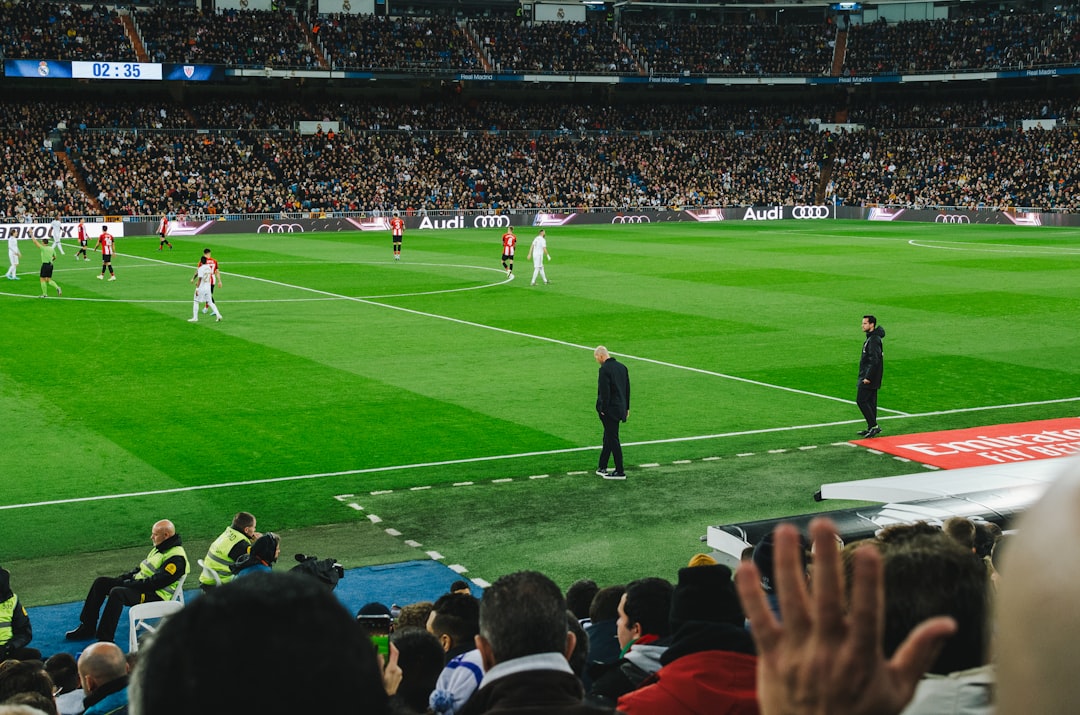
| Association football | Wall pass, one-two, up-back-through | The pressing full-back or midfielder | Offside, judged at the moment of the return | The passer’s follow-through and the runner leaving with it |
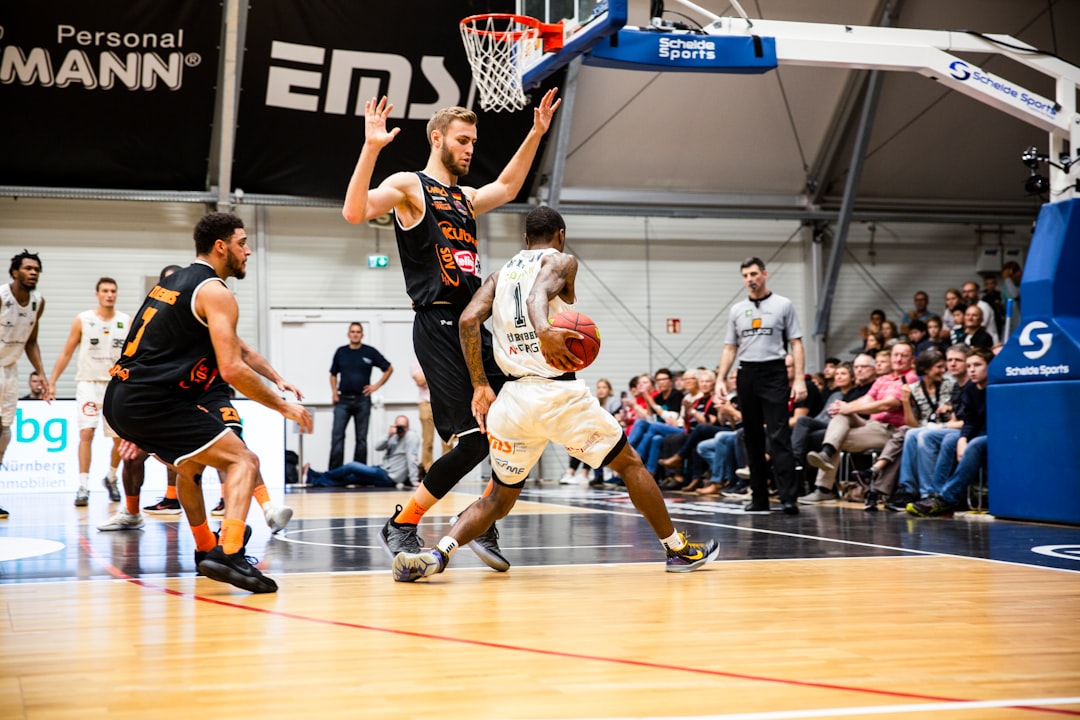
| Basketball | Give-and-go, backdoor exchange | The on-ball defender who turns toward the ball | None directly, though lane-count rules limit waiting | The defender’s head turning while his man drifts out of vision |
| Ice hockey | Give-and-go, area exchange | The defenceman stepping up at the line | Offside: the puck must cross the blue line first | The defenceman’s inside skate rotating toward the puck |
| Futsal | Give-and-go, parallel pass | The marker in a confined court | No offside law, so space is the only limit | The wall player receiving with an open back foot |
The column that matters most is the fourth. Codes with an offside law force the runner to be patient in a very specific way, and codes without one replace that constraint with a shortage of ground. Futsal players learn the same exchange in a court where the whole move can happen inside the width of a football penalty area.
How to watch for it from your seat
Pick a defender and stop watching the ball. On the next attacking sequence, keep your eyes on one full-back or one on-ball defender and watch his plant foot rather than his head. Almost every wall pass in a match announces itself two seconds early on that foot.
Then count in four. Pass, weight, run, return. Doing that once or twice a half rewires how the rest of the game looks, because you start noticing the exchanges that were on and never attempted, which are far more common than the ones that come off.
On the replay, angle changes the story completely. A tight camera makes the pattern look like intuition between two players who understand each other. A high wide angle makes it look like what it is: a triangle collapsing, a defender caught between two jobs, and a runner arriving into the ground he vacated. If the offside is disputed, only one frame matters, the one where the returning pass leaves the foot, and everything else on the replay is decoration.
Frequently Asked Questions
Is a give-and-go the same thing as a one-two?
Yes. One-two, wall pass and up-back-through all describe the same exchange, and which term gets used mostly depends on where the coach learned the game. The only naming distinction worth keeping is between this pattern and a third-man run, where the return goes to a different player entirely.
Why does it work in transition and almost never against a deep block?
Because the pattern spends space behind the defender it beats, and a deep block is designed to have none. In transition the defence is spread and recovering, so one committed defender leaves real ground behind him. Against eight players inside their own third, beating one of them puts the runner directly into the next one.
Does the return have to be played first time?
Usually, and for a mechanical reason rather than an aesthetic one. A controlling touch by the wall player gives the beaten defender the exact beat he needs to plant and recover. The exception is when the wall player receives with nobody near him, in which case a touch to improve the angle costs less than it gains.
How do defenders train against it?
By breaking the second read rather than the first. Most modern coaching approaches teach defenders to stay square, avoid following the ball with head and body together, and pass the runner on to a teammate instead of chasing him.
Can two players who rarely play together execute it?
They can, but the version they produce is slower, with the return played to feet rather than into space. Familiarity between teammates mostly buys the riskier fourth read: the pass in front of the runner, which requires trusting he will still be running when it arrives.
The next time a two-pass exchange opens a defence, watch it twice. Once for the finish, and once with your eyes on the defender who never got to be part of the highlight. That is where the play was actually decided.