
A guard comes off a screen at the top of the key and the arena has an opinion about it within a second. Somebody was open, somebody was late, somebody should have switched. What almost nobody in the building has done is name the coverage, and until the coverage has a name the argument is about the outcome rather than about the plan.
There are four families of answer to a ball screen, and they have been stable for a long time because they are the only four available. Sit back. Meet the ball high and recover. Trade assignments. Send two defenders at the ball. Everything else in the vocabulary, and there is a great deal of vocabulary, is one of those four with an instruction attached about which way to force the handler.
Each family concedes something on purpose, and that is the part that gets skipped. A coverage is not an attempt to stop everything. It is a decision about which shot the defense will live with, taken before the game and executed by five players who have to agree about it while moving. The useful question after a made basket is not whether the coverage failed, but whether the shot that went in was the one it chose to give up.
Read the screen in six lines
- Four families. Drop, at the level, switch, blitz. Everything else is one of these with a direction attached.
- What sets the price. Not the ball handler alone. The screener’s shooting range and his speed off the roll decide what each option costs.
- First tell. The on-ball defender’s chest at contact: over the screen, under it, or across the top.
- Second tell. The screener’s defender’s first step. Backwards, forwards, or square and staying.
- Third tell. The weak-side defender. If he moves before the pass, the defense has already accepted that the roller will be open.
- The honest test. Not whether a shot was conceded, but whether it was the shot the coverage agreed to concede.
What a ball screen is actually asking
A legal screen does one thing: it puts a stationary body in the path the on-ball defender needs to travel. He can go over the top, under, or around the outside, and each choice costs him a specific amount of time and a specific amount of ground. None of them is free, which is the entire point of setting the screen where it was set.
The screener then becomes the second problem. Once contact is made he can roll to the rim, pop out to open space, or slip away before the screen is set at all. His defender is the only player in position to meet the ball early, and every moment he spends near the ball is a moment the roller is unguarded.
So the defense is short of bodies by design. Two defenders cannot cover the ball, the roll and the space behind them at the same time, which is why the third, fourth and fifth defenders are part of every coverage even though nobody names them on television. The coverage is a rule about who gives up what, agreed before the possession starts.
The four pick and roll coverage families, side by side
| Coverage | Conceded by design | Protected | Beaten by | Tell in two seconds |
|---|---|---|---|---|
| Drop | The pull-up from around the screen | The rim and the lob | Range off the dribble; the pocket pass into the gap | Screener’s defender retreating before contact |
| At the level or hedge | The roll, for about two seconds | The pull-up and the drive | Re-screen, snake dribble, four-on-three off a slow recovery | He steps up square, then turns and sprints back |
| Switch | A mismatch, immediately | Everything for the first two seconds | Post-up or isolation; the slip before the call lands | Hips turn toward the handler and stay there |
| Blitz or trap | Four-on-three behind the ball | A shot from the best scorer | A screener who passes; one accurate skip pass | Two defenders above the screen with hands high |
The second column decides most possessions. Every row in it is a sentence a coaching staff said out loud during the week, and the shot that eventually goes up is usually the one written there.
Drop: concede the pull-up, protect the rim
The drop is the default in most systems for a plain reason. It protects the highest-value shot on the floor with the fewest moving parts and the least communication, and it keeps four defenders attached to their own assignments. The screener’s defender retreats toward the rim, the on-ball defender fights over the top, and the two of them form a corridor the handler has to shoot over.
What it gives up is stated in its own name. Everything between the screen and the retreating big man is available. How deep he sits decides which shot: a deep drop concedes the pull-up and takes away the lob, a shallower one takes away the pull-up and opens the pocket pass into the space he left. There is no setting that covers both, and pretending otherwise is how a defense ends up covering neither.
It dies to a handler who can rise into a shot off one or two dribbles while the big is still backing up, and to the pocket pass into the gap while the screener is still moving. Against a screener who shoots from distance the pure drop is close to unplayable, which is why the coverage that dominated a decade of basketball has been edited rather than abandoned.
At the level and hedge: buying two seconds
Meeting the ball at the level of the screen is a delay tactic and nothing else. The screener’s defender steps up square to the handler at the moment of contact, holds him for a beat, then turns and sprints back to his own man. A hedge is the harder version, with that defender stepping across the handler’s path to push him wider before recovering.
The purchase is time. Two seconds is usually enough for the on-ball defender to get back in front, which restores the original matchup and burns a chunk of the shot clock. The defense spends an enormous amount of energy to arrive back where it started.
The cost sits behind the hedge. The instant the big steps up, his man is loose, and if the handler can find him the defense is playing four against three for the rest of the possession. The standard answer has become the short roll: the screener does not sprint to the rim, he stops in the vacated space, catches facing the basket and passes. A re-screen is the other reply, forcing the same defender to hedge twice inside six seconds, which tends to resolve itself.
Switch: no advantage, but a new mismatch
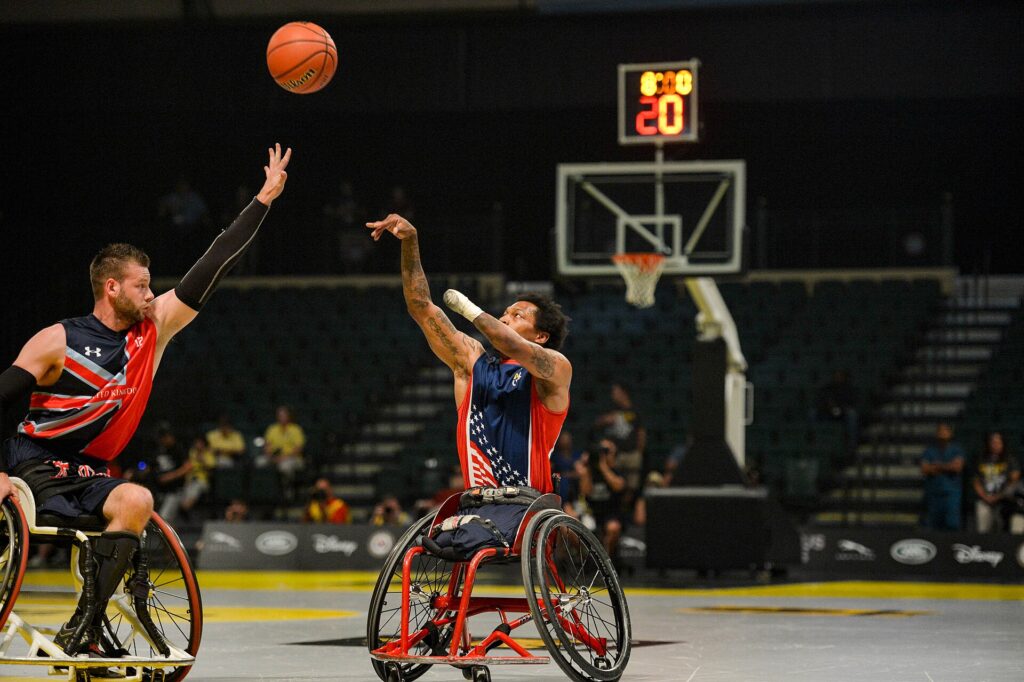
Switching answers the timing problem by refusing to have one. The two defenders trade assignments at the screen, nobody fights through anything, and the handler arrives on the far side with a defender already in front of him. For the first two seconds it is the most effective of the four coverages by a distance.
Then the mismatch arrives and the coverage becomes a bet about who can punish it. A guard now defending a much larger screener has to hold position against a post-up, which is a strength and conditioning problem as much as a technical one. A big man now on the ball has to survive an isolation with the whole side of the floor cleared for it. Neither is hopeless, and both are worse than what the defense started with.
The failure mode is talk rather than physique. A switch has to be called before the screen arrives, and a screener who slips early, breaking to the rim before contact happens, catches two defenders mid-conversation. That is where switching teams give up their cheapest baskets.
Blitz: force the ball out of the best hands
Sending two defenders at the ball above the screen starts from a different premise than the other three. They all try to contain the best player on the floor. This one accepts that it cannot, and gets the ball away from him instead, quickly, before he can shoot or turn the corner.
Everything after that is a numbers problem the defense has agreed to lose politely. Four attackers are covered by three defenders and the rotation happens on the pass, with the furthest shooter covered last or not at all. A blitz concedes an open corner attempt rather than a contested one from the player who worries you most.
It is beaten by a screener who can pass. The short roll into a four-on-three has been the answer for as long as the tactic has existed, and it explains why big men are now coached to catch in the middle of the floor with their eyes up instead of turning to finish. One accurate cross-court pass moves the defense faster than it can rotate, which is the whole argument for the shot it concedes.
Ice, weak and under: the instruction attached to the coverage
Half the terms fans hear are not coverages at all. They are directions. Ice, also called blue or down depending on the building, applies to a screen set on the side of the floor: the on-ball defender jumps to the top side of the handler and refuses to let him use the screen, forcing him along the sideline toward the baseline, where the big is waiting and the space runs out.
Force weak is the same principle applied to a handler with a dominant hand. Push him to the other one and let the coverage happen over there. Going under the screen is a third kind of statement, and a blunt one: it says the defense does not believe the handler will punish an open shot from that distance, and it invites him to prove otherwise.
None of these replace the four families. A side screen can be iced with the big in a deep drop or with the big at the level, and those two look nothing alike while being the same instruction. Separating the direction from the coverage removes about half the vocabulary.
The tells: what to watch in the first two seconds
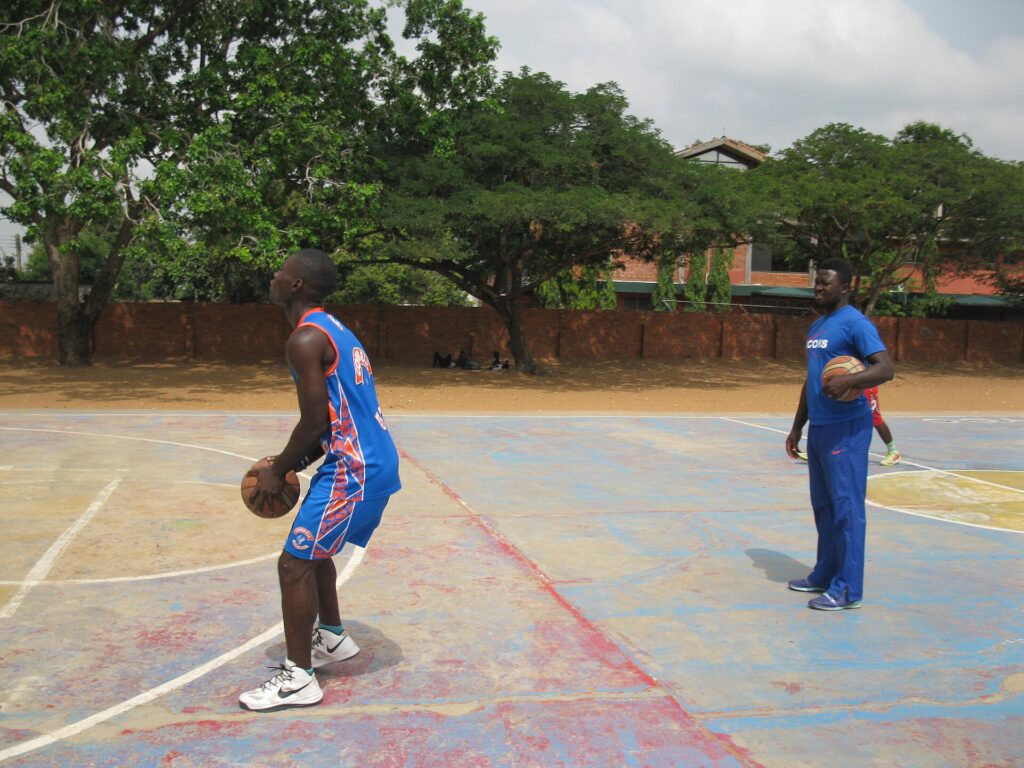
Start with the on-ball defender’s chest at the moment of contact. Over the top means the defense is protecting the shot and expects help behind it. Under the screen means the defense has decided the handler will miss the open jumper. Across the top, refusing the screen entirely, means the call was a direction rather than a coverage, and the play is being pushed somewhere specific.
Then take the screener’s defender’s first step. Backwards is drop. Square and forward, then a turn, is a hedge. Square and staying, with his hips already pointed at the ball handler, is a switch. Past the level of the screen with both hands high is a blitz, and by the time you have registered it there are two defenders on the ball and somebody behind them is free.
The third tell gives the coverage away earliest and nobody looks at it. The weak-side defender, low on the far side, starts moving before the pass. If he is already sliding toward the paint, the defense has accepted that the roll will be open and assigned somebody else to take it. If he has not moved, the coverage expects to handle the roll alone, which nearly always means a drop.
What the other three defenders are doing
A coverage is described as a two-man exchange and executed by five. Behind every hedge and every blitz there is a low man whose job is to leave his own assignment early, a defender in the strong-side corner deciding whether to help, and a fifth player covering a pass nobody mentioned on the broadcast.
Their instructions are a rotation order rather than a set of assignments: the defender nearest the rim takes the roller, the next nearest takes that man, and the last takes whoever remains. The scramble that follows is not a breakdown. It is the plan, run at a speed that makes it look like one.
One rule constrains all of it. In competitions that apply a defensive three-second restriction, a defender protecting the rim cannot simply park in the paint; he has to be actively guarding an opponent or step out and back in. That single line is why deep drops are played with the big man touching in and out of the lane instead of standing in it. The wording lives in the competition rulebook rather than the coaching manual, and the international version is maintained by basketball’s world governing body.
Why a coverage gets blamed for the wrong thing
The most common mistake in post-game analysis is judging a coverage by the result. A drop that concedes exactly the shot it was built to concede, taken by a player who happens to make it, is a coverage that worked inside a possession that failed. Those are two different sentences and the broadcast almost always merges them into one.
The honest test has two parts. Was the shot on the list the coverage agreed to give up, and did five defenders execute the rotation it requires? A team that blitzes and then does not rotate has not been beaten by the blitz; it failed to play it. A team that drops and concedes a contested pull-up has been beaten by a shot, which is a different problem with a different fix.
Coaches make the same separation on film, which is why the clip shown after a heavy defeat is often a possession where nothing was scored at all. In a single-elimination tournament there is no second game to correct the plan in, so the distinction between a bad plan and a badly played one has to be made immediately. Most modern coaching methods are built around exactly that split.
Frequently Asked Questions
Which pick and roll coverage is the best one?
There is no best, only a matchup decision with four inputs: whether the handler shoots off the dribble, whether the screener shoots or rolls, how well the other three rotate, and how much foul trouble the defense can afford. Anyone answering without naming the opponent is answering a different question.
Why do so many teams switch everything now?
Partly roster construction, since squads built around players of similar size can switch without creating an extreme mismatch. Partly arithmetic: the alternative coverages all concede either a shot from range or a four-on-three, and both have become more expensive as shooting has spread to more positions on the floor.
Is a screen illegal if the screener moves at all?
The standard is position at the moment of contact, not stillness forever. The screener has to be set when contact happens and has to have left a defender who could not see him enough room to stop or change direction. Moving into the contact, widening the base late or extending an arm is what turns a screen into a foul.
What exactly is a short roll?
The screener rolls two or three steps into the space his defender just left, stops, and catches facing the basket instead of continuing to the rim. It punishes hedges and blitzes by putting a passer in the middle of the floor with four attackers against three and the whole rotation still to happen.
Can you identify the coverage from a highlight clip?
Usually not. Most clips start after the screen and hold a frame tight enough to exclude the weak side, which removes the two tells that matter most. Naming a coverage reliably takes a wide angle and about two seconds of footage before the ball moves.
Pick one screen a quarter and ignore the ball entirely. Watch the screener’s defender’s feet, then find the low man on the far side. Two possessions of that is enough to start seeing the plan underneath the scramble.