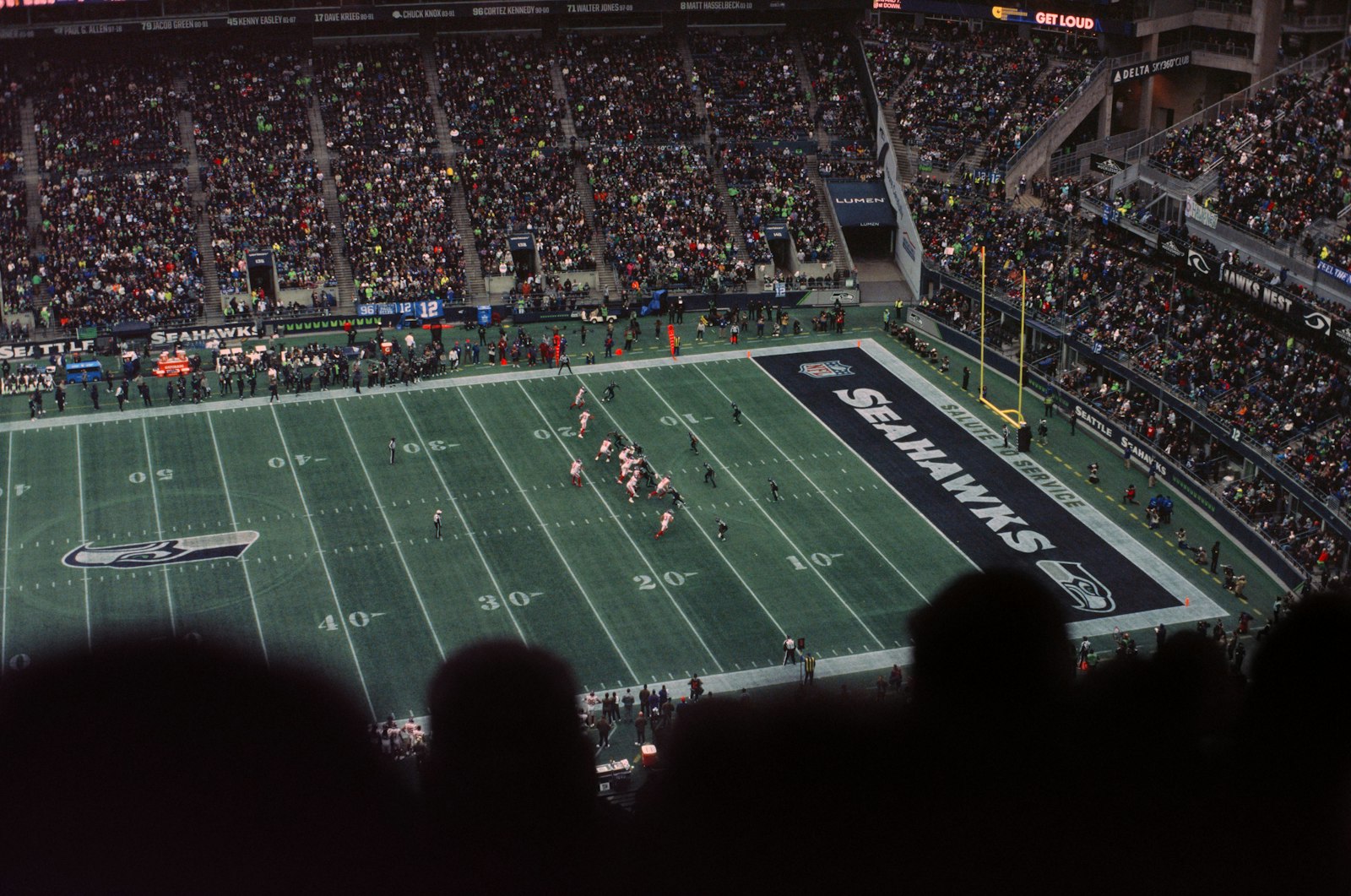

A NFL Wild Card weekend always produces the same conversation. A quarterback throws three picks. The blame lands on him. Forty-eight hours later, the film breakdown shows he was running for his life on most of them.
That gap — between what the box score charged the quarterback for and what the protection actually allowed — is the central puzzle of playoff QB evaluation. The interceptions are real. The pressure was also real. Reading one without the other produces the kind of postgame coverage that ages embarrassingly within two playoff rounds.
The piece below is the working version of how to read playoff quarterback performance through pressure rate, who tends to face more of it, and what the public analytics actually say about whether the pressure was earned or imposed.
Quick read: pressure rate in playoff QB evaluation, in 60 seconds
- What pressure rate measures: The share of dropbacks where a quarterback was hit, hurried, or sacked.
- Why playoffs matter: Defenses bring more exotic pressure, scout protection schemes harder, and play with less restraint than in regular season.
- The split that matters: Some QBs face high pressure because the offensive line is bad. Others face it because they hold the ball too long. The data can separate the two.
- Where the eye test fails: Treating every pressured throw as the QB’s fault.
- How to use this honestly: Pair pressure rate with time-to-throw and pass-block win rate before assigning blame.
What pressure rate actually counts
Pressure rate is the percentage of dropbacks on which a quarterback was hit, hurried, or sacked. PFF, ESPN’s NFL Next Gen Stats, and Pro Football Focus all publish slightly different versions of the metric, but the architecture is similar. Each play is reviewed; pressure is recorded if the defender disrupted the quarterback inside the pocket before the throw or sack.
The number matters because it captures something the box score does not. A quarterback with 290 passing yards and three interceptions on a clean afternoon is a different story than the same line generated under 41% pressure. The first quarterback chose poorly. The second one was operating without a pocket. The interceptions count the same. The diagnosis does not.
League-average regular-season pressure rate sits around 33-35%. Elite offensive lines drop a quarterback’s pressure rate into the high twenties. Bottom-tier lines push it above 40%. Playoff defenses, almost without exception, push the number higher than the regular-season baseline for the same quarterback by 3-6 percentage points. The vocabulary that lives around this metric is covered in our sports analytics field guide.
The two kinds of pressure
The cleanest way to evaluate a playoff quarterback’s pressure rate is to ask which kind of pressure he is facing. Public data, paired with film, can usually distinguish them.
| Pressure type | Cause | Quarterback’s responsibility | Common public stat to check |
|---|---|---|---|
| Imposed pressure | Offensive line loses the rep quickly | Low — QB had no time to operate | Pass-block win rate (PBWR), time to pressure |
| Earned pressure | QB holds the ball past the play design | High — QB extended into pressure | Average time to throw, snap-to-throw splits |
| Coverage-driven pressure | No open receiver, QB scrambles or waits | Mixed — partially scheme, partially talent | Average separation, receiver win rate |
| Blitz-induced pressure | Defense sends extra rusher, math beats protection | Mixed — pre-snap recognition matters | Hot-route usage, pressure-on-blitz splits |
Most playoff games involve a mix of all four. A quarterback who faces 45% pressure with average time to throw of 2.4 seconds is being failed by his line. A quarterback who faces 45% pressure with average time to throw of 3.2 seconds is contributing to his own problem. The blame attribution falls differently in each case.
Which playoff QB profiles tend to face the most pressure
The pattern across the last decade of playoff data is consistent. Some quarterback archetypes attract more pressure than others, often for reasons that have less to do with their team’s line than coverage would suggest.
Mobile QBs with extended scramble tendencies consistently face higher pressure rates because their average time to throw is longer. Patrick Mahomes, Lamar Jackson, Justin Fields, and Jalen Hurts all fit this profile in some season. The extra time produces both the highlight plays and the elevated pressure number. The trade-off is real and intentional.
Pocket passers behind weak lines face elevated pressure for different reasons. Joe Burrow has spent multiple seasons in this bucket. The time-to-throw is reasonable, the line is the issue, and the pressure rate reflects offensive-line failures rather than QB process. The same quarterback behind a stronger line produces a different number.
Rookie or first-time playoff starters tend to see elevated pressure because defenses scheme aggressively against unfamiliar pre-snap looks. The pressure rate often spikes 4-6 points above the rookie’s regular-season number in his first playoff start, then settles by the second game if he advances.
Quarterbacks with poor pre-snap recognition face high blitz-induced pressure even when the line is league-average. The signal here is pressure rates that climb when the defense blitzes regardless of opponent quality. This is a coaching and film-room issue more than a pure talent one.
A reading framework for playoff quarterback performance
The table below is the workflow we run before writing any quarterback piece during the playoff window. The job is to assign the right share of the result to the QB versus the conditions around him.
| Question to ask first | What it reveals | What it changes about the takeaway |
|---|---|---|
| What was the pressure rate? | The baseline difficulty of the operating environment | Anything above 40% should soften individual blame |
| What was average time to throw? | Whether the QB extended into the pressure | Above 3.0 seconds = QB contributing to the problem |
| What was pass-block win rate? | Whether the line failed quickly or held up | Below 55% = line problem more than QB problem |
| Did the defense blitz more than average? | Whether scheme drove the pressure | Above 35% blitz = scheme is half the story |
| What was the QB’s clean-pocket EPA? | Whether the QB capitalized when given time | If clean-pocket EPA was strong, blame the protection more |
| How many interceptions came under pressure? | Whether the picks were process or conditions | Under-pressure INTs are systemic, not individual judgment |
| How does this game compare to season average? | Whether the QB’s environment shifted in the playoff context | A pressure spike of 8+ points reveals defensive scheming |
The framework’s job is not to absolve quarterbacks of bad games. It is to assign the bad game to the right combination of QB execution, line performance, and defensive scheme. The version that ignores any of the three is the version that produces the embarrassing piece two weeks later. The companion read on how to balance data and direct observation lives in our match-reading workflow.
Where the playoff context changes the math
Three things shift in playoff games that affect how pressure rate should be read.
Defenses bring more exotic looks. Coordinators install pressure packages specifically for the playoffs that they would not show on a Sunday in October. Simulated pressures, A-gap blitzes, late-rotation safeties — these tactics produce pressure rates that did not exist in the same matchup during the regular season. Comparing playoff pressure rate to regular-season pressure rate against the same opponent often understates how aggressive the playoff scheme actually was.
Sample sizes shrink dramatically. A QB plays one playoff game at a time, sometimes only one in a season. A 45% pressure-rate game is one data point. The framework on why small samples mislead applies in full. Single-game pressure rates need to be read as situations, not seasons.
Injuries to offensive linemen carry outsized weight. A team that loses a starting guard between the Divisional round and the Conference Championship will face dramatically different pressure conditions in the second game. The QB stat lines from the two games will look like two different quarterbacks. They were not. The line was.
Frequently asked questions
Is pressure rate the most important QB metric in the playoffs?
No, but it is the most important contextual one. EPA per dropback, tracked by rbsdm.com and Pro Football Reference, remains the cleanest single efficiency metric. Pressure rate explains why that EPA looks the way it does. The pair tells a fuller story than either alone. ESPN’s QBR derivatives, PFF grades, and rbsdm.com all publish both. Reading them together is the version that ages well.
How does pressure rate interact with the running game?
Strongly. A team that cannot establish a run threat allows defenses to commit to pure pass rushes, which inflates pressure rate. A team with a credible run game forces defenses to honor the run, which softens the pressure environment. The same QB behind the same line will face different pressure in those two contexts.
What about pressure rate for mobile QBs specifically?
Mobile QBs deserve a slightly different baseline. Their average time to throw is longer because of the scramble option, which inflates raw pressure rate without indicating bad process. The fairer comparison is mobile-QB-to-mobile-QB pressure rates, or pressure-per-pass-attempt rather than pressure-per-dropback. The vocabulary distinction matters more than most public coverage admits.
Does pressure rate predict playoff outcomes?
It predicts QB efficiency strongly within a game. It predicts win probability when combined with offensive EPA and turnover differential. Pressure rate alone is a necessary but not sufficient piece of the prediction. The teams that go deep in the playoffs almost always have either elite QB-under-pressure performance or below-average pressure rate against tough defenses. Both paths work. Neither works without one of the other.
The takeaway, in one paragraph
Playoff quarterback evaluation goes wrong most often when pressure rate is ignored or, worse, treated as if it were entirely the QB’s responsibility. Some pressure is earned by holding the ball. Some is imposed by failing protection. Some is generated by exotic defensive scheme that did not exist on Sunday in November. The reading framework above is the version we run before assigning blame or credit for any playoff QB performance. For the broader vocabulary that supports this conversation, our sports analytics field guide is the natural companion read.