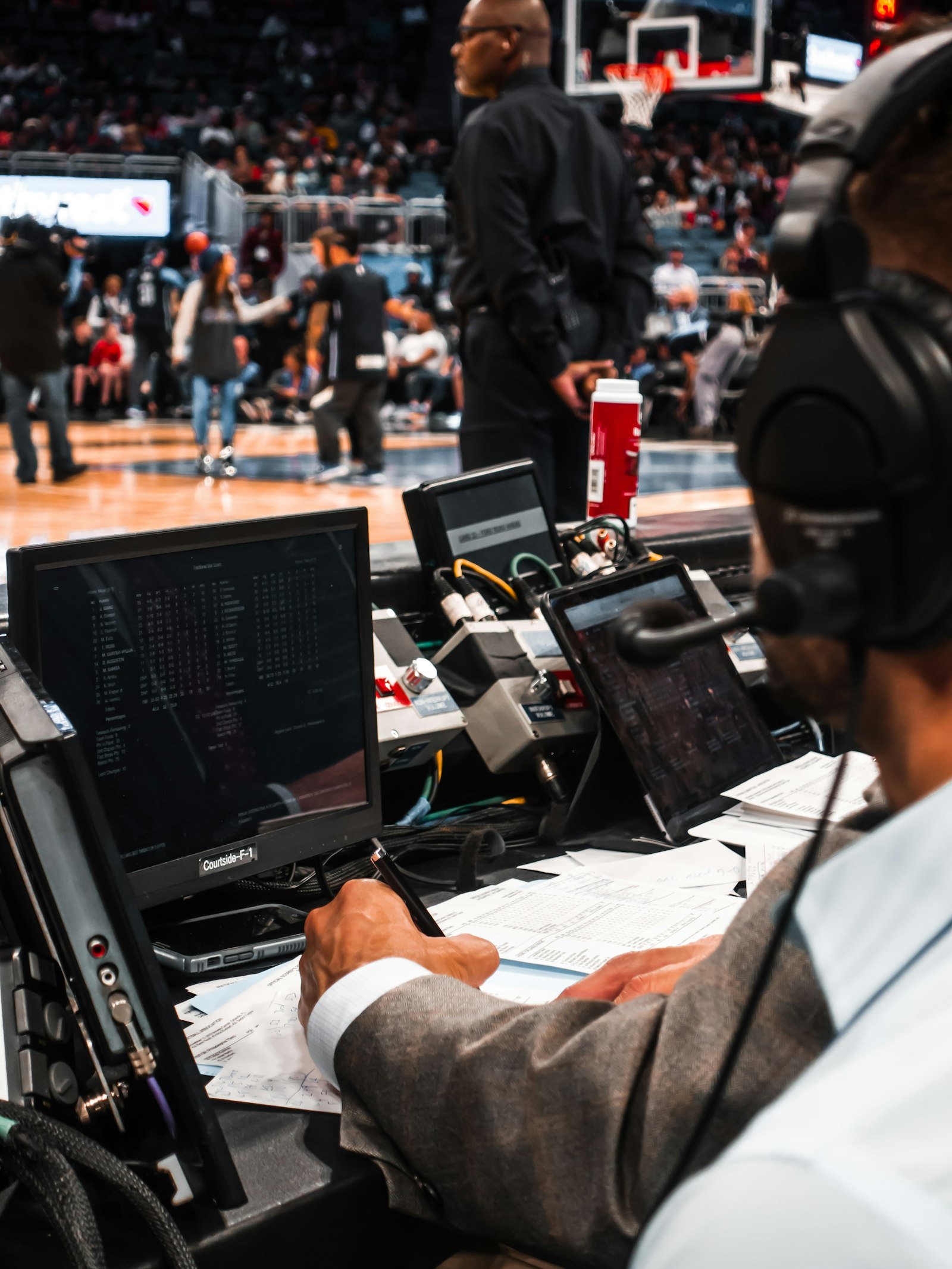

The phrase “eye test” used to mean the considered judgment of someone who had watched enough basketball to recognize a player’s contribution beyond the box score. In 2026 the phrase has acquired a different connotation — the lazy alternative to actually checking the data, the refuge of the writer who could not be bothered to verify what the metrics say.
Both versions exist in modern sports media. The careful eye test, used as an input alongside analytics, still produces sharper coverage than analytics alone. The lazy eye test, used as a substitute for data, produces the kind of coverage that ages embarrassingly within weeks. The phrase covers both. The discourse rarely distinguishes between them.
The piece below is the working version of when the eye test still wins, when it loses, and the short framework for combining qualitative observation with analytical inputs honestly.
Quick read: the eye test in 2026 in 60 seconds
- What the careful eye test captures: Scheme details, body language, in-game adjustments, locker-room dynamics.
- What the lazy eye test misses: Sample-size context, opponent quality, regression dynamics.
- Where eye test wins: Coaching decisions, scheme reads, momentum-shift identification.
- Where it loses: Variance separation, opponent adjustment, multi-game pattern detection.
- How to use it: As one input among many; never as a substitute for verifiable data.
How the “eye test” lost credibility
The phrase started as a positive descriptor. A beat writer who had watched fifty Lakers games knew things about Magic Johnson that the box score did not capture. The eye test was the accumulated judgment of expert observers. It was a credential, not an apology.
The shift came in the 2010s as the analytical community built tools that quantified what the eye test had previously been the only way to measure. Defensive impact, lineup chemistry, shot quality, player tracking — each of these was once readable only through the trained eye. By 2020, the public-facing data captured most of it, often more reliably than any single observer could.
The phrase began acquiring its second meaning in this period. “Eye test” became the rhetorical move of a writer who wanted to assert a conclusion without supporting it with data the analytical community had made available. The lazy version of the phrase drove out the careful version in much of the discourse. The vocabulary distinction got lost. The framework on how this kind of vocabulary shift happens lives in our sports analytics field guide.
What the careful eye test still captures reliably
Several specific categories remain harder to measure through public data than through expert observation. The careful eye test wins in these contexts.
Coaching adjustments inside a single game. A third-quarter scheme change, a personnel swap that produced a run, a timeout that broke the opponent’s momentum — these are visible on the broadcast tape and largely invisible in the box score. A beat writer who watched the game catches the adjustment in real time. The data captures the outcome. The eye test captures the choice that produced it.
Body language and emotional state. The analytics community has not produced credible public metrics for momentum, frustration, or confidence. The eye test reads these reliably across years of observation. A coach who appears confident or panicked on the sideline produces information the dashboards cannot match.
Personnel matchups within possessions. The specific defensive assignment a coach chose for a key possession, the offensive set called against that defender, the moment when the matchup became a mismatch — all of these are visible on tape. The data captures the result. The eye test reads the chess match that produced it.
Locker-room and culture dynamics. Beat writers spend hours in locker rooms, on team flights, and in press conferences. The qualitative information they collect about player relationships, coaching staff confidence, and internal expectations does not appear in any analytical dashboard. The framework on balancing both inputs in modern beat writing lives in our beat writer workflow piece.
Where the eye test loses to the data
The lazy eye test fails predictably in specific contexts. The table below maps the most common.
| Eye test failure mode | What the eye test claims | What the data actually shows |
|---|---|---|
| Memorable single-game read | “This team has figured it out” | Sample of one; regression highly likely |
| Volume vs efficiency confusion | “He scored 28 points; great game” | 28 points on 27 shots is below average efficiency |
| Defensive impact mismeasurement | “He didn’t play any defense” | Defensive on/off and tracking data may say otherwise |
| Opponent-quality blindness | “They dominated” | Opponent was bottom-five; result is less impressive than it looks |
| Hot shooting confusion | “He’s a different shooter now” | Career-baseline regression highly likely |
| “Eye test” as conclusion-by-assertion | “My eye test says X” | Without data support, claim is unfalsifiable |
| Coaching critique from one game | “He lost the locker room” | Single-game variance; no multi-game pattern |
The shared pattern is that the eye test fails when it tries to do work the data does better — sample-size separation, opponent adjustment, regression-aware reading. The careful eye test stays in its lane. The lazy version pretends to do everything.
A reading framework for evaluating eye-test claims
The table below is the workflow we apply when reading any coverage that leans on the eye test as a primary input.
| Question to ask | What it reveals | What to do with the answer |
|---|---|---|
| Is the eye test being used for something measurable? | Whether the claim could be verified with data | If yes, check the data instead of trusting the eye test |
| Does the writer credit specific tape observations? | Whether the eye test was actually applied | Specific observations = real eye test; vague = lazy version |
| Does the eye test claim survive multi-game samples? | Whether single-game observation generalizes | Single-game eye test = hypothesis only |
| Is the writer using the eye test in its strong domain? | Whether the claim is about scheme or adjustments | Scheme/adjustment claims = eye test legitimate |
| Has the writer also engaged with the data? | Whether the analysis combines inputs | Both used = strongest coverage; neither = weakest |
| Does the eye test contradict consistent data? | Whether the writer is overriding evidence | Contradicting strong data = burden on writer to explain |
| What would change the writer’s eye-test conclusion? | Whether the claim has escape hatches | Falsifiable claims = better signal than absolute ones |
The framework’s job is to evaluate eye-test claims by the same standards as analytical claims — sample size, falsifiability, opponent adjustment. The careful version of the eye test passes these tests. The lazy version does not. The companion read on balancing data with direct observation lives in our match-reading workflow piece.
How the modern integrated workflow uses the eye test
The best modern sports coverage does not choose between eye test and analytics. It combines them in a specific workflow.
The writer watches the game with an opinion-forming intent, pulls three layers of data (box score, season context, opponent profile), identifies where the data agrees with what was observed and where they disagree, and writes the piece around the disagreement. The eye test contributes the qualitative reads — scheme, adjustments, body language. The data contributes the sample-size, opponent-adjusted, and regression-aware framing. Neither input alone produces the strongest piece. The integration does.
The framework on which metrics earn their place across multiple seasons of this kind of integrated coverage lives in our durability piece. The vocabulary the integrated workflow uses for measurement and observation alike lives in our sports analytics field guide.
Frequently asked questions
Is the eye test useful for amateur viewers without years of experience?
Less so than for professional observers. The careful eye test depends on accumulated pattern recognition that takes years to develop. The amateur viewer’s “eye test” often reflects assumptions about what the player or team should look like based on reputation, not what they actually showed. Combining the amateur viewing with analytical data produces better results than either alone.
Why did the analytical community become hostile to the eye test?
Partly because the lazy version of the eye test was being used to dismiss analytical findings, and partly because the careful version was being conflated with the lazy version in public discourse. The analytical community’s frustration was with the substitute-for-data version, not the input-alongside-data version. The phrasing has often been more aggressive than the underlying disagreement.
Which sports media writers use the eye test most effectively?
Beat writers who watch every game (or close to it) tend to produce the strongest careful eye-test work. The Athletic’s senior beat writers, the Ringer’s NBA tactical coverage, and several independent analytical writers who combine film study with data work all publish in this register. The Ringer‘s tactical breakdowns, The Athletic‘s senior beat writers, and the work documented across Cleaning the Glass are particularly clean examples of careful eye-test work done well.
How can I tell if a writer’s eye test is the careful or lazy version?
Check whether the eye-test claim could be verified with available data. If it could and the writer did not cite the data, the eye test is being used to substitute for verification. If the claim is about scheme, adjustment, or body language — things the data cannot capture — the eye test is being used legitimately within its strong domain.
The takeaway, in one paragraph
The “eye test” has two distinct meanings in modern sports media: the careful version that contributes qualitative reads the data cannot match, and the lazy version that asserts conclusions without verifying them. The careful version still produces sharper coverage than analytics alone. The lazy version produces coverage that ages embarrassingly. The framework above is the version we apply when evaluating any eye-test claim. For the broader vocabulary this conversation sits inside, our sports analytics field guide is the natural companion read.