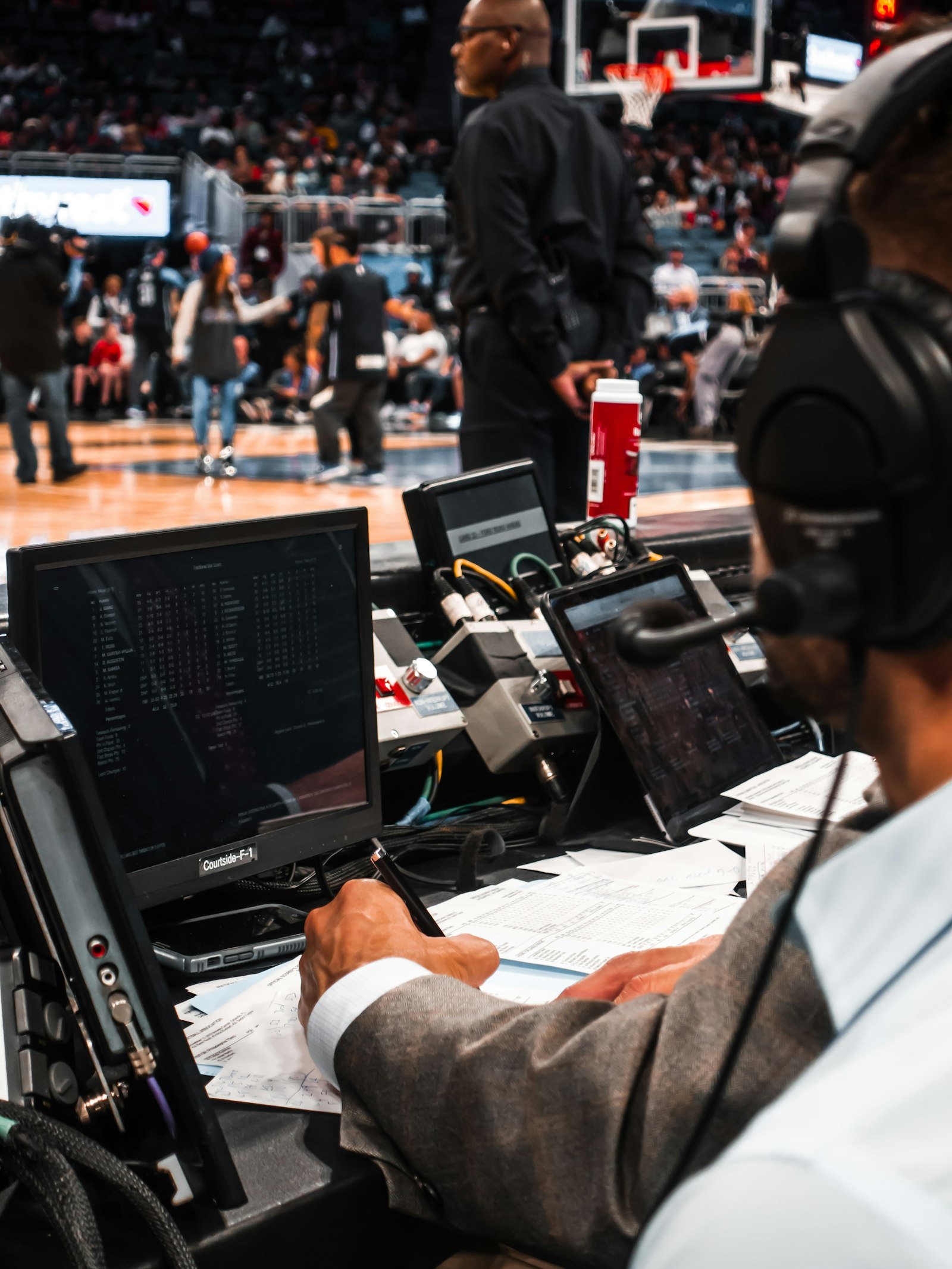

A few years ago, a sports site I will not name published a piece arguing that a certain veteran NBA guard was, quote, “in the best form of his career” based on a fifteen-game stretch in which he had averaged 23 points per game. The piece was 2,400 words long. It mentioned no per-possession data, no efficiency metrics, no opponent quality, no lineup context. The guard played 18 more games that season and reverted, sharply, to his career averages. The piece was never updated. Three years later, it still ranks on Google for his name.
This is the problem with most game-analysis writing in the analytics era. We have access to better data than we have ever had. We are, on average, using it worse. The infrastructure is in place. The discipline has not caught up.
I have been writing about basketball, soccer, and the general weirdness of sports statistics for ten years, and what follows is the workflow I actually run when I sit down to write a game-analysis piece — or, more often, when I edit one. It is not the only way to do this. It is the way that, in practice, produces pieces I am not embarrassed by six months later.
Step one: pick a real question
The single most common failure mode in sports writing is publishing a piece that does not have a question. Pieces without questions are either recap (here is what happened, in order) or hot take (here is my conclusion, defended by selective evidence). Neither tends to age well.
A real question, in the analytics-era sense, is something like:
- Did the Knicks’ fourth-quarter run reflect a genuine matchup advantage, or did it ride a small-sample shooting variance?
- Why did Arsenal create chances at a higher rate against Manchester City than their season-long xG profile suggested?
- Is this player’s December breakout sustainable on the schedule strength he is about to face in January?
Each of those questions has an answer. The answer might be “yes,” “no,” or “it depends on which sub-question you actually meant.” But the question is the contract you have with the reader. Without it, the piece is going to drift.
If you cannot articulate the question in one sentence, the piece is not ready to write yet. Sit with the data longer.
Step two: pull the right data, not all the data
The temptation, with a piece about a single game, is to load up the box score, two stat databases, and a tactical chalkboard, and then build a Frankenstein of supporting numbers. The result is unreadable.
What you actually need, for a typical game-analysis piece, is three things:
- The relevant box-score and possession data for the game itself. Points, rebounds, assists, turnovers, true shooting, lineup minutes, on-court net rating for the closing lineups.
- The season-long context for the same data. How did the night’s numbers compare to the team’s and players’ season averages? Was the bench’s 41% from three sustainable or a hot night?
- The opponent’s season-long defensive profile. A 32-point game against the league’s best defense is not a 32-point game against the league’s worst.
Three layers, no more. Basketball Reference, FBref, the official league sites, and one beat writer for additional context — that is the toolkit. Anything beyond it is, usually, padding.
Step three: watch the game, then watch it again
This is the step the worst game-analysis writing skips. The stats describe what happened. They do not, on their own, tell you why. The “why” lives on the film.
If you are writing about a basketball game, the second watch is for two specific purposes. First, to identify the coverages that produced the night’s offensive efficiency or struggle. Drop coverage versus switching versus blitzing the pick-and-roll changes what the offense can do. The box score will not warn you. Second, to identify the lineup change or scheme adjustment that swung the game. Most NBA games are decided by a five-minute stretch in the third quarter. Knowing which lineup produced the run is the difference between an analysis and a recap.
In soccer, the second watch is for shape and pressing structure. The shot map is the result. The shape that produced the shot map is the explanation. Without the explanation, you are publishing the shot map and asking the reader to do the work you were supposed to do.
Twenty minutes of rewatching, in my experience, is worth more than two hours of additional data pulls.
Step four: write the lede the data demands, not the lede the result suggests
Here is where most pieces go wrong. The result of the game pulls every paragraph toward a particular conclusion. The home team won by twelve. The narrative pull is: the home team was the better team. The data might be saying something quieter and more interesting — for example, that the home team was outperformed in expected possessions but won the game on three lucky transition layups in the third quarter.
The discipline is to write the lede the data demands. If the underlying performance and the result agree, easy. If they disagree, the disagreement is the lede. “The Knicks won by twelve and were, by every possession-based metric, the worse team for thirty-three of the game’s forty-eight minutes” is a much better opening sentence than “The Knicks dominated.”
This is the single thing that separates analytics-era writing from the hot-take ecosystem. The result is reported. The result is also interrogated. Both are part of the piece.
Step five: name the limits of your own argument
Every game analysis piece has at least one weakness. It is written off a single game. It is written off a sample too small to support its conclusion. It is written without access to the player tracking data the team itself uses. It is written by a writer (me) who, despite his best efforts, has biases about which players he likes to be right about.
The convention, in the era of takes-driven coverage, was to bury these weaknesses or omit them entirely. The convention worth adopting is to name them out loud. A paragraph like:
The case above is built off twelve possessions of late-third-quarter data. Twelve possessions is not a large enough sample to declare anything definitively. The pattern is interesting. The pattern is not yet evidence.
…is, in my experience, the paragraph that earns the reader’s trust. It is also, frequently, the paragraph that gets cut by editors who think honesty is a weakness in argument-driven writing. Push back on the cut. The paragraph is the piece.
Step six: link, but only to the work that earned it
Internal links are how you build a site that ages well. A piece about a game also serves as a portal into the conceptual writing — the explanations of advanced stats, expected goals, player evaluation, team trends — that lets a new reader follow the argument deeper.
External links are different. A link to an opposing argument earns its place. A link to a stat database earns its place. A link to a tactical chalkboard earns its place. A link to a generic sports site, for SEO juice or filler, hurts the piece. Readers can tell. Search engines can tell. The temptation to inflate the link count is one to resist.
Step seven: edit for the sentence you would not delete
The final pass is structural. Read the piece aloud, paragraph by paragraph, and at every paragraph ask: would I cut this if I had a 200-word constraint? If yes, cut it. Game-analysis writing rewards compression. A 1,500-word piece with two thirds of the words doing actual work beats a 2,400-word piece with one third of the words doing work.
Specifically, the paragraphs that get cut first are:
- The setup paragraph that restates the matchup. The reader knows the matchup.
- The transition paragraph that summarizes what you just said.
- The hedge paragraph that softens an argument you already made carefully.
- The historical-context paragraph that does not actually inform the argument.
If you are honest with yourself, three to five hundred words come out of every piece on the final edit. The remaining sentences read sharper as a result.
Where this gets weird
A few traps that I have, personally, fallen into and only escaped with help from editors who were less invested in my argument than I was.
The motivated framing. If you sit down to write a piece because you are excited about a specific team’s hot stretch, you will, despite your best efforts, build the piece around evidence that supports the excitement. The corrective is to ask, in step two above, “what data would change my mind?” If the answer is “none,” the piece is not analysis. It is celebration.
The accidental hot take. An “analytics” piece can be a hot take in disguise if the underlying argument boils down to “I am right and the consensus is wrong, here is data to prove it.” The good version of this is rare and excellent. The bad version is the most common failure mode in the genre.
The over-confident sample. Every writer’s strongest takes come from the smallest samples. The fifteen-game stretch. The five-match window. The single great half of basketball. Sample size is the discipline that costs writers their best paragraphs. Pay it anyway.
The buried lede. Sometimes the most interesting fact in a piece is in paragraph eight. Move it to paragraph one. The fact that you had to discover it through the writing process is not a reason to make the reader do the same.
The workflow in summary
Pick a real question. Pull three layers of data. Watch the game twice. Write the lede the data demands. Name the limits of your argument. Link to the work that earned it. Edit for compression. Run the result against the test: does this piece survive six months from now if a rookie’s hot stretch turns out to be a coaching wrinkle that the league solved in February?
If yes, publish. If no, the piece is not ready. Sit with the data longer.
For the conceptual foundations the workflow above assumes, our analytics primer is the starting point. The workflow is a frame. The frame is empty without the concepts. Both have to travel together.
The piece I never wrote, ten years ago, was the one that argued, sincerely and at length, that a particular player was finished. He went on to make two more All-Star teams. The lesson cost me nothing — I never published the piece — but the lesson is the only reason I trust the workflow above. Sometimes the discipline is what prevents the wrong piece from existing in the first place. That is, quietly, the part of the job I am most proud of.
The seven steps as a single reference card
If you prefer the workflow compressed into a single view, the table below is the entire piece in one row each. The steps look obvious. The discipline is doing all seven on the same piece.
| Step | What it does | The failure mode it prevents |
|---|---|---|
| 1. Pick a real question | Anchors the piece to something falsifiable | Drift into recap or hot take |
| 2. Pull three layers of data | Box score, season context, opponent profile | Frankenstein supporting stats nobody can read |
| 3. Watch the game twice | Identifies coverages and scheme adjustments | Writing a shot map without the shape that produced it |
| 4. Write the lede the data demands | Forces honesty when result and process disagree | Narrative pulled by the scoreboard |
| 5. Name the limits | Earns reader trust through transparency | Buried weakness exposed by a comment thread |
| 6. Link only what earned it | Builds the site as a network, not a list | Filler links that hurt both reader and search |
| 7. Edit for compression | Cuts 20-30% of every draft | Setup, transition, and hedge paragraphs that pad without paying |
The workflow is not heroic. It is the version of game analysis that, in my own drafts, prevents the embarrassing six-month rewatch.
Frequently asked questions
How long should a game-analysis piece be?
1,200 to 1,800 words for most games. Longer pieces should justify their length with multiple angles — a tactical breakdown that also doubles as a season check, or a piece anchored on a key player whose performance opens onto a broader argument. Pieces beyond 2,500 words tend to lose readers in the middle. Compression is almost always the right edit.
Do I need access to advanced data to write this kind of piece?
No. The publicly available tools — Basketball Reference, FBref, the official league sites — cover most of what a thoughtful writer needs. Where the public data ends, beat reporters and tactical writers fill in. The bottleneck is not data access. It is the discipline to ask the right question before pulling the data at all.
What if the underlying numbers disagree with my opinion?
Trust the disagreement. The piece that says “the result agreed with my eyes” is a piece nobody needed to read. The piece that says “the result agreed with my eyes but the process tells a quieter story” is the piece that earns the next reader. The disagreement is the article. Our piece on how single games turn into trends covers what happens when this discipline gets skipped at scale.
How often does the workflow actually catch a bad draft?
Honestly, two out of three times for me. Step five, the limits paragraph, is the most common save. It tends to surface when you start writing it that the argument was thinner than the rest of the piece suggested. Step seven, the compression edit, kills another large fraction of drafts that were merely OK. The remaining one in three gets published and survives the six-month rewatch.
The takeaway, in one paragraph
Good game analysis is not a clever angle. It is a workflow run honestly on a real question. The seven steps are the version that, in my own writing, has prevented the most embarrassing pieces. For the broader frame on which the workflow rests, our analytics primer covers the conceptual foundations. The workflow is empty without the concepts. The concepts are sterile without the workflow.