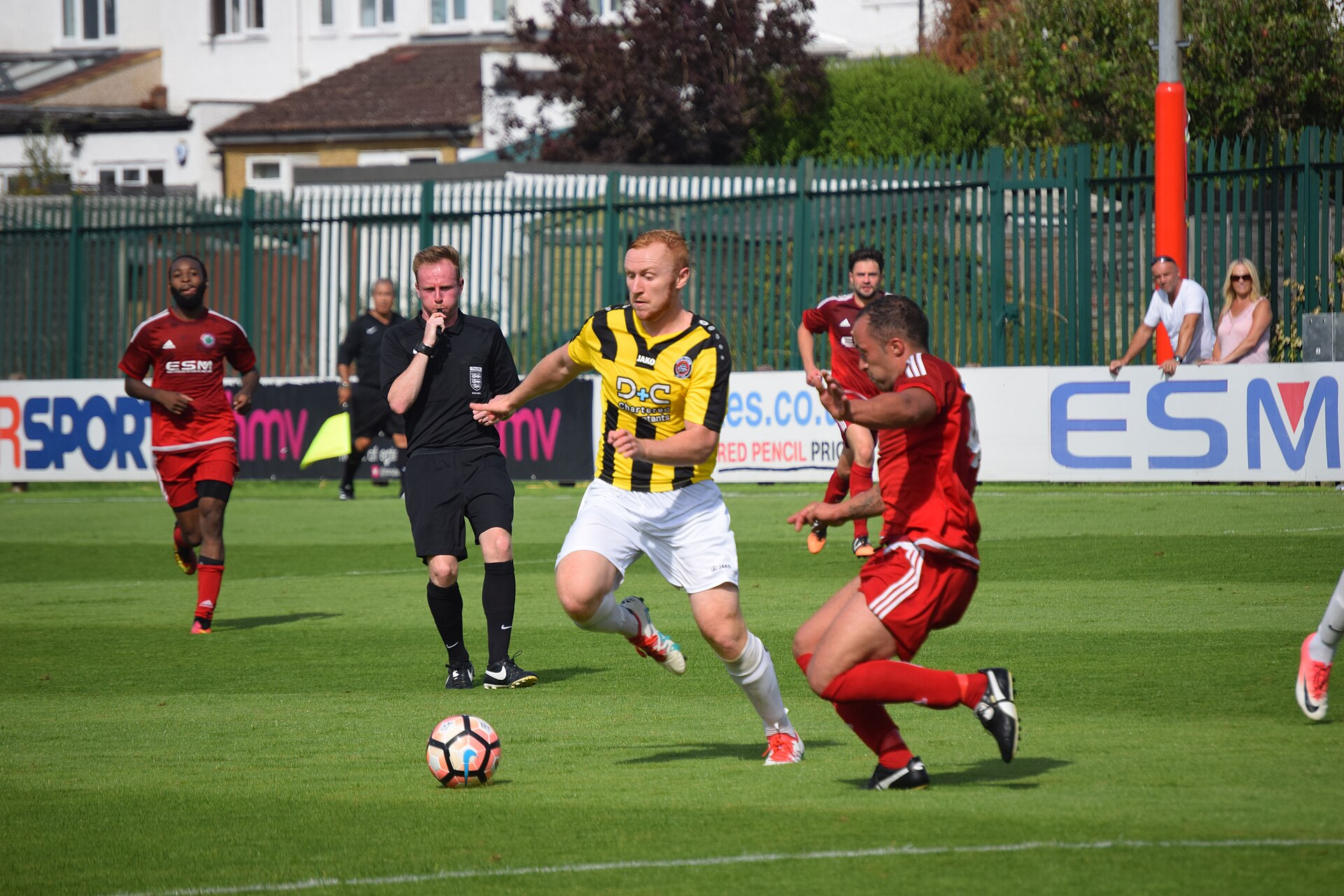
A defender goes down under minimal contact eighteen yards from goal, no card is shown, and the replay from a broadcast camera positioned high above midfield makes the decision look obviously wrong. From that elevated angle, the contact looks clear and the referee’s inaction looks like a mistake. From the referee’s own position, sprinting along a diagonal run some twenty yards away and screened by two other players, the same contact was likely never fully visible at all.
Almost every argument about a missed or incorrect call assumes the official saw what the broadcast camera saw. They rarely did, because officiating positioning systems in football, basketball, and most other sports are built around specific, deliberate sight lines that trade some viewing angles for others, and understanding that system changes which complaints about a specific decision are actually worth making.
What follows explains the diagonal system that governs where football’s officials run, the three-official mechanics that position basketball’s crew, and how to judge, before judging a decision itself, whether the official actually had a usable view of it.
The system in six lines
- Football’s diagonal. The referee runs a diagonal path, trading a close view of some play for coverage of the whole pitch.
- Assistant referees. Positioned on the touchline specifically to cover the offside line the referee cannot see well.
- Basketball’s crew. Three officials rotate roles, each with a different primary viewing responsibility.
- The core trade-off. No positioning system gives every official a clear view of every incident.
- The fair question. Before judging a call, ask whether that specific official’s position gave them a real look.
- What technology changed. Video review covers the gaps positioning leaves, but only within its own defined limits.
Football’s diagonal system, and what it is built to solve
The standard positioning system for a football referee has him running roughly along a diagonal line across the pitch, from one corner area to the opposite one, rather than following the ball directly at close range. This diagonal is designed to keep the referee close enough to the majority of play while remaining positioned to read the wider shape of the game, rather than getting boxed in among a crowd of players at close quarters.
The trade-off built into this system is explicit and well understood by officiating bodies: a referee running the diagonal is rarely positioned for a perfectly square, unobstructed view of contact happening at the far side of the penalty area, and is instead positioned to have a reasonable view of most of the pitch across the full ninety minutes rather than an ideal view of any single incident.
Why assistant referees stand where they do
An assistant referee’s position on the touchline exists to solve a specific problem the central referee’s diagonal cannot solve alone: judging an offside line accurately requires a sight line square to the relevant defensive line, which is only reliably available from the touchline itself, not from anywhere on the pitch.
This is why an assistant referee’s positioning discipline, staying level with the second-to-last defender rather than the ball, matters more to offside accuracy than almost any other single factor in the system. An assistant standing even a stride out of position produces a distorted sight line regardless of how experienced or attentive they are, which is part of why semi-automated systems were introduced specifically to support this one judgment rather than to replace the official’s broader positioning entirely.
Basketball’s three-official mechanics: primary, secondary, trail
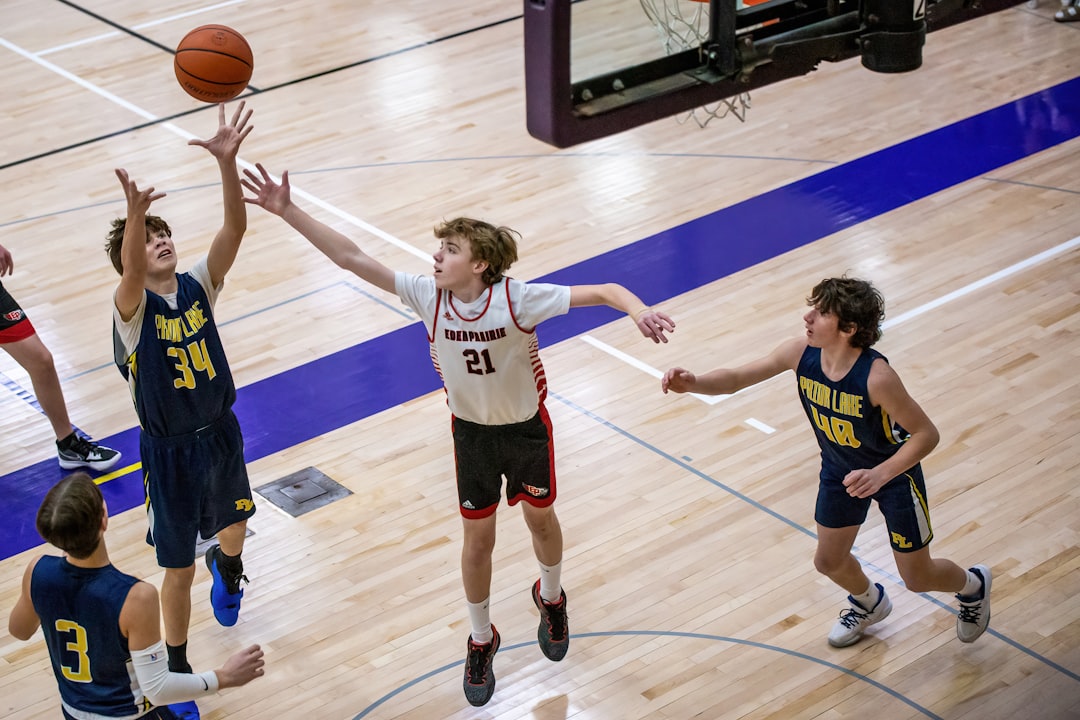
Basketball’s standard three-official crew assigns each official a rotating primary coverage area rather than having all three officials watch the ball simultaneously, which would leave large parts of the court uncovered. The lead official typically covers the baseline area closest to the basket, the center official covers the strong-side wing and post area, and the trail official, positioned furthest from the basket, covers the perimeter and the initial action.
These roles rotate continuously as play moves up and down the court, which means a specific official’s ability to judge a specific play depends heavily on which role they were occupying in that exact moment, not on their overall competence. A contested rebound under the basket is squarely the lead official’s primary responsibility; the same official is rarely well positioned to also judge a perimeter screen happening simultaneously at the other end of the frame.
The core trade-off every positioning system accepts
Every officiating positioning system in every sport accepts the same underlying trade-off: no arrangement of two, three, or four officials can provide a perfect, unobstructed view of every incident on a field or court large enough to require multiple officials in the first place. Designing the system is an exercise in deciding which viewing angles matter most often, not eliminating blind spots altogether.
This is why officiating bodies periodically adjust positioning guidance rather than treating it as fixed, shifting an assistant referee’s recommended distance from the touchline, or adjusting a basketball trail official’s default court position, specifically in response to which types of incidents were most often being missed under the previous arrangement.
Referee positioning system: reading whether the view was real
| Situation | Official primarily responsible | Likely view quality |
|---|---|---|
| Contact inside the penalty area, near side | Central referee, if diagonal places him close | Often clear |
| Contact inside the penalty area, far side | Central referee, distant on the diagonal | Often obstructed |
| Offside line at the moment of the pass | Assistant referee, level with the defense | Usually clear if positioned correctly |
| Contested rebound under the basket | Lead official, baseline position | Usually clear |
| Off-ball screen away from primary action | Whichever official is not on the ball | Often missed entirely |
Reading down the right-hand column is a more useful habit than reading a decision in isolation, since it separates the incidents where a genuine viewing failure explains a missed call from the ones where the official simply made the wrong judgment despite a clear view.
The fair question to ask before judging a call
Before concluding that an official missed an obvious incident, the more useful first question is where that specific official was standing and what was between them and the play, rather than what a broadcast camera positioned specifically to capture that exact incident happened to show. A broadcast camera is placed to produce the clearest possible picture for television. An official is placed to cover the whole game.
This does not excuse every missed call, since officials are sometimes simply out of position due to fatigue or a poor read of where play was heading, which is a legitimate criticism distinct from being correctly positioned but still unable to see through a crowd of players. The distinction between the two is exactly what separates a fair complaint from an unfair one.
What video review changed, and what it did not
Video assistant systems in football and instant replay reviews in basketball were introduced specifically to cover the gap positioning inevitably leaves, giving a second, differently positioned view of an incident the on-field officials may not have seen clearly. This is a genuine improvement over relying on positioning alone, and it has measurably corrected decisions that positioning alone would have missed.
It has not eliminated the underlying trade-off, only added a layer on top of it. Review systems have their own defined scope, typically limited to specific categories of incident, and they still depend on camera placement providing a genuinely clear angle, which is not guaranteed for every incident even with multiple broadcast cameras covering a match.
How positioning guidance has changed over time
Officiating bodies revise positioning recommendations periodically based on organized review of missed or contested calls across a season, adjusting an assistant referee’s recommended distance from the touchline in fast counter-attacking situations, for instance, or changing how basketball’s trail official reads a fast break transition. These changes rarely make headlines the way a single controversial decision does, but they represent the slower, structural response to exactly the same blind spots that produce the viral controversies.
A useful sign that a specific type of missed call is a systemic positioning issue rather than an individual lapse is whether it recurs across many different officials over a season. A pattern that persists across dozens of different officials points toward the positioning system itself needing adjustment, while an isolated case is more likely to reflect an individual official’s specific read of one moment.
What broadcasters could do to make this clearer to viewers
Very little live broadcast coverage currently shows a viewer where the responsible official was actually standing relative to an incident, even though the technology to overlay that information already exists in most top-level competitions. A brief graphic showing the official’s position and sight line at the moment of contact would let viewers judge for themselves whether a missed call reflects a genuine blind spot or a clear view misjudged.
Some broadcasts have begun including this kind of positioning context occasionally, usually only after a decision has already generated significant controversy, rather than as a standing part of how a contested call gets shown. Making it routine rather than reactive would do more to calibrate public expectations about officiating than almost any other single production change available.
Other sports solve the same problem differently
Cricket assigns two on-field umpires specific, largely fixed positions, square of the wicket and behind the stumps at the bowler’s end, precisely because leg-before-wicket and stumping decisions require a sight line that only one exact position provides. A hockey umpiring team splits the pitch into zones rather than following the ball everywhere, similar in principle to basketball’s rotating responsibility but organized around fixed areas instead of shifting roles.
What all of these systems share, regardless of the sport, is the same underlying compromise described throughout this piece: a fixed number of officials cannot cover every angle of a playing area large enough to need more than one of them, so each sport’s governing body has made a specific, documented choice about which viewing angles matter most and accepted the blind spots that choice creates elsewhere. Understanding a specific sport’s version of that trade-off is what turns a generic complaint about bad officiating into a more precise, and usually fairer, one.
What players and coaches are taught about this system
Professional players and coaches generally receive some version of this positioning knowledge as part of standard rules education, since knowing where an official is likely to be standing during a specific phase of play is directly useful for understanding which infractions are more or less likely to be seen and called in real time.
This is not coaching players to exploit blind spots, which would cross into a different and less defensible territory, but it does explain why experienced players sometimes seem unsurprised when a specific incident goes uncalled. They often have a more accurate real-time sense of where the responsible official actually was than a viewer watching a single, well-placed broadcast camera ever could.
Frequently Asked Questions
Why does a broadcast camera often show a clearer view than the referee had?
Because the camera is placed specifically to capture that type of incident clearly, while the referee is positioned to cover the whole game under a system built around trade-offs rather than one ideal angle.
Is basketball’s rotating official system less reliable than having fixed positions?
No. Rotating primary responsibility as play moves is what allows three officials to cover a full court without leaving large areas permanently unwatched by anyone.
Does video review remove the need for good positioning?
No. Review covers specific gaps within a defined scope and still depends on camera placement, so on-field positioning remains the primary way most incidents are actually judged.
How can a viewer tell if a missed call was a positioning issue?
Checking where the responsible official was standing and what, if anything, blocked their view is the more useful first step, rather than assuming a broadcast camera’s angle matched what the official could see.
Do officiating bodies ever change positioning rules because of missed calls?
Yes, positioning guidance is reviewed and adjusted periodically based on patterns of missed calls across a season, though these changes are rarely as visible as a single controversial decision.
The next contested call worth arguing about is worth one extra question first: where was the official actually standing, and was there ever a clear line to what happened. Sometimes the answer is that they simply got it wrong. Often, the system had already decided they would not get a clean look at all.