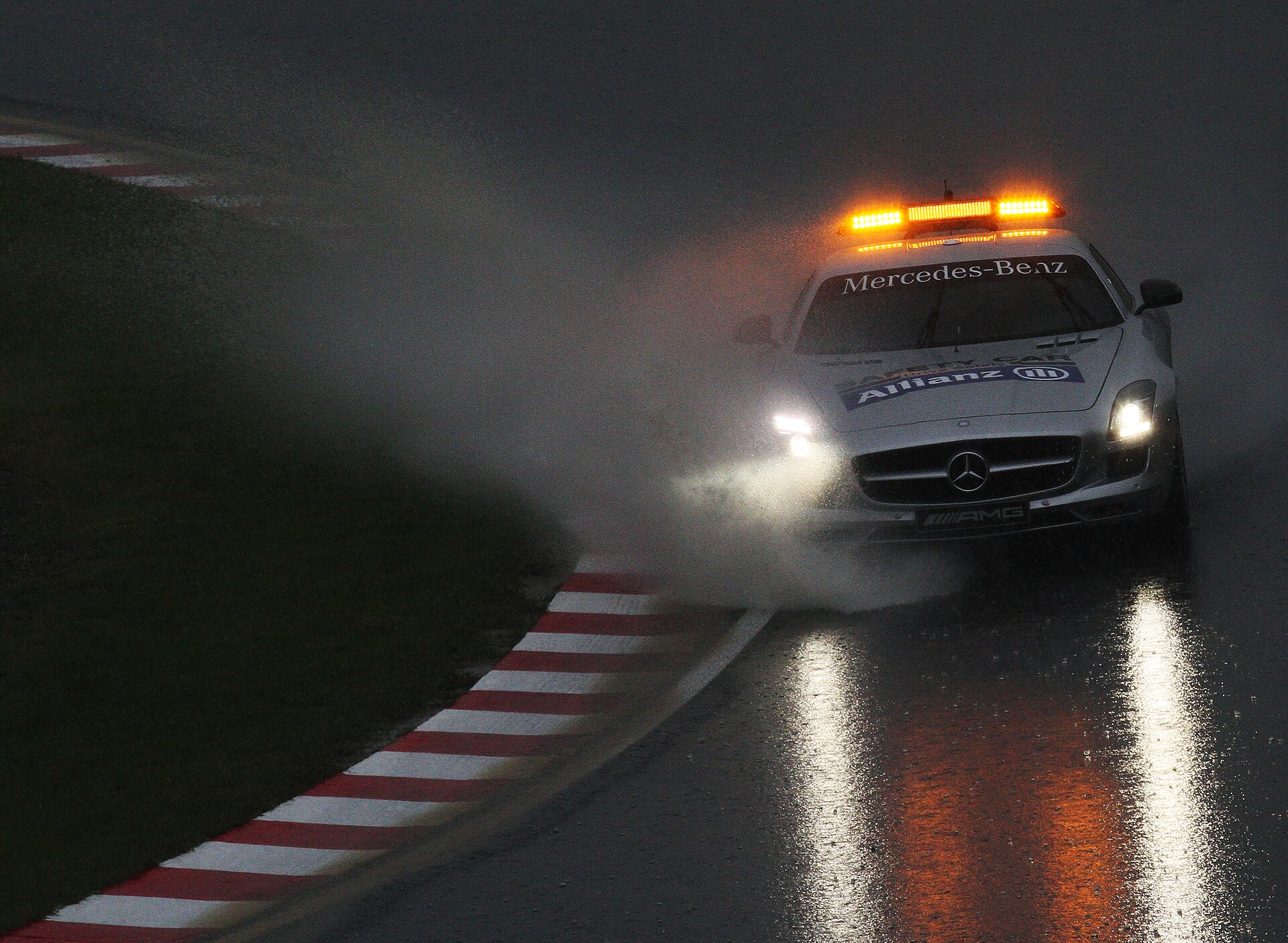
A driver builds a fifteen-second lead over forty laps of clean racing, and a piece of debris on lap forty-one erases the entire advantage in the time it takes the field to bunch up behind a safety car. The driver who built the lead did nothing wrong. The driver who benefits did nothing to earn it. Both facts are true at once, and neither changes the result.
This is the part of racing that resists the tidy narrative of a race well driven. A safety car does not just slow the field down. It resets the economics of every strategic decision made up to that point, and it does so at a moment nobody on the grid can predict or control.
What follows works through why a neutralization changes the value of a pit stop, how lapped cars and restarts are handled, and why strategy calls made in the seconds after a caution comes out are judged unfairly by anyone assessing them purely on the outcome.
What a safety car changes, in six lines
- Pit stops. Become dramatically cheaper in lost track position while the field is bunched.
- Gaps. Frozen or compressed, erasing minutes of racing in seconds.
- Lapped cars. Sometimes released to unlap themselves before a restart, sometimes not.
- The restart. A single high-pressure moment that decides more than the previous hour.
- The virtual version. Slows cars without bunching the field, changing the calculation entirely.
- The judgment problem. Strategy calls made under caution are assessed by results nobody could see coming.
Pit-stop economics under a safety car
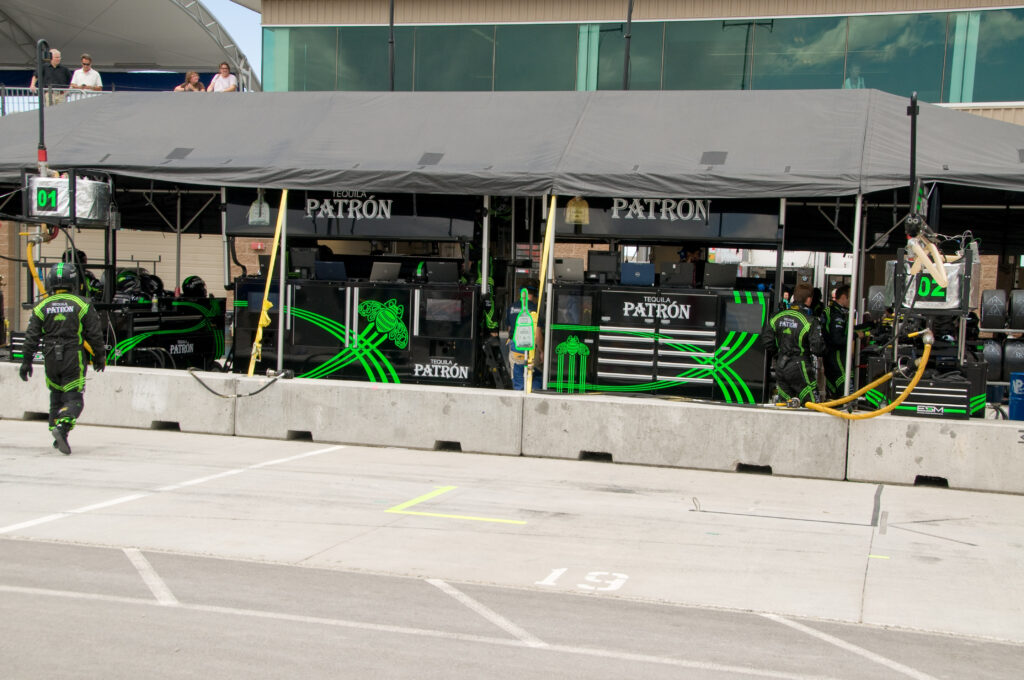
Every pit stop costs time relative to staying on track, and that cost is not fixed. Under green-flag conditions, a stop costs a driver the full duration of the stop plus the speed differential between pit lane and racing speed, often twenty seconds or more of pure loss relative to a car that stays out.
Under a safety car, the field slows to a fraction of racing speed and bunches together, which collapses that cost dramatically. A driver who pits while the safety car is out might lose only a few seconds of relative position, because everyone else on track is also moving slowly and closely packed. The stop that would have dropped a driver from third to eighth under green conditions might only cost a single position, or none at all, under caution.
This is why a caution period triggers an immediate, almost universal rush to pit lane among any driver who has not already stopped. The strategic call is not really a choice between stopping and not stopping; it is a recognition that the price of stopping has just fallen to a fraction of its normal cost, and every team on the grid is doing the same arithmetic within seconds of each other.
Who gets caught out, and why it is rarely their fault
The driver who pitted one lap before the caution flew, paying full price for a stop that would have been nearly free a lap later, has made a defensible decision that looks disastrous purely because of timing nobody could have predicted.
Debris on track, a mechanical failure, a driver spinning into a wall: none of these events are schedulable, and a team’s strategy is built around probabilities established before the race, not around the specific lap an incident will occur. A team that pits proactively based on tire degradation data has made a sound decision using the information available at the time, and a caution flag one lap later does not retroactively make that decision wrong.
Judging a strategy call by whether a safety car happened to help or hurt it afterward is a common and misleading habit. The correct standard is whether the decision was reasonable given what was knowable in the moment, which is a much harder thing to assess from a broadcast booth than simply reading the final gap.
Lapped cars: a separate problem the rules handle differently
A safety car period raises an additional complication when cars a lap or more down are running between the leader and the cars directly behind, because those lapped cars occupy track position without being relevant to the actual battle for the lead.
Some competitions allow lapped cars to unlap themselves during a safety car period, waving them past the pack so the eventual restart happens with a clean, uninterrupted queue of cars in their true running order. Others do not, leaving lapped traffic mixed into the field, which can create genuine danger and confusion at the restart as leading cars have to navigate around slower, unrelated competitors at the exact moment concentration matters most.
The rule a given series follows on this point has a real effect on how dangerous and how fair a restart is, and it is worth checking rather than assuming, since major series differ meaningfully in their approach.
The restart: where races are actually decided
A green-flag restart compresses an entire race’s worth of overtaking opportunity into a single lap, often the single lap, and drivers understand this instinctively even when the broadcast frames it as a formality before racing resumes.
The lead driver controls the pace into the restart zone and chooses precisely when to accelerate, within the bounds of the rules, creating a tactical duel before a single competitive lap has technically begun. A restart taken too early risks a penalty for jumping the procedure; one taken too cautiously hands the driver behind a run that can end the race before the leader has a chance to respond.
| Restart type | How the field is arranged | Main risk |
|---|---|---|
| Single-file restart | Cars queue in running order, one line | Slower overtaking opportunity, safer execution |
| Double-file restart | Cars paired by position, two lines | Faster racing, higher first-corner incident risk |
| Rolling restart | Field accelerates together from safety car speed | Timing disputes over when full speed begins |
| Standing restart | Field stops and restarts as at race start | Highest incident risk, most dramatic swings |
Each format trades safety against drama in a different place, and a series’s choice of restart procedure says a great deal about which of those two priorities it weighs more heavily.
The virtual safety car: a different kind of neutralization
A virtual safety car achieves a similar safety goal through an entirely different mechanism, imposing a mandatory minimum lap time on every car without physically bunching the field behind a pace vehicle.
Because cars maintain their relative spacing rather than compressing together, a virtual safety car period does not create the same dramatic pit-stop discount that a full safety car does. A stop still costs meaningfully more than staying out, though less than under full green conditions, since the cars ahead are also slowed. This makes the strategic calculation genuinely different rather than simply a smaller version of the same effect, and teams run separate models for each scenario precisely because the two are not interchangeable.
The distinction also affects how a race is remembered. A full safety car period is visually obvious and gets discussed as the moment that changed the race; a virtual safety car period is often barely visible on a broadcast, despite having real strategic consequences of its own.
Why teams model safety car probability before the race even starts
Modern strategy groups do not treat a caution period as an unpredictable disruption to an otherwise fixed plan. They build the probability of one occurring directly into their pre-race modeling, using historical data from the specific circuit.
Street circuits with limited runoff and narrow track surfaces produce cautions far more often than purpose-built road courses with generous margin for error, and strategy groups plan pit windows differently as a result. A team racing on a circuit with a historically high caution rate will sometimes accept a theoretically slower fixed strategy specifically because it is more flexible if a caution arrives at an inconvenient moment, trading a small amount of expected performance for resilience against the scenario that experience says is likely to occur.
How broadcasters and commentators frame a caution period
Live commentary during a safety car period faces a genuine narrative problem: the racing has effectively paused, yet the strategic decisions being made in that window will determine much of what happens for the rest of the broadcast.
The best commentary during this stretch shifts from describing on-track action, since there is very little of it, to explaining the pit-lane calculus in real time: who has already stopped, who is gambling on staying out, and what each choice implies about a team’s confidence in tire life or in the likelihood of a second caution. Weaker coverage treats the period as dead air to be filled with replays, missing the chance to explain the decision that will actually shape the finish.
Viewers who understand the pit-stop economics described earlier in this piece are typically better positioned to evaluate a broadcast’s coverage of a caution period than the commentary team gives them credit for, since the strategic logic, once explained clearly, does not require insider access to follow.
What separates a well-managed caution from a poorly managed one
Not every safety car period is handled equally well by race control, and the difference shows up most clearly in how quickly and how clearly information reaches the teams making split-second decisions.
A well-managed caution communicates its likely duration and the state of lapped traffic promptly, giving strategists a reasonably stable basis for their calls even under time pressure. A poorly managed one leaves teams guessing, changing recommendations, or reacting to procedural information that arrives too late to act on cleanly, which introduces an additional layer of unfairness on top of the inherent randomness of when the caution began in the first place.
This is one of the areas where a governing body’s procedural clarity, documented by organizations such as the international federation that regulates motorsport worldwide, materially affects how fair a given race feels to competitors and viewers alike, independent of anything a driver or team actually did.
Judging a result honestly after a caution-affected race
The habit that produces the fairest assessment is separating what a driver or team controlled from what a caution period redistributed regardless of merit, and doing so requires looking at the race in phases rather than as a single continuous narrative.
A driver who built a lead through genuinely faster racing before a caution, then defended that compressed lead well at the restart, deserves credit for both phases separately. A driver who inherited a lead purely through fortunate stop timing and then held on through a caution-free remainder of the race deserves credit for the second phase and a more measured assessment of the first. Collapsing both phases into a single verdict, won cleanly or got lucky, misses what actually happened in either direction.
Frequently Asked Questions
Why does a pit stop cost so much less time under a safety car?
Because the entire field slows down and bunches together, the relative time lost by a driver who stops shrinks dramatically compared to a stop taken while other cars are running at full racing speed.
What is the difference between a safety car and a virtual safety car?
A full safety car physically leads the field around the track at reduced speed, compressing gaps. A virtual version imposes a minimum lap time without a pace car on track, slowing everyone by a similar amount without eliminating the spacing between cars.
Do all racing series let lapped cars pass the safety car before a restart?
No. Rules differ by series, and the choice materially affects how clean and how dangerous the eventual restart is, since mixed lapped traffic in the queue changes what leading cars have to navigate around.
Is it fair to say a driver got lucky when a safety car helps their strategy?
Partly. The timing of the caution is outside anyone’s control, but the decision to pit quickly once it appears, and the ability to execute a fast stop, are skills that still separate teams even when the underlying opportunity was a matter of chance.
Why do restarts produce more incidents than the rest of a race combined?
Cars are bunched at close quarters after running single file at reduced speed, and the sudden return to full racing speed compresses decision-making into a much shorter window than exists during normal green-flag racing.
A safety car does not reward the better driver or the worse one. It rewards whoever happens to be in the right place when the field bunches, and judging the race that follows means separating that redistribution from everything either driver actually controlled.