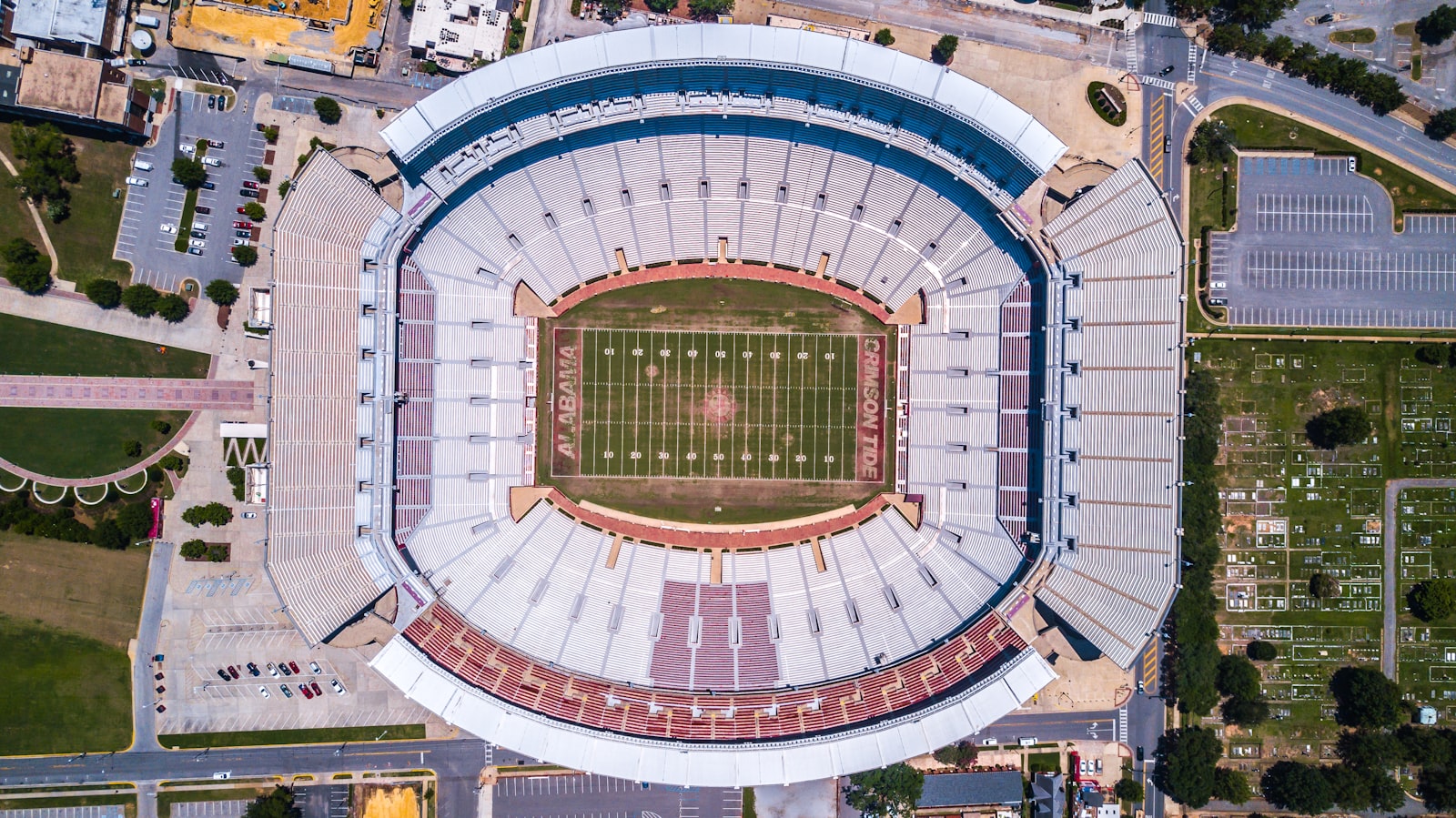

Ohio State 27, Michigan 9. The 2025 edition of “The Game” at Ohio Stadium on a cold Saturday in late November was the third consecutive Big Ten Championship Game-quality performance from a Buckeyes team that had spent the entire season as a top-three program by every public efficiency model. The Wolverines, the team that had won three of the previous four meetings, were ranked 15th and got handled in a way the underlying numbers had predicted from October. The 18-point margin was the cleanest reading of the gap between the two programs since 2018. Ohio State was undefeated at 12-0. Michigan was 8-4. Rivalry Week 2025 had produced exactly the result the structural data had been promising.
The Iron Bowl, Apple Cup, Egg Bowl, Bedlam — most of the other major rivalries produced results in the range the underlying numbers expected. Ole Miss beat Mississippi State 38-19. Washington beat Washington State 59-24. Oklahoma beat LSU 17-13 in a slightly surprising result. The Iron Bowl was the closest of the major rivalries and produced a chalk outcome. Rivalry Week, taken as a whole, was the year’s cleanest expression of how the SP+ rankings had been describing the conference structures all season. The teams ranked higher won. The favorites covered. The Week was the loudest version of the structural data getting validated.
What follows is what Rivalry Week’s results actually told us about the CFP picture two weeks before bracket release, where the public ranking models still disagreed with each other in meaningful ways, and what the conference championship round will test about the underlying conference quality readings.
What Ohio State-Michigan actually revealed
The Buckeyes finished the game with 437 yards of offense, 22 first downs, and a pass-block win rate of 71% against a Michigan defense that had been top-fifteen in pass-rush all season. The structural matchup that the model had been calling — Ohio State’s offensive line plus skill depth against Michigan’s defensive front — went the way the model had predicted. Will Howard played one of his cleaner games: 19 of 28 for 248 yards with two touchdowns and no interceptions. The running game produced 189 yards on 41 carries. The closing efficiency on third down was 8-of-13 (62%).
Michigan’s offensive performance was the part that confirmed the gap. The Wolverines produced 0.9 EPA per play, scored 9 points, and got shut out in the second half. The quarterback play had been an issue all year, and against Ohio State’s defensive structure, the issue was decisive. Michigan’s pass-block win rate of 51% was bottom-twenty nationally. Against Ohio State’s defensive line, the protection failed at exactly the rate the model had been pricing.
The result moves Ohio State to a probable 13-0 if they win the Big Ten Championship Game (which I covered in detail in the Indiana piece). The structural profile of a 13-0 Ohio State team with this offensive line and this defensive front sits at the top of every public ranking model going into bracket release.
The other major rivalry results, in context
| Rivalry game | Result | SP+ expected margin | Gap |
|---|---|---|---|
| Ohio State vs Michigan | OSU 27-9 | +15 OSU | +3 OSU (close) |
| Iron Bowl (AUB vs BAMA) | BAMA -3 favorite | +3 BAMA | (close) |
| Apple Cup (WAS vs WSU) | UW 59-24 | +24 UW | +11 UW |
| Egg Bowl (OM vs MSU) | OM 38-19 | +14 OM | +5 OM |
| OK vs LSU | OK 17-13 | OK -3 | +7 OK (upset) |
| USC vs UCLA | USC 38-21 | +8 USC | +9 USC |
Most of the rivalries produced results within 6 points of the SP+ expected margin. The two notable outliers were Washington-Washington State (covered well above expectation) and Oklahoma-LSU (upset of a road favorite). Both outliers had structural explanations — Washington’s offensive efficiency had been climbing through October-November, while Oklahoma’s defense had been improving in a way that the season-long SP+ rating had not yet caught up to. The model is not a real-time tracker; it integrates the entire season at consistent weights.
Where this gets weird
The clean “Rivalry Week mostly validated the model” reading misses three things that complicate the CFP projection.
The first is that the SP+ rankings and the CFP committee rankings have started to diverge meaningfully going into the final week. SP+ has Texas Tech below Indiana and Ohio State; the committee has them at #4. SP+ has Boise State higher than the committee does. SP+ has Notre Dame and Miami within 0.2 of each other; the committee separates them by two ranking lines. The structural disagreement about the bubble teams is going to produce another year of SP+-vs-committee controversy when the bracket gets released. The pattern has been consistent since the 12-team format started.
The second is that the Rivalry Week results compressed the conference championship implications more than the public coverage has acknowledged. The SEC Championship will be between Texas and Georgia. The Big Ten Championship will be between Indiana and Ohio State (the Indiana matchup I covered separately). The Big 12 Championship has Texas Tech in. The ACC Championship has multiple paths. The Mountain West has Boise State again. Six teams playing for conference titles will all be in or near the CFP bubble. The bracket math depends on those six games more than on the regular season that just finished.
The third is that the upsets in Rivalry Week (Oklahoma over LSU, the closer-than-expected Apple Cup quality) are the kind of late-season results that the SP+ ratings will spend the next week absorbing. By the time the final SP+ ratings publish on December 6, the rankings will look slightly different than the committee’s December 7 release. Both will be defensible. The gap between them will get litigated in late-night CFP podcasts for the next ten days.
What the next two weekends will actually settle
- The Indiana-Ohio State Big Ten Championship. The cleanest single-game test of whether the SP+ ratings or the committee’s order on the top two teams is correct. Indiana is the model’s #3; Ohio State is #1. The game decides which is right.
- The SEC Championship. The conference title decides the SEC’s top seed; the loser’s CFP path depends on conference championship outcomes elsewhere.
- The bubble team performances in conference title games. Texas Tech and Boise State are both playing for their CFP positions. The committee gives them less benefit of the doubt than SP+ does.
- The Mountain West Championship. Boise State’s CFP at-large case depends on producing a quality conference championship win. A close win or loss compresses the case for inclusion.
The callback
That cold Saturday in late November when Ohio State handled Michigan 27-9 and the SEC produced the Iron Bowl outcome the model expected and the Pac-12 successor conferences produced clean validations of the underlying ratings, was the loudest version of how the 2025 college football season has unfolded against the structural projections. The favorites won. The model called it. The bracket math is now nearly settled with two weekends left. The conference championship results will tweak the bubble; the top of the field is already established. The 12-team format’s second year has produced a more model-aligned regular season than the first year did, which is the natural progression of a postseason format that incentivizes consistent performance across the full schedule. The SEC vs Big Ten piece covers the conference quality conversation. Ohio State is the model’s #1 going into bracket release. Indiana is the committee’s #1 after the Big Ten Championship. Both will be in the bracket. One of them will win the national title. The model has been ahead of the conversation for three months. The bracket will decide whether it stays ahead.
SP+ rankings via Bill Connelly at ESPN; rivalry data via CBS Sports; CFP context via CFP official.