
A football recap works because a football match has a shape a reader already understands: kickoff, a goal that changes the mood, a stoppage-time twist, a final whistle. Try to write a golf tournament, a Grand Prix or a title fight the same way and the structure collapses before the second paragraph.
These three sports do not resolve in a single continuous timeline the way most team sports do. A golf leaderboard shifts constantly across four days with no discrete moments to hang a narrative on; a race is decided by strategy windows that unfold in parallel rather than in sequence; a fight is scored in independent, self-contained increments that a chronological summary flattens into meaninglessness.
What follows sets out why the standard chronological recap fails each of these three sports specifically, and the structures that replace it.
Why chronological recap breaks down in three sports
- Golf. No single continuous event; four rounds and dozens of concurrent players.
- Motorsport. Positions decided by pit strategy invisible in track-position order alone.
- Combat sports. Scored round by round, independent units, not a running total.
- What replaces it. The leaderboard swing, the strategy window, the scorecard.
- The shared fix. Structure the report around the unit of analysis the sport actually uses.
- The trap. Forcing a false turning point onto a result that did not have one.
Why a chronological recap works for most team sports
A standard match report succeeds because a football, basketball or hockey match genuinely has a timeline: a single ball, a single continuous clock, and events that happen in a sequence every viewer experienced in the same order. A goal in the eighty-ninth minute is meaningfully different from a goal in the fifth, and a chronological account captures that difference naturally.
The format assumes a match has a small number of decisive moments embedded in an otherwise continuous flow, and that assumption holds often enough that the format has become the default for reporting on team sports almost everywhere. The failure only becomes visible once a sport does not share that underlying structure, which is exactly the case for the three covered here.
Golf: the leaderboard swing replaces the timeline
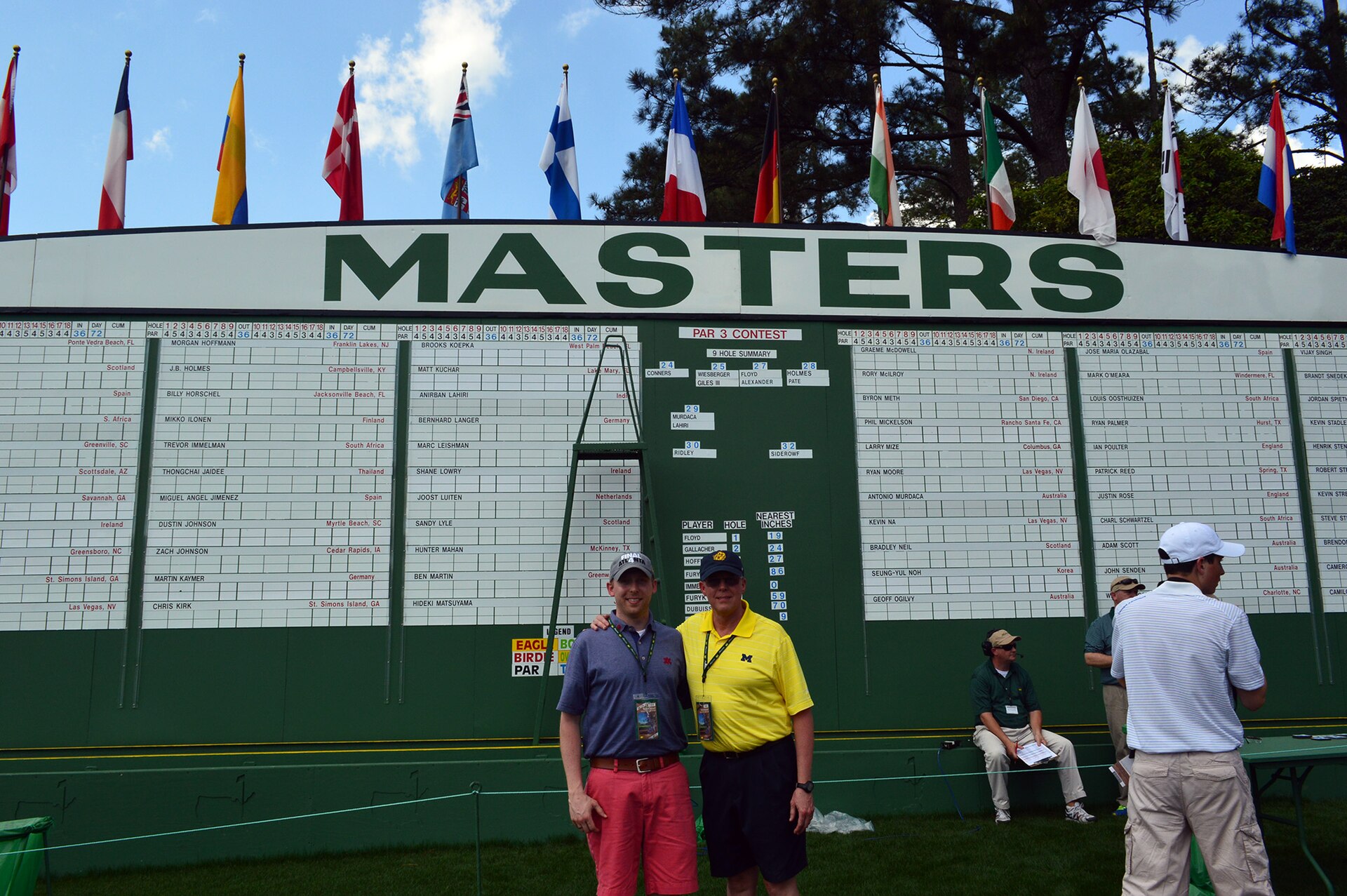
A golf tournament has no single clock and no single sequence of events a reader can follow start to finish, because dozens of players are competing simultaneously across four days, often on different parts of the course at the same moment.
A chronological account of a single player’s round misses the tournament; an account of every player’s every shot is unreadable. What replaces both is the leaderboard swing: identifying the specific stretch of holes, for the specific players involved, where the outcome actually changed, and building the report around that stretch rather than around the full round in order.
A leaderboard swing might span three holes on the back nine of the final round, or it might span a single putt that separated two players tied through fifty-three holes. The report’s job is to find that stretch and explain it in detail, treating everything outside it as context rather than as equally weighted narrative.
Motorsport: the strategy window replaces the lap order
A running order of cars at any given lap tells a reader who is ahead and almost nothing about why, because track position in a race with pit stops is a function of strategy decisions made at different times by different teams, not of pure on-track pace.
A car running third on lap thirty might be one pit stop away from the lead, or it might be a lap down and about to be overtaken by faster cars still on an earlier strategy. Reporting lap-by-lap position changes without explaining the underlying strategy window produces a technically accurate account that tells a reader almost nothing useful about who is actually winning the race.
The structure that works instead identifies the two or three strategic decisions, the pit stop called early, the tire choice that paid off late, the caution period that favored one strategy over another, and explains the race through those decisions rather than through the sequence of positions on track.
Combat sports: the round-by-round scorecard

A boxing or mixed martial arts bout is scored in discrete, independent rounds, each judged largely on its own merits under most scoring systems, which makes a single running narrative of momentum misleading in a specific way a chronological account does not correct for.
A fighter can lose the first four rounds clearly and still win a fight by taking the final round decisively if the format rewards a finish, or can win a majority of rounds on the cards while a single dominant round shapes how the fight is remembered regardless of the official scoring. A chronological recap that describes the fight as building continuously toward its ending misrepresents a contest that judges are, at that same moment, scoring in independent chunks.
| Sport | Unit that actually decides the result | What a plain timeline obscures |
|---|---|---|
| Golf | A short stretch of holes among contenders | Most of four rounds are functionally irrelevant to the outcome |
| Motorsport | A small number of strategy decisions | Track position without pit-stop context misleads |
| Combat sports | Independent scored rounds | A running narrative flattens rounds that are judged separately |
Structuring a report around the scorecard, round by round, with a brief note on how each round was likely scored and why, respects how the result was actually reached far better than a single continuous account of the action.
The statistics each structure actually demands
Each of these three structures calls for different supporting numbers than a standard match report, and reaching for football-style statistics in the wrong sport produces a recap that looks rigorous and explains very little.
A golf leaderboard swing is best supported by strokes gained on the specific holes in question, not a full-round strokes-gained total that buries the decisive stretch inside eighteen holes of noise. A motorsport strategy window is best supported by the actual time gained or lost at each pit stop and the gap to the cars on alternate strategies at the moment each stop was taken, not a lap chart alone. A combat sports scorecard is best supported by significant strikes landed and control time broken out by round, since a fight total obscures exactly the round-by-round pattern the report is trying to explain.
Where a false turning point gets forced onto a result
The chronological instinct is strong enough that writers covering these three sports sometimes force a turning point onto a result that genuinely did not have one, because a recap without a dramatic pivot feels incomplete by the standards of team-sport writing.
A golf tournament that was effectively decided across an entire final round of steady play, with no single dramatic swing, gets written as though one hole changed everything, because that framing is more familiar than the accurate one. A race won through consistently superior tire management across fifty laps gets compressed into a single overtake that happened to be the last one, even when it changed less than the preceding strategy already had. The honest version of these reports sometimes has to say plainly that the result was decided gradually, which is a harder sentence to write than naming a single moment, and a more accurate one.
How headline writing changes with the structure
A headline built on chronology, describing what happened last, works reasonably well for a football match because the last event, a stoppage-time goal or a red card, is usually also the most important one. Applying the same instinct to golf, motorsport or combat sports frequently produces a misleading headline even when every word in it is technically true.
A golf headline built around the final putt of the tournament can mislead when the tournament was actually decided three holes earlier and the final putt merely confirmed a margin that no longer mattered. A motorsport headline built around the final lap’s position can mislead when the race was effectively settled by a strategy call an hour earlier and the final lap involved no meaningful change in the competitive picture. A combat sports headline built around the finishing sequence can mislead when a fight was actually one-sided across the rounds preceding it, and the finish was simply the moment it became official rather than the moment it was decided.
The fix mirrors the fix for the body of the report: headline the actual deciding unit, the swing, the strategy call, or the round that turned the fight, rather than defaulting to whatever happened last simply because last is where a football-trained instinct expects to find the story.
What all three formats have in common despite their differences
Golf, motorsport and combat sports look unrelated on the surface, and the reporting problem they share is identical: each resolves through a unit of analysis that a plain timeline does not naturally surface, which means every one of these reports requires an extra analytical step before writing begins.
That step is identifying the actual deciding unit, the swing, the window, or the round, before drafting a single sentence, rather than discovering it midway through a chronological write-up and trying to retrofit emphasis onto it. Writers who skip this step tend to produce technically complete but analytically flat reports, accurate about what happened and vague about why it mattered, which is the specific failure mode a borrowed structure produces regardless of how skilled the writer otherwise is.
Writing the opening paragraph for each format
The opening of a report built around one of these structures should name the deciding unit immediately rather than starting with a chronological account of the beginning, which is the instinct a football-trained writer brings by default.
A golf report opens with the swing on the back nine, not the first tee shot of the day. A motorsport report opens with the pit call that decided the race, not the formation lap. A combat sports report opens with which rounds the fight actually turned on, not the opening bell. Readers looking for the outcome first, a habit well documented by outlets that study how news audiences actually read a story, are better served by structure that matches how the result was reached than by a format borrowed from a different sport entirely.
Frequently Asked Questions
Can a chronological structure ever work for golf or motorsport?
Occasionally, for a single dramatic final stretch covered live, but it fails as the default structure for a full event, since most of the event’s duration is not evenly weighted toward the eventual outcome.
Why do combat sports get scored in independent rounds rather than as a continuous contest?
Most scoring systems are built this way specifically to reward sustained effectiveness across a fight rather than a single late surge, and reporting that ignores the round-by-round structure misrepresents how judges actually reached their decision.
What statistic best supports a motorsport strategy report?
Time gained or lost at each pit stop relative to competitors on different strategies, since raw lap times or finishing gaps alone do not explain why the strategic decisions paid off or failed.
Is it dishonest to say a result was decided gradually rather than at one moment?
It is more honest than forcing a turning point that did not exist, even though it makes for a less dramatic opening. Readers are generally better served by an accurate account than a compelling but misleading one.
Do these structural principles apply to other individual sports?
Yes, with adaptation. Any sport scored cumulatively across a long period, decided by strategic timing rather than continuous action, or judged in discrete units benefits from a structure built around its actual unit of decision rather than a borrowed timeline.
The chronological recap is not a universal format. It is a good fit for sports with a single clock and a bad fit for sports that resolve in parallel, in strategy, or in independent scored units, and the fix is structural, not stylistic.