
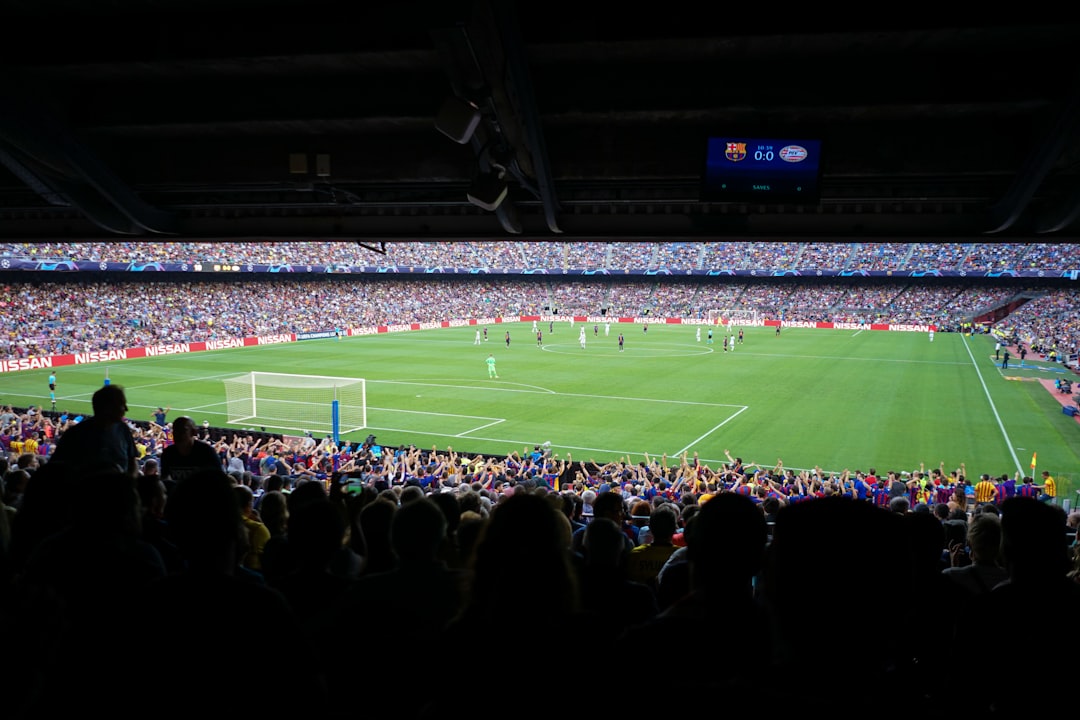
The Champions League Quarterfinals 2026 represent the point in the competition where pretenders are separated from genuine contenders. Eight of Europe’s elite clubs have navigated a grueling group stage and a tense Round of 16 to reach this stage, and the four quarterfinal matchups promise tactical intrigue, individual brilliance, and the high-stakes drama that makes the Champions League the most prestigious club competition in world football.
In this tactical preview, we examine every Champions League Quarterfinals 2026 matchup in detail. From formation analysis and pressing triggers to set-piece strategies and key individual duels, this breakdown goes beyond surface-level predictions to explore the tactical chess matches that will determine which four teams advance to the semifinals. Whether you follow the sport through a tactical lens or simply want to understand what to watch for in each tie, this guide provides the insights you need.
The Quarterfinal Draw: Context and Implications
The draw for the Champions League Quarterfinals 2026 produced four fascinating ties that pit contrasting footballing philosophies against one another. The matchups reward the neutral observer with stylistic variety: high-pressing intensity meets deep-block resilience, possession-based artistry collides with devastating counter-attacking speed, and some of the best managers in the world face tactical puzzles that will test the limits of their preparation.
What makes this particular set of quarterfinals so compelling is the absence of clear favorites in several ties. While previous seasons have occasionally produced lopsided draws, the Champions League Quarterfinals 2026 feature evenly matched opponents where tactical execution, rather than a disparity in individual talent, is likely to determine the outcome. The following table provides a statistical overview of the eight remaining teams, setting the stage for the detailed tactical analysis that follows.
| Matchup | Team | Formation | Goals Scored (UCL) | Goals Conceded (UCL) | Possession Avg | xG per Match | PPDA |
|---|---|---|---|---|---|---|---|
| QF1 | Real Madrid | 4-3-3 | 22 | 8 | 58.3% | 2.31 | 9.4 |
| Arsenal | 4-3-3 / 4-4-2 | 18 | 5 | 55.1% | 1.94 | 8.7 | |
| QF2 | Bayern Munich | 4-2-3-1 | 26 | 10 | 62.7% | 2.68 | 7.2 |
| Inter Milan | 3-5-2 | 15 | 4 | 49.2% | 1.72 | 11.8 | |
| QF3 | Barcelona | 4-3-3 | 24 | 9 | 64.5% | 2.54 | 7.9 |
| Paris Saint-Germain | 4-3-3 | 19 | 7 | 57.8% | 2.11 | 9.1 | |
| QF4 | Manchester City | 4-1-4-1 / 3-2-4-1 | 20 | 6 | 66.1% | 2.38 | 6.8 |
| Borussia Dortmund | 4-2-3-1 | 17 | 8 | 48.6% | 1.89 | 12.3 |
Quarterfinal 1: Real Madrid vs Arsenal
The first quarterfinal pits Real Madrid’s attacking royalty against Arsenal’s defensive sophistication in a tie that could define the Champions League Quarterfinals 2026. Real Madrid enter as the competition’s most decorated club, while Arsenal bring a defensive record that is the best of any remaining team, having conceded just five goals across eight Champions League matches this season.
Real Madrid’s Tactical Approach
Under Carlo Ancelotti, Real Madrid continue to operate with a fluid 4-3-3 that can shift into a 4-4-2 without the ball. Their attacking trident is the most potent in European football, combining pace, creativity, and clinical finishing in a system that allows significant positional freedom. In the final third, Real Madrid’s forwards interchange positions constantly, creating overloads on whichever flank appears most vulnerable.
The key to Real Madrid’s attack lies in their transitional speed. Among the eight quarterfinalists, they rank first in goals scored from fast breaks, converting defensive turnovers into scoring opportunities with devastating efficiency. Their midfield, anchored by a deep-lying playmaker who recycles possession with metronomic consistency, provides the platform for these rapid transitions while also maintaining control during sustained possession phases.
Arsenal’s Defensive Blueprint
Arsenal’s success in the Champions League Quarterfinals 2026 will depend on their ability to implement the structured defensive approach that has been their hallmark throughout the competition. Their 4-3-3, which compresses into a compact 4-4-2 in defensive phases, limits space between the lines with impressive discipline. Arsenal’s PPDA of 8.7 indicates an aggressive pressing approach that seeks to win the ball high up the pitch rather than sitting deep and absorbing pressure.
The tactical battle within this tie will center on Arsenal’s ability to disrupt Real Madrid’s build-up play before it reaches the attacking third. If Arsenal can force turnovers in the middle third of the pitch, their own transition game, which has produced several crucial Champions League goals this season, becomes a potent weapon. However, if Real Madrid bypass the press with long diagonal passes to their wide forwards, Arsenal’s defensive structure could be stretched in ways that expose their full-backs to one-on-one situations against some of the fastest attackers in world football.
For an exploration of how athletes maintain peak performance under the kind of pressure these matches demand, read our analysis of techniques that elevate athletic performance and mental resilience.
Quarterfinal 2: Bayern Munich vs Inter Milan
Bayern Munich versus Inter Milan presents one of the most tactically fascinating matchups of the Champions League Quarterfinals 2026, as two contrasting philosophies collide. Bayern’s high-octane, possession-dominant approach meets Inter’s disciplined three-at-the-back system that has made them the stingiest defense in the competition with just four goals conceded.
Bayern’s Attacking Machine
Bayern Munich lead all quarterfinalists with 26 goals scored and an expected goals (xG) rate of 2.68 per match, both figures that reflect their relentless attacking intent. Their 4-2-3-1 formation provides width through overlapping full-backs who push high up the pitch, while the attacking midfielder operates as a second striker, finding pockets of space between the opponent’s defensive and midfield lines.
Bayern’s PPDA of 7.2 is the second-lowest among the remaining teams, indicating an extremely aggressive pressing game that aims to suffocate opponents in their own half. When the press is engaged, Bayern commit players forward with intensity, looking to win the ball back within six seconds of losing it and immediately launching attacks against a disorganized defense. This approach creates enormous pressure but also leaves space behind the defensive line that a team with Inter’s counter-attacking pedigree can exploit.
Inter’s Tactical Resilience
Inter Milan’s 3-5-2 formation has been their foundation throughout the Champions League Quarterfinals 2026 campaign, and its effectiveness is reflected in their remarkable defensive record. The three center-backs provide numerical superiority in defensive situations, while the wing-backs offer both defensive cover and attacking width depending on the phase of play. Inter’s PPDA of 11.8, the highest among the quarterfinalists, reveals a team that is comfortable allowing opponents possession while maintaining a compact defensive shape and waiting for transition opportunities.
The tactical key for Inter lies in their two strikers, who must serve as both the first line of defense, pressing Bayern’s build-up play to disrupt their rhythm, and the primary outlets for counter-attacks. When Inter win the ball, the speed of their forward passes toward these two strikers, who combine physical presence with intelligent movement, can create numerical advantages before Bayern’s high defensive line recovers. This cat-and-mouse game between Bayern’s press and Inter’s transitions will likely determine which team advances.
Quarterfinal 3: Barcelona vs Paris Saint-Germain
Barcelona and Paris Saint-Germain have developed a fierce rivalry in the Champions League over the past decade, and their meeting in the Champions League Quarterfinals 2026 adds another chapter to a story filled with dramatic twists. Both teams play a 4-3-3 formation, but the similarities largely end with the shape on paper. Barcelona’s approach is rooted in positional play and patient build-up, while PSG blend structured possession with moments of individual brilliance from their star attackers.
Barcelona’s Positional Play
Barcelona enter the quarterfinals with the highest possession average (64.5%) and the second-highest xG per match (2.54) among the remaining teams. Their commitment to positional play, the tactical framework that prioritizes creating numerical superiority in every zone of the pitch through coordinated positioning, remains the foundation of their approach. Barcelona’s players are drilled to maintain specific spatial relationships that ensure passing lanes are always available, making their ball circulation extremely difficult to disrupt.
The evolution of Barcelona’s style under their current management has added a directness that previous iterations sometimes lacked. While they still value possession, they are more willing to play vertical passes into the feet of attackers who can turn and create in tight spaces. This combination of patience and penetration has produced 24 Champions League goals this season and makes Barcelona one of the most dangerous attacking teams in the competition.
PSG’s Counter-attacking Threat
Paris Saint-Germain’s approach to the Champions League Quarterfinals 2026 matchup against Barcelona will likely center on a willingness to cede possession and exploit the spaces that Barcelona’s high defensive line inevitably leaves. PSG’s xG of 2.11 per match suggests they create fewer chances than Barcelona, but their conversion rate indicates clinical finishing when opportunities arise. Their PPDA of 9.1 shows a moderately aggressive pressing approach, but against Barcelona’s exceptional ball circulation, PSG may choose to drop deeper and defend in a mid-block that forces Barcelona to play in front of them rather than through them.
The individual quality within PSG’s squad provides a trump card that tactical analysis alone cannot fully account for. A moment of individual brilliance, a dribble that eliminates two defenders, a long-range strike that finds the top corner, can swing a tie regardless of the broader tactical picture. Barcelona must find a way to limit these moments while imposing their own stylistic preferences on the game, a balancing act that requires both tactical discipline and mental fortitude. For the latest tactical insights and match analysis, consult UEFA Champions League official coverage.
Quarterfinal 4: Manchester City vs Borussia Dortmund
Manchester City and Borussia Dortmund complete the Champions League Quarterfinals 2026 lineup with a matchup that features one of the most possession-dominant teams in football history against a side that has made a virtue of playing without the ball. City’s 66.1% average possession is the highest in the competition, while Dortmund’s 48.6% average reveals a team that is content to let opponents have the ball and strike when spaces appear.
City’s Tactical Flexibility
Manchester City’s tactical identity under Pep Guardiola continues to evolve, and the Champions League Quarterfinals 2026 may see them deploy their most flexible system yet. The nominal 4-1-4-1 shape transforms into a 3-2-4-1 in possession, with one full-back inverting into midfield to create an additional passing option in central areas. This structural change gives City numerical superiority in the middle of the pitch, allowing them to play through the opponent’s press and progress the ball into dangerous areas with short, incisive passing combinations.
City’s PPDA of 6.8, the lowest among all quarterfinalists, reflects the most aggressive pressing approach in the competition. They suffocate opponents with coordinated pressing triggers that are initiated the moment possession is lost, and their defensive line pushes extremely high up the pitch to compress the playing area. This approach has been devastatingly effective throughout the campaign but carries inherent risk against a team with Dortmund’s pace on the counter-attack.
Dortmund’s Counter-attacking Identity
Borussia Dortmund’s PPDA of 12.3, the highest in the quarterfinals, tells the story of a team that defends deep and attacks with explosive speed. Their 4-2-3-1 formation provides a solid defensive base with two holding midfielders screening the back four, while the attacking players ahead of them are selected for their ability to run in behind defenses and convert counter-attacking opportunities into goals.
The tactical blueprint for Dortmund against City is clear: absorb pressure, remain compact, and strike when City’s high line is exposed by a turnover or a long ball over the top. Dortmund have executed this approach successfully against possession-dominant teams throughout the competition, and their 17 goals scored include several that were created from fast-break situations lasting fewer than ten seconds from the moment of winning the ball. If Dortmund can limit City to low-quality chances from distance while creating high-value counter-attacking opportunities, they have the quality to spring an upset in the Champions League Quarterfinals 2026.
Set-Piece Analysis: The Hidden Battleground
Set pieces have become an increasingly important factor in modern football, and the Champions League Quarterfinals 2026 feature several teams that derive significant portions of their offensive output from dead-ball situations. Arsenal lead all quarterfinalists with seven goals from set pieces in this season’s competition, reflecting the sophisticated routines and delivery quality that have become a hallmark of their approach. Barcelona and Real Madrid have also scored multiple set-piece goals, utilizing their aerial presence and intelligent movement to create chances from corners and free kicks.
Defensively, set pieces represent a potential vulnerability for several teams. Bayern Munich have conceded three of their ten goals from set-piece situations, suggesting that their aggressive approach to defending dead balls, which involves man-marking rather than zonal coverage, can be exploited by teams with well-drilled routines. Similarly, Dortmund’s zonal marking system at corners has come under scrutiny after conceding from similar situations in the Round of 16. Managers who have identified these weaknesses will undoubtedly have specific set-piece plans designed to exploit them, and the team that wins the set-piece battle in each tie may well be the team that advances. Further statistical breakdowns are available through ESPN Champions League statistics.
Predictions: Who Will Advance to the Semifinals?
Predicting the outcomes of the Champions League Quarterfinals 2026 requires weighing tactical analysis against the intangible factors that make knockout football so unpredictable. Based on the tactical breakdowns presented above, the following predictions consider each team’s stylistic strengths, key matchups, and historical performance in high-pressure knockout scenarios.
In Quarterfinal 1, Real Madrid’s big-game experience and attacking quality give them a slight edge over Arsenal, but this tie has the potential to be decided by a single moment, a set-piece goal, a counter-attack, or a defensive error, and Arsenal’s defensive organization means they will be competitive across both legs. Real Madrid to advance in a tight, low-scoring affair.
Quarterfinal 2 presents the most intriguing tactical battle, with Bayern’s relentless attacking approach colliding with Inter’s defensive resilience. Inter’s ability to frustrate possession-dominant teams makes them dangerous, but Bayern’s sheer volume of chance creation should ultimately prove decisive. Bayern Munich to advance, but not without significant resistance from Inter’s defensive structure.
Quarterfinal 3 between Barcelona and PSG could be the most entertaining tie of the round. Barcelona’s positional play gives them a structural advantage, but PSG’s individual quality creates an element of unpredictability that makes them dangerous in any single match. Barcelona’s greater consistency and home-field advantage in the first leg tip the balance in their favor. Barcelona to advance.
Quarterfinal 4 is the tie most likely to produce an upset. While Manchester City’s tactical sophistication and squad depth make them favorites, Dortmund’s counter-attacking identity is precisely the type of approach that has troubled City in previous Champions League campaigns. If Dortmund can remain disciplined and clinical, they have the tools to eliminate City. However, City’s overall quality and experience should see them through. Manchester City to advance, but Dortmund will make them work for every moment of progress.
The Champions League Quarterfinals 2026 promise to deliver tactical drama of the highest order. As these eight teams prepare for the most important matches of their seasons, the tactical battles outlined in this preview will play out on pitches across Europe, providing football fans with the spectacle that makes the Champions League the pinnacle of club football. For deeper context on how elite athletes develop the sport-specific conditioning needed for this level of competition, explore our expert analysis.
Frequently Asked Questions
When are the Champions League Quarterfinals 2026 matches scheduled?
The Champions League Quarterfinals 2026 first legs are scheduled for April, with the return legs taking place the following week. Specific dates and kick-off times are confirmed by UEFA approximately six weeks before the matches and are subject to broadcast scheduling requirements. Both legs must be completed before the semifinal draw takes place, ensuring a clear path to the final in late May.
Which team has the best defensive record in the Champions League Quarterfinals 2026?
Inter Milan have the best defensive record among the eight quarterfinalists, having conceded just four goals across eight Champions League matches this season. Their 3-5-2 formation provides defensive solidity through a three-center-back system that limits opposition chances, and their expected goals against (xGA) figure is the lowest in the competition. Arsenal rank second with five goals conceded, reflecting their own impressive defensive organization.
What does PPDA mean in football analytics?
PPDA stands for Passes Per Defensive Action and is a widely used metric for measuring pressing intensity. It calculates the number of passes an opposing team is allowed to make before a defensive action (tackle, interception, or foul) is made. A lower PPDA indicates more aggressive pressing, as the defending team allows fewer opposition passes before engaging. Among the Champions League Quarterfinals 2026 teams, Manchester City have the lowest PPDA (6.8), indicating the most aggressive press, while Borussia Dortmund have the highest (12.3), reflecting a deeper defensive approach.
How do away goals work in the Champions League quarterfinals?
UEFA abolished the away goals rule starting from the 2021-2022 season. In the Champions League Quarterfinals 2026, if the aggregate score is level after both legs, the tie proceeds to 30 minutes of extra time played during the second leg. If the score remains level after extra time, a penalty shootout determines which team advances to the semifinals. This rule change has made second legs more open and attacking, as visiting teams no longer receive bonus credit for goals scored away from home.
Disclaimer: The tactical analysis, formations, and statistical projections in this article are based on data available through the Champions League group stage and Round of 16 matches. Actual team selections, formations, and tactical approaches may differ on match day based on player availability, injuries, and managerial decisions. This preview represents editorial analysis and informed opinion. For official match information and schedules, visit UEFA.com.