
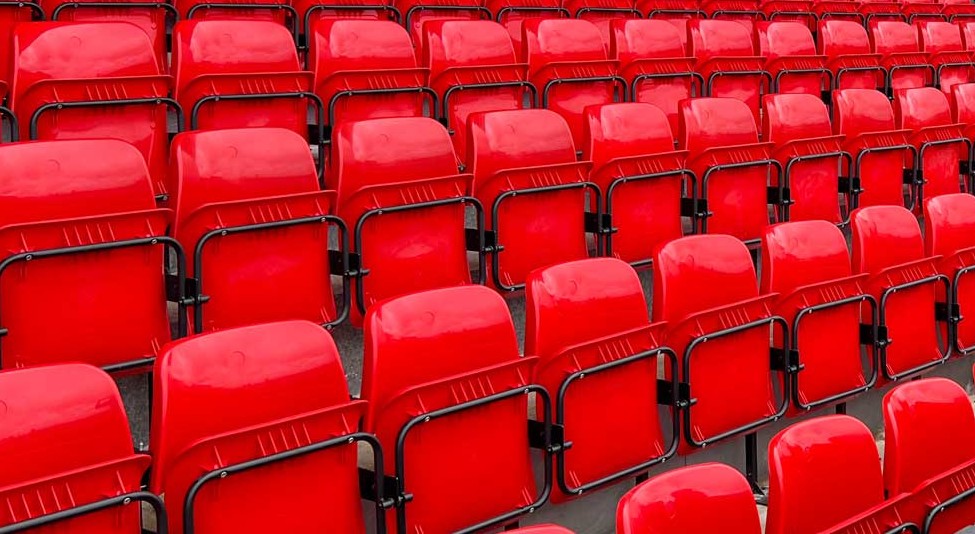
For roughly a year across most major leagues, matches were played in venues built for tens of thousands of people holding, at most, a skeleton crew of staff and no paying crowd at all. Nobody arranged that as an experiment. It happened for public health reasons that had nothing to do with sports analytics. But it produced a natural experiment that decades of ordinary home advantage research could never have run deliberately.
Before those seasons, home advantage was treated as a single number: home teams win more often than away teams, across nearly every sport and every league ever studied. The empty-stadium period forced a more useful question. That single number was always a bundle of separate effects, travel, unfamiliarity, and whatever a crowd contributes, and nobody could cleanly separate them while crowds were a constant.
Remove the crowd and hold the other two roughly constant, and whatever changes in the data is attributable to the crowd. What follows is what shrank, what held, and what those seasons could never have settled no matter how long they lasted.
What the numbers showed, in six lines
- The setup. Matches continued with travel and unfamiliar surroundings intact, crowds removed.
- What shrank. The size of the home scoring and results advantage narrowed across most leagues studied.
- What shrank the most. Referee-driven measures: cards, penalties and stoppage time awarded to the home side.
- What held steady. A smaller home advantage persisted even with the crowd gone entirely.
- What the seasons could not test. Travel fatigue and ground familiarity, since both stayed constant throughout.
- The honest conclusion. The crowd was a real component, not the whole explanation.
What the empty-stadium seasons actually were
Across the affected period, home teams continued to sleep in their own beds, train on their own facilities, and avoid the travel fatigue an away trip imposes. What disappeared was the crowd noise, the atmosphere and, in most cases, any visible reaction from spectators that a referee or a player could register in real time.
Accounts of how one league adapted an entire season to isolation describe the same absence of a crowd from a very different angle, focused on logistics rather than performance data, but pointing at the identical missing variable. This matters for what the seasons can and cannot tell us. They are not a clean test of home advantage overall, because travel and familiarity, two of the three components researchers had long proposed, never varied. They are a genuinely clean test of one specific question: what does a crowd itself contribute, isolated from everything else that comes with playing at home.
The three components home advantage was assumed to contain
Long before the empty-stadium seasons, researchers had proposed roughly three explanations bundled inside the single home-advantage number. Travel fatigue affecting the away side, familiarity with the pitch, facilities and local conditions benefiting the home side, and psychological or behavioral effects created by a supportive crowd, both on the players and on the match officials.
Separating these three had always been difficult because they move together in ordinary competition. A team playing at home is simultaneously well-rested, familiar with its surroundings and supported by its crowd, and no season of normal fixtures offers a way to hold two of the three constant while the third changes.
What shrank when the crowd disappeared
Across the leagues studied during the affected period, the overall home advantage in results, measured as the gap in points or win rate between home and away performance compared with the same competitions in prior seasons, narrowed noticeably. It did not vanish, but multiple independent analyses converged on the same direction of movement rather than a scattering of contradictory findings, which is itself a meaningful signal in a field where effects this size are often hard to pin down.
The narrowing was not uniform across every measure. Some indicators moved substantially, others barely at all, which turned out to be one of the more informative parts of the whole episode once analysts started breaking the aggregate number down.
What held steady regardless of crowd
A residual home advantage persisted even with stadiums empty. Home teams still won more often than a coin flip would predict, still scored marginally more, and still generally outperformed their away form, just by a smaller margin than usual. That residual is consistent with travel and familiarity doing real, independent work, since both stayed present even as the crowd effect was switched off.
Analysts working on where sports analytics is headed next have pointed to this residual figure as one of the more durable findings to come out of an otherwise disruptive period. This is the finding most worth holding onto precisely because it complicates a simple story. It is tempting to conclude the crowd was the whole of home advantage, but the data does not support that conclusion. A real, if smaller, advantage was there before the crowd left and remained after it did.
Referee decisions, measured without a crowd watching

The most consistently reported shift across the affected period involved officiating: the gap between cards, penalties awarded and stoppage time given to home versus away teams narrowed more sharply than the overall scoring gap did. That pattern lines up with an older hypothesis in sports psychology, that a supportive home crowd can subtly influence a referee’s split-second judgment calls even without any deliberate intent to favor either side.
The caution worth attaching here is about mechanism versus outcome. The data shows the gap in decisions narrowed. It is harder to prove definitively that crowd noise, specifically, rather than some correlated factor, was the causal mechanism, even though the timing and the size of the shift make crowd influence the most plausible explanation currently on the table.
Travel and familiarity: the parts no pandemic season could test
Because travel schedules and venue assignments continued largely as normal throughout the empty-stadium period, those two components of home advantage were never isolated by this natural experiment. Any residual advantage remaining after the crowd left is consistent with either factor, or both, doing genuine work, but the empty-stadium data cannot tell us how much each one individually contributes.
Separating travel from familiarity would require a different kind of natural experiment entirely, one where teams play true home matches at neutral, unfamiliar venues close to home, which happens rarely enough that it has not produced a comparable dataset. The honest state of the evidence is that these two components remain bundled together even after the crowd has been cleanly subtracted out.
What the away side gained, and what it did not
The mirror image of a shrinking home advantage is an away side performing closer to its underlying quality than usual, and that pattern showed up consistently enough to be worth stating on its own terms rather than only as the flip side of the home number. Away teams during the affected period posted results closer to what their broader season form would have predicted, with less of the systematic gap that a hostile away atmosphere typically appears to impose.
What did not change for away teams was the travel itself. A side flying across time zones for a fixture still made that same trip during the empty-stadium period, still dealt with unfamiliar facilities, and still lacked the specific local knowledge a home side accumulates over a season of training on the same pitch. Any improvement in away performance during this period has to be attributed to the crowd’s absence specifically, since the other burdens an away team carries were left entirely intact.
Reading the numbers without overclaiming
The responsible summary of this period is narrower than the headlines it produced at the time. Crowds appear to matter for home advantage, particularly through their apparent influence on officiating, and a meaningful part of home advantage survives without them. Both statements can be true simultaneously, and treating either one as the complete story overstates what a single, unrepeated natural experiment can support.
It is also worth remembering that these were unusual seasons in other respects, disrupted schedules, altered squad rotations, and psychological conditions for players that had nothing to do with crowd noise specifically. Some of the observed shifts may reflect those broader disruptions rather than the absence of spectators alone, which is a limitation any fair reading of the period has to carry forward.
What remains unresolved
Whether the crowd effect on officiating reflects genuine, if unconscious, influence on judgment calls, or some other correlated change in how matches were played and reported during an unusual period, is not fully settled. The direction of the finding is consistent across leagues; the precise mechanism behind it is not proven with the same confidence.
The relative size of travel versus familiarity within the remaining advantage is also unresolved, and likely to stay that way absent another natural experiment as unusual and as unwelcome in its origins as this one was.
What this means for how home advantage gets talked about now
The empty-stadium seasons earned a permanent place in how analysts discuss home advantage, not because they answered every question, but because they replaced a single bundled number with at least a partial breakdown that can now be cited with real evidence behind it rather than intuition alone.
The most useful habit to take from the period is separating claims about home advantage into its component parts before assessing them, since a bettor, broadcaster or analyst treating the crowd, travel and familiarity as one undifferentiated force is working with a model the data itself no longer fully supports.
How different sports and leagues showed different patterns
The narrowing was not identical across every competition studied, and the variation itself is informative. Leagues where stadiums are typically loud, tightly packed and physically close to the field of play tended to show a larger shift than leagues where crowds sit farther from the action or where noise levels are lower to begin with, which is broadly consistent with a crowd-proximity explanation for at least part of the effect.
Some of the same acoustic logic shows up in coverage of stadium design innovations built around fan experience, where architects openly discuss how proximity and roofing shape crowd noise. Indoor sports played in smaller, more acoustically contained venues showed some of the more pronounced shifts of any competitions studied, which fits the same logic: a crowd’s influence on officiating and on players plausibly scales with how directly and immediately that noise reaches the court or pitch, rather than applying as a uniform constant across every sport regardless of stadium design.
Individual sports contributed a useful comparison point as well, since several continued during the same period with reduced or absent crowds and showed smaller, less consistent shifts relative to seeding or ranking expectations than the team-sport data did. That difference is suggestive rather than conclusive, but it points toward crowd effects mattering more in contexts where fans can plausibly influence an official’s real-time subjective call, a more frequent feature of team sports than of most individual competitions.
Why the finding still gets overstated in casual discussion
A number this easy to summarize, home advantage shrank when crowds left, tends to get flattened in casual retelling into a stronger claim than the data supports, usually some version of home advantage was never real to begin with. The residual advantage documented across nearly every league studied contradicts that stronger version directly, and repeating it mainly serves a tidy narrative rather than the actual numbers.
The more defensible version, that a real and previously unmeasured share of home advantage traces to the crowd specifically, is less quotable but is the version that survives contact with the full dataset rather than a single headline figure pulled from it.
Frequently Asked Questions
Did home advantage disappear completely during the empty-stadium seasons?
No. It narrowed in most leagues studied but a residual advantage remained, consistent with travel and familiarity still contributing even without a crowd present.
Which measure of home advantage shrank the most?
Officiating-related measures, including cards and penalties awarded, showed the sharpest narrowing across the leagues where this was studied closely.
Does this prove referees are influenced by crowd noise?
It is strongly consistent with that explanation and is the most plausible one currently available, though a single natural experiment cannot establish the mechanism with full certainty.
Why couldn’t these seasons test travel fatigue and familiarity?
Because travel schedules and home venues continued as normal throughout the period. Only the crowd variable was effectively removed, leaving the other two components bundled together as before.
Has the size of home advantage returned to its previous level since crowds came back?
Broadly yes in most leagues, which is itself supporting evidence that the crowd’s contribution is real rather than a lasting structural shift caused by something else during that period.
An unwanted global disruption produced one of the better natural experiments in sports analytics almost by accident. It did not settle the debate about home advantage. It did replace one number with three separate, more honest questions, which is a real gain even without a final answer attached to any of them.