
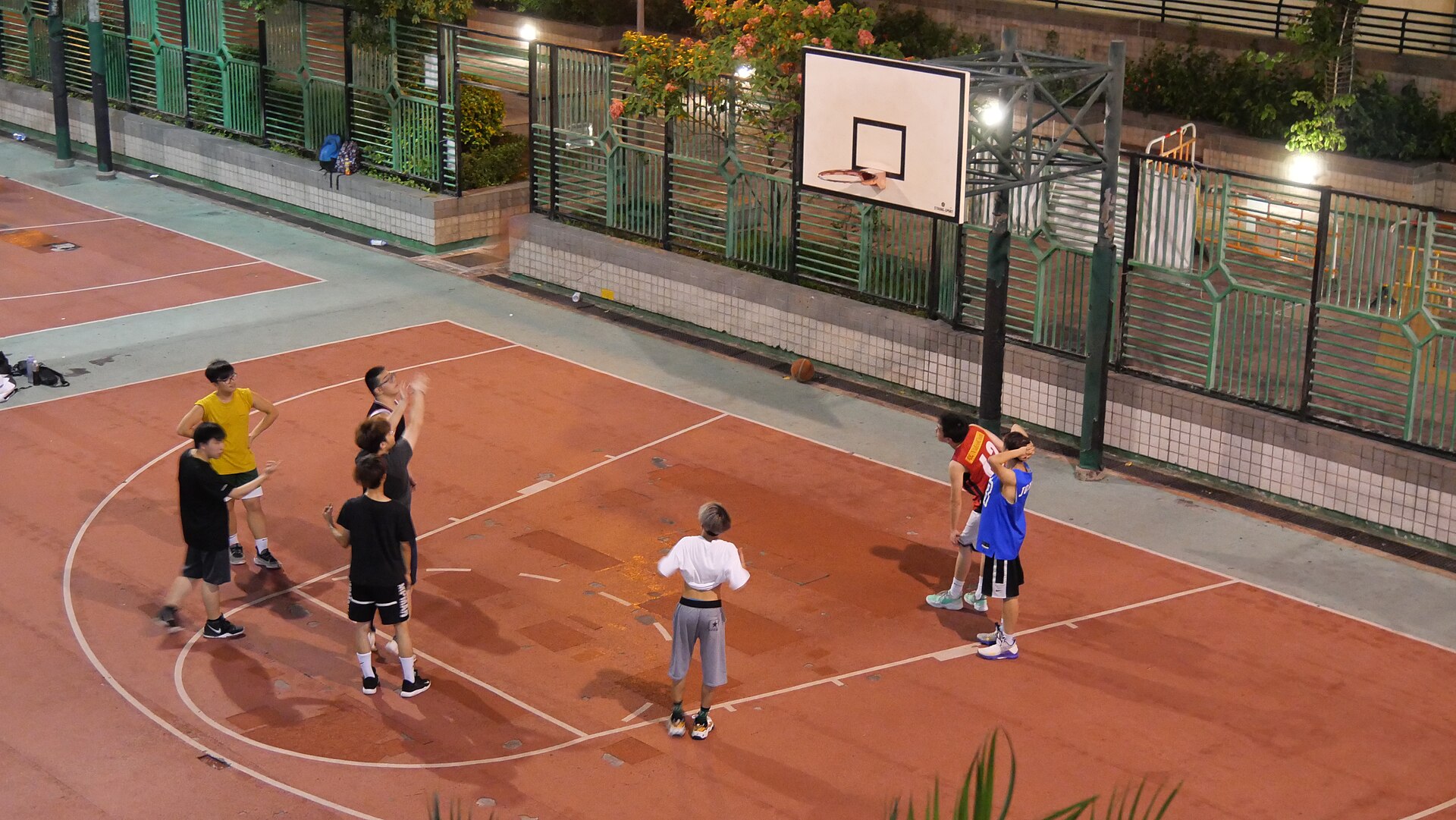
A player catches the ball at the free throw line, plants his right foot, plants his left, gathers it with two hands, and then takes two more full strides before he releases a layup on the other side of the rim. To a fan raised on a stricter idea of traveling, that looks like four steps. To the rulebook, it is legal, and has been for close to two decades.
The confusion is not stupidity. It is a gap between the plain-language word travel and the specific, mechanical definition the rulebook actually uses, which turns on a single moment most broadcasts never isolate: the gather. Everything a euro step or a step-back is allowed to do happens after that moment, and almost nothing about it is intuitive from a live look.
What follows works through the current wording, then applies it frame by frame to the two moves that generate the most sideline arguments. The goal is not to defend either move as fair. It is to show exactly where the legal line sits, so the argument can move on to something more interesting than the count.
The rule in six lines
- The gather. The moment a player secures control of the ball with one or both hands while moving.
- What it buys. Up to two steps after the gather before the ball must be shot, passed or dribbled.
- The zero step. If the gathering foot is already down when control happens, that plant does not count against the two.
- Where the euro step lives. Entirely inside the two post-gather steps, one of which changes direction.
- Where the step-back lives. The same two steps, moving backward instead of sideways.
- Why it is rarely called. Officials are watching the count, not the footage, and the count is almost always legal.
What the gather step rule actually says
The traveling rule in most rulebooks reads simply: a player may not take more than a fixed number of steps without dribbling. The gather step rule is the clause that defines when the counting starts, and it is the part that changed the sport more than the step count itself ever did.
Before a gather is complete, footwork does not count. A player can plant, shuffle, gather momentum and adjust his balance while the ball is still traveling toward his hands, and none of that is charged against him. The clock, so to speak, starts running the instant both hands or a controlling hand close around the ball while he is moving.
From that instant, the player is allowed two steps before the ball has to leave his hands as a pass, a shot, or the start of a new dribble. That is the entire mechanism. Everything a euro step, a step-back, or a spin move does is built inside those two steps, and none of it requires bending the letter of the rule.
Where the gather step rule sits in the rulebook
In the NBA rulebook the gather is defined within the traveling section, alongside the zero-step provision that governs what happens when a player’s plant foot is already on the floor at the moment he secures the ball. The wording is technical enough that even long-time broadcasters routinely paraphrase it incorrectly on air.
College and international rules use a related structure but are not identical to it, which is one reason a move that draws no whistle in a professional game can occasionally draw one in a college gym with a different official’s internalized rhythm. The core idea, control before counting, is shared across all three, even when the fine print on the zero step differs slightly.
The practical result is that a rule written to prevent an unfair advantage on the dribble has been read, correctly, as also covering everything a player does with the ball after he stops dribbling and before he releases it. That single reading created the legal space for almost every modern finishing move at the rim.
The two steps after the gather, explained
Step one is the plant that follows the gather, and it can go in almost any direction: forward, sideways, even backward. Nothing about the direction of the first step is restricted, which is the part most fans underestimate when they call a move traveling on sight.
Step two is where the shot, pass or dribble has to begin. The ball has to leave the player’s hands, or a new dribble has to start, at or before the second foot returns to the floor. A player who takes a third full step before releasing the ball has traveled, full stop, no matter how smooth the move looked.
The zero step complicates this in a way that favors the offense. If a player is already in the air, or already has a foot down, when he actually gathers control, that foot is treated as a zero step rather than the first of the two. That is what allows some finishing sequences to look like three plants while remaining perfectly legal underneath.
Applying it to the euro step, frame by frame
The euro step begins with a gather at or near the free throw line, usually off a live dribble that has just ended. The first foot plants moving in one direction, most often straight toward the defender’s original position, which sets up the entire deception of the move.
The second foot then plants at an angle, frequently a full stride sideways from where the first one landed, carrying the player around the defender’s outstretched arm rather than through it. That lateral plant is legal for one specific reason: it is still only the second step after the gather, and nothing in the rule restricts direction.
The shot has to leave the player’s hand at or before that second foot returns to the floor. Watch the release relative to the landing foot rather than the overall shape of the move, and the euro step stops looking like an exception to the rule and starts looking like the rule working exactly as written.
Applying it to the step-back, frame by frame
A step-back jumper follows the identical structure with the direction reversed. The gather happens on the move, the first step plants forward or to the side to create the pivot, and the second step drives backward, opening separation from a defender who has been trained to stay attached on the drive.
Because a jump shot does not require the shooter’s feet to be square to the rim, the backward direction of that second step creates no additional rule problem. What matters is the same single checkpoint: does the ball leave the shooter’s hand at or before that second foot lands. If it does, the extra distance the step created is simply good footwork, not a violation dressed up as one.
Where a step-back does draw a legitimate travel call is when a player takes a hop with both feet leaving and landing together as an additional movement after the second step has already occurred, effectively adding a third plant before the shot goes up. That version is rare at the highest level precisely because officials are trained to look for it specifically.
Why the call is almost never made
Officiating a gather step rule violation in real time requires isolating a single moment, the instant of control, inside a sequence that takes under a second and often happens in traffic near the basket. Most violations that fans believe they saw are actually legal sequences that simply looked unfamiliar at full speed.
Officials are trained to count from the gather forward rather than from the first dribble stop backward, which means their attention is on the two steps and the release point, not on how many total foot plants occurred across the whole move. A sequence with four visible plants can still contain only two legal post-gather steps once the zero step is subtracted correctly.
Officiating under this kind of scrutiny does not get easier when the surrounding season is already unusual, and the compressed, isolated schedule during the league’s bubble season gave officials fewer normal cues than a typical arena environment provides. The rate of missed calls in the other direction, legitimate travels that go uncalled, is a separate and genuinely contested question, and it is not one this piece is trying to settle. What is settled is the standard being applied: officials are not ignoring an obvious violation on most euro steps and step-backs, because most of them are not violations under the current wording.
The NBA change that widened the legal window
The two-step gather provision was formalized and clarified over a series of rule memoranda in the 2000s, well after players like Manu Ginóbili had already popularized the euro step using footwork that referees of an earlier era might have called differently under a stricter, less codified standard.
The zero-step language followed later still, added specifically because officials needed a clean way to explain sequences where a player appeared to take three steps while remaining within the letter of a two-step allowance, a level of rule literacy that shows up constantly whenever this season’s advanced-stats MVP debate turns to footwork and finishing efficiency around the rim. Writing the zero step down did not change what had been happening on the floor. It gave officials and broadcasters a shared vocabulary for a footwork pattern that had already become common.
That sequencing, the move arriving before the precise rule text caught up to it, is a recurring pattern in how officiating standards evolve, and it explains why fans who learned the sport a generation earlier sometimes describe today’s game as looser on footwork than it actually is under current wording.
A simple test you can run from the stands
Pick a single finishing move on the next fast break and ignore everything before the gather. Find the moment two hands close around the ball, or one hand secures it while the player is airborne, and treat that as the starting gun.
From there, count exactly two foot plants. If the ball is out of the player’s hands at or before the second plant lands, the move is legal, whatever it looked like in real time. If a third plant occurs before release, that is the violation worth appealing to, and it is worth noting on replay rather than in the moment, since the human eye is not fast enough to separate a true third step from an unusually long second stride at full speed.
Coaches teaching this footwork increasingly borrow the same frame-by-frame habits featured in modern coaching technique breakdowns, isolating the gather before ever discussing the finish. This test also explains why the same footwork looks completely different depending on camera angle. A baseline camera compresses lateral movement and can make a legal euro step look like extra steps, while a high sideline angle shows the true footwork and usually settles the argument in seconds.
Where officials still disagree
| Situation | What decides it | Why it is contested |
|---|---|---|
| Airborne gather off a bounce pass | Whether both landing feet count as zero or as step one | Depends on which foot was already descending at the moment of control |
| Spin move into a euro step | Whether the spin’s pivot foot ever lifted before the gather | A lifted pivot foot before control resets the whole count |
| Step-back with a hop | Whether the hop is a landing or an additional plant | The two look nearly identical at broadcast speed |
| Euro step drawing contact | Whether the contact affected the footwork or just the finish | Officials are watching the defender and the feet at once |
None of these four are disagreements about what the rule says. They are disagreements about which frame the gather actually happened in, which is a factual question the human eye is not built to answer at game speed without replay.
Frequently Asked Questions
Is the euro step a separate rule from traveling?
No. There is no rule written specifically for the euro step. It is a footwork pattern that fits entirely inside the ordinary two-step gather allowance that governs every move in the sport.
Why do college games sometimes call travels that the NBA does not?
Because the zero-step language is not written identically across rule sets, and officials at different levels are trained on slightly different standards for when a plant counts as the start of the two steps.
Can a player take a third step if the third foot never fully plants?
No. What matters is whether the ball has left the player’s hand, not whether a step counts as full contact with the floor. A grazing third step before release is still a violation.
Does the gather step rule apply to a spin move the same way?
Yes, with one added wrinkle. A spin resets the count only if the pivot foot lifts before the gather is complete. If the pivot stays down through the gather, the spin is simply the first of the two allowed steps.
Why does the rule allow a backward step but not a third forward one?
It does not distinguish direction at all. Backward, sideways and forward are equally legal for either of the two post-gather steps. What is restricted is the count, not the compass heading.
None of this settles whether the modern game rewards this footwork too generously, which is a question about the sport’s style rather than its rulebook. What it settles is where the line actually sits, and that line has not moved nearly as much as the reaction to any given highlight suggests.