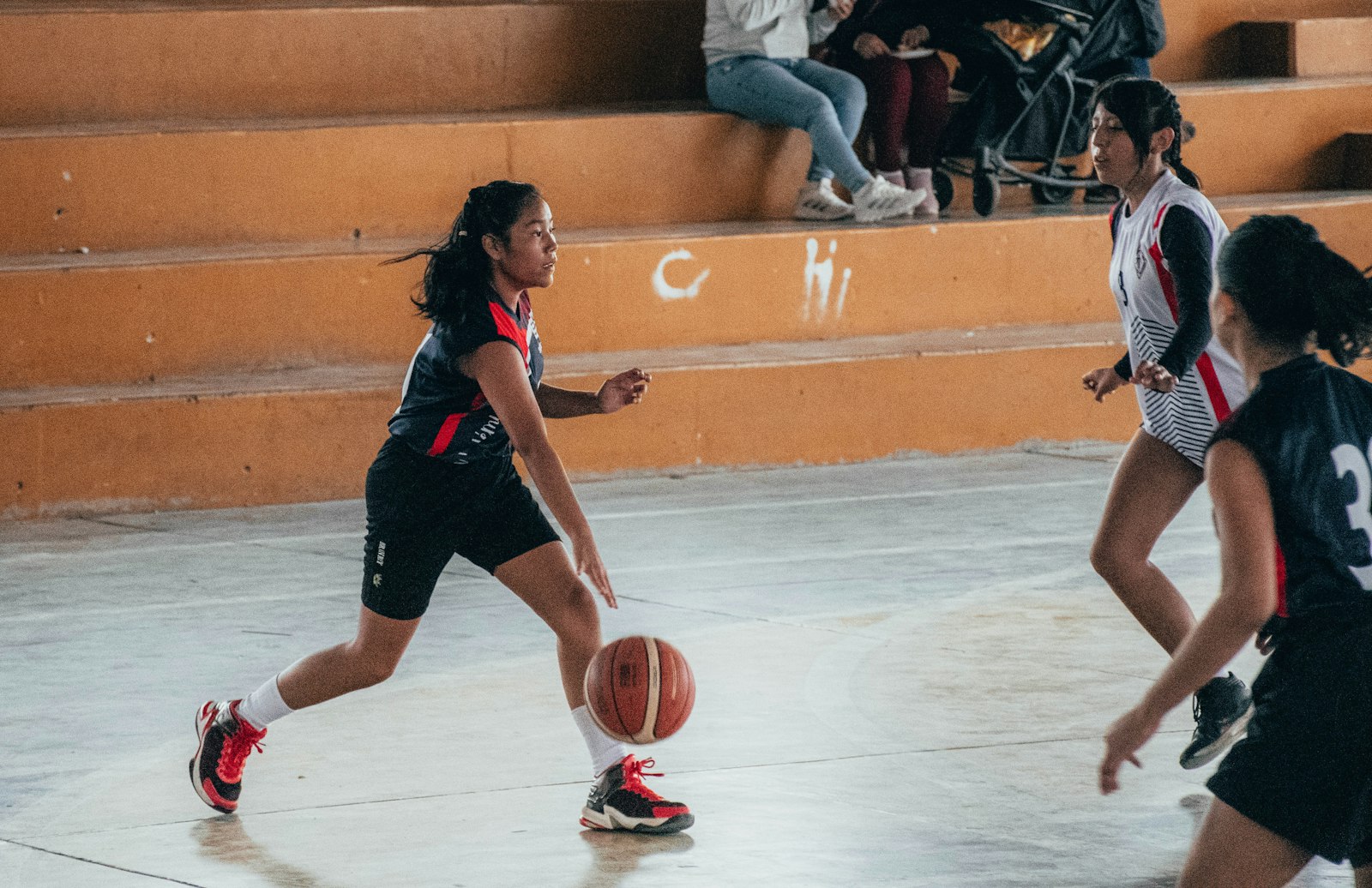

The Women NCAA Tournament has, across the last five years, become the cleanest case study in sports of an analytical conversation catching up to the underlying game. The audience grew. The coverage matured. The public data infrastructure expanded. And the bracket itself started being argued through the same efficiency-based vocabulary that NBA and men’s college coverage have used for two decades.
The result is a tournament that, in 2026, is read by serious fans through a sharper toolkit than even five years ago. Net efficiency. Strength of schedule. Effective field goal percentage. Defensive rating. The same metrics that anchor NBA analysis now anchor the women’s college game, with sport-specific tooling catching up in real time.
The piece below is the working version of how to read the Women NCAA Tournament through the analytical frame. What metrics to track, how the bracket dynamics differ from the men’s tournament, and the short framework we apply when previewing or recapping any women’s tournament game.
Quick read: women NCAA Tournament through analytics in 60 seconds
- HerHoopStats and Synergy Sports publish the leading public efficiency data for women’s college basketball.
- NET rankings exist for women’s basketball with the same structure as the men’s NET.
- Top-end depth is narrower than men’s basketball — favorites tend to dominate early rounds more reliably.
- Three-point shooting variance is more decisive than in the men’s tournament because possession counts are slightly lower.
- The eye test for women’s basketball has caught up to the analytics in mainstream coverage, especially since 2022.
The metrics that anchor women’s college basketball analysis
The vocabulary that drives serious women’s basketball coverage has converged on a small set of efficiency metrics that travel from NBA analysis to college and back. The translation is direct because the underlying basketball is, statistically, the same game at slightly different paces and three-point profiles.
The major public efficiency metrics for women’s college basketball include net rating per 100 possessions, true shooting percentage, effective field goal percentage, defensive rating, and per-possession assist and turnover rates. These are tracked by HerHoopStats (the leading public-facing efficiency site for women’s basketball) and by Basketball Reference’s WNBA section for league-level historical data.
Synergy Sports, used by most coaching staffs, provides play-type efficiency data that the public versions do not match. ESPN’s women’s NET ranking is the NCAA’s official selection tool. The methodology mirrors the men’s NET but with slightly different weighting reflecting the women’s game’s pace and possession patterns. The full vocabulary that sits around these metrics lives in our sports analytics field guide.
Where the women’s tournament differs from the men’s
The two tournaments share a structure but produce different patterns. The table below maps the dimensions that matter for bracket prediction.
| Dimension | Women NCAA Tournament | Men NCAA Tournament |
|---|---|---|
| Top-end talent depth | Narrower — 6-8 truly elite programs | Wider — 15-20 plausibly elite teams |
| Upset frequency (first round) | Lower; #1-#3 seeds rarely lose | Higher; first-round upsets common |
| Pace (possessions per game) | Slightly lower than men’s | Slightly higher |
| Three-point rate (% of attempts) | Rising rapidly; now near men’s levels | High and stable |
| Star-player tournament impact | Higher concentration of impact per star | Diffused across deeper rotations |
| Senior leadership weighting | More predictive than in men’s tournament | Less predictive due to one-and-done |
| Coaching continuity | Generally higher (less turnover) | More frequent staff changes |
The pattern means that the women’s tournament tends to reward the prediction models more reliably in early rounds and punish overconfidence in dark-horse picks. Sweet 16 brackets that include three or more upset picks tend to underperform brackets that respect the seeding more closely.
What to track during a Women NCAA Tournament game
The framework below is the workflow we run during any women’s tournament game. The metrics are similar to those for the men’s game with sport-specific weighting.
Possession-by-possession efficiency. Net rating per 100 possessions tells you whether the leading team is genuinely outplaying the opponent or merely accumulating a hot-shooting margin. A team leading by 8 with a -4 efficiency margin per 100 is in a less safe position than the scoreboard suggests.
Three-point variance. A team shooting 50% from three at halftime is almost certainly regressing in the second half. A team shooting 22% is almost certainly improving. The variance is mathematically reliable in both directions. The framework on regression to the mean applies in full.
Star-player usage and efficiency. Women’s college teams tend to rely on their primary scorer more heavily than men’s teams. A star whose usage spikes above 35% with efficiency above 60% true shooting is having a generational kind of tournament game. A star at 35% usage with 45% true shooting is having a tournament game his coach will revisit on film.
Defensive on/off and lineup data. The team with the better defensive lineup data in the closing five-minute units tends to win close games at higher rates. The pattern is more reliable in the women’s tournament than in the men’s, partly because women’s coaches are more consistent in their late-game rotation choices.
A reading framework for tournament games and bracket projections
The table below is the workflow we apply when evaluating any women’s tournament game preview or recap.
| Question to ask | What the answer reveals | What it suggests |
|---|---|---|
| Where do the teams rank in HerHoopStats efficiency? | Whether the matchup is a true mismatch or close | Margins of 10+ in net efficiency = clear favorite |
| What is the three-point rate differential? | Whether one team relies more on variance-prone scoring | Higher 3PT rate = more bracket variance risk |
| How does the defensive efficiency compare? | Whether the underdog has a defensive identity | Top-15 defense underdog = potential upset candidate |
| What is the senior production share? | Whether the team has tournament-tested leadership | 50%+ from seniors = more reliable in pressure |
| How did the team perform against ranked opponents in the regular season? | Whether the team played up or down to competition | Above-record performance vs ranked = tournament-ready |
| Has the star player faced this defensive scheme before? | Whether the matchup has scouting precedent | Familiar matchup = adjustment likely; new = experiment |
| What is the historical performance of this seed line? | Whether the seeding has predictive history | Top-3 seeds historically advance at high rates |
The framework’s job is to separate seed-based expectation from analytical expectation. The two usually agree but diverge on the cases worth writing about — the underdog with strong analytics, the high seed with weak underlying numbers. Those disagreements are where the article lives.
The growth of public data in women’s college basketball
The single biggest change in women’s basketball analytics over the past five years has been the maturation of public-facing data. HerHoopStats, launched in 2018, has become the de facto KenPom equivalent for women’s basketball. Basketball Reference’s WNBA section publishes historical and current advanced stats. ESPN’s women’s college basketball coverage has integrated efficiency metrics into broadcast graphics for several seasons. The public infrastructure now matches the depth of men’s coverage in most respects.
The maturation has changed how the tournament gets covered. Pre-2020 women’s tournament coverage leaned heavily on raw record and AP rankings. Post-2022 coverage routinely cites efficiency, defensive rating, and on/off data. The vocabulary that the men’s game adopted in the 2010s has migrated to the women’s game in roughly half the time, partly because the analytical community had already worked out the methodology and partly because the women’s game’s mainstream visibility grew fast enough to reward serious analysis.
The companion read on why some metrics earn their place across sports and others get retired lives in our durability piece.
Where the eye test still beats the analytics in the women’s tournament
Three categories remain harder to quantify in women’s college basketball than the data fully admits.
Late-game possession choices. Coaches who consistently run high-quality late-game sets — clean ball-screen actions, well-spaced isolations — produce outcomes that the data only partially captures. The eye test reads these adjustments faster than per-possession data updates them.
Defensive scheme matchups. A team that runs aggressive ball-screen coverage against an opponent whose primary creator struggles against pressure can produce results that the season-long efficiency metrics did not predict. The scouting tape captures the matchup. The data captures the outcome later. The companion read on balancing both lives in our match-reading workflow piece.
Star-player chemistry shifts. A team whose star player altered her shot diet mid-season — for example, taking more catch-and-shoot threes after the addition of a primary creator — produces statistical noise that the season-long numbers smooth over. The eye test on the recent stretch is often a better tournament predictor than the full-season average. The framework on how role changes break stat comparisons lives in our context problem piece.
Frequently asked questions
How accurate are women NCAA Tournament prediction models?
More accurate than the men’s models in early rounds because the talent gap between top and bottom seeds is wider. By the Sweet 16, the gap narrows and the predictions converge with men’s accuracy. The Final Four is typically more predictable in the women’s tournament because the top 4-5 programs reach the final weekend most years.
Why has women’s basketball analytics grown so fast?
Three reasons: the methodology was already worked out by the men’s analytics community; mainstream visibility grew sharply post-2021, attracting analytical attention; and platforms like HerHoopStats created public infrastructure that did not exist before. The growth compressed roughly fifteen years of men’s analytics evolution into about five years.
Which women’s NCAA program is most consistently analytically excellent?
Across the past decade, UConn, South Carolina, Stanford, and Iowa have spent the most time in the top five of public efficiency rankings. The list shifts season to season — recent recruiting cycles have lifted programs like LSU and Texas — but the historical pattern is that a handful of programs dominate the top of the analytical rankings even when the AP poll order changes.
Where can I read serious women’s tournament coverage?
The Athletic’s women’s basketball coverage, ESPN’s dedicated women’s college basketball page, and HerHoopStats’ editorial content all publish analytics-aware coverage. The mainstream broadcast networks have caught up in graphics quality if not always in commentary depth.
The takeaway, in one paragraph
The Women NCAA Tournament in 2026 is read through the same analytical toolkit as the men’s tournament, with sport-specific weighting reflecting pace, three-point rate, and senior production patterns. The framework above is the version we apply when previewing or recapping any women’s tournament game. For the broader vocabulary this conversation sits inside, our sports analytics field guide is the natural companion read.